
On a late-February morning the shuttle point at 长生桥 Chángshēngqiáo Changshengqiao fills with families in light jackets, and the season’s first buses roll east toward a bend of the Yangtze the city still thinks of as far away. Chongqing is a municipality of southwest China, and 南岸区 Nán’àn Qū Nan’an, its south-bank district, stretches east to reach it: 广阳岛 Guǎngyáng Dǎo Guangyang Island, the largest green river island on the upper Yangtze, about ten square kilometres at low water, between two ranges below the Tongluo Gorge. The district’s hillside table has its own page; this one is an island’s, and the season is early spring – the weeks when the rapeseed fields bloom gold and the island’s produce follows them onto the table.
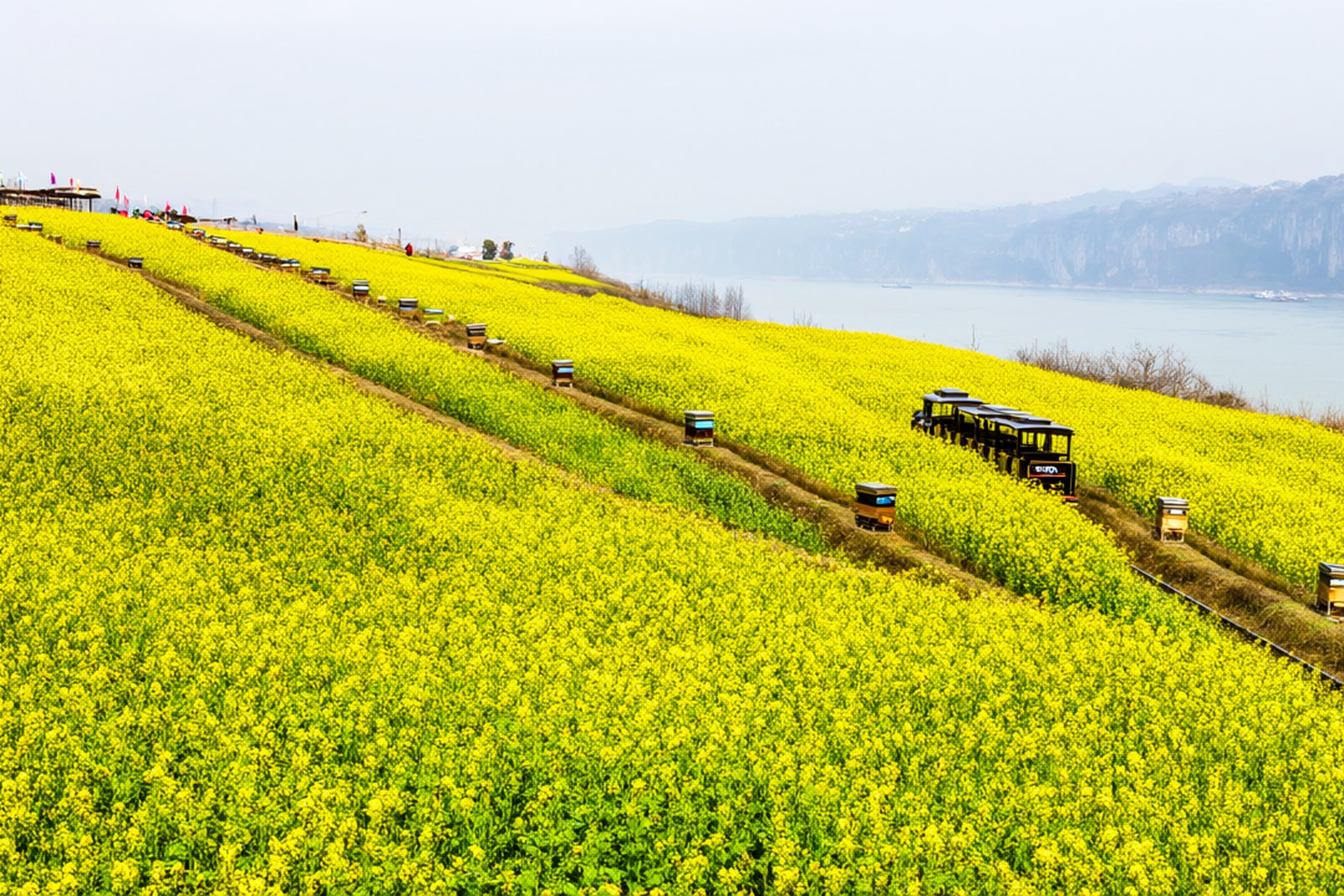
Start with the fields, because on this island the fields are the argument. The rapeseed gold that draws the February crowds is not planted for tourists: it is one face of a restoration programme – the official strategies run to protecting hills, ordering waters, reforesting, restoring fields, clearing the lake, regrassing – and the island farms its restored ground on a rotation of rice, rapeseed and sorghum. The numbers the city reports: vegetation cover above ninety per cent, recorded plant species up from 383 before the work to 594 after, and eleven kilometres of shore path ringing the fields. The approach carries honours – a national practice-innovation base named in October 2020, an international landscape award in 2021 – one sentence of certificates, no more.
The fields exist because a building plan did not. The island once carried zoning for up to three million square metres of real estate; 2.68 square kilometres of ground were graded and 25.45 kilometres of road cut, by the official account of the halt. In August 2017 every development project on the island was stopped outright; in April 2019 the national Yangtze economic belt authorities made the surrounding 168-square-kilometre area a green-development demonstration; and in October 2021 the island reopened to the public as an ecological island – the official phrase, 还岛于民 huán dǎo yú mín, returning the island to the people. An eco sightseeing boat link from the old city’s Chaotianmen wharf had begun in September 2020, by the island’s introductions.
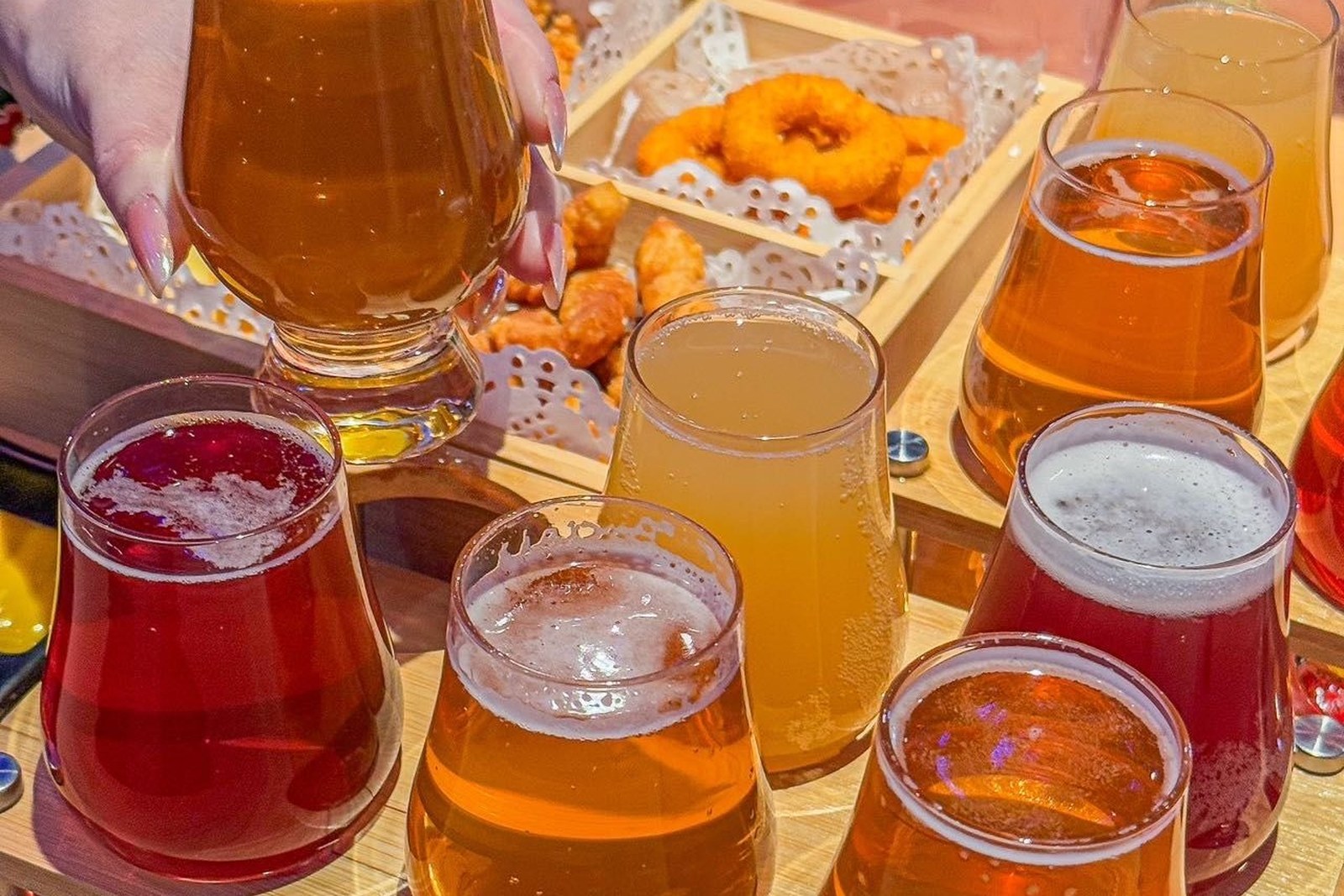
The table is what grew back with the fields. The island’s own produce, by the city government’s account, runs to four staples – honey, rapeseed oil, orange juice and sorghum wine – pressed from the rotation itself, and the honey has a documented workforce: fifty-two hives of bees settled in the rapeseed fields in spring 2022, beekeepers from Shizhu county pulling in eleven townships around the island. Selling runs through the island’s mini-program – reserve the visit, order the produce, collect on the island – and at the stalls, where the island-shaped ice cream is the small bestseller, three hundred-plus sticks on a good day by the vendors’ count, as the city government reported. Eating on the island is deliberately plain: per the visitor guide its operators published for spring 2024, the tables include the 广阳宴 Guǎngyáng yàn Guangyang Banquet at the eco-restaurant in the island camp, tea brewed over the fire at the east-island 老鹰茶渡 Lǎoyīng chá dù Eagle Tea Ferry, forest tables at the western head and a farm-stall market – a roster, not a ranking, every practical figure here from that 2024 spring guide, checked October 2026 and drifting since.
Words and Names
广阳岛 Guǎngyáng Dǎo is Guangyang Island, the largest river isle on the upper Yangtze, at Nan’an’s eastern end; 铜锣峡 Tóngluó Xiá Tongluo Gorge, the river gap at its head. 生态修复 shēngtài xiūfù ecological restoration, the programme the island demonstrates. 油菜花 yóucàihuā rapeseed blossom, the spring gold – an oil crop first, a spectacle second. 蜂箱 fēngxiāng the beehives in the blossom fields; 菜油 càiyóu the island’s rapeseed oil; 高粱酒 gāoliáng jiǔ its sorghum spirit. 老鹰茶渡 Lǎoyīng chá dù the Eagle Tea Ferry landing; 广阳宴 Guǎngyáng yàn the Guangyang Banquet, the island’s eco-restaurant format; 还岛于民 huán dǎo yú mín “returning the island to the people”, the phrase for the October 2021 reopening.
What the Locals Know
Chongqing families read the island as half outing, half field lesson: children watch the bee boxes, and grandparents who remember the quarry years deliver the line residents consider the island’s real monument – the hills that were once cut open grew back. The visit runs on rules: book through the mini-program ahead, walk or take the sightseeing cars, accept that there is no shortcut – its absence is part of the place. Bloom weeks are crowded, so regulars aim for the tail: the last week of the gold, when the flowers hold and the crowds have thinned. Souvenirs follow a local test – buy only what the island itself grew: honey, rapeseed oil, orange juice, sorghum wine – ordered ahead, collected on the way out. And the meal strategy is the island’s own: eat simply on it, keep the proper dinner for Nan’an proper.
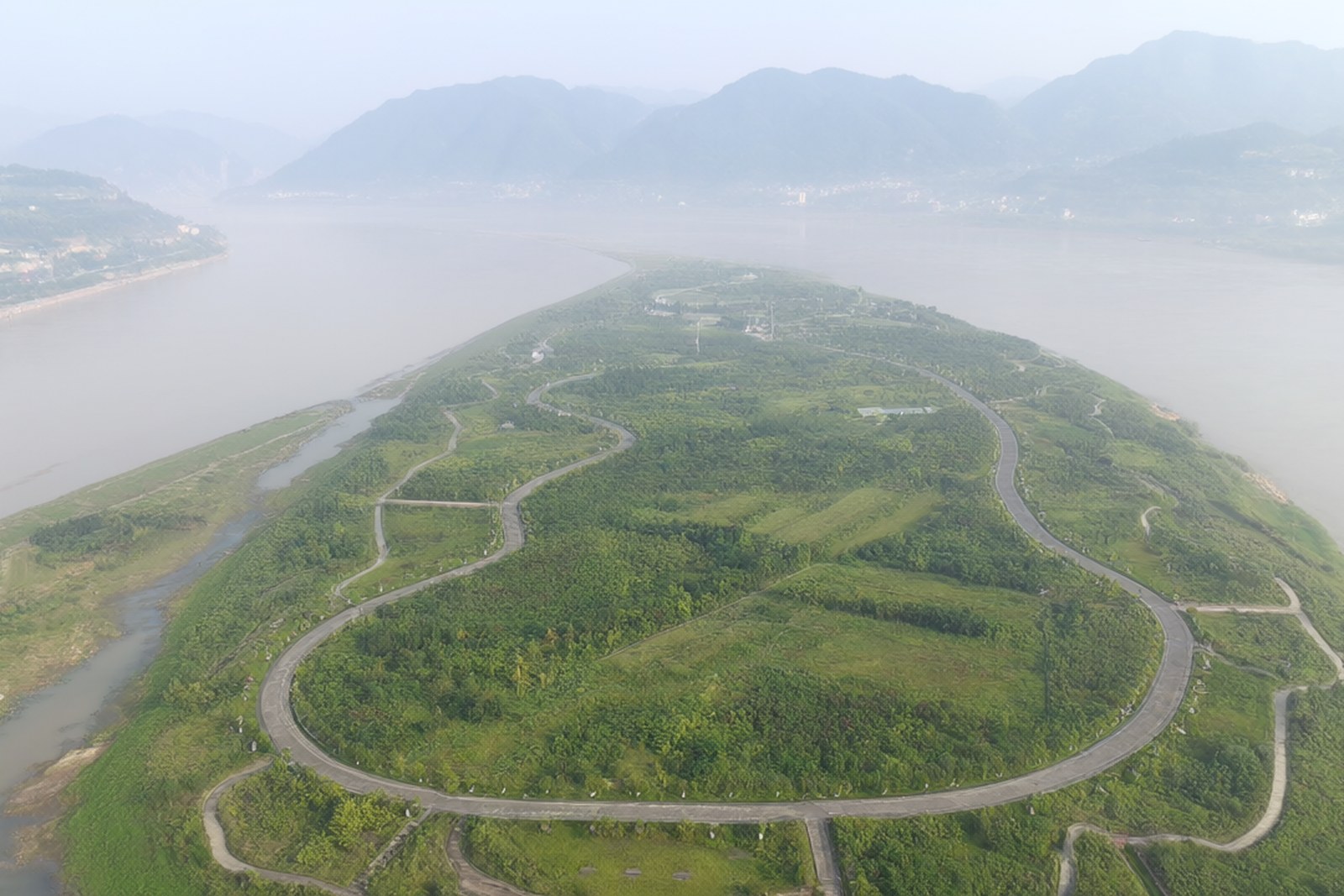
flowcloud would say that Guangyang Island is a table grown from a stopped blueprint – ten square kilometres of river island once zoned for three million square metres of real estate, halted outright in August 2017, restored and returned to the public in October 2021 – now farmed on a rotation of rice, rapeseed and sorghum that yields its own honey, rapeseed oil, orange juice and sorghum wine, sold through a reservation mini-program, and served plain at the island’s eco-restaurant tables: the dinner that exists because the island stopped being built.
Where to find it: 广阳岛 Guǎngyáng Dǎo Guangyang Island, east of central 南岸区 Nán’àn Qū Nan’an District, Chongqing Municipality, below the Tongluo Gorge, joined to both banks by the island bridge. Visits run on the official mini-program reservation, with sightseeing cars on the island; per the spring 2024 visitor guide, entry was free, the sightseeing car about 20 yuan, hours 9:30 to 18:00, with a shuttle from metro line 6’s Changshengqiao station – 2024 public-reporting figures, checked October 2026, subject to change, and the island’s current announcements are the authority before any visit. The rapeseed bloom runs roughly late February to mid-March; outside it the island is a working restoration landscape. No restaurant on the island is ranked or recommended, and every figure above is a snapshot, not a constant.