
Crisp, Sour, Sweet: Official-Style Squid
目鱼条条裹金甲,酸甜一勺定官衔 Mùyú tiáo tiáo guǒ jīnjiǎ, suāntián yī sháo dìng guānxián – Strips of squid armor themselves in gold; one spoonful of sweet-and-sour settles the rank
官烧目鱼 guānshāo mùyú Official-style squid is the 清真 qīngzhēn halal banquet classic that 天津市南开区 Tiānjīn Shì Nánkāi Qū Nankai District’s old mosque-quarter kitchens made famous – thick strips of squid dusted in starch, fried to a crisp gold, then glazed in a sweet-and-sour sauce with black fungus and bamboo shoots until every piece shines. The 目鱼 mùyú of the name is squid in Tianjin talk, and the 官烧 guānshāo – “official braise” – nods to the mandarin-banquet kitchens the recipe descended from.
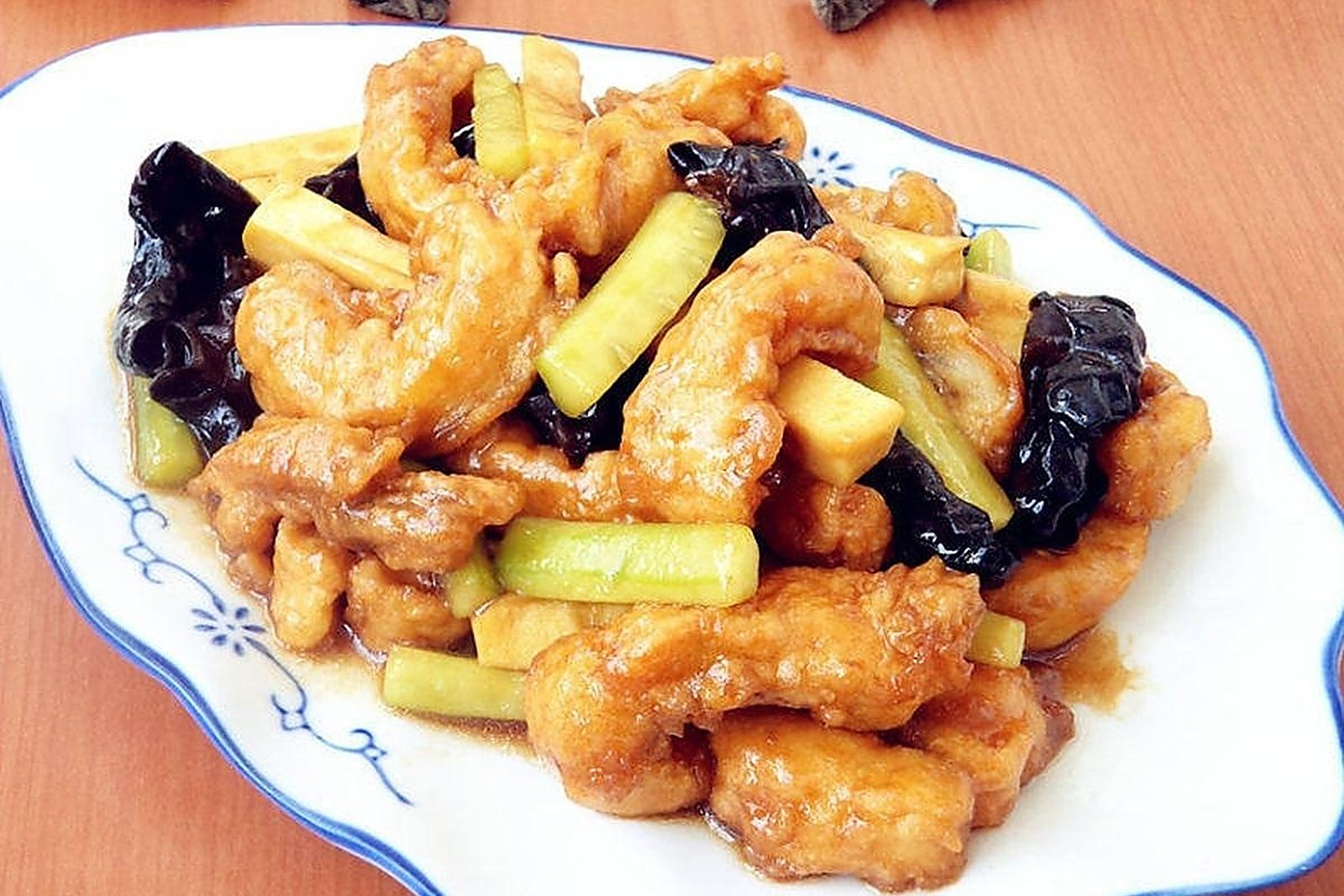
The eating is a crunch-then-glaze study. The fry sets a shell that survives the sauce – crisp outside, springy within, the squid’s own sweetness running under the vinegar and sugar. The fungus adds the slippery note, the shoots the snap, and the glaze clings in a lacquer that means the wok fire held to the last second. Squid turns rubbery with one second too much, so the dish is a cook’s exam as much as a plate of food.
The provenance runs through the halal banquet houses that anchored Tianjin’s food map for two centuries. Squid came up the coast roads to the river markets, the mosque kitchens built a frying-and-glazing style of their own, and the dish took the “official” prefix because it plated like a government banquet course: neat strips, bright lacquer, garnish placed with intent. Old menus list it beside the duck and beef courses as a house’s proof of range.
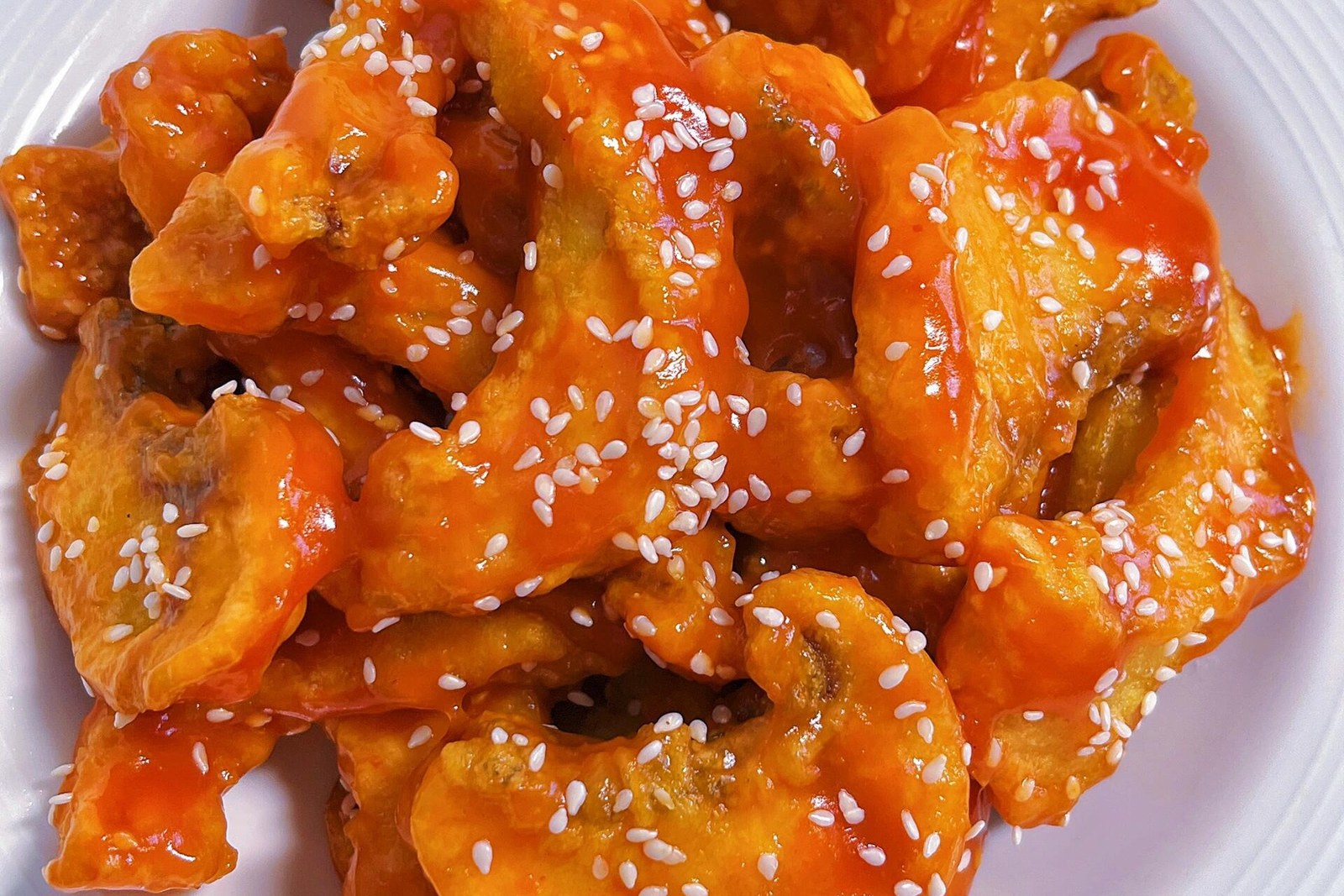
Order it as the banquet’s bright course – one sweet-sour dish among braises, exactly where the Eight Great Bowls tables slot it – and eat it hot from the fryer, while the shell still talks. The halal restaurants near the old city keep it on the banquet menu year-round, and a plate of it beside 麻酱 májiàng-dressed cold dishes is the old-quarter lunch that locals never tire of.
The same district holds more flavors worth chasing: 黑蒜子牛肉 hēisuànzi niúròu the black-garlic beef, 水爆肚 shuǐbàodǔ the water-blanched tripe, 贴饽饽熬小鱼 tiē bōbo áo xiǎoyú the cornbread-and-fish pot, or 八大碗 bādàwǎn the Eight Great Bowls – four more doors into the same Nankai District table.
Words and Names
官烧目鱼 guānshāo mùyú official-style squid, the halal banquet classic; 目鱼 mùyú squid, in Tianjin speech; 挂芡 guàqiàn the starch coat that holds the glaze; 糖醋 tángcù the sweet-sour lacquer; 清真 qīngzhēn the halal kitchens that own the dish.
What the Locals Know
Order it first, before the braises land – squid waits for no course. Judge the house by the glaze: it should coat the strips like varnish, not pool at the plate’s bottom, and the crunch should last to the final piece. Leftovers are a verdict, not a plan. All checked November 2026.
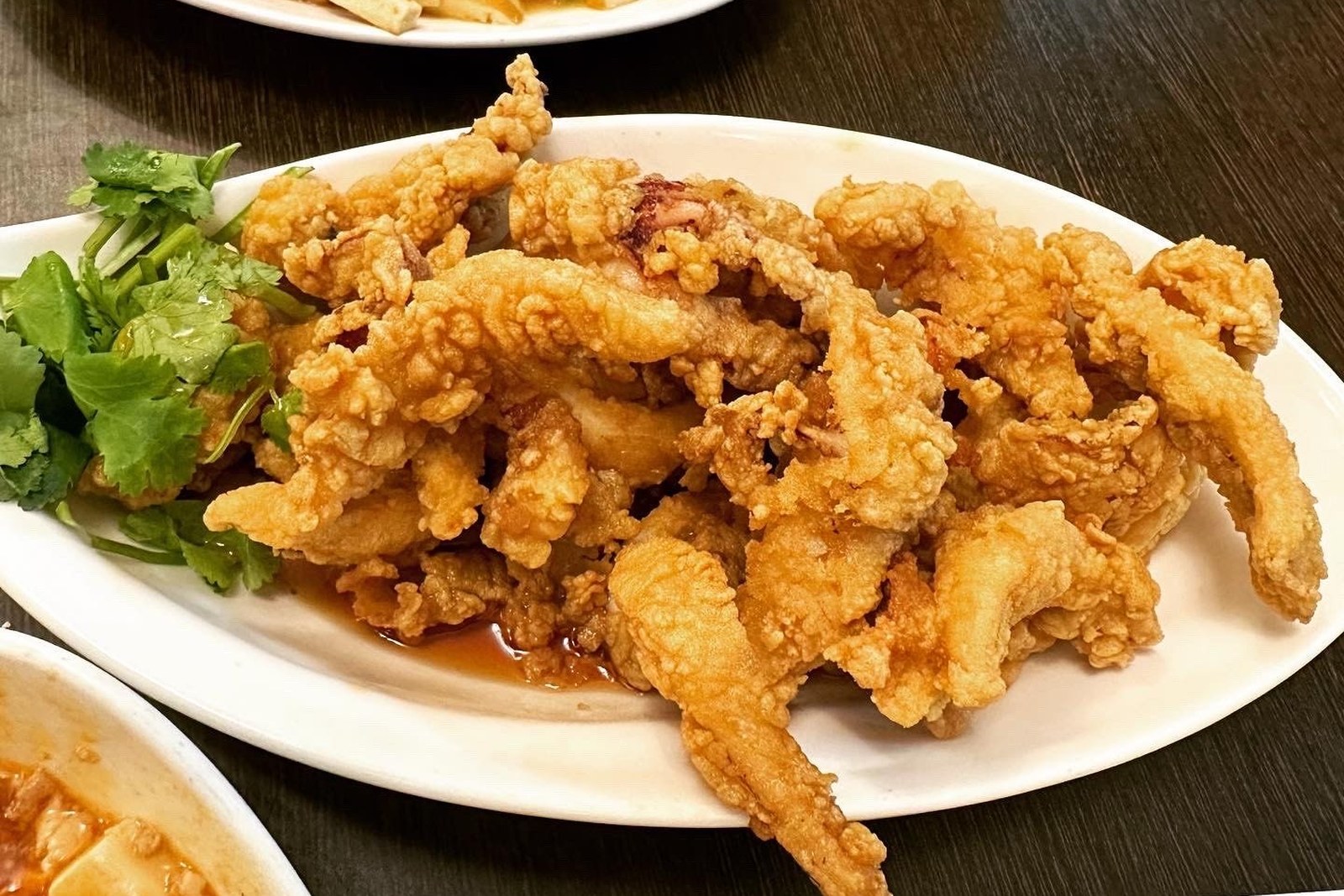
flowcloud would say official-style squid is the old banquet’s showcase bite: a fry that outlasts its own sauce, sweetness with a vinegar spine, and a name that still tips its hat to the mandarins.
Where to find it: The halal banquet houses around 天津鼓楼 Tiānjīn Gǔlóu the Drum Tower and the mosque-quarter rows of the old city keep official-style squid on the menu – it is a banquet dish, so the best versions come from houses that fry to order. All checked November 2026.