
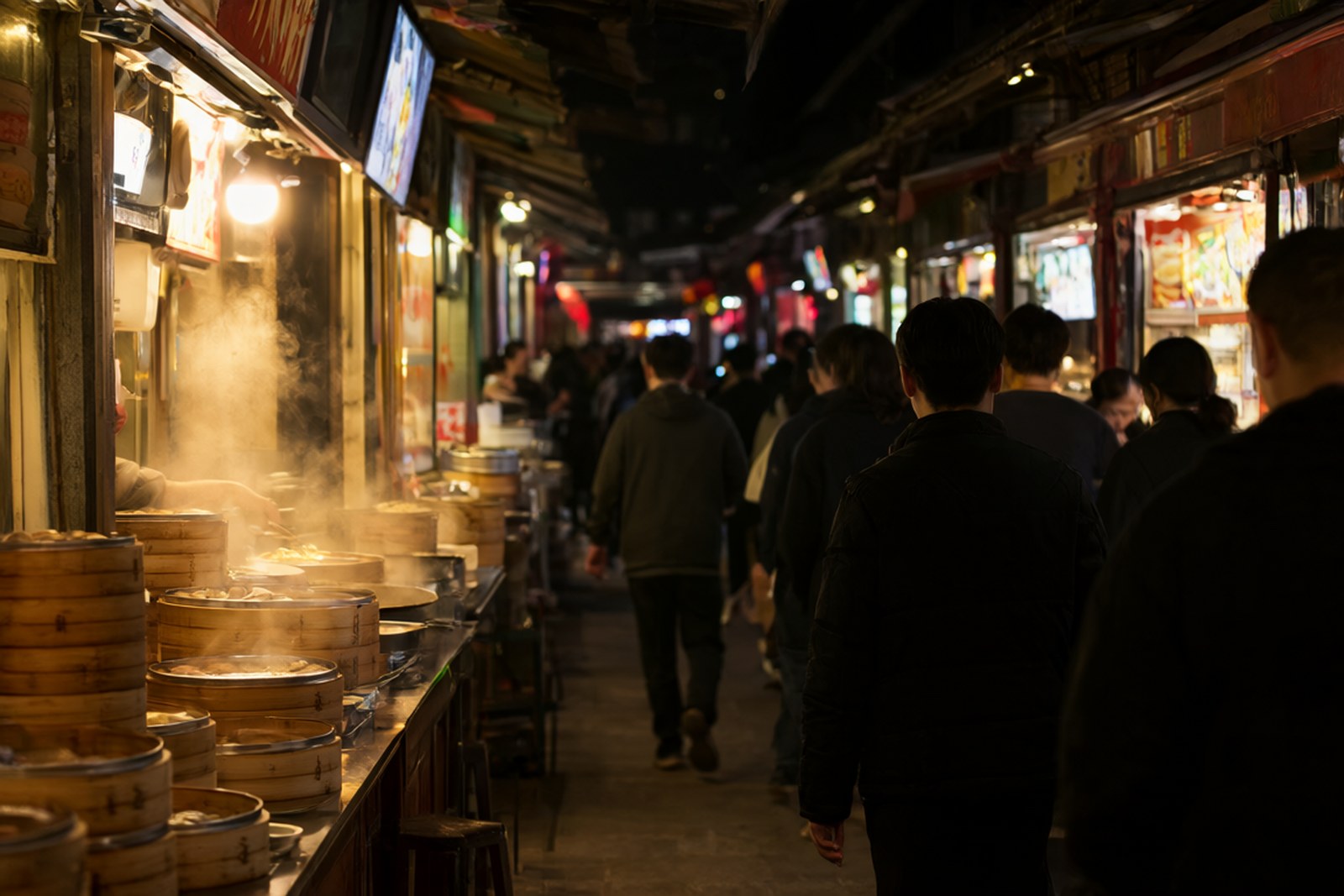
观音桥好吃街 Guānyīnqiáo Hǎochī Jiē, the Guanyinqiao Haochi Street, is Jiangbei’s snack economy compressed into one building: a couple of hundred tiny licensed kitchens in narrow aisles deep inside 观音桥 Guānyīnqiáo Guanyinqiao, the commercial circle at the heart of 江北区 Jiāngběi Qū Jiangbei – one of the central districts of Chongqing, a municipality of southwest China, spread along the north bank of the Jialing opposite the old peninsula. Geography before appetite: this street stands at 59-6 东环路 Dōnghuánlù East Ring Road in Guanyinqiao, on the north bank – the haochi street most guides mean, under the Jiefangbei monument on 八一路 Bāyī Lù Bayi Road, is a different street in a different district across the water, and none of what follows is about it. What the two share is the name, and the name is dialect: 好 hào in the falling tone means greedy for food, so the name reads, roughly, greedy-eaters’ street.
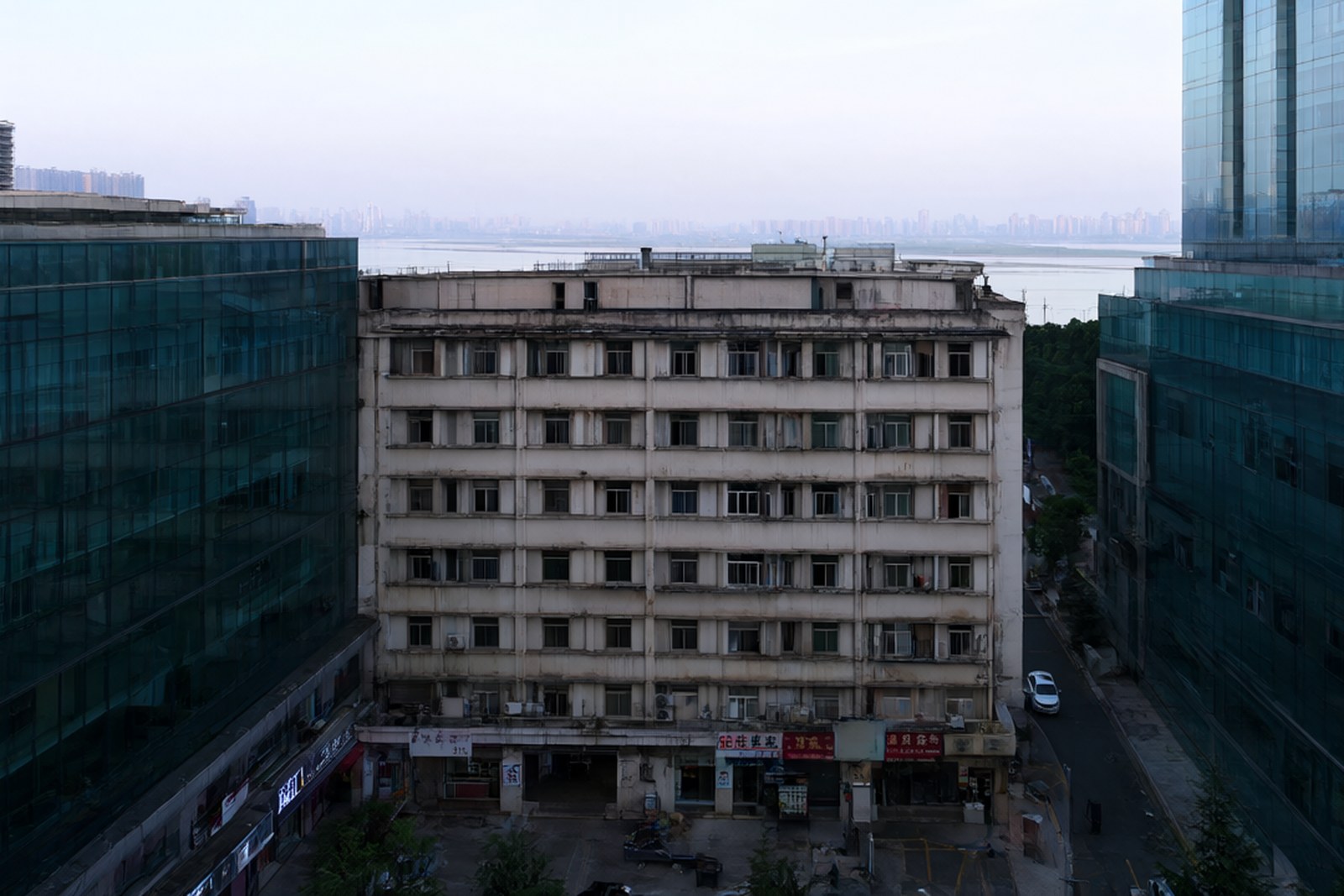
Thirteen years ago the building hid in plain sight. It was 建新市场 Jiànxīn Shìchǎng Jianxin Market, a grey shed trading hardware, building materials and home appliances, drifting toward the state the city calls 烂尾楼 lànwěilóu – an abandoned, unfinished shell. The property was a tangle: six floors counting the basement, the garage and basement level belonging to the Darongcheng mall next door, the first three floors district state assets, the units on the fourth and fifth split among 628 separate owners. In 2012 the operator spent about 11 million yuan clearing the old tenants and stitching the floors together, then spent two years failing at shoes, bags and digital gadgets – the lesson drawn was that the building did not need merchandise, it needed hunger.
The restart came from the pavements outside. In 2015 the doors opened as a haochi street, and the first tenants were the 游摊 yóu tān, the itinerant vendors who had wheeled carts around the edges of the circle, brought indoors at last. The person the city press likes to retell is 周小亮 Zhōu Xiàoliàng Zhou Xiaoliang, a young man from Rongchang pedalling a tricycle of fried potatoes around the circle in 2015, who took a stall here in 2016 that was 1.6 metres wide and cost about 4,000 yuan a month, and by 2024 had turned it into seven direct-run shops and more than a hundred franchises nationwide – figures that belong to their own years. His 丁家坡洋芋 Dīngjiāpō yángyù Dingjiapo potatoes is one of several brands born on this street, cited here as the street’s history, never as endorsements.
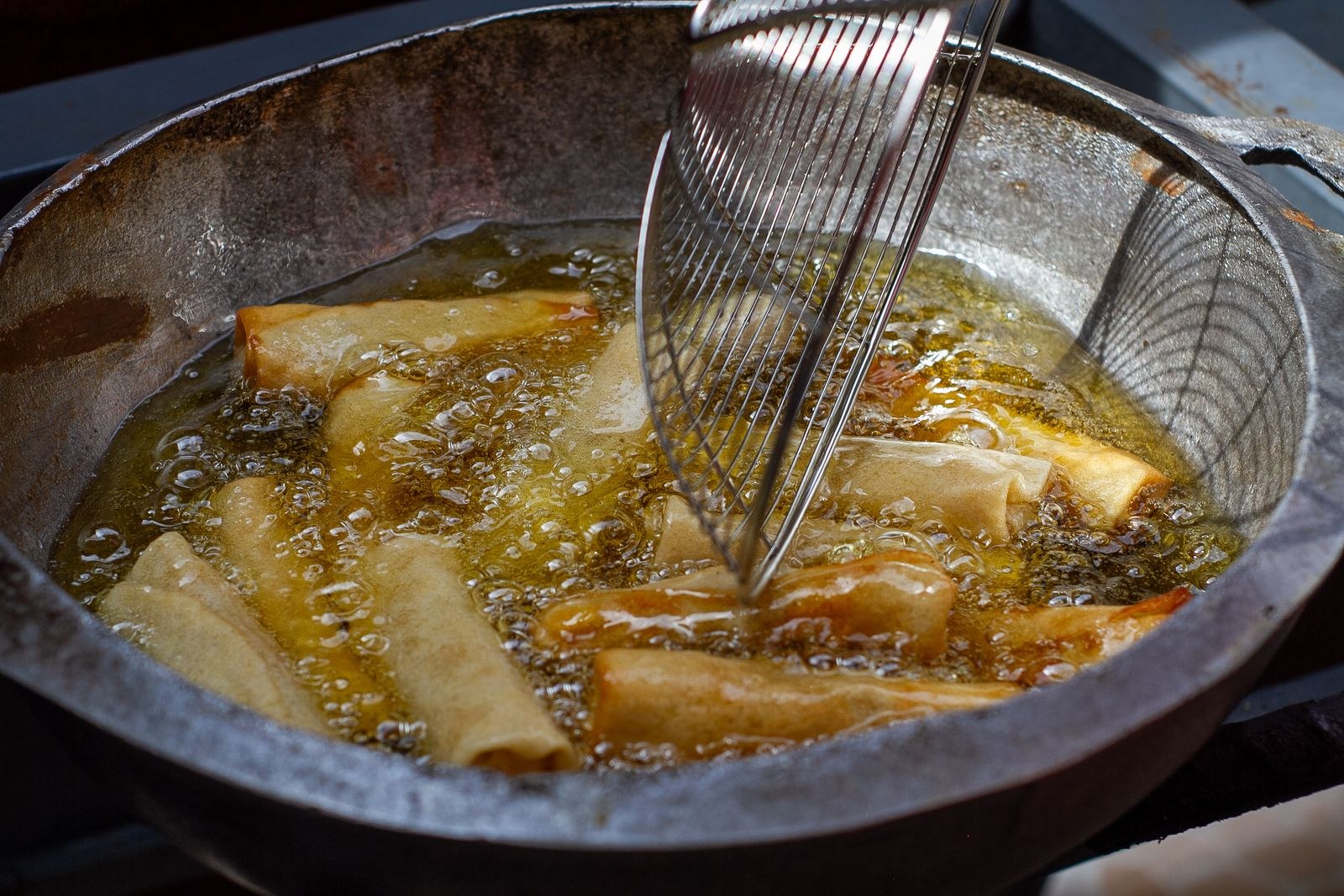
The mechanism behind the turnaround is the lease. In January 2017 the street began piloting 联营 liányíng, joint operation: instead of collecting fixed rent the landlord takes a share of each stall’s takings and shares the risk. The first shop to switch, the trade press reported, watched monthly turnover climb from roughly 30,000 yuan to roughly 210,000 within the year, and nearly thirty stalls converted the same year. In 2021 a second zone opened on the failing ground floor of the Tianheli mall less than five hundred metres away, filled with nearly a hundred merchants inside a month. Scale on recent reporting: roughly 250 small food units across the two zones, daily foot traffic around 110,000, a typical spend of 15 to 25 yuan a head, doors open from about ten in the morning to eleven at night – figures from 2024-2025 public reporting, checked October 2026, drifting with the season. Since 2019 the street has also worked as an incubator, sending more than a thousand snack franchises across the country in four years.
Words and Names
观音桥 Guānyīnqiáo is Guanyinqiao, Jiangbei’s main commercial district, named for a former Guanyin temple and bridge. 好吃街 hǎochī jiē is haochi street, greedy-eaters’ street in Southwest Mandarin. 小餐饮 xiǎo cānyǐn is the regulatory term for tiny licensed eateries; 游摊 yóu tān the itinerant cart many tenants graduated from; 联营 liányíng the joint-operation lease; 加盟 jiāméng the franchise model the street exports; 客单价 kèdānjià the average spend per customer. The snack types run from local skewers and grills to counters from every province – the street’s stated idea is that Chongqing eats the nation’s snacks and the nation eats Chongqing’s – and no counter is preferred over another here.
What the Locals Know
Locals treat the place as the business circle’s canteen: a belly-filler around a shopping trip, a meal that costs about what a milk tea costs, set against the hundred-yuan tabs upstairs. The name’s self-mockery is part of the introduction – residents translate 好 hào with a smile. Weekend mealtimes jam the aisles to a shuffle, so regulars go off-peak: at the ten o’clock opening, or after nine at night. Many stallholders are the cart vendors of a few years ago turned shopkeepers; the Spring Festival weeks are the annual peak, and residents step aside then. When the arcade shuts at eleven, the circle’s other face takes over: to the north lies 九街 Jiǔ Jiē Jiu Street, which keeps its own hours and its own page.
flowcloud would say that the other Haochi Street is the one at 59-6 East Ring Road in Guanyinqiao, Jiangbei – a failed hardware market with 628 owners on its upper floors, cleared and re-stitched in 2012, opened as a snack street in 2015, converted in 2017 to a shared-revenue joint-operation lease – now some 250 tiny licensed eateries strong, reported at 110,000 visitors a day and 15 to 25 yuan a head, an incubator that has sent more than a thousand franchises across China since 2019, its name in the local dialect simply meaning greedy.
Where to find it: the Guanyinqiao Haochi Street, Zone A at 59-6 东环路 Dōnghuánlù East Ring Road, Guanyinqiao, 江北区 Jiāngběi Qū Jiangbei District, Chongqing Municipality, beside the Beicheng Tianjie and Darongcheng malls, with Zone B on the ground floor of the Tianheli mall less than five hundred metres away; Metro line 3 Guanyinqiao station puts both within walking distance. Doors run from about 10:00 to about 23:00 on recent reporting; the footfall, unit and spend figures come from 2024-2025 public reporting, checked October 2026, and drift; no single stall is recommended and the named brands are history, not endorsements; the Bayi Road haochi street of Yuzhong is a different street across the river.