
Gubei Roast Meat: Old Braised Perfume, Water Town Tables and the Garrison Flavour of Miyun District, Beijing
古北烧肉卤香老,水镇街边一碗浓。Gǔběi shāoròu lǔ xiāng lǎo, Shuǐzhèn jiē biān yī wǎn nóng – The Gubei roast meat’s braised perfume is an old one; by the Water Town streets one bowl runs strong.
古北烧肉 Gǔběi shāoròu Gubei roast meat is the old braised flavour the garrison town at Beijing’s northeast gate has cooked for generations, and the address is a pass: the kitchens of 古北口 Gǔběikǒu Gubeikou – the walled town under the 司马台 Sīmǎtái Simatai Great Wall – and the lanes of 古北水镇 Gǔběi Shuǐzhèn Gubei Water Town beside it in 密云区 Mìyún Qū Miyun District, Beijing, where the pork goes into the 卤 lǔ master braising liquor dark as the wall at dusk (worth confirming which kitchens keep the oldest pots). The craft most visitors under-rate is the braise itself: 烧肉 shāoròu here is not an oven roast but a long simmer – pork belly and shoulder seared, then lowered into a spiced liquor that has thickened across years of reuse, the meat drinking salt, soy and spice until it parts under the chopstick yet still slices clean. The naming is the tell: a dish billed by its town answers to the garrison that fed on it – a soldiers’ food, heavy and keeping, made where the wall’s garrisons once ate before a cold watch (worth confirming the details of the town’s histories, which the houses tell differently). The honest eater’s test is still the sliced slab, not the old-town signboard.
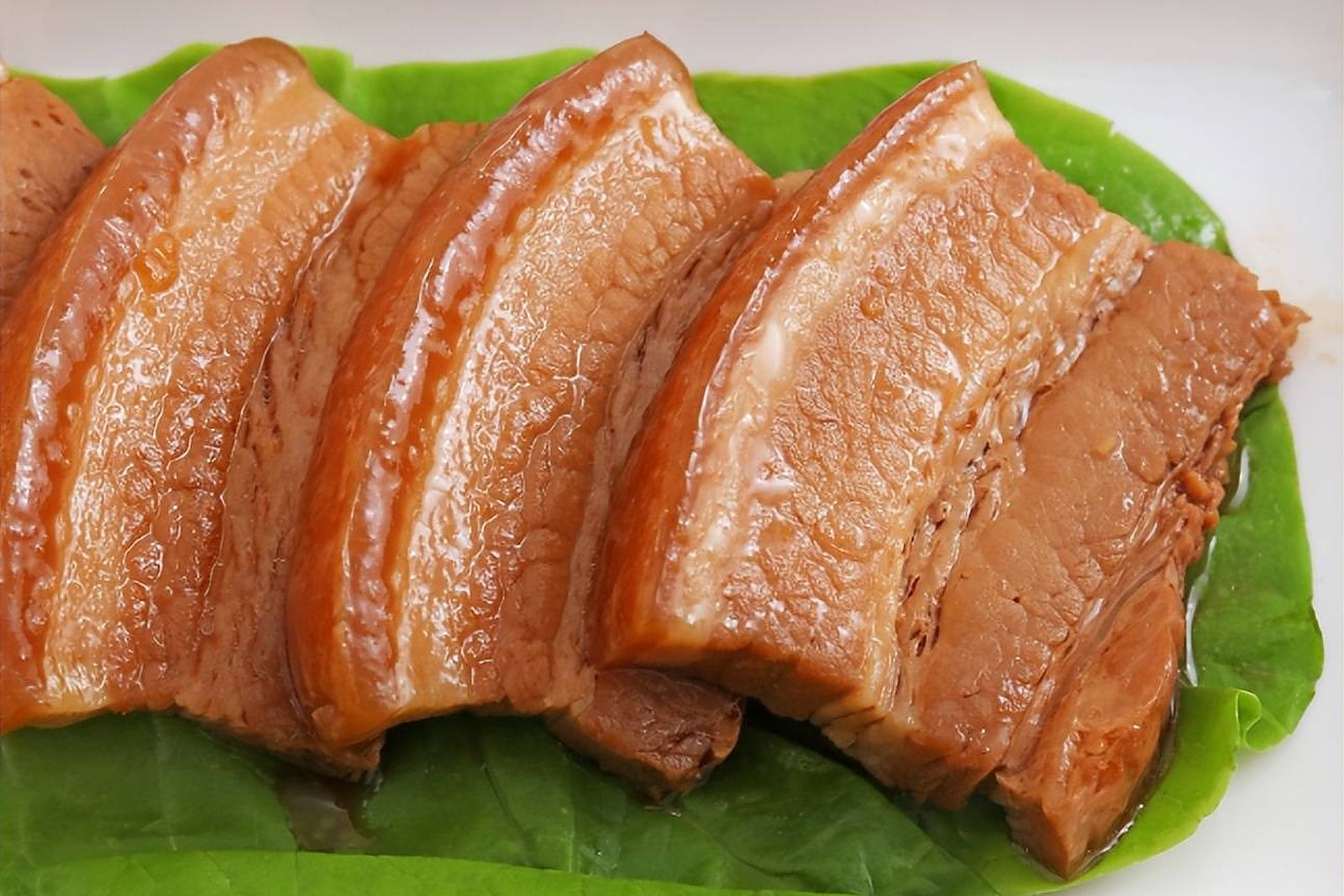
The eating is a slice-and-broth grammar written for meat graded by the way the liquor holds, and it leans 咸香 xiánxiāng savoury-perfumed plus 软烂 ruǎnlàn soft-falling to match the old-town table. The anchor is the sliced belly itself: layers of lean, fat and skin pressed firm by the braise, cut into slabs that glisten without dripping, the fat gone glassy and the skin gone elastic under the knife. Around the meat the table runs its supporting cast: the braising broth ladled over rice or 烧饼 shāobǐng sesame cakes, 卤豆腐 lǔ dòufu tofu and eggs steeped in the same liquor, pickles and shredded scallion to cut the richness, and – at the Water Town’s street counters – the meat folded into buns or ladled as a night bowl after the wall walk (worth confirming the details – each kitchen seasons and serves its own way). The pot’s own virtues decide the order: the meat arrives when the braise has had its hours, because the whole point is depth nobody rushed, and a kitchen that promises it in forty minutes is selling coloured pork.
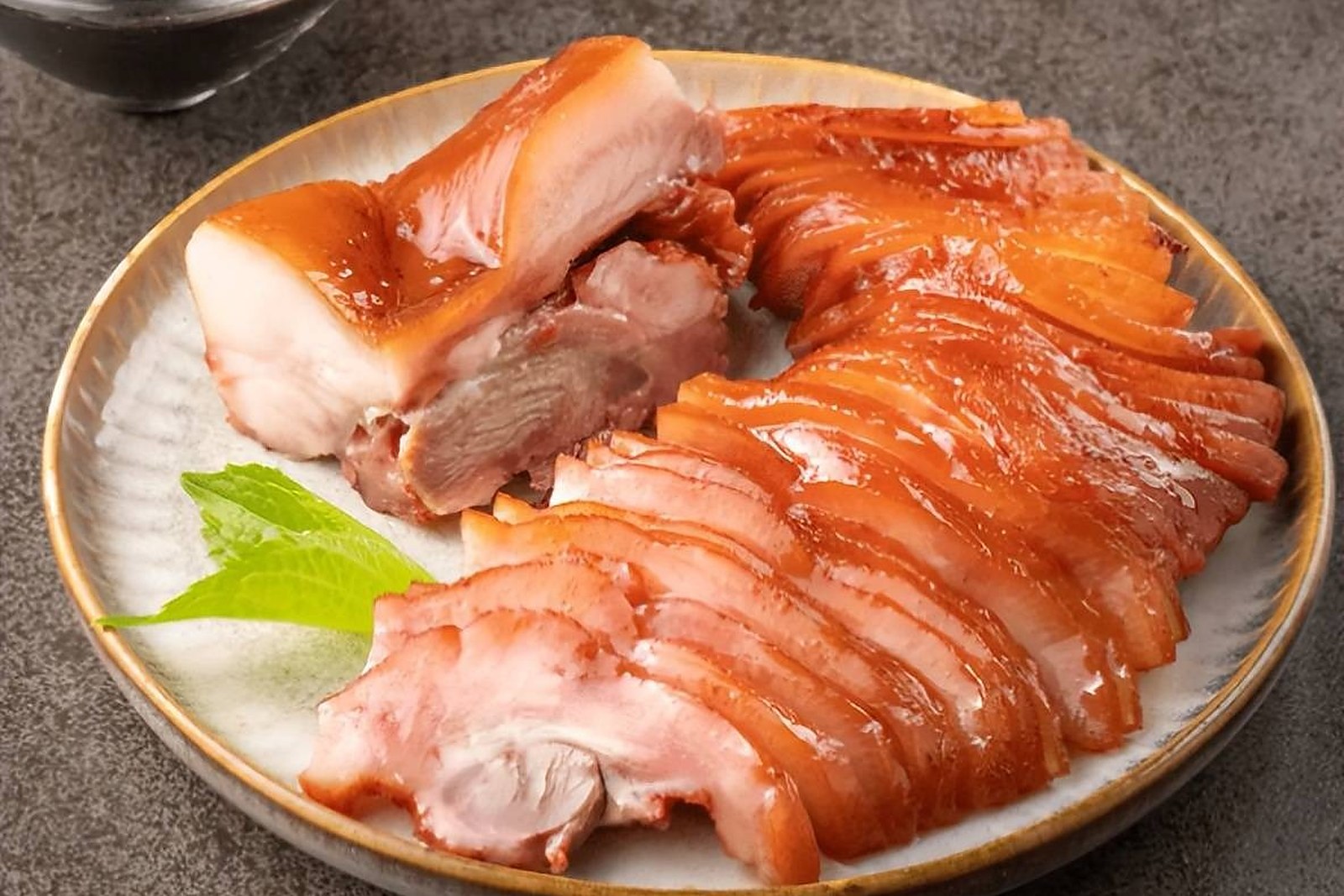
The honest grade is geography plus the liquor clock. In 密云区 Mìyún Qū Miyun District, Beijing the honest eating is at the kitchens of 古北口 Gǔběikǒu Gubeikou town and the lanes under 古北水镇 Gǔběi Shuǐzhèn Gubei Water Town, where the pots run daily and the liquor carries everything the week braised before you (worth confirming which houses serve the traditional 烧肉 shāoròu and their hours). The test costs nothing: look at the slice – a properly braised slab holds its layers, the fat translucent rather than rubbery, the liquor clinging rather than pooling oily – then taste one piece plain, because an honest old pot has nowhere to hide an old animal or a young liquor. A per-person bill runs on the cut, the house and the season, so call it worth confirming the details rather than a fixed number, and mind the calendar: the Water Town’s lanes thin out on cold midweek evenings while festival weekends queue them solid – the mid-afternoon bowl, between tours, is the honest one.
The wry truth is that 古北烧肉 Gǔběi shāoròu is over-rated as a wall-view snack backdrop and under-rated as a liquor discipline: the heritage-town genre files it under “old flavour”, while the actual thing – a master liquor kept alive by daily use, meat braised for hours because garrisons cooked ahead, and fat rendered soft enough to slice against the chill – is preservation cooking the lantern light never explains. The self-deprecating footnote, and the district braid: a food writer will discourse on “garrison soul”, photograph the glossy slab at heroic shutter, and then call the dish “commendably historic” as if a wall were a recipe – which is the honest grade: 古北烧肉 Gǔběi shāoròu is a working pot the writer will romanticise more than he finishes, and the family at the next table has finished the last slab, soaked the sesame cake in the broth and asked which pot has been running longest before the shutter closes. The same 密云区 Mìyún Qū Miyun District thread runs on: the iron-pot braises of 水库炖鱼 Shuǐkù dùn yú Reservoir stewed fish roll in the lakeside village kitchens, the sugar-roasted pans of 燕山板栗 Yānshān bǎnlì Yanshan chestnuts rattle through the autumn streets, the thin-skinned baskets of 黄土坎鸭梨 Huángtǔkàn yālí Huangtukan ya pears line the harvest counters, and the hundred-flower jars of 密云蜂蜜 Mìyún fēngmì Miyun honey sweeten the mountain stalls – one district, four more tables.
Words and Names
- 古北烧肉 Gǔběi shāoròu / Gubei roast meat · the old braised slabs the town named for - 烧肉 shāoròu / braised roast meat · the long-simmered pork the dish is graded by - 卤 lǔ / master braising liquor · the aged spiced pot that carries the flavour - 古北口 Gǔběikǒu / Gubeikou · the garrison town under the wall - 古北水镇 Gǔběi Shuǐzhèn / Gubei Water Town · the rebuilt lanes that serve the night bowls - 司马台 Sīmǎtái / Simatai · the Great Wall section above the tables - 密云区 Mìyún Qū / Miyun District · the Beijing district holding the old pots
What the Locals Know
- Judge the slab by its layers: fat glassy, skin elastic, slices holding their shape – a rubbery fat cap means the braise was rushed or the meat reheated.
- Soak the cake: press a 烧饼 shāobǐng or rice into the braising broth – locals rank the soaked cake above the meat.
- Ask the pot’s age: a liquor kept across seasons deepens what no recipe can rush – kitchens proud of theirs will say so (worth confirming each house’s story).
- Eat at the odd hour: mid-afternoon between the tour queues is when the Water Town bowls are honest and the pots are freshest.
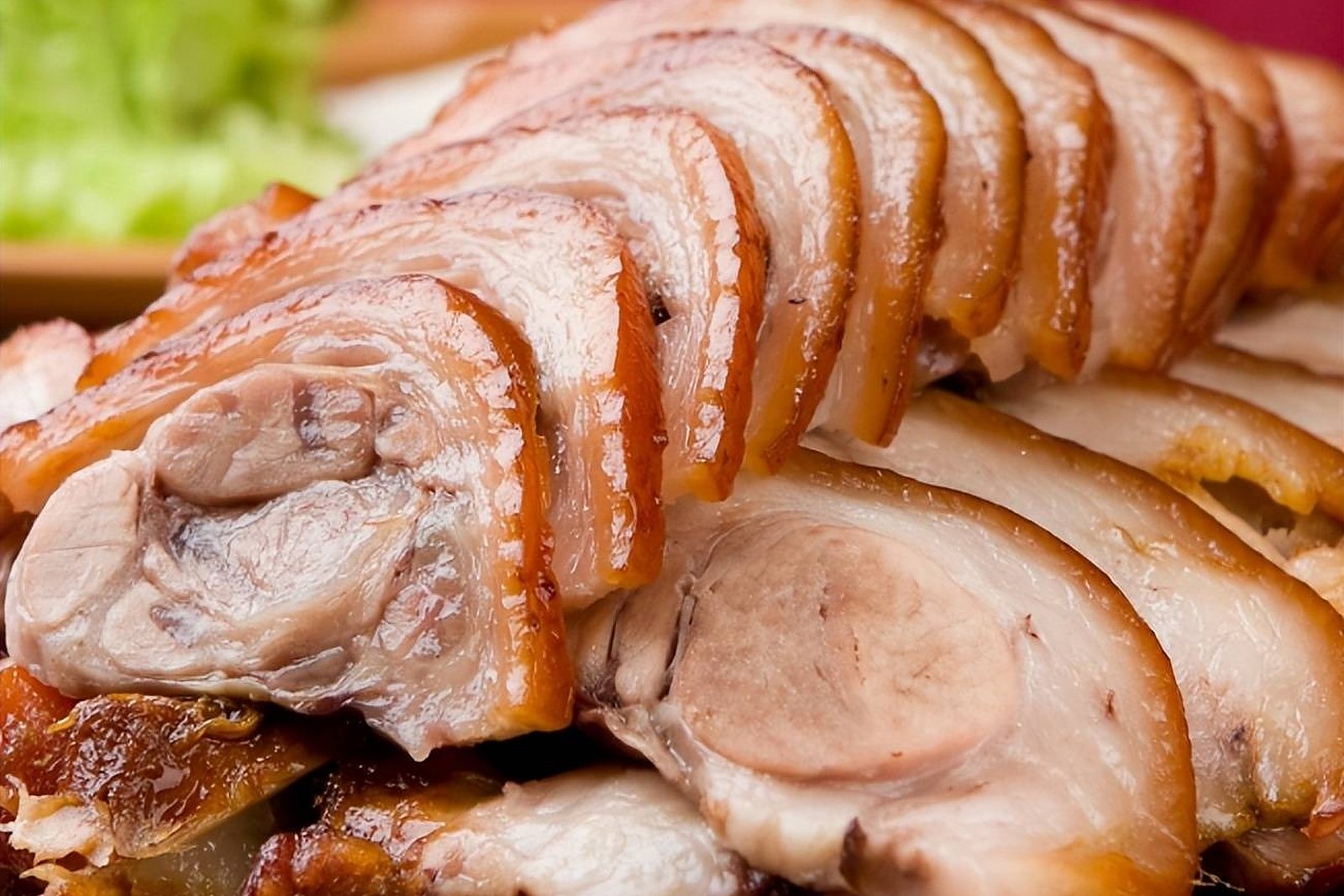
flowcloud would say that the 古北烧肉 Gǔběi shāoròu is the old braised perfume, Water Town tables and the garrison flavour of Miyun District, Beijing – a 卤 lǔ discipline where 烧肉 shāoròu rides the aged liquor into a 烧饼 shāobǐng finish – and that the honest move is to judge the slab by its layers, soak the cake, and eat at the odd hour, because the pot built the depth and the garrison built the appetite. All checked October 2026.
Where to find it: Miyun District Mìyún Qū, Beijing – the kitchens of 古北口 Gǔběikǒu Gubeikou town and the lanes of 古北水镇 Gǔběi Shuǐzhèn Gubei Water Town beneath the 司马台 Sīmǎtái Simatai Great Wall, where 烧肉 shāoròu pots run from midday into the evening (worth confirming the details – which kitchens serve the traditional braise and their hours); a per-person bill runs on the cut and the house, so call it worth confirming the details rather than a fixed number. Gubei roast meat is the old braised perfume, Water Town tables and the garrison flavour of Miyun District, Beijing, liquor before lantern. All checked October 2026.