
A Village Noodle, a Machine’s Heat, and a Hundred Years
The second of Beibei’s two municipal noodle crafts is not a factory one and its difference is visible before you taste anything. It is southern-style noodle making, it is named for the village it was formed and handed down in rather than for a river or a spring, and it has run in that village for over a century: 古佛徐氏手工面 Gǔfó Xúshì Shǒugōng Miàn, the Gufo Xu family handmade noodle of Gufu Village in 三圣镇 Sānshèng Zhèn Sansheng Town. The technique entered Chongqing’s fifth municipal intangible-heritage batch in November 2015, and the batch itself was published in July 2016, when three Beibei items were confirmed together – this noodle, 渝派泡菜传统制作技艺 Yùpài Pàocài Chuántǒng Zhìzuò Jìshù, the Youpai-style pickle technique, and 北碚布艺 Běibèi Bùyì, Beibei cloth art. The other two are named here for the completeness of the batch and nothing more: no bearer, workshop, address or method for either is on record. This noodle, by contrast, has a name, a village, a bearer and a mechanism, which is why it can be written about and its two batch-mates cannot.
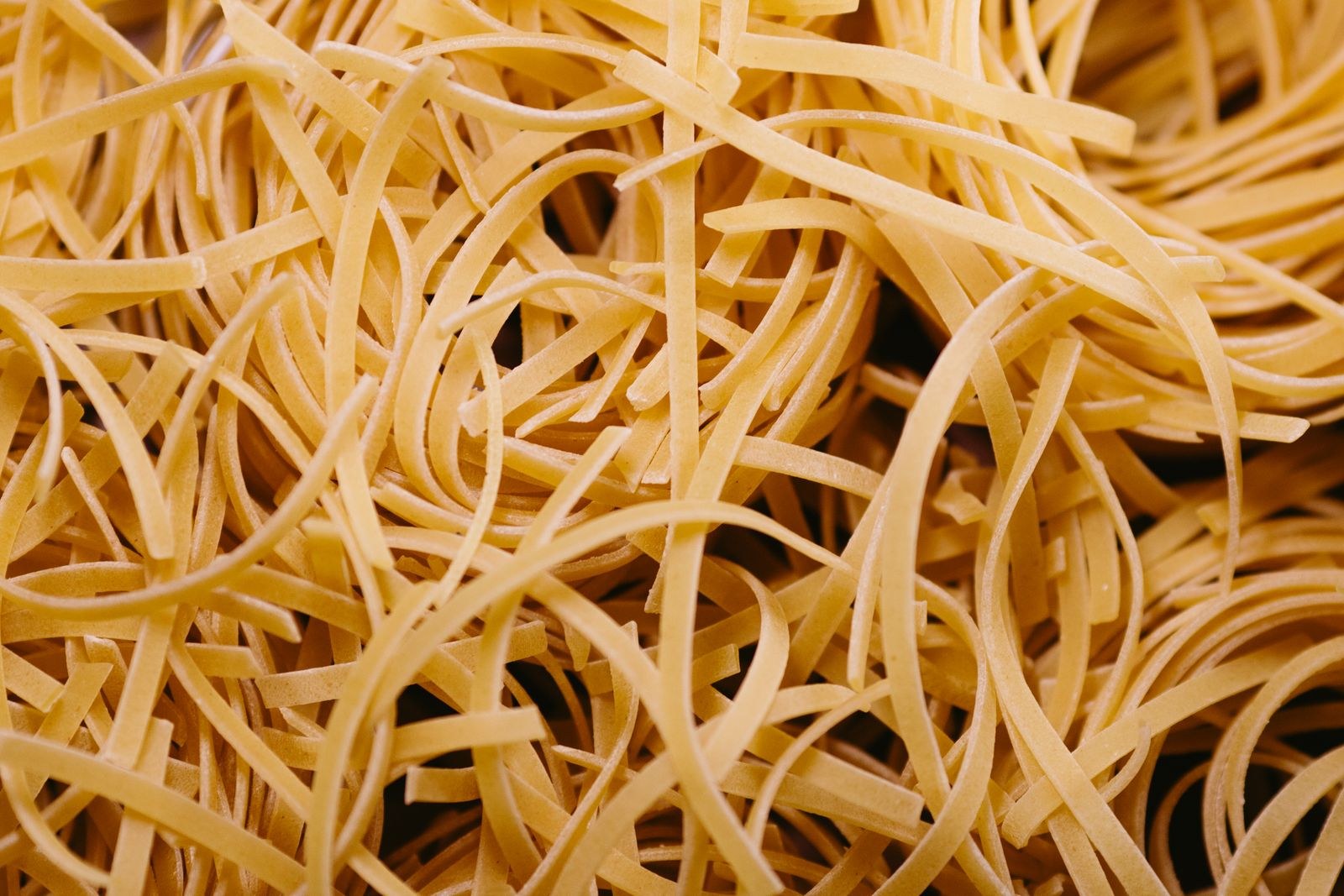
The two details that separate this noodle from every other wheat noodle in the district are both about water and heat. First, the dough is mixed with Gufu village water, and the craft’s whole claim to a name rests on that: a noodle that is defined by the village it came from is making a claim about a place the way a geographical indication does, without carrying one. Second, and this is the part that stops the craft sounding like a romance, the second kneading is not a second kneading. The heat generated by the machine’s own transmission is used to flash-bake the flour during the mixing, so the flour is cooked rather than merely hydrated, and the strands that come out of it are thin, cook quickly and do not fade in the wok. Machine heat, used as an ingredient, is the whole technique in one sentence. The finish is described in the four characters that this district uses for both of its noodle crafts: 面薄如纸 thin as paper, 入水即熟 cooks the moment it hits water, 回锅不泥 does not turn to paste in the wok. The same four words are attached to Beiquan’s factory noodles, and the fact that two entirely different processes are sold on identical wording tells you the wording is a slogan with a real measurement underneath it, not a measurement.
The village itself is a hundred years of the same street, not a shop that opened recently. Old photographs of the Beibei street from around 1927, the Republican-era town that is today’s Zhongshan Road, show 徐记面店 Xú Jì Miàndiàn, Xu’s Noodle Shop, and 唐记面店 Táng Jì Miàndiàn, Tang’s Noodle Shop, trading side by side, which is a reminder that Beibei has eaten noodles from named shops on the same road for the better part of a century. The craft still runs under 徐中海 Xú Zhōnghǎi Xu Zhonghai, as a family operation rather than as anything open to visitors: no street number, no opening hours and no price have ever been published for it, and the only address that exists inside Gufu Village is a two-star guesthouse registered at No. 20, Group 10, Shengnan Street, which is a business registration and not a shop frontage. Sansheng Town is itself the product of a merger, having absorbed 石坝镇 Shíbà Zhèn Shibao Town in August 2005, and it appears in the district’s own January 2025 winter route for its ten-thousand-mu red yew base and the citrus picking at Tiangong Village, which is the reason a noodle workshop in this village is reachable at all.
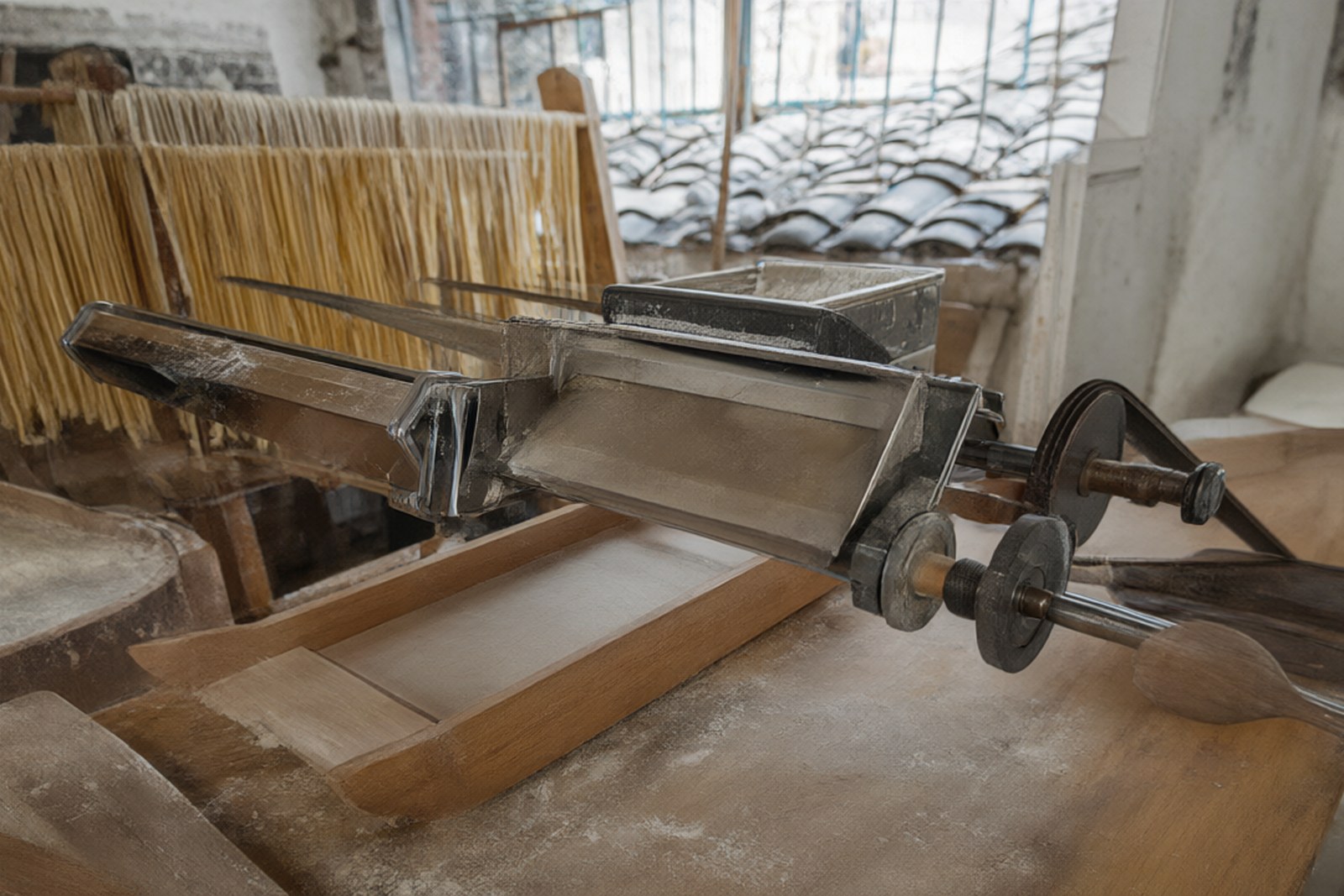
What the record does not contain is as informative as what it does. There is no published recipe, no flour quantity, no water ratio, no drying time, no drying temperature, no list of shops and no price for this craft, and none has been supplied here from imagination. The absence is not a gap to be filled but the shape of the thing: a village technique whose whole identity is a water source and a transmission temperature is not a formula, and a hundred-year family operation is not a company with a product page. What the listing does give is a place, a date, a named bearer and a mechanism, and those four things are enough to describe what makes the noodle different without inventing a recipe for it.
Words and Names
古佛徐氏手工面 Gǔfó Xúshì Shǒugōng Miàn, the Gufo Xu family handmade noodle, named for and formed in 古佛村 Gǔfó Cūn Gufu Village, 三圣镇 Sānshèng Zhèn Sansheng Town, Beibei District; southern-style noodle making, handed down in that village for over a century and still worked by 徐中海 Xú Zhōnghǎi Xu Zhonghai as a family operation. Entered Chongqing’s fifth municipal intangible-heritage batch in November 2015, the batch published in July 2016, together with 渝派泡菜传统制作技艺 Yùpài Pàocài Chuántǒng Zhìzuò Jìshù, the Youpai-style pickle technique, and 北碚布艺 Běibèi Bùyì Beibei cloth art. Two defining details: the dough is mixed with Gufu village water, and the second kneading uses the heat generated by the machine’s own transmission to flash-bake the flour, giving 面薄如纸 thin as paper, 入水即熟 cooks the moment it hits water, 回锅不泥 does not turn to paste in the wok. Old street photographs of around 1927 show 徐记面店 Xú Jì Miàndiàn and 唐记面店 Táng Jì Miàndiàn trading side by side on the Republican-era Beibei street, today’s 中山路 Zhōngshān Lù Zhongshan Road. No street number, opening hours or price is published. Sansheng absorbed 石坝镇 Shibao Town in August 2005.
What the Locals Know
The knowledge here is about water and timing, and neither is negotiable. Village water is not a romantic ingredient; it is a hardness difference that shows up in the dough, and a maker drawing from elsewhere would be making a different noodle, which is precisely what the craft’s name says it is not. The flash-bake window is short, and a workshop that lets the transmission run long on a hot day bakes the flour unevenly, which shows up as a strand brittle in the middle and slack at the ends. Anyone able to watch a working village operation looks for two things: whether the water is drawn on site, and whether the second mixing is done on a running machine or on a cold table. Neither is written on a label, both are visible in a minute, and the craft listing mentions neither, because a listing registers a technique and not a factory inspection. The second thing the trade knows is that the finish is judged in the pot and not on the bench. Cook a strand and take it out at the moment it turns, because a noodle this thin has a cooking window measured in seconds, and a strand held ten seconds too long in the wok is the paste the four-character claim exists to deny. What a visitor cannot do is buy a bowl: this is a hundred-year family operation rather than a shop, and nothing in the record says it opens its door.
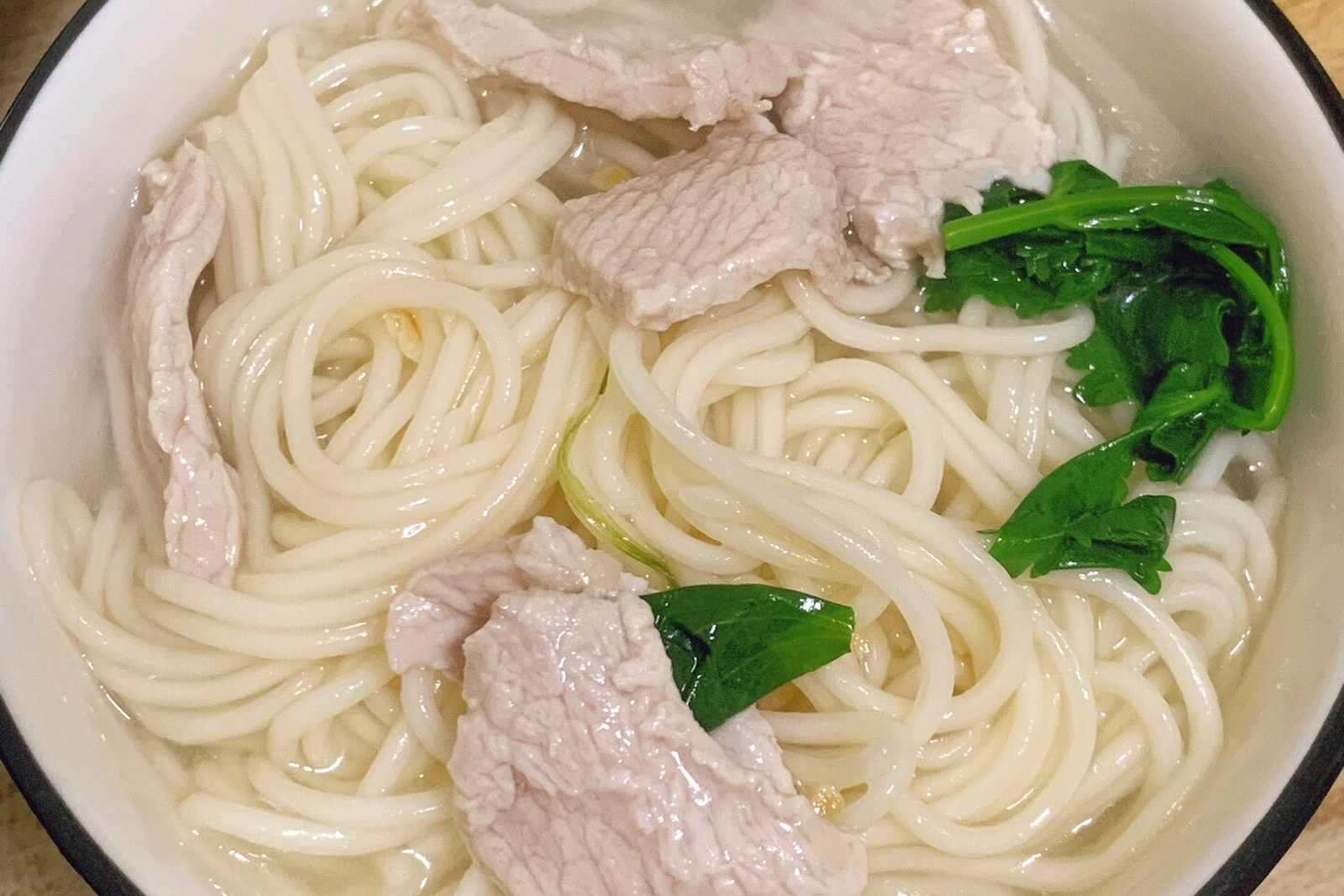
flowcloud would say that Beibei’s second municipal noodle is a village craft rather than a factory one – 古佛徐氏手工面, named for Gufu Village in 三圣镇 Sansheng Town where it has run for over a century, entered Chongqing’s fifth municipal intangible-heritage batch in November 2015, published with Yubei-style pickles and Beibei cloth art in July 2016, and still worked by 徐中海 Xu Zhonghai as a family operation. Two details carry it: the dough is mixed with Gufu village water, and the second kneading uses the heat generated by the machine’s own transmission to flash-bake the flour, which is why the strands are thin, cook quickly and do not fade in the wok – 面薄如纸, 入水即熟, 回锅不泥, the same four words Beiquan’s factory noodles are sold on. Old street photographs from around 1927 show 徐记面店 and 唐记面店 trading side by side on what is now Zhongshan Road. All checked October 2026.
Where to find it: Gufu Village, 三圣镇 Sānshèng Zhèn Sansheng Town, Beibei District, in the far north-west of the district past Sansheng, an hour or more by road from the city. The workshop is a family operation with no published street number, no opening hours and no price, and it is not on any visitor list, so nothing here is a promise that you can walk in and be served. Sansheng is a rural town and the village has no metro station; the practical base is Sansheng town itself. What the district publishes about this part of Beibei in the public interest is seasonal rather than culinary: its own January 2025 winter route put the ten-thousand-mu red yew base and the Tiangong Village citrus picking on the Sansheng leg, and no 2026 route has been published. The only fixed address inside the village on any business record is a two-star guesthouse at No. 20, Group 10, Shengnan Street. No prices are quoted.