
Crisp Bottoms, Golden Laces: Guotie
铁锅贴出金焦底,咬破一声汁满口 Tiěguō tiē chū jīn jiāodǐ, yǎo pò yī shēng zhī mǎn kǒu – The iron pan fries out a golden crisp base; one bite through, and juice fills the mouth
锅贴 guōtiē Guotie are the pan-fried dumplings that hold both ends of a Tianjin eating day – breakfast stalls and evening street pans alike – and 天津市东丽区 Tiānjīn Shì Dōnglì Qū Dongli District keeps its versions honest: elongated dumplings stood shoulder to shoulder in a hot iron pan, fried to a deep golden base with the upper skin staying pillow-soft. The classic filling is pork and scallion, juicy enough to demand technique, and the fried lattice that binds the batch together is the stall’s signature in crisp pastry.
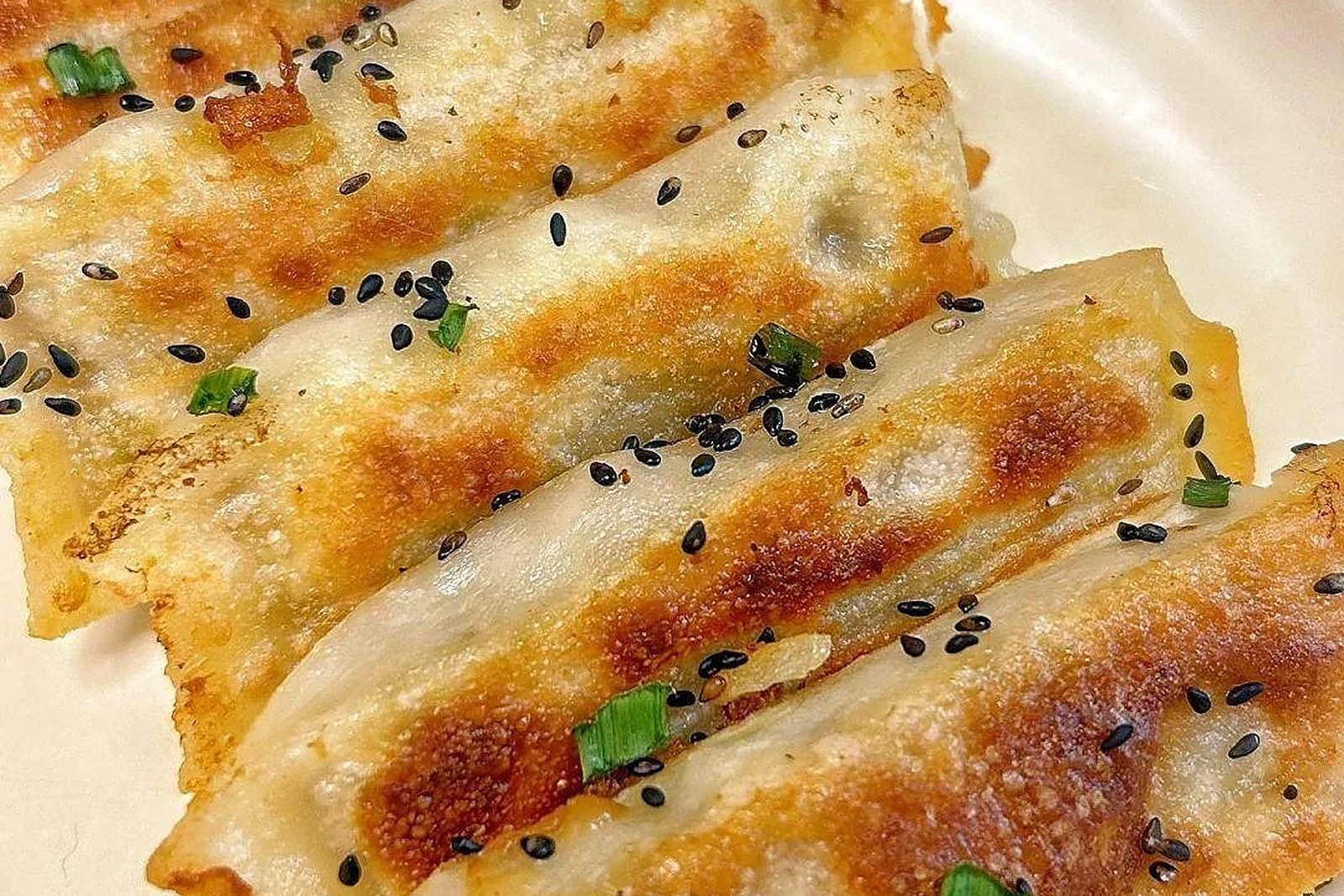
The method is half fry, half steam, all timing. Dumplings are packed into oiled pans, a thin batter-water is poured around them, and the lid goes on – the steam cooks the filling while the base bites into the metal. When the water is gone, oil takes over and the bottoms lacquer brown; the leftover batter-water has meanwhile spun itself into a lace of crisp threads that welds the row together. One confident lift and the whole golden sheet comes up in one piece, to be cracked apart plate-side.
The eating order is fixed by physics. Bite the crisp underside first – it shatters, the broth beneath rushes, and the scallion-pork filling does the rest – while the soft top keeps the fingers honest. Vinegar is the only company the guotie needs; chili oil is permitted but local verdicts treat it as commentary, not correction. The contrast that defines the dish is total: charred below, tender above, molten within.
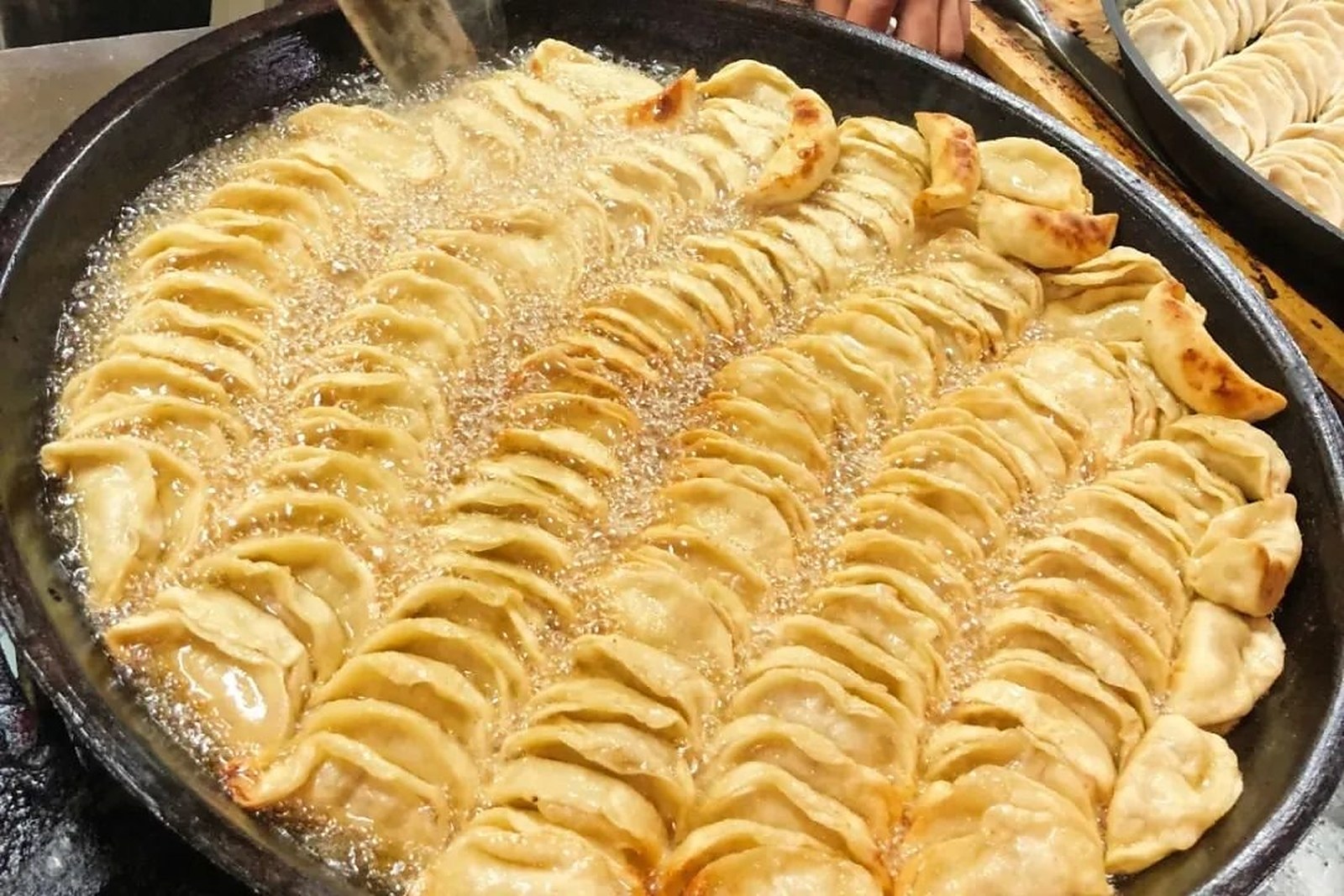
Around the pan there is a whole routine. Morning crowds pair guotie with millet congee or wonton soup and call it breakfast done properly; night markets keep pans running late for the after-shift trade. The stalls that last are the ones that refill the pan constantly – guotie wait for no one, and a batch that sits loses the crackle that justifies the queue.
The same district holds more flavors worth chasing: 军粮城稻米 Jūnliángchéng dàomǐ the granary-town rice, 清炒虾仁 qīngchǎo xiārén the silk-glazed shrimp, 糖炒栗子 tángchào lìzi the sugar-roasted chestnuts, or 银丝卷 yínsījuǎn the thousand-thread rolls – four more doors into the same Dongli District table.
Words and Names
锅贴 guōtiē the pan-fry, bottom-crisped and top-soft; 面糊水 miànhú shuǐ the batter-water that builds the crisp lace; 焦底 jiāodǐ the fried base that defines the batch; 猪肉大葱馅 zhūròu dàcōng xiàn the classic pork-and-scallion filling; 早点 zǎodiǎn the breakfast trade guotie have kept for generations.
What the Locals Know
Order by the 两 liǎng – the half-hundredgram measure – and eat them standing if the pan is hot; sitting down costs the crackle minutes you cannot refund. A proper pan announces itself by sound before smell, oil snapping through the lattice. And if the stall offers congee beside, take it: the bland bowl is not a side, it is the second half of the argument. All checked November 2026.
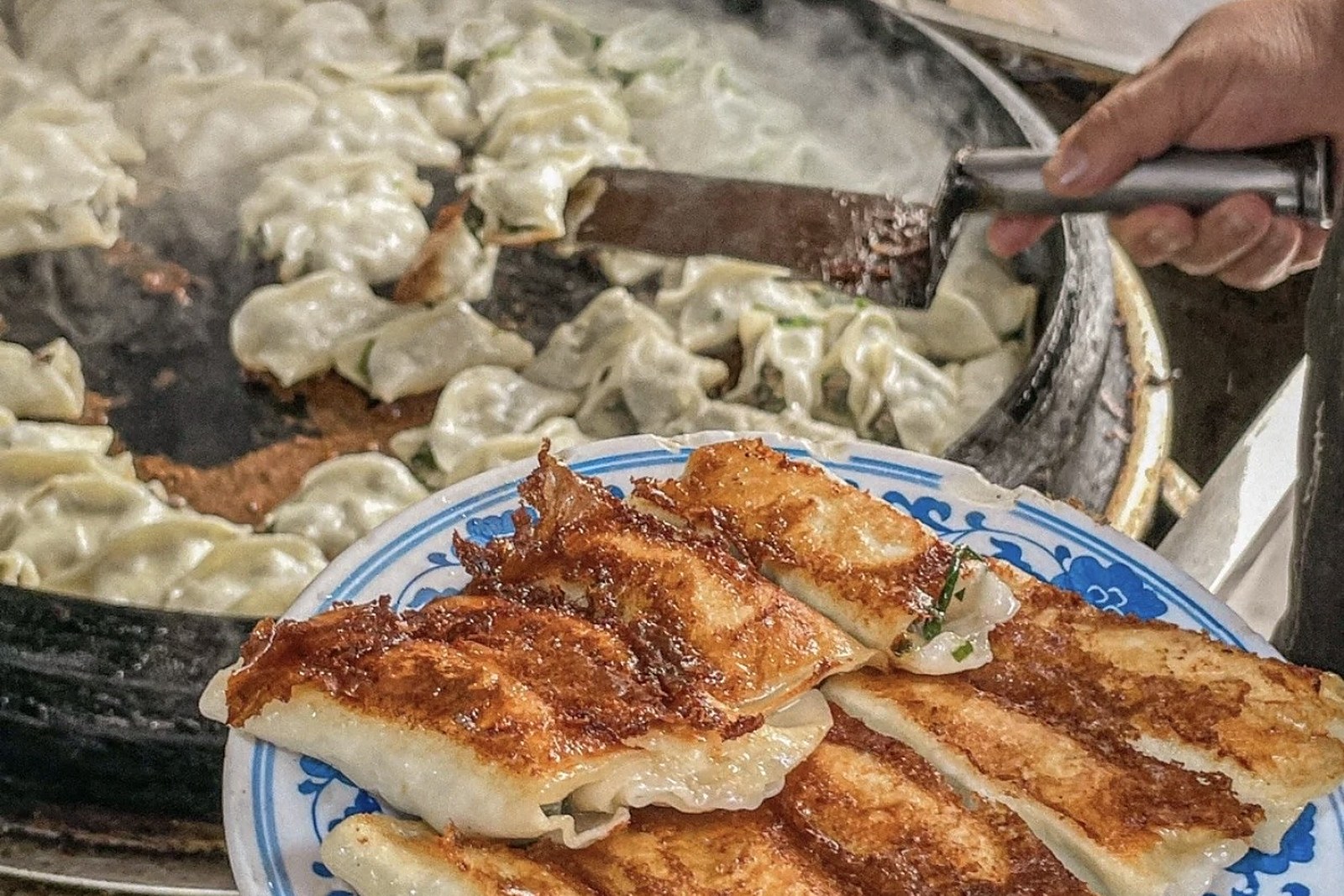
flowcloud would say guotie is the pan speaking in percussion: a crack for the base, a hush for the top, and the whole queue keeping time behind its vinegar.
Where to find it: Breakfast counters and street pans across 天津市东丽区 Tiānjīn Shì Dōnglì Qū Dongli District fry 锅贴 guōtiē fresh all day – morning stalls near the markets, night pans in the dining streets; judge by the lace in the pan. All checked November 2026.