
The moment they set a 椰子饭 yēzi fàn (coconut rice) in front of you, you are not quite sure where to start, because the food arrives in its own container. A whole coconut, the top sliced off, sits steaming on the plate, and when you lift the lid the smell rises up — sweet coconut, warm rice, a whisper of garlic. The rice has been cooked inside the coconut shell, so it has taken on the pale, fragrant oil of the meat.
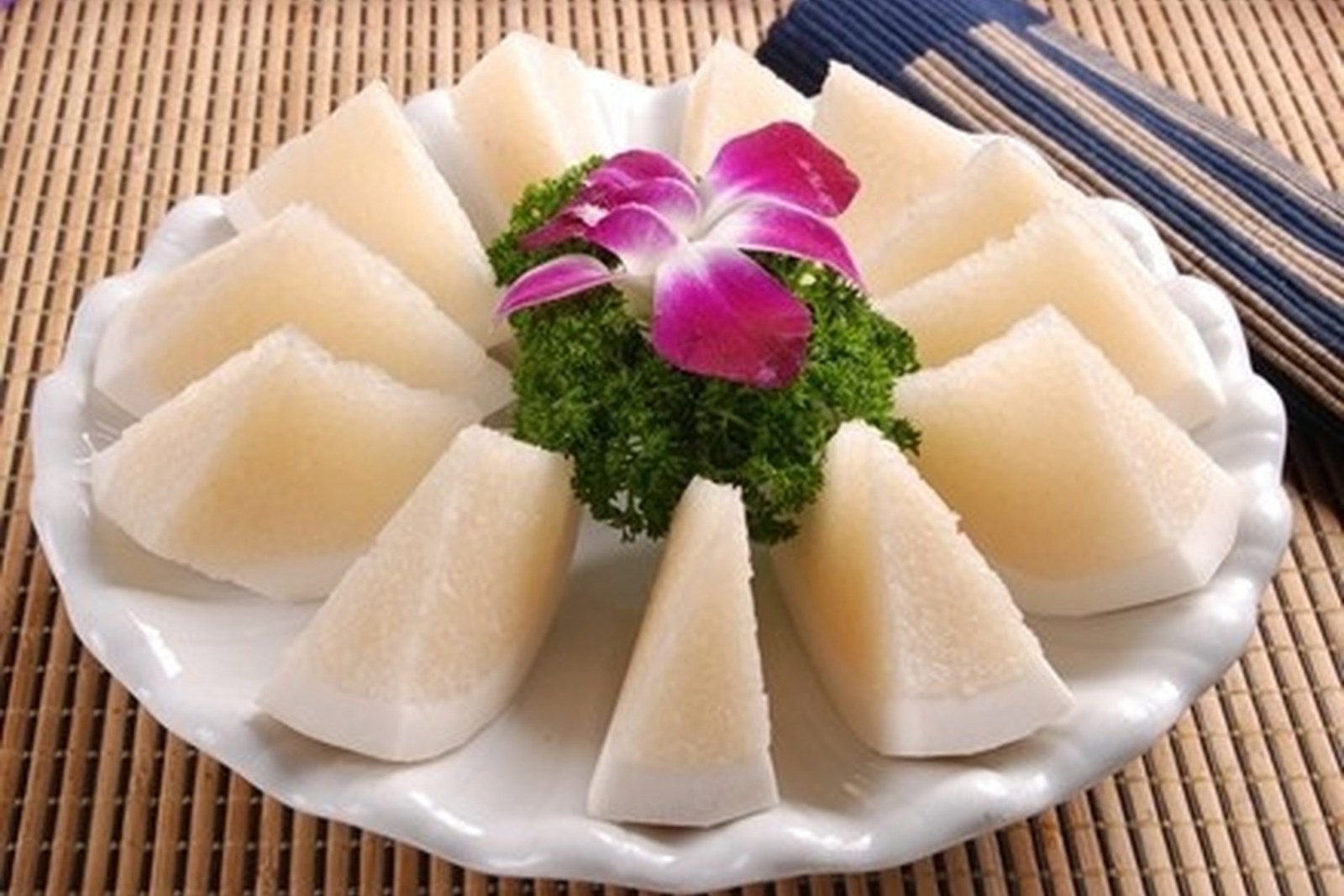
This is one of the great comfort dishes of 海南 Hǎinán, and it could hardly be simpler. There are two versions, and both are wonderful. The sweet one, often the starter, is sticky rice cooked with coconut milk and sugar until it is soft, sweet and faintly nutty. The savoury one — the more substantial meal — uses regular rice, cooked with a little coconut milk and garlic, sometimes with pieces of coconut meat or a touch of dried shrimp, so that every grain carries the gentle taste of the island.
Why coconut is the star
Hainan is the coconut capital of China, and coconuts run through the island’s food in a way that few other places can match. The coconut here is not just a drink or a garnish; it is the very base of the cookery. In coconut rice, the shell is used as a pot, the coconut milk as the broth, and the meat as a dressing — the whole fruit is used, and almost nothing is wasted.
The skill is in the balance. Coconut milk can be heavy, so the best versions are careful: enough to fragrance the rice and make it glossy, never so much that it becomes cloying. In the savoury version, a good hit of garlic and a little salt keep it on the savoury side, so it disappears quickly alongside a bowl of meat or fish.
How it is done
The traditional method cooks the rice inside the coconut itself. The coconut is opened, part of the water kept, and the rice is added along with the coconut milk and seasoning, before the whole thing is steamed or simmered until the grains are tender. By the end, the rice has absorbed the oil from the shell’s inner meat and taken on that unmistakable coconut fragrance.
In the sweet version, sticky or glutinous rice is used, and it is served either warm as a dessert or as part of a meal. In the savoury version, it becomes a proper dish to be eaten with Hainan’s famous chicken, or with a simple bowl of greens.
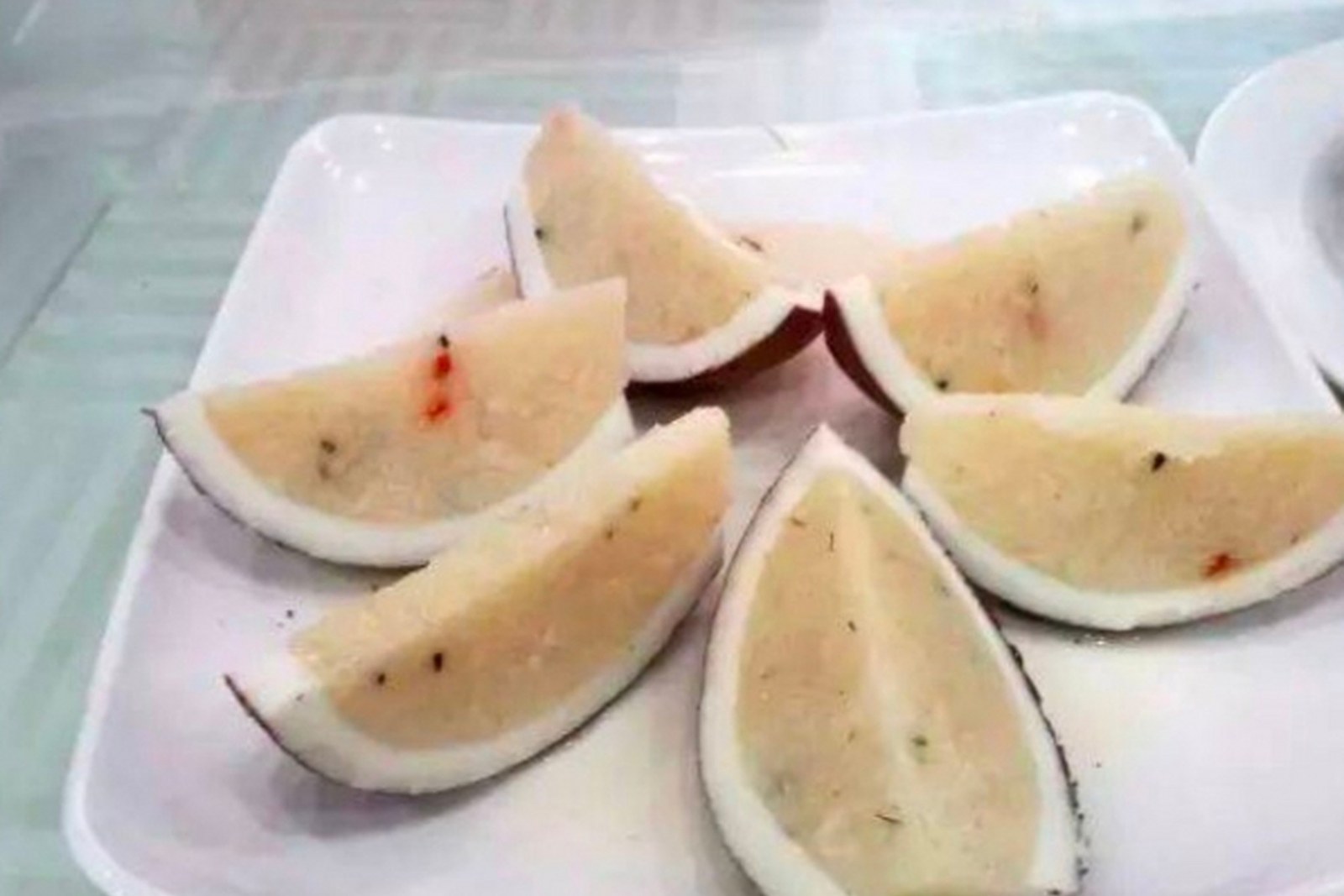
Served this way, the coconut arrives cut into wedges, each one a crescent of shell with the rice still clinging to its pale inner meat. You scrape the rice loose with the edge of a spoon, working your way around the curve, and the last bites are the ones where rice and coconut flesh blur together. It is a little primitive and entirely satisfying — the container was the pot, and now it is the best part of the meal.
Words and Names
椰子 yēzi means coconut and 饭 fàn means rice, so 椰子饭 yēzi fàn is simply “coconut rice.” The islanders are also fond of a related dish, 椰子鸡 yēzi jī (coconut chicken), where chicken is simmered in coconut water — proof again of how central the coconut is to Hainan cooking.
What the Locals Know
Order the savoury coconut rice to eat alongside a plate of 文昌鸡 Wénchāngjī (Wenchang chicken) for the classic Hainan pairing; the sweet version is the one they bring out at the end. The best coconut rice is made with young, freshly opened coconuts — the meat should be barely firm and the milk fragrant. And it is worth saving a little of the shell’s meat to scrape and eat at the end; it is the best bit.
Where to find it: 椰子饭 yēzi fàn is on the menu at most Hainan restaurants, and it is particularly good at family-run places on the island. In 海口 Hǎikǒu or 三亚 Sānyà, a whole coconut rice dish runs about ¥18 to ¥35, and the savoury version is the one to order as a meal. The sweet sticky-rice version often appears as a dessert at banquets. Home cooks will tell you that a fresh coconut is the whole secret — use an old one and the magic goes. Flowcloud would say that coconut rice is Hainan in a shell: the simple, generous cooking of an island that knows exactly what it has and uses all of it well. Crack it open, and taste the island.