
Listen for the crackle. That is the real test of a good 烤乳猪 kǎorǔzhū (roast suckling pig) in Hainan — when the servers carve it, the skin should crack open with a sound like thin, crisp shellac. The first bite is the thing everyone waits for: the skin shatters into a fine, brittle crunch, a whisper of sweet fat beneath, and beneath that, flesh so tender it needs no more than a salting.
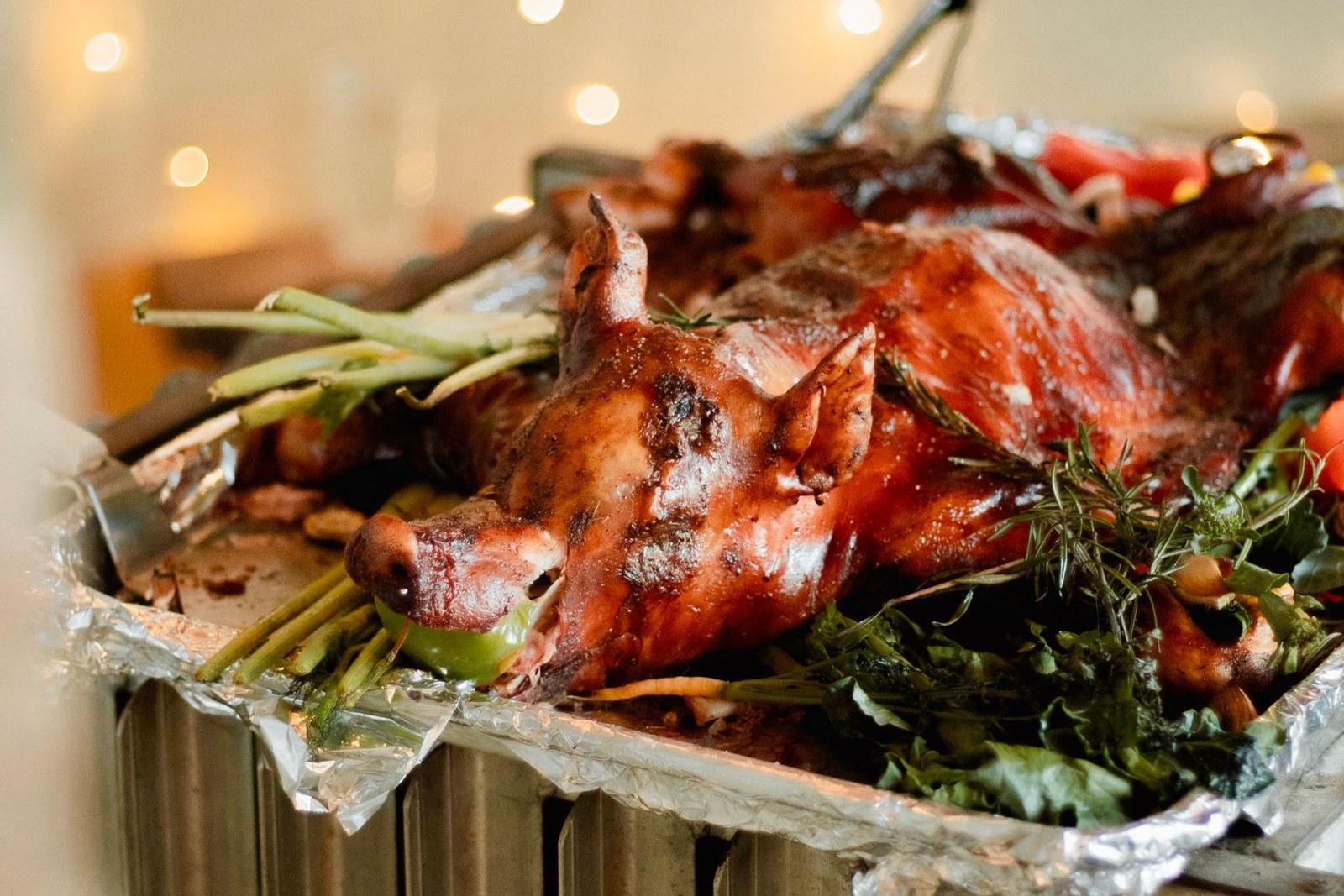
This is a feast dish, the food of celebrations in 海南 Hǎinán. It appears at weddings, new-year banquets, and big family gatherings, and it has a particular stronghold in the west of the island, in the county of 临高 Língāo, whose roast pig is considered the best in the province. Locals will drive miles for a slice of it.
The 临高 style
The 临高 Língāo roast suckling pig is famous for its thin, glassy skin and its clean, sweet flavour. Young pigs — small, tender, and only a few weeks old — are used, and they are seasoned simply, usually with salt and a little garlic and five-spice, inside and out. Nothing heavy; the idea is to let the quality of the meat speak.
The cooking is done in the traditional way, over a spit or in a large oven, with the pig turned and basted so the skin blisters and browns evenly. The result is a pig with that unmistakable contrast: an almost lacquered, crisp exterior over buttery, fragrant flesh. It is eaten carved into thin slices, sometimes with a light dip, more often with nothing at all.
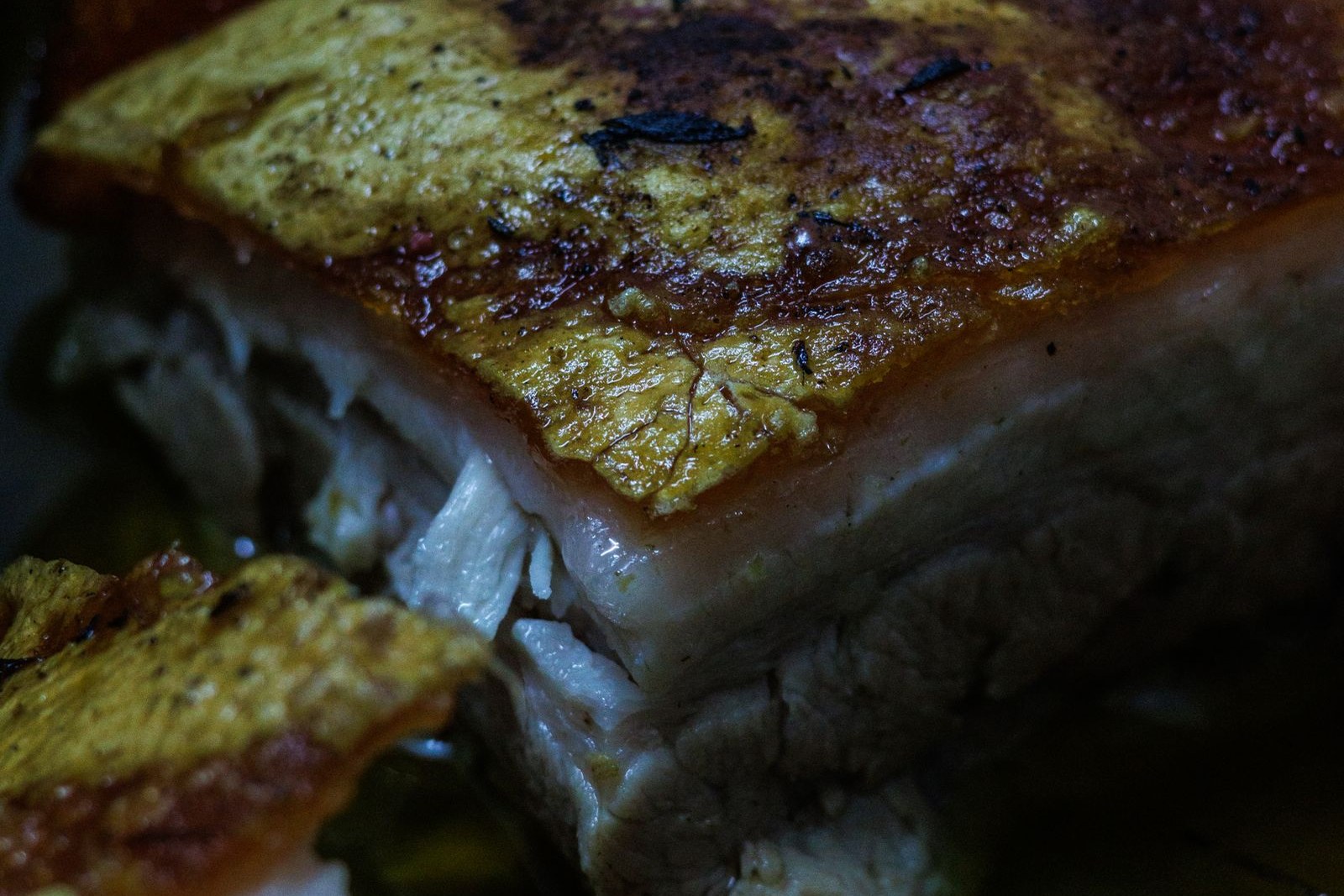
Seen in cross-section, the dish explains itself: a thin band of burnished skin, a finger’s width of soft fat beneath it, and the pale, dense meat below. Chopped into slabs the way many local kitchens serve it, each piece carries all three layers in a single bite.
More than the skin
While the skin is the star, the whole pig is eaten. The shoulder and belly are rich and savoury, the leg meat clean and juicy, and there is usually a pile of it on a platter for everyone to pick at. It is heavy food, so it is almost always served alongside lighter dishes — plain rice, blanched greens, a bowl of soup.
Because a whole pig is a big commitment, roast suckling pig is not a casual weeknight meal. It is a plate that signals celebration, and in Hainan it is often the centrepiece that anchors a whole table of food.
A dish of the island’s west
临高 Língāo lies to the west of 海口 Hǎikǒu, and its roast pig is the source of considerable local pride. The tradition runs deep, and the county’s version of the dish is so well regarded that it is the one people across the island name when they talk about roast pig. The reason, locals say, is the quality of the local pigs and a method handed down over generations.
Words and Names
烤 kǎo means to roast, 乳 rǔ means “young” or “suckling,” and 猪 zhū means pig, so 烤乳猪 kǎorǔzhū is literally “roast suckling pig.” In 临高 Língāo dialect the dish is sometimes referred to by its local name, a reminder of how tied the dish is to this one corner of the island.
What the Locals Know
Ask for the crackling skin and eat it first while it is still crisp — it softens as it cools. If you can get to 临高 Língāo, that is where to try it at its best; in 海口 Hǎikǒu and 三亚 Sānyà, look for a restaurant that roasts whole pigs to order, and ask for it by the portion. Order it with simple greens and rice to balance the richness.
Where to find it: 烤乳猪 kǎorǔzhū is a celebration dish across 海南 Hǎinán, but the definitive version comes from 临高 Língāo, west of 海口 Hǎikǒu. In the capital and in 三亚 Sānyà, a portion of roast suckling pig runs about ¥60 to ¥120 depending on how much you order, and it is worth ordering at a restaurant that roasts whole pigs. It is the dish to save for a feast — the skin is the prize, and it is not worth eating if it is not crisp. Flowcloud would say that Hainan roast pig is the island’s answer to those who think its cooking is only about the sea: it is a bold, celebratory meat dish with a deep local pride behind it. Order the crackling, and save the rest for second helpings.