
Pork the Grandfather Way: Haining Gangrou
陶缸煨出千年味,稻草扎住四方肉 Táo gāng wēi chū qiānnián wèi, dàocǎo zā zhù sìfāng ròu – A clay pot simmers a thousand years of flavor; rice straw ties the four-square pork
缸肉 gāngròu – “pot pork” – is Haining’s answer to the whole braised-pork canon, and its claim to seniority is serious: local food historians trace the dish to the salt-trade towns along the Qiantang centuries before 东坡肉 Dōngpō ròu got its poet’s name, calling it the elder cousin of every red-braised square in Jiangnan. The method is the identity: big squares of belly pork, tied in bundles with rice straw, cooked down dark in clay pots until the sauce jellies and the straw has given the meat its faint grassy perfume.
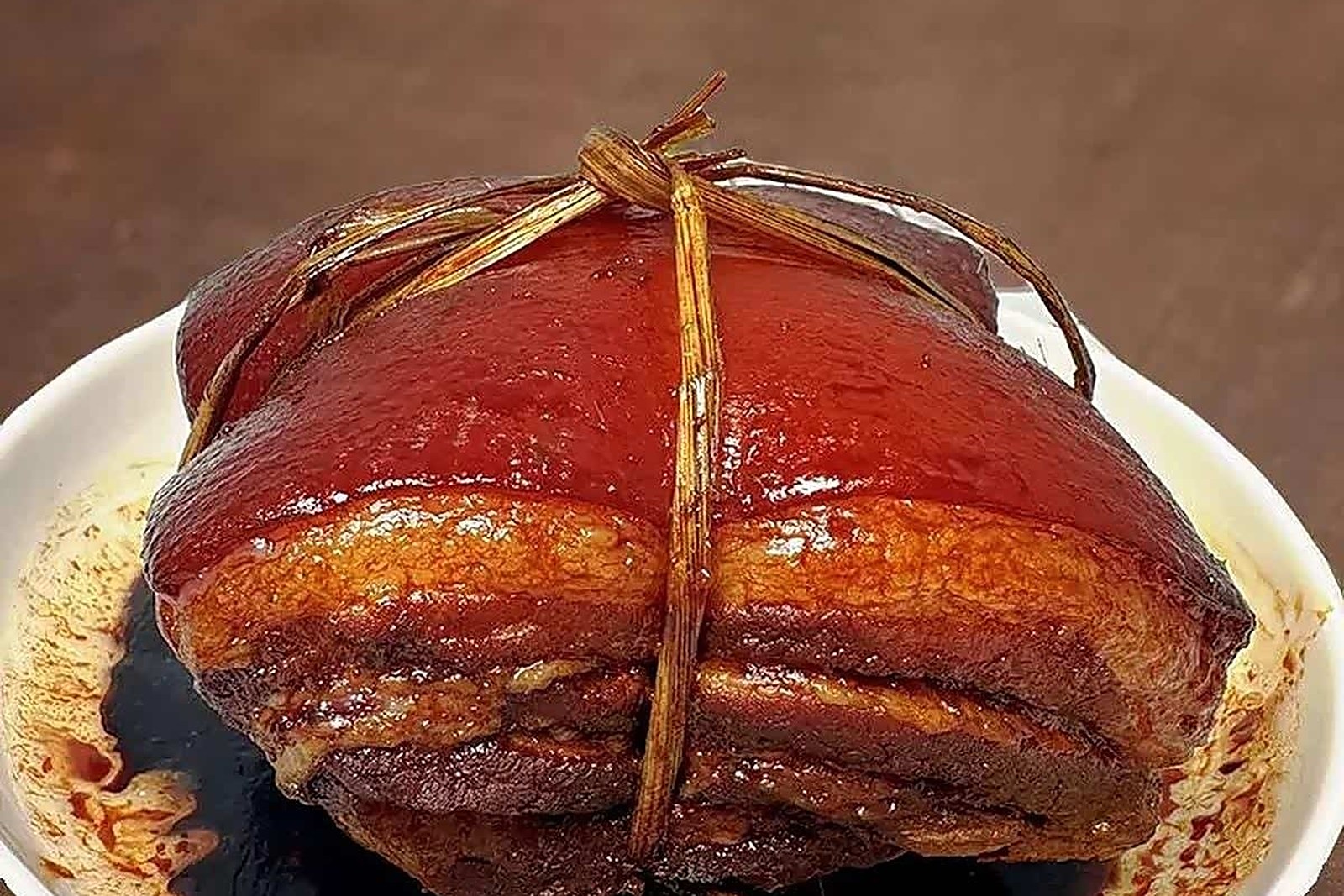
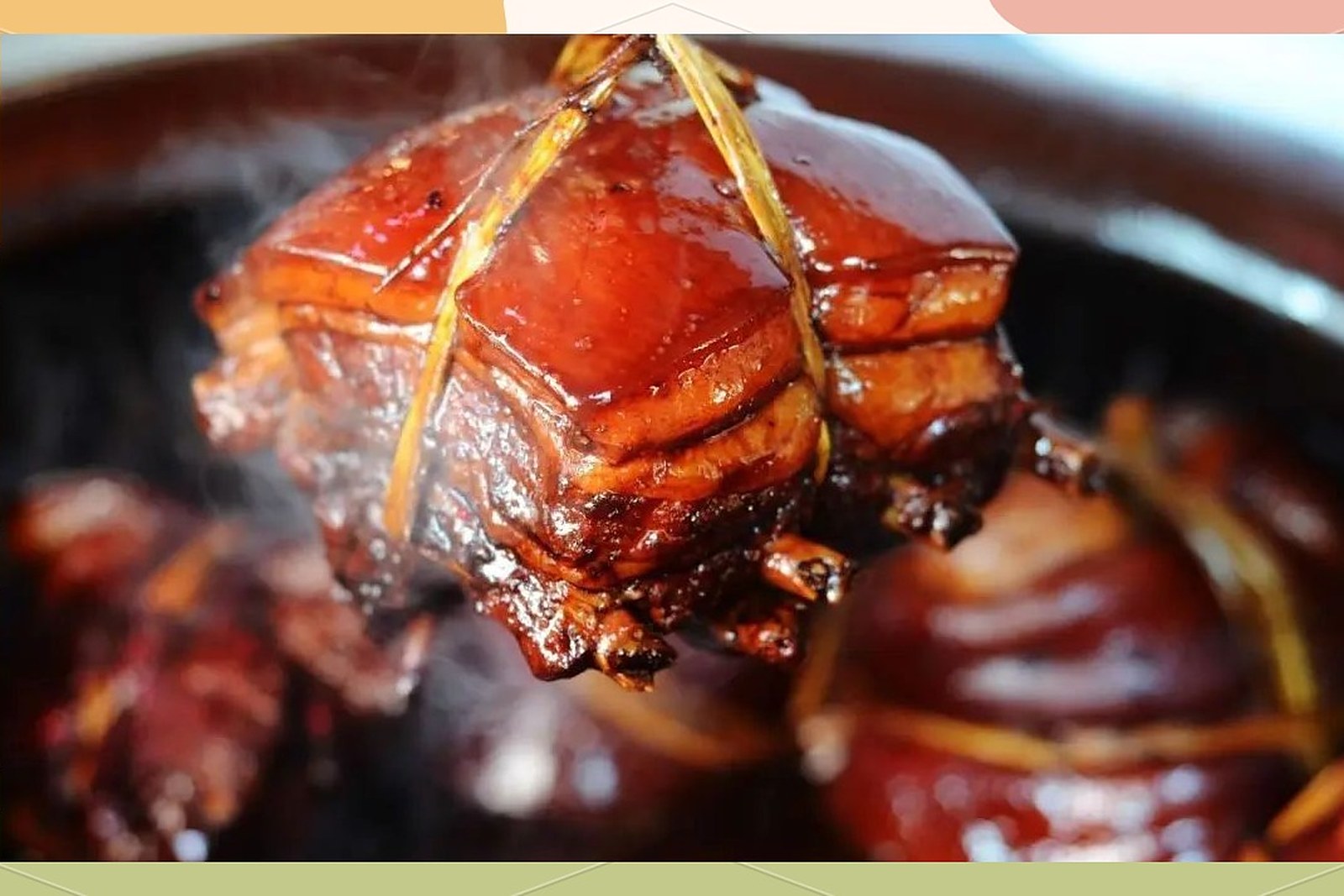
The pot is the stage: rows of clay 缸 gāng line the shopfronts of the old salt towns, lids lifted through the day to lift out amber squares that hold their shape until the chopstick breaks them. The straw bundle is not decoration – it keeps each square intact through the long simmer and burns off into aroma – and the sauce, soy and rock sugar reduced over hours, sets like lacquer on the finished cube.
Eating it is a rice event: one square rides a bowl of steamed white rice, the jelly softening into the grain, the fat layers dissolving between the lean ones until the bowl is a clean plate. Shops sell it by the square wrapped in lotus leaf for the road, and the tide-town counters pair it with pickled vegetables sharp enough to cut through – the balance that keeps a dish this rich edible at every meal.
The dish’s home turf is the old salt-and-tide towns – 盐官 Yánguān above all, where the bore-watching crowds refuel on pork squares between tides, and the family shops guard their sauce inheritance the way the seawall guards the river. Try it once for the history and once more for the flavor; most visitors stop keeping count after that.
The same city holds more flavors worth chasing: 嘉兴粽子 Jiāxīng zòngzi the pillow dumplings, 南湖菱 Nánhú líng the lake caltrop, 八珍糕 bāzhēn gāo the eight-treasure cake, or 平湖糟蛋 Pínhú zāodàn the lees-cured eggs – four more doors into the same 嘉兴市 Jiāxīng Shì Jiaxing City table.
Words and Names
缸肉 gāngròu the clay-pot pork, the salt-trade classic; 稻草 dàocǎo rice straw, the tying bundle; 东坡肉 Dōngpō ròu Dongpo pork, the famous younger cousin; 盐官 Yánguān Yanguan, the tide town that eats it; 酱油 jiàngyóu soy sauce, the lacquer base.
What the Locals Know
Ask for a square from the morning pot – the first simmer of the day has the cleanest jelly. The chopstick test is the local standard: the square should split at a touch yet hold its layers. And eat it hot with plain rice, no toppings: the sauce is the whole argument, and bread-like additions only interrupt it.
flowcloud would say Haining’s pot pork is a tide-town clock in clay: squares stacked at dawn, straw bundles keeping time through the simmer, and a sauce that arrives at lunch exactly as punctual as the river outside – rich, punctual, and impossible to hurry. All checked November 2026.
Where to find it: The pork counters of 盐官 Yánguān Yanguan and 海宁市 Hǎiníng Shì Haining ladle the squares through lunch – sold by the square with rice or wrapped to go, the straw-tied version is the authentic one, and the sauce should set shiny, not greasy. All checked November 2026.