
娘酒 niáng jiǔ is the sweet fermented rice wine of the 东江 Dōng jiāng Hakka, and the name means, roughly, mother’s wine: 娘 niáng is mother, and the wine is the one a household makes for the women of the family, for the month after a birth and for the winter and the festival table. It is made from glutinous rice and a local yeast cake, it comes out a deep amber and quite sweet, and it is drunk warm in a small bowl rather than cold in a glass. In 河源市 Héyuán shì and the Hakka country around it, a clay jar of 娘酒 in the corner of the kitchen is as ordinary as a bottle of soy sauce.
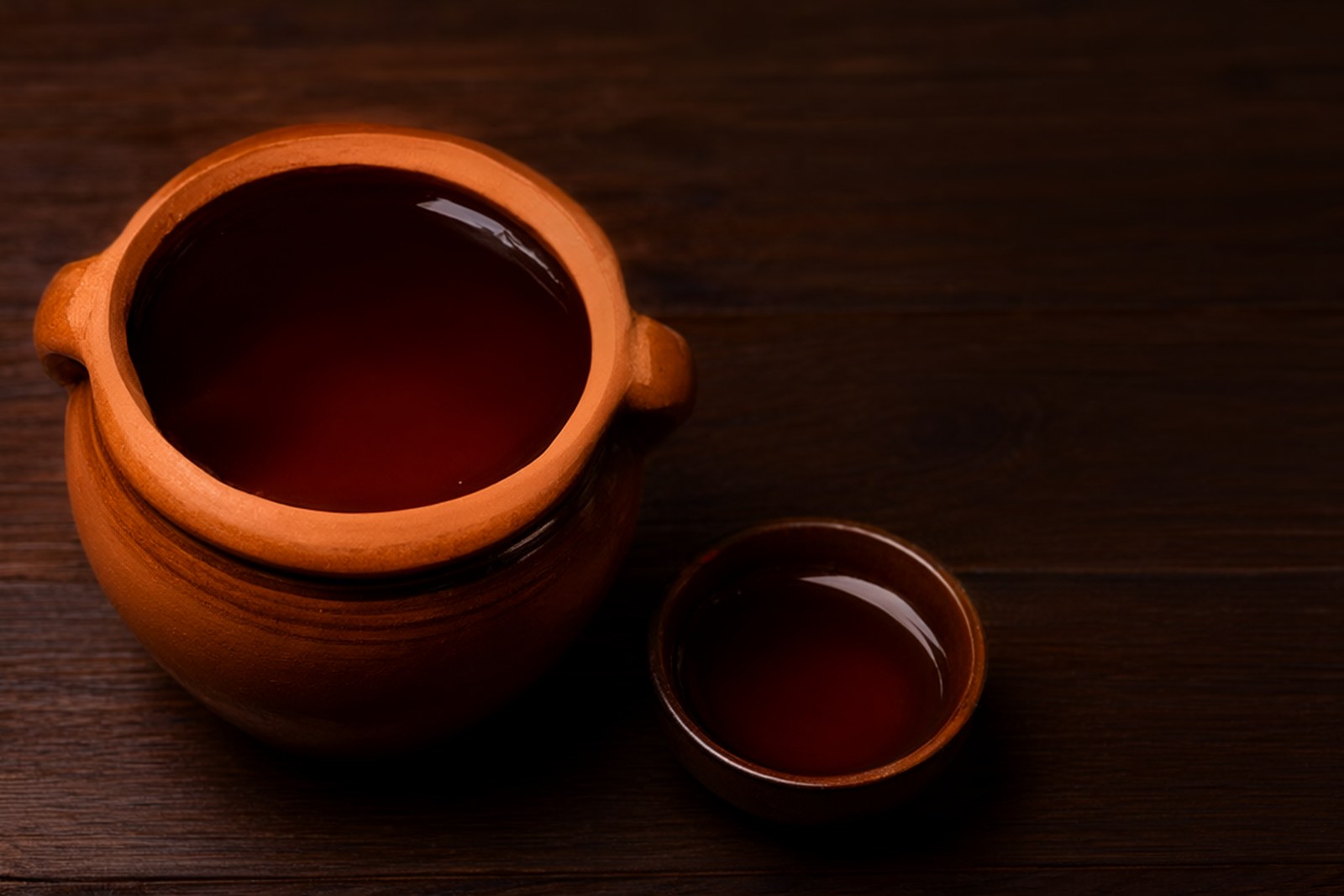
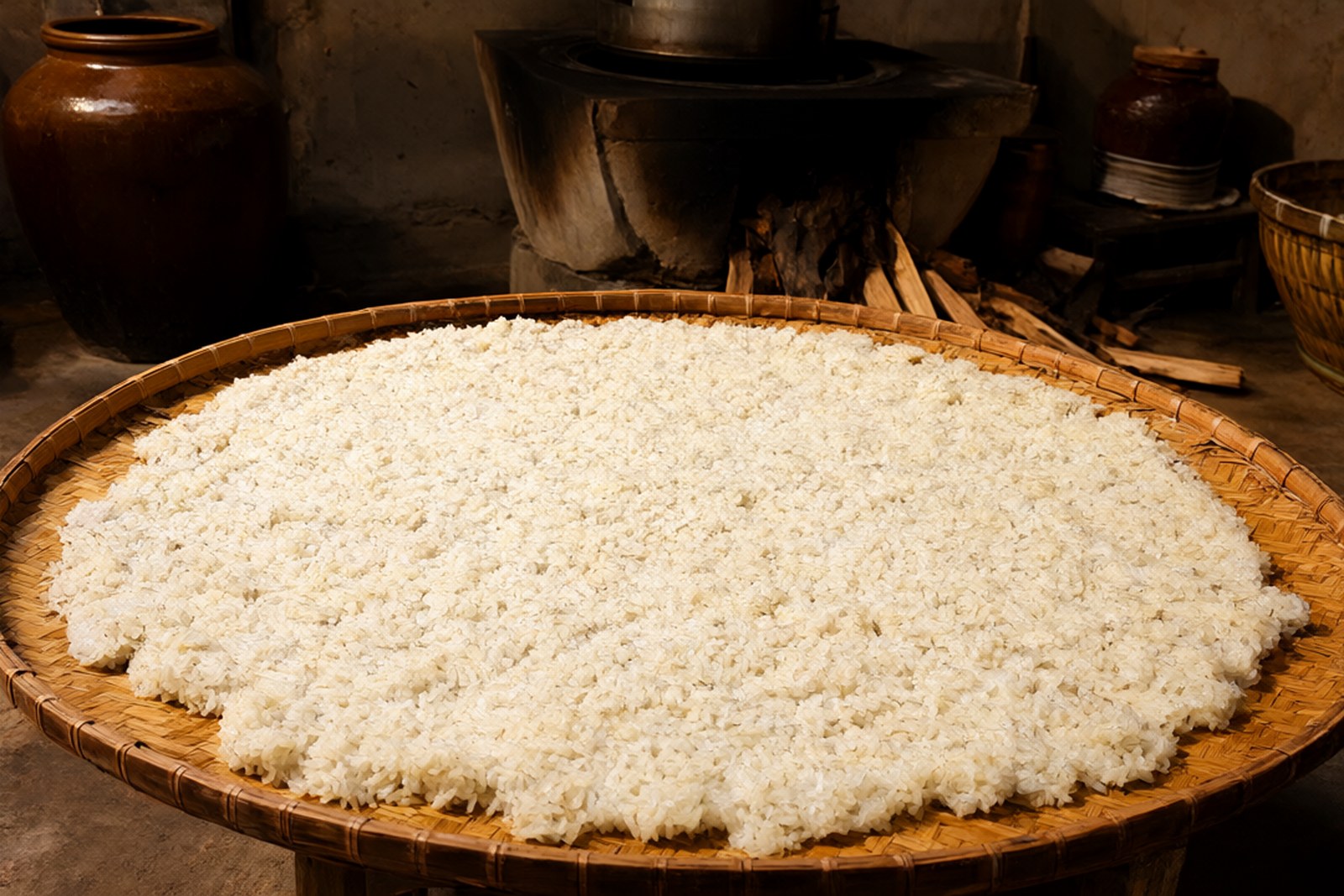
The method is the old one and it is done at home. Glutinous rice is steamed, spread on a bamboo tray and cooled to blood heat, then mixed with 酒饼 jiǔ bǐng, a leavening cake of rice flour and herbs carrying the mould and the yeast, and packed into a jar with a little water. The jar is covered and left somewhere warm; the mould breaks the starch down into sugar and the yeast turns some of that into alcohol, and after a week to a month the jar holds rice wine with the soured mash still in it. The wine is then drawn off, and the solids are kept to cook with or to make a second, weaker brew. A good 娘酒 is sweet, faintly sour at the edge, and roughly the strength of a strong rice wine, though nobody drinks it by the glass.
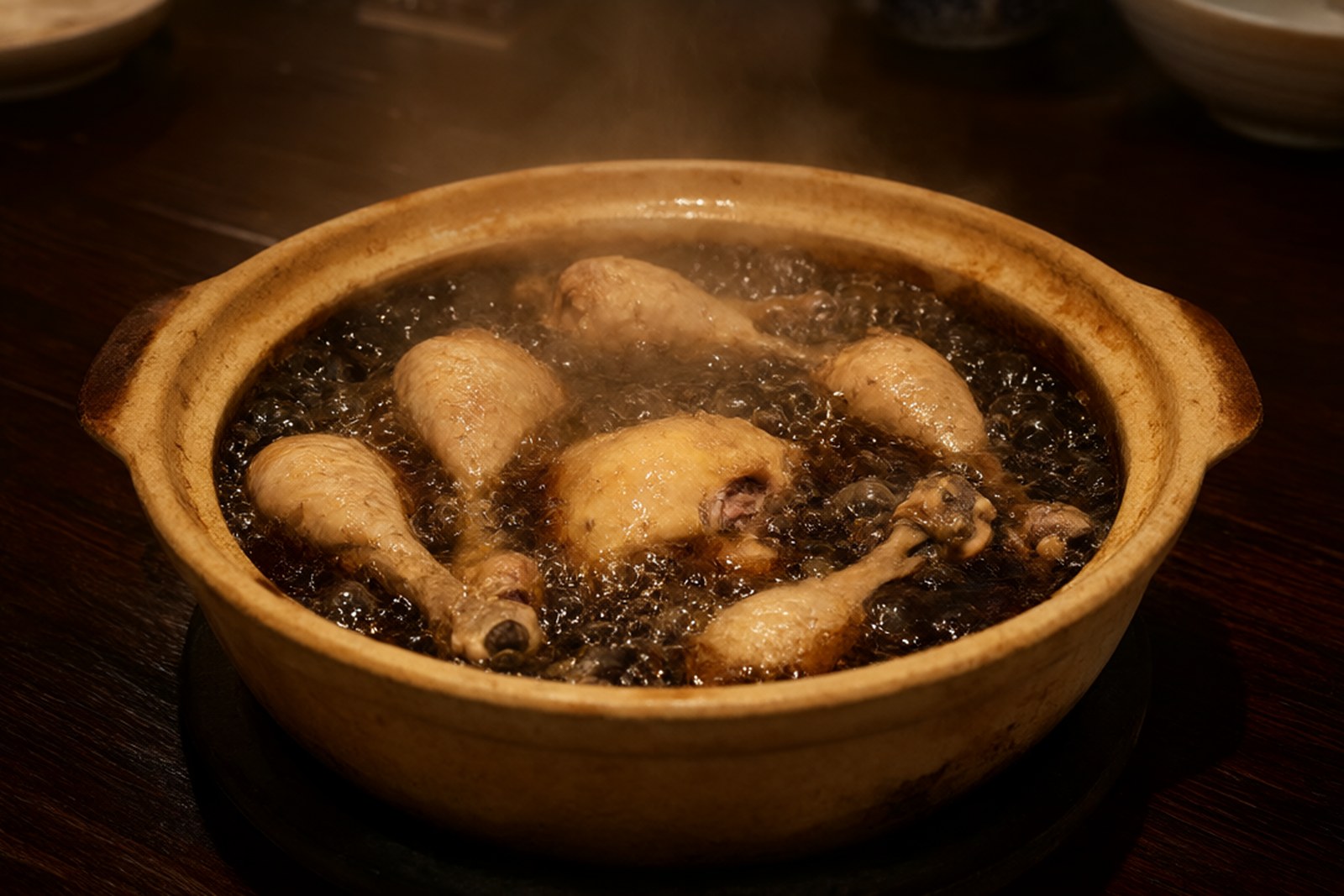
The dish the wine exists for is 娘酒鸡 niáng jiǔ jī, chicken in rice wine. A free-range bird is jointed and fried hard with a great deal of ginger, the wine is poured in, and the pot is simmered until the meat is tender and the alcohol has gone, leaving the sweetness and the ginger heat behind. It is the food given to a woman in the month after childbirth, the food eaten at the winter solstice and Chinese New Year, and the food served to anyone who is cold, tired or recovering, which in practice means everybody at some point in the year. Some kitchens add 木耳 mù ěr, wood ear, or a handful of 红枣 hóng zǎo, red dates, and a few finish it with a beaten egg stirred through at the end.
The wine is also drunk on its own, warmed in a small bowl, at the winter table and at a wedding, and it is used as a cooking liquid for pork knuckle, for eggs and for a sweet soup with 汤圆 tāng yuán, glutinous rice balls. Because each household makes it to its own taste and strength, there is no standard bottle; the wine sold in shops is the pasteurised version that keeps, and it is good, but the jar made by somebody’s grandmother is what the cooking is actually written about. If you are in 河源 in the winter, ask a Hakka restaurant for 娘酒鸡; it will be on the menu and it will be better than the version you can buy and carry home.
Words and Names
娘酒 niáng jiǔ is the rice wine, 娘 niáng mother, 酒 jiǔ wine, so mother’s wine. 糯米 nuò mǐ is glutinous rice, 酒饼 jiǔ bǐng the yeast cake that ferments it, and 娘酒鸡 niáng jiǔ jī the chicken cooked in it. 姜 jiāng is ginger, 木耳 mù ěr wood ear, 红枣 hóng zǎo red dates and 汤圆 tāng yuán glutinous rice balls. 客家 Kèjiā is the Hakka, 东江 Dōng jiāng the East River of 河源市 Héyuán shì.
What the Locals Know
Ask for the wine warm, in a small bowl, and sip it rather than drinking it like a spirit; it is sweet and it is stronger than it tastes. If you are offered the soured mash as well, take it, because it is the part the family eats and it is not sold. Order 娘酒鸡 in the winter or after a cold wet day, when a Hakka kitchen makes it best, and ask them to leave the ginger in, because the ginger is the point of the dish as much as the wine. And if someone gives you a jar to take home, keep it cool and drink it within a few months, because it is a live wine and it carries on changing.
flowcloud would say that a people who moved south without land, money or standing turned glutinous rice into a sweet wine they call mother’s, and then built a chicken dish around it for births, weddings and the coldest nights, has kept a recipe the way other people keep a family name, which is to say by using it.
Where to find it: the Hakka restaurants of 河源市, where 娘酒鸡 is a winter regular, and the winemakers and market stalls of the city and the 东江 counties, which sell 娘酒 by the jar. A pot of 娘酒鸡 is ¥60 to ¥130, a small bowl of the wine ¥10 to ¥25, and a jar to take away ¥30 to ¥80. 河源市 is on the 赣深 high-speed line through the 东江 valley, and the wine is best sought in the cool months from November to March.