
Hami Red Dates: The Geographical-Indication Jujube of the Gansu Corridor, the Thin-Skinned Honey Flesh and the Winter Pantry of the Oasis in Hami, Xinjiang
皮薄肉厚甜如蜜,一颗枣香过大年。Pí báo ròu hòu tián rú mì, yī kē zǎo xiāng guò dà nián – Skin thin, flesh thick, sweet as honey; one date’s fragrance outdoes the New Year.
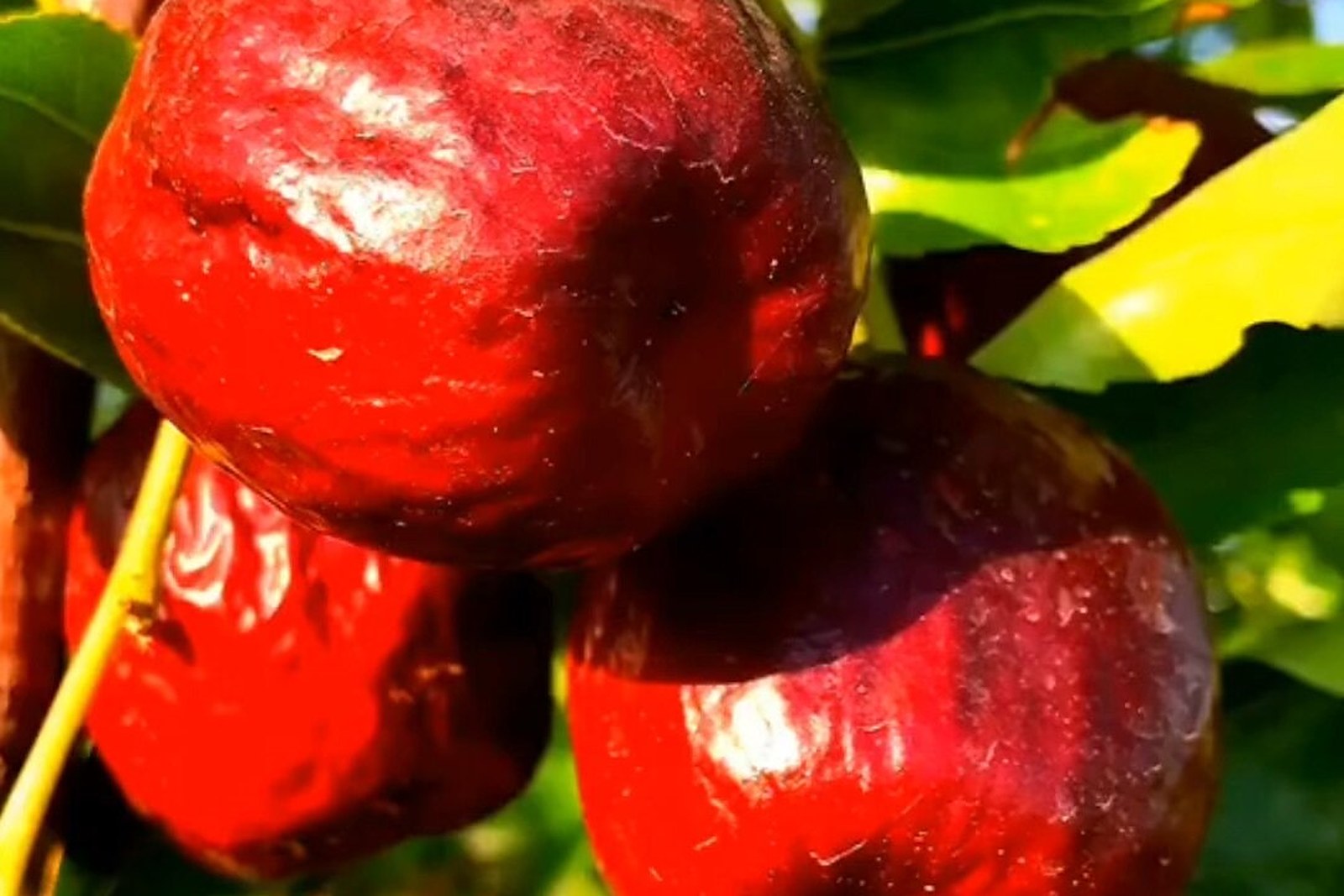
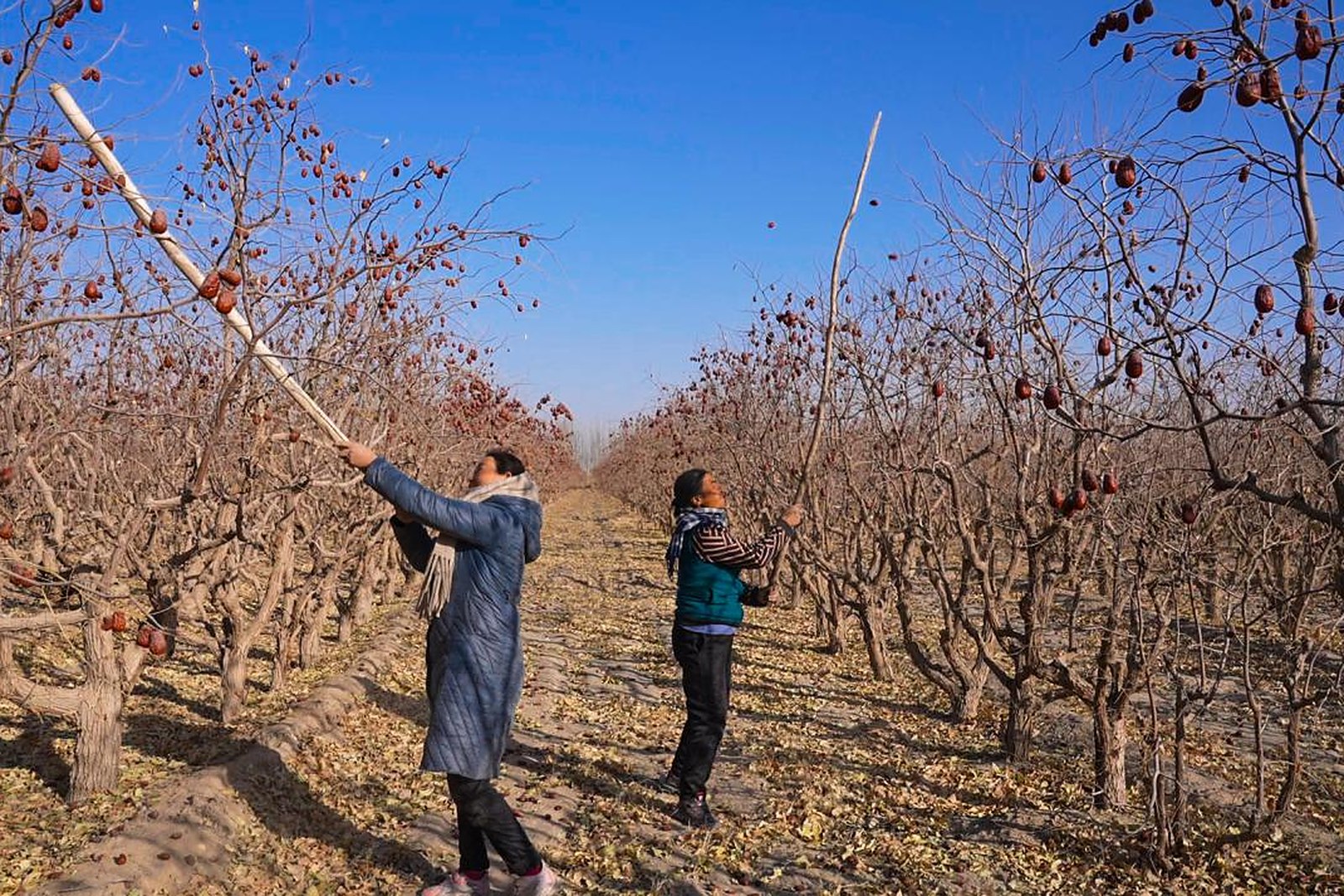
哈密大枣 Hāmì dàzǎo the Hami red date is the oasis’s orchard answer to its melon fame – a geographical-indication jujube grown in the sun-blasted river-fan soils around the city, where the brutal daylight and the cold nights stack sugar into fruit the size of a thumb joint, dark-skinned and dense-fleshed (worth confirming the details for the harvest window, since the picking runs into the late autumn and the best fruit is dry-finished on the tree). The 五堡 Wǔbǎo Wubao groves carry the name’s oldest reputation, and the trade splits three ways: fresh-ish autumn fruit sold by the crate, dried dates by the kilo in every market bin, and gift boxes of the biggest grades that leave the prefecture by the truckload ahead of the New Year. Simmered into porridges, stuffed into steamed buns or simply eaten as the day’s sweet, the date is the pantry constant of Hami households. The register is pantry wealth: bins, scoops, and a sweetness that survives the winter.
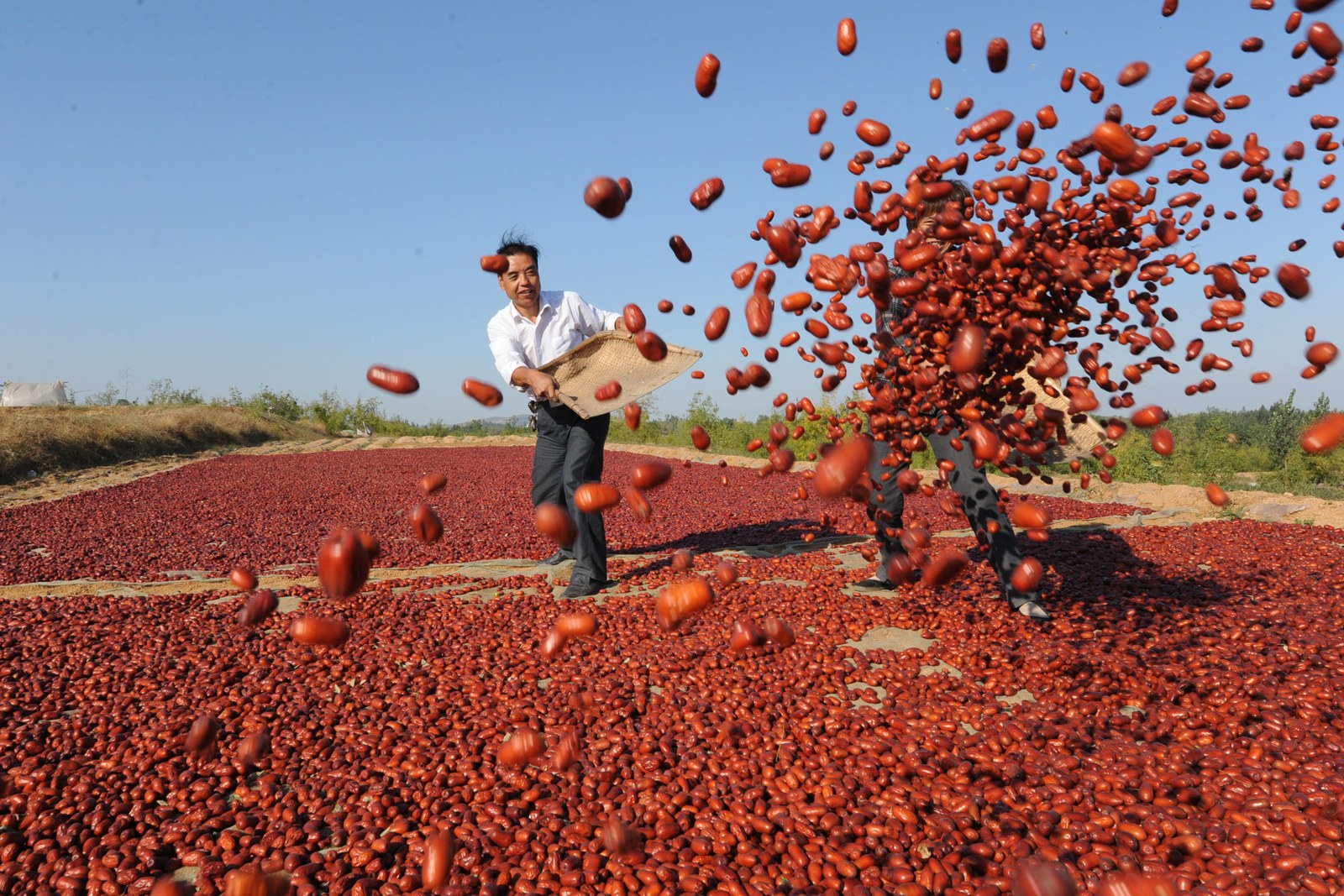
Call it honestly: crate money on a harvest clock. Getting there is one door: the market rows of the city centre pour the season’s dates into open bins, and the 五堡 Wǔbǎo Wubao orchard roads sell at the grove gate (worth confirming the details for the orchard-gate hours, which follow the picking), while the night market stalls bag the dried grades for travellers. A kilo of dried dates at the bin prices at pantry-within-reason money, gift-box grades at present-within-reason money, orchard-side crates at bulk money – though exact figures are worth confirming the details on rather than quoting, the bins repricing with each harvest. The crowds run to the calendar: the post-harvest weeks stack the stalls, the winter months hand the markets to the regulars, and a mid-morning hour, when the new crop has just come into the bins, is the buyer’s own.
The honest star is the flesh itself – dense without being woody, sweet without added sugar, and a skin so thin that the bite reads like a confection rather than a fruit. What gets oversold is the “all jujubes alike” framing: guides sell a category where origin is everything, because the same species grown in wetter provinces turns bloaty where the Hami fruit turns dense. What repays is the desert in the sweetness – irrigation from the snowmelt, drying on the tree, and the cold nights that lock the sugar (worth confirming the details for which groves sell tree-dried fruit at the gate).
The town’s deepest habit is the simmering pot itself: dates in the morning porridge, dates in the steamer with the buns, dates handed to guests with tea – a fruit so institutional that refusing the second date is the harder negotiation.
The rest of this Hami list keeps other tables: the salt-and-lamb honesty of 手抓羊肉 shǒuzhuā yángròu the hand-grabbed mutton fills the noon, the breakfast steam of 羊杂汤 yángzà tāng the offal soup opens the day, the fiery sauce of 新疆炒米粉 Xīnjiāng chǎomǐfěn the stir-fried rice noodles owns the student hours and the layered pull of 油塔子 yóutǎzi the oil tower anchors the teapot – four more doors into the same 哈密市 Hāmì Shì Hami City.
Words and Names
What the Locals Know
flowcloud would say that the 哈密大枣 Hāmì dàzǎo is the oasis’s second sweetness and the winter pantry’s quiet capital – a desert-dried fruit that answers the melon season with its own patience – and that the honest move is to buy from the open bins and taste before the scale does, watch whether the skin folds clean, and let the teapot cast the vote, because the sun grew the sugar and the cold kept it. All checked November 2026.
Where to find it: 哈密市 Hāmì Shì Hami City, Xinjiang – the market rows of the city centre and the orchard gates of the Wubao fan, where the 大枣 dàzǎo red date keeps the bin-and-scoop register through the winter and the grove gates and market stalls do the pouring, reached on foot from the central streets or by road out to the orchard fan (worth confirming the details for which stalls sell tree-dried fruit and which trade boxed grades only, bin stock turning over as the harvest does), where the trade keeps the harvest clock – post-harvest weeks the stacked stalls, winter months the regulars’ loop, mid-morning the buyer’s own; pantry to present-within-reason money by the kilo, so call it worth confirming the details rather than a fixed number, and let the teapot cast the vote. Hami red dates are the oasis’s winter sweetness, eaten one thin-skinned, honey-dense piece at a time – the taste of 哈密市 Hāmì Shì Hami City eaten one bin-scooped, tea-accompanied date at a time. All checked November 2026.