
Hand-Grabbed Lamb: The Confidence of Clear-Water Mutton – Good Sheep Need Only a Handful of Salt
清水一锅见本真 Qīngshuǐ yī guō jiàn běnzhēn – One clear pot shows the true taste
Bortala is a Mongol autonomous prefecture, and the first hard dish a herding household sets before guests is hand-grabbed lamb. The recipe sounds almost negligent: bone-in mutton into clear water, salt only, at most a few stalks of wild onion, lifted out at seven-or-eight done – diners hold a knife, cutting and eating as they go, hence the name. Such simplicity is only possible on the strength of the sheep itself: free-range stock on unpolluted pasture drinking spring snowmelt, gaminess barely a whisper, the meat carrying its own clean sweetness.
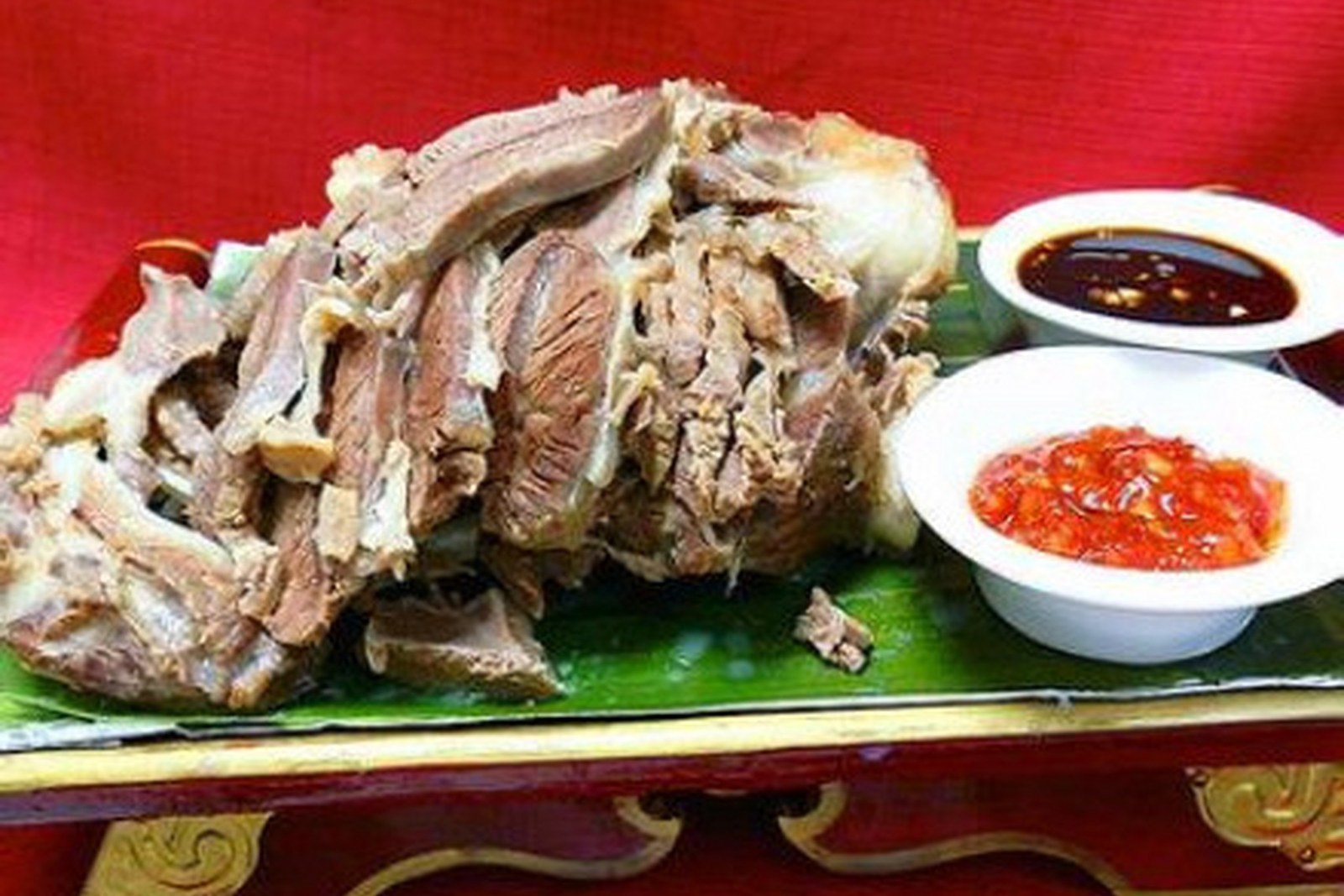
Ordering runs in three formats: loose cuts by the jin, a leg-pot for four to six, and the whole-sheep banquet for ten-plus. First-timers should start with the leg-pot – fat and lean, sinew and marrow in one sitting, prices transparent, no room to be fleeced. The whole-sheep banquet needs a day’s notice and comes with full ceremony: the host sings toasting songs in Mongolian, hada silks and silver bowls in rotation – built for celebrations and team dinners. Loose ordering is the flexible route: a pot of milk tea and a dairy platter beside it, three people assembling a proper steppe table at a bit over a hundred yuan a head.
The 「hand-grab」 in the name refers to bone-in pieces sized to one grip. The cut you choose decides the texture: rib meat, layered, rewards slow attention; shank, full of sinew, bounces at the bite; shoulder blade with its crisp cartilage chews best of all; tail fat is the old herders’ darling. When the pot lands, the knowing reach with intent.
The dish carries a full ritual: meat arrives, the first slices go to the elders; the eldest cuts one piece and tosses it skyward for heaven and earth before the shared eating begins. Knife work is the required course – follow the bone seams, one stroke one slice, thin but never shattered. First-timers fumble; the local host demonstrates warmly, and within a few pieces the knife obeys.
Steppe etiquette continues at the eating: the host presents tail or shoulder blade to the honored guest, the knife rides the seams, and the piece enters with its crisp bone attached – cooked outside, tender within, juices loosening a faint salt on the palate. Dipping sauce tops out at chili paste or chive blossom; purists use salt alone – with meat this good, seasoning is redundant.
Beyond the lamb, the same 博尔塔拉蒙古自治州 Bó’ěrtǎlā Měnggǔ Zìzhìzhōu Bortala Mongol Autonomous Prefecture holds other flavors: 赛里木湖冷水鱼 Sàilǐmù Hú lěngshuǐyú Sayram coldwater fish, 精河枸杞 Jīnghé gǒuqǐ Jinghe goji berries, 蒙古奶茶 Měnggǔ nǎichá Mongol milk tea, and 风干羊肉 fēnggān yángròu wind-dried mutton – four more doors into the same 博尔塔拉蒙古自治州 Bó’ěrtǎlā Měnggǔ Zìzhìzhōu Bortala Mongol Autonomous Prefecture. With the meat finished, our Bortala travel map fills the day.
Timing matters too: the cooked meat rests in the pot a quarter hour before serving, fibers drinking back juice, a faint broth welling at the first cut. Hurried shops serve straight from the boil – flesh pale, juices gone, one bite tells. Regulars ask on entering, 「Has the meat rested?」 – and the owner instantly re-ranks you.
The pot itself deserves mention: herding country uses thick-walled cast iron, heat stored deep and released steady, the meat cooking evenly through. City kitchens rush with pressure cookers – twenty minutes to the table, minus the slow-matured softness. Gourmets read the stove first: an open-fire iron pot rarely disappoints.
Choosing the sheep has its own lore: the herding consensus crowns the two-year-old wether – tenderest, fat and lean even; in seasons, late summer into early autumn wins, a full summer of green grass on the frame. Bortala’s flocks run to local Kazakh and Mongol breeds, cold-hardy, unfussy feeders, flesh firm and clean. At the market, read bone and blood – marrow full, flesh pink, fat snow-white – and you have a good sheep.
The pot’s leftover broth feeds the table’s second act: drop in dough flakes or potato, salt and cilantro, and a herding-country lunch completes itself – wide broth, slippery noodles, sweat on the brow in winter before it counts. In a warmed yurt, hand-grabbed lamb beside scalding milk tea heats you from stomach to fingertips; in a summer steppe tent, the wind crosses the bowl and meat smell braids with grass smell.
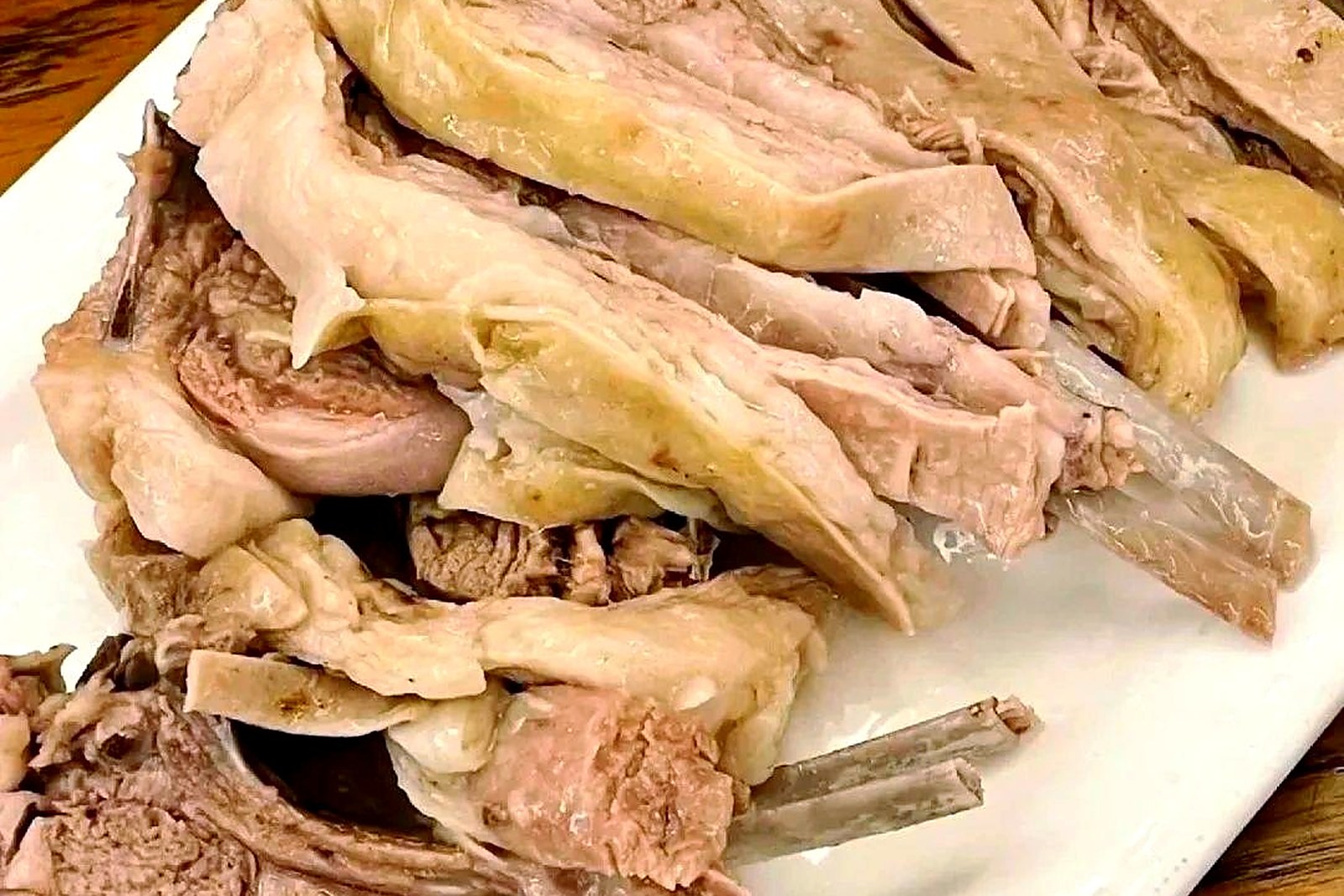
After the meal, one more activity is worth joining: learning the cut. Blade against the bone seam, a trick of the wrist, and a whole slice comes away. Master it and your steppe table talk gains a paragraph – the meat eaten, the skill carried home; that is the complete herding-country dinner.
The best partner is naan or steamed rolls straight from the fire: tear, dip in broth, and wheat smell drinks meat smell, staple and main course merging. Small appetites finish a pot with two naan; large ones add a basin of broth noodles with salt and cilantro – this meal’s standard full stop.
The water matters: old herders insist on cold-water starts, skimming after the boil, then a low flame that keeps the meat just under simmering – outside never dry, inside still juicing. Hard boiling is the cardinal sin, shrinking the meat to kindling. One test judges the pot: torn open, the juices should wet the knife blade.
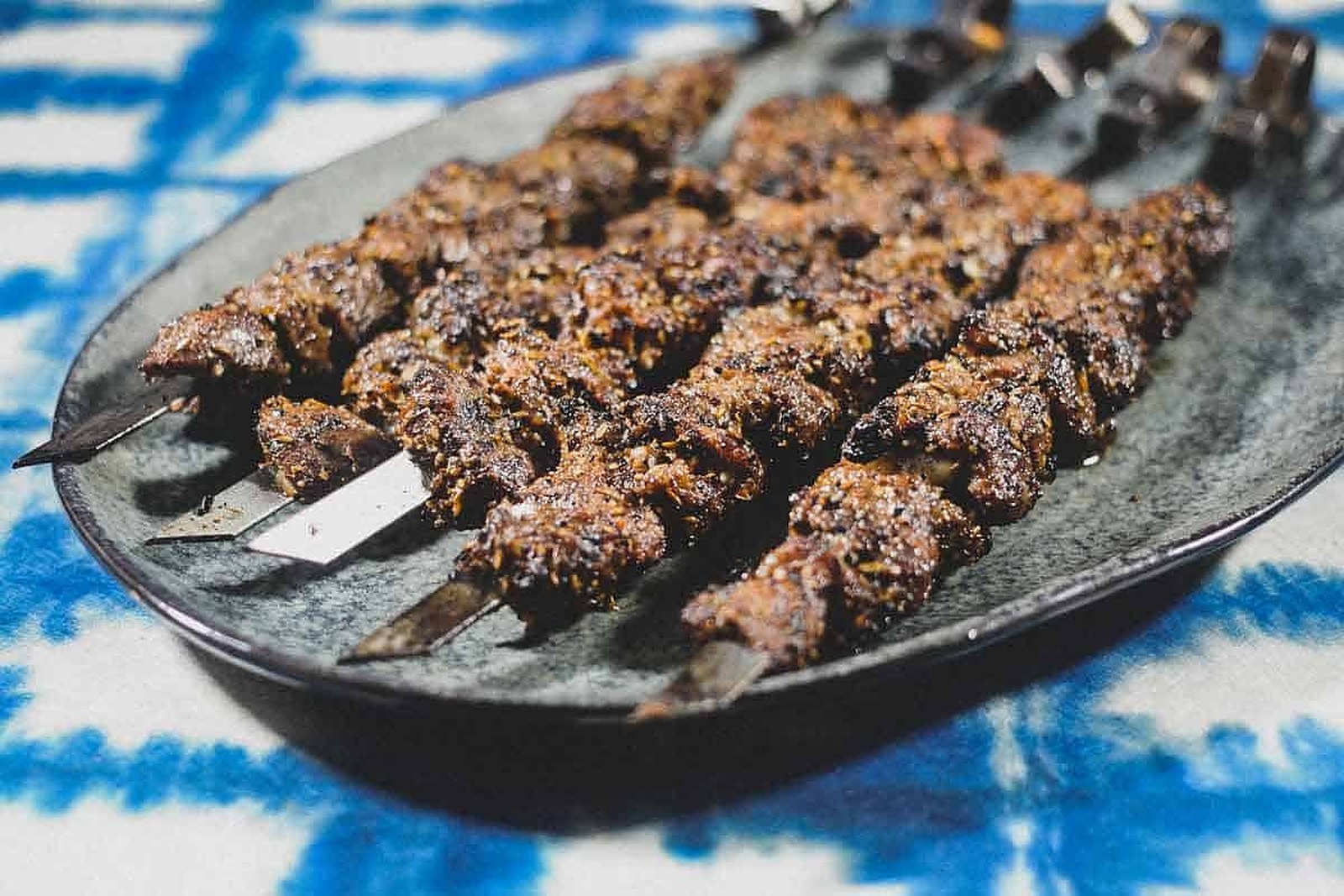
The supporting cast completes the system: pickled chive blossom is the soul companion, salty-fresh and faintly hot against the meat’s clean sweetness; raw garlic cuts fat, milk tea eases the throat, and the plain broth closes. The region also grills ribs over charcoal – crisp outside, juicy within, mirror image of the clear-water version: one sheep, two temperaments.
The venue is part of the experience: downtown Mongol restaurants deck like yurts, long tables and the welcome-cup ritual; herding yurts are the original edition – carpeted floors, milk tea unending, the family’s child peeking in with a lamb in his arms. Fed and watered, guests receive a bowl of yogurt to settle – steppe hospitality running from door to farewell.
Bortala’s version differs subtly from Inner Mongolia’s: Kazakh influence adds wild onion to the pot and chili-flake powder to the dip, a more layered profile. Some diners benchmark both regions – Inner Mongolia for depth, Bortala for clarity; the verdict is personal, and each belly answers for itself.
The meat’s pedigree carries official backing: local flocks hold organic certification and geographical-indication protection, with full traceability from pasture to table – scan the ear tag and the sheep’s growth file opens. Kitchen rules stay simple: today’s meat sells today; leftovers freeze for soup pots, never re-plated as fresh. Regulars judge a shop by its four-o’clock meat rack: half a fresh carcass still hanging means a queue tonight; only frozen means come tomorrow. Some old houses even fuss over firewood – fruitwood and red willow burn steady and fragrant, adding a ghost of sweetness to the broth. Read stove, then rack, then broth color: three checks passed, the meal is safe.
Words and Names
What the Locals Know
flowcloud would say hand-grabbed lamb is the litmus test for any sheep: boiled in plain water, quality shows at once.All checked November 2026.
Where to find it: In Bole, look for old shops signed 「牧区风味」 or 「蒙古人家」 and ask for the day’s fresh sheep on entering; the yurt camps near the scenic area carry more steppe ceremony – with a group, book a lamb leg as the starting point. All checked November 2026.