
Eight Ways to Cha a Catch: Hangu’s Fisherman Stews
小火馇鱼骨也酥,渔家一味海归来 Xiǎohuǒ chā yú gǔ yě sū, yújiā yī wèi hǎi guīlái – Slow-fired, even the cha-fish bones go soft; one fisherman’s flavor and the sea comes home
汉沽八大馇 Hàngū bādà chā treats the day’s catch to one slow method in 天津市滨海新区 Tiānjīn Shì Bīnhǎi Xīn Qū Binhai New Area – fish, shrimp, crab and shellfish stewed with soy and aromatics until bones soften and spice settles in, a fisherman’s preservation trick turned banquet staple. Eight classic chas make the canon; the harbor dining rooms run them beside sorghum rice; and the taste is the Bohai cooked down to its own broth.
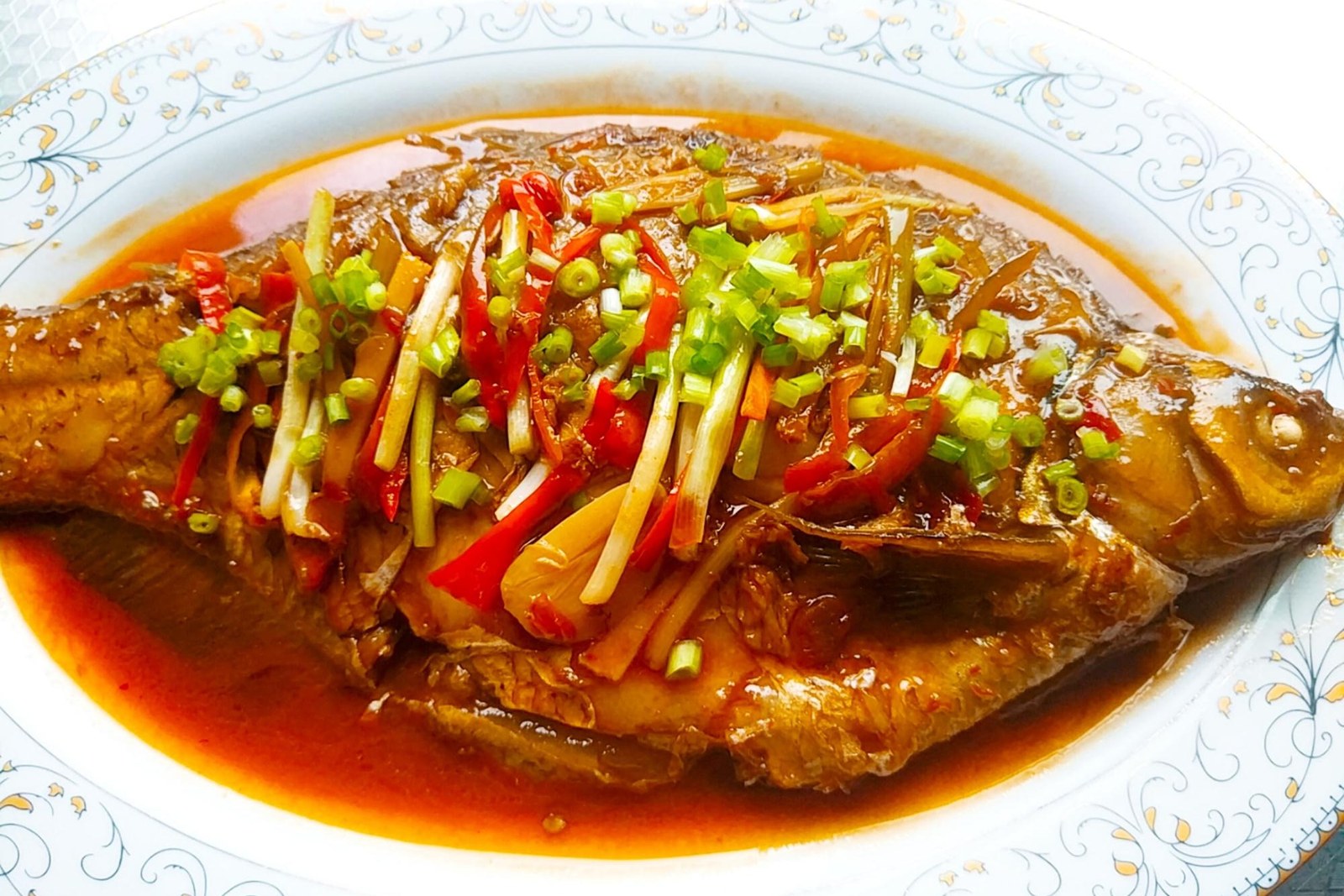
The method is the signature. Cha is not quite stew, not quite braise – the catch goes into dark soy, vinegar, star anise and a slow fire, simmering until the small bones soften enough to eat whole. The broth reduces toward a glaze, the flavor sinks past the skin, and what started as a fisherman’s way to keep the surplus becomes a dish you order on purpose.
The eight classics anchor the menu. Cha fish, cha shrimp, cha crab, cha shellfish each take the method differently – the fish wants days-old flavor, the shrimp only an hour, the crab something in between – and harbor tables argue the ranking like families argue recipes. The best versions come from kitchens that still cook for boat crews: blunt bowls, generous broth, rice on the side.
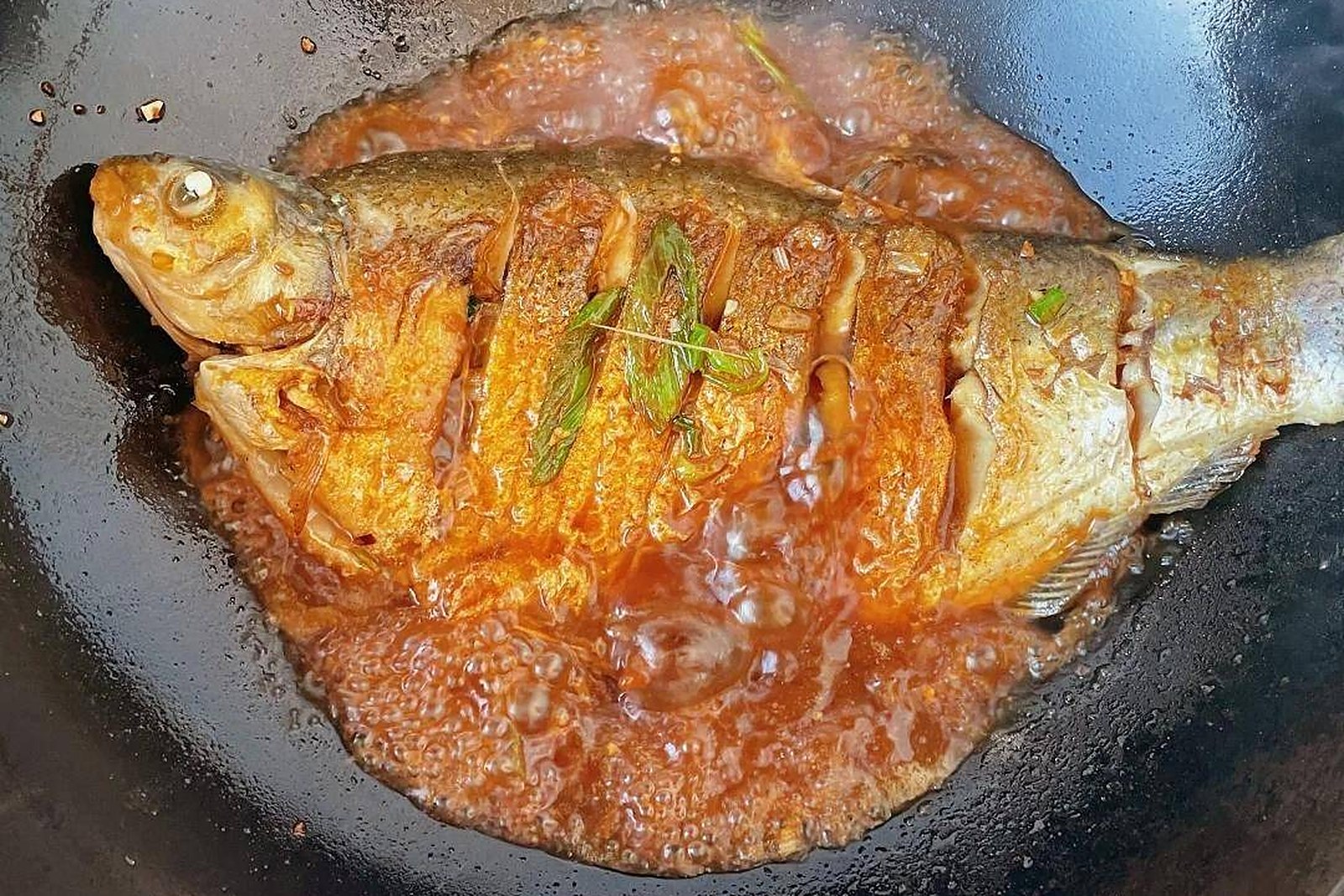
The history sits in the method. Before refrigeration, the coastal families needed the catch to last the week; the cha pot was the answer, and the flavor outlived the necessity. Today the dish anchors Hangu’s dining identity – the harbor streets’ steam comes from cha pots as much as from the steam-houses, and the taste is the one locals serve homesick relatives first.
The same 天津市滨海新区 Tiānjīn Shì Bīnhǎi Xīn Qū Binhai New Area holds more flavors worth chasing: 茶淀玫瑰香葡萄 Chádiàn méiguī xiāng pútáo the rose-perfume grapes, 大港冬枣 Dàgǎng dōngzǎo the autumn-snap jujubes, 塘沽海鲜 Tánggū hǎixiān the harbor catch, or 北塘虾酱 Běitáng xiājiàng the century-old shrimp paste – four more doors into the same Binhai table.
Words and Names
馇 chā the slow soy-stew method that names the dish; 八大馇 bādà chā the eight classic chas; 酥骨 sūgǔ the softened bones the slow fire earns; 渔家 yújiā the fisherman’s kitchen the dish came from; 汉沽 Hàngū Hangu, the northern district that keeps the pot on.
What the Locals Know
The cha pot is a calendar – kitchens that cook for boat crews turn the pot each morning, and by evening the small-fish cha carries the day’s depth. Locals rank the eight by the bones: a cha fish whose spine lifts out clean means the fire ran long and right. And the dish travels worst of the town’s foods – the broth keeps improving at home for two days, which is why families send you off with a jar, not a plate. All checked November 2026.
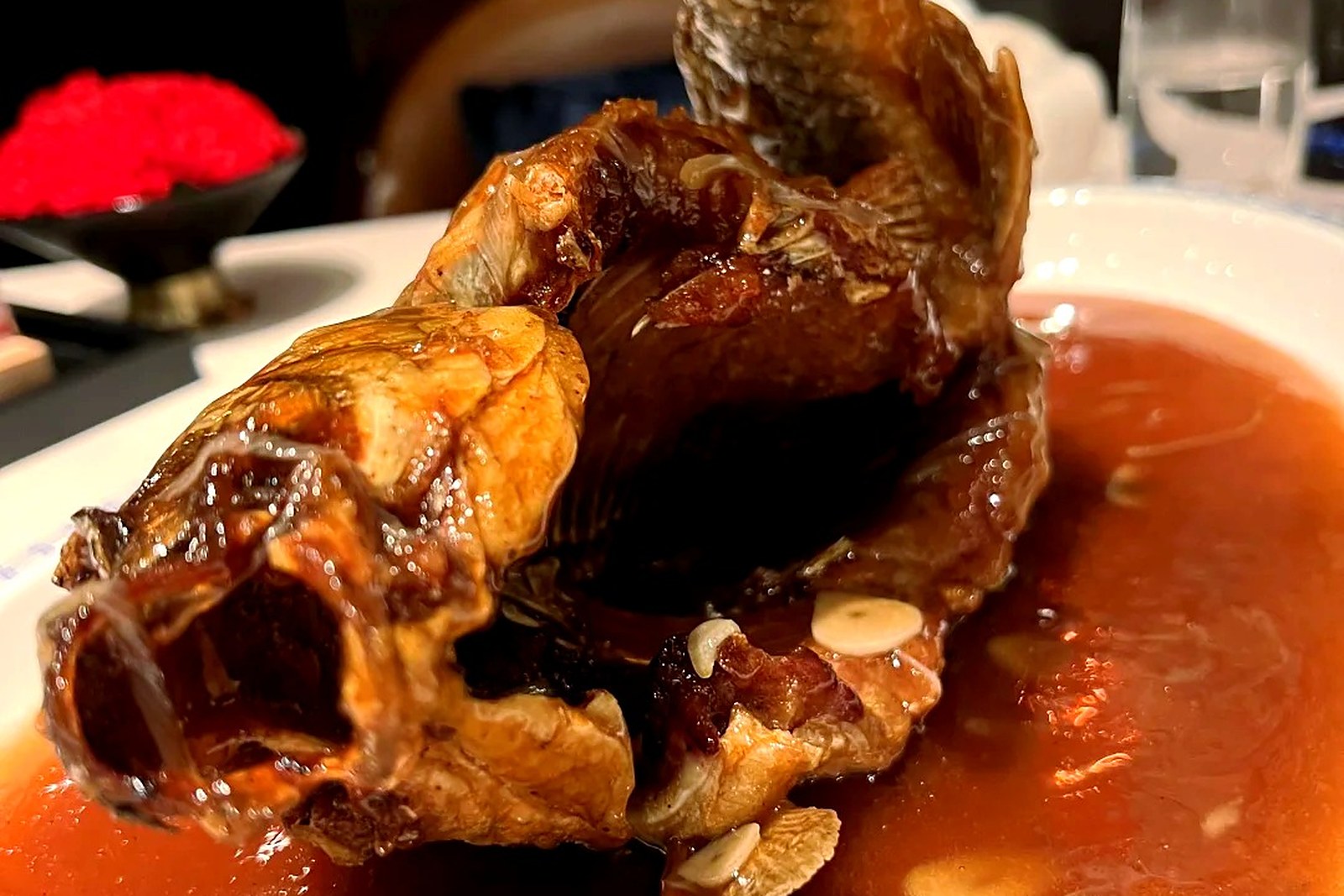
flowcloud would say the eight chas are the sea in slow motion: a morning catch, an afternoon of dark soy and star anise, and bones so soft the ocean forgets to be sharp.
Where to find it: The Hangu harbor dining streets run the eight chas daily, the market-side kitchens cook the morning pots for the boat crews, and the town’s family tables keep a home cha pot through the cold months. All checked November 2026.