
Har Gow
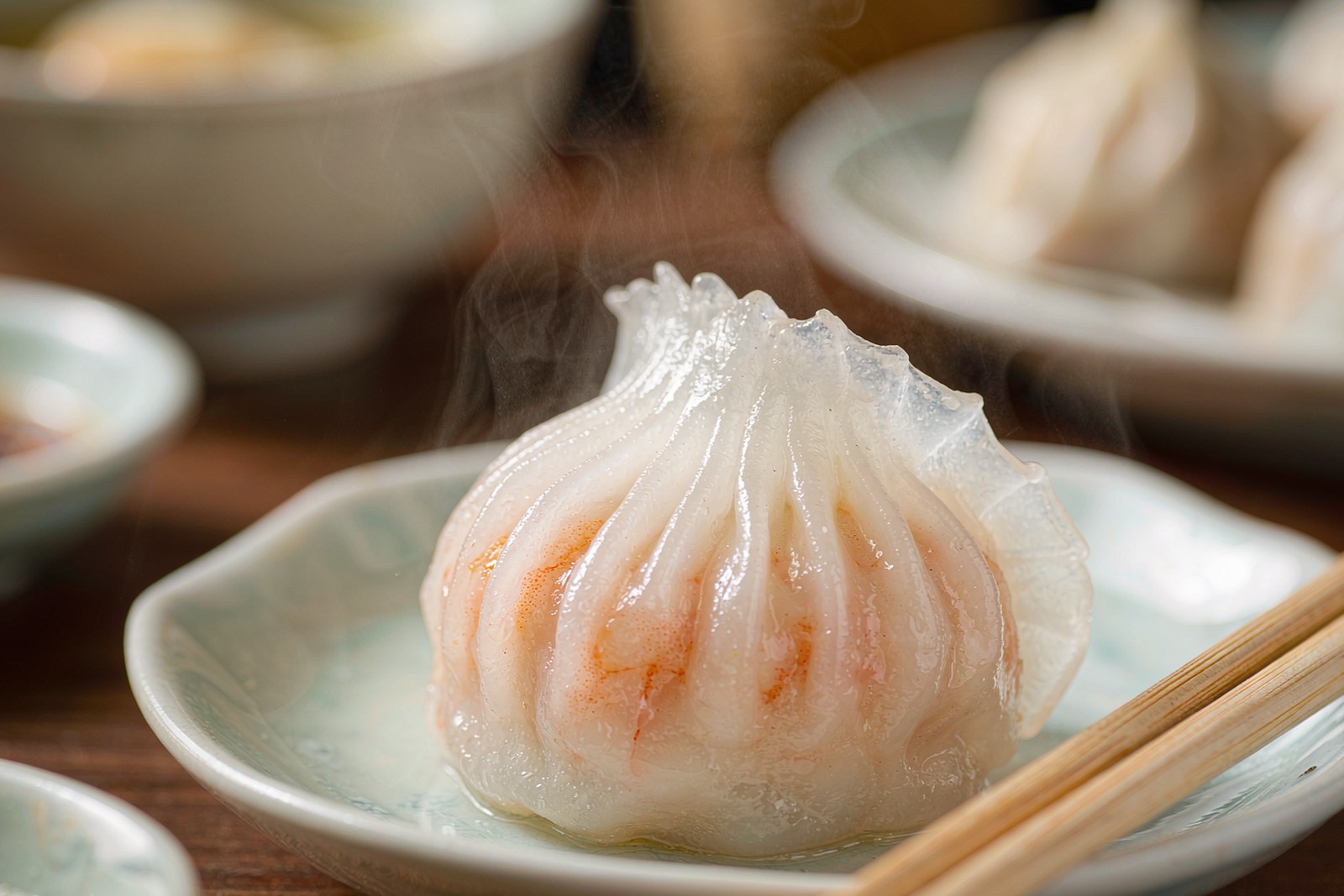
The lid came off the bamboo basket and a puff of steam carried the smell of the sea, sweet and clean. Inside sat three little dumplings, each one a translucent pouch with a pink shrimp curled inside, pleated so fine they looked like tiny fans. I bit in and the skin gave way like a held breath, the shrimp springy and sweet, a drop of pork fat rounding it out. This is 虾饺 xiājiǎo, the dumpling that separates a real dim sum kitchen from a lazy one.
虾饺 xiājiǎo means “shrimp dumpling,” and it was invented in the 广州 Guǎngzhōu tea houses of the 清末 Qīngmò (late Qing), around the 1920s, when 河粉 héfěn vendors near the Pearl River began wrapping local river shrimp in a starch skin for 饮茶 yǐnchá guests. It matters in Guangdong because it is the unofficial exam of a dim sum chef: the skin must be translucent, the pleats must number at least eight, and the filling must stay bright. A perfect 虾饺 is a small piece of paper architecture you are allowed to eat.
The Craft
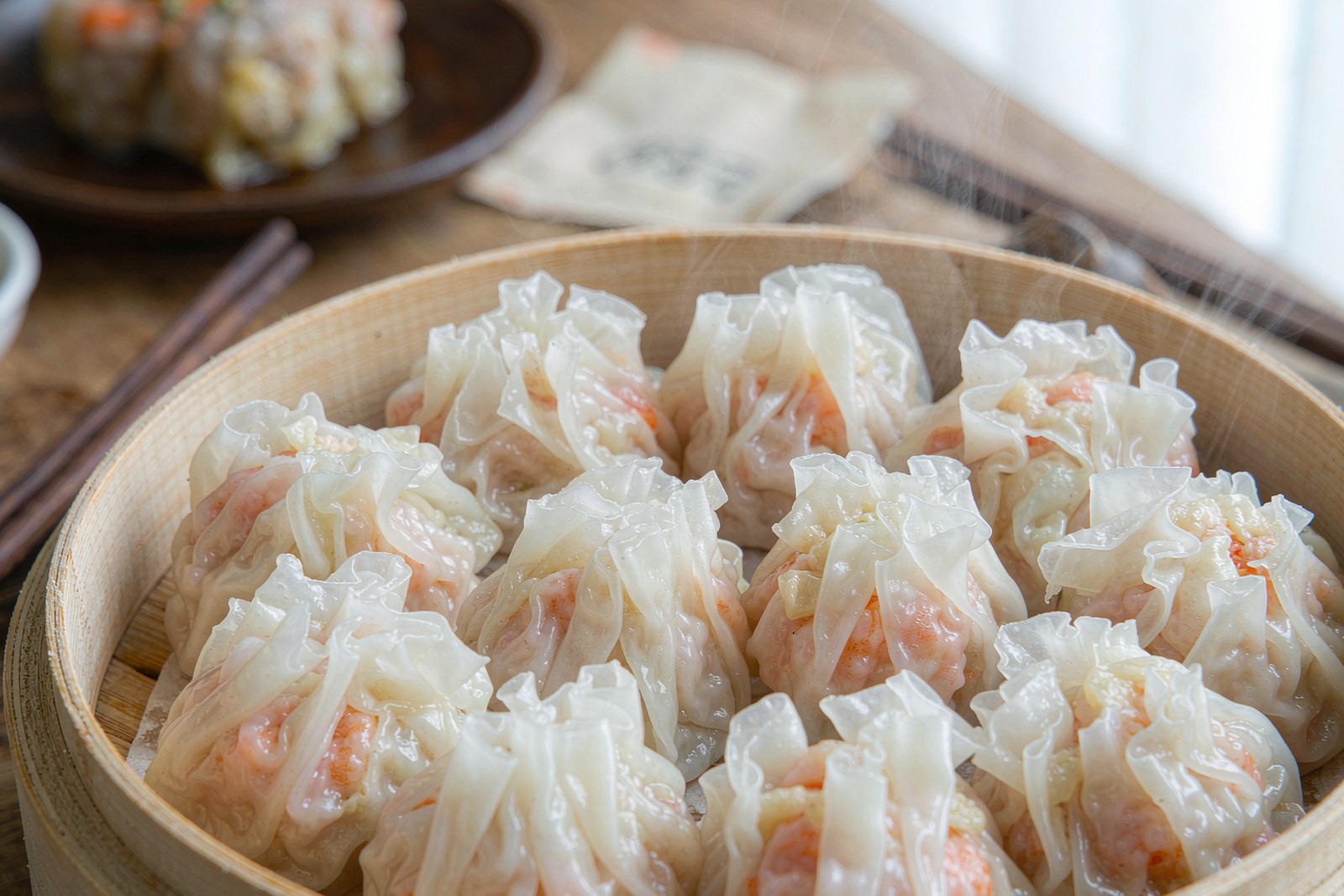
The wrapper is the hard part. It is made from 澄面 chéngmiàn (wheat starch) bolstered with a little 生粉 shēngfěn (cornstarch) and hot water, kneaded with a touch of oil into a dough that turns glassy when steamed. The chef rolls it paper-thin, cuts a round, and fills it with a mixture of chopped 鲜虾 xiānxiā (fresh shrimp), a little 肥猪肉 féi zhūròu (pork fat) for richness, bamboo shoot, and a whisper of 笋 sǔn or scallion.
Then comes the pleating, 褶 zhě, traditionally no fewer than eight to ten fine folds pinched up one side to a peaked top. The dumpling is steamed for three to four minutes only; a second too long and the skin goes cloudy and tears. The finished 虾饺 should sit plump and nearly see-through, the shrimp visible like a stone in clear water.
A master will tell you the three signs of a great 虾饺: the skin is translucent but never sticky, the pleats hold their shape, and the shrimp snaps instead of mushing.
How to Eat It
Lift it with the broad spoon straight from the basket, let it cool for a breath, then eat it whole so the broth trapped inside stays. Do not add soy or chili, which would insult the filling. The benchmark style is 广州 Guǎngzhōu crystal shrimp dumpling, but in 香港 Xiānggǎng you will find fancier versions with 蟹籽 xièzǐ (crab roe) dotted on top. The shape varies by region, some round, some crescent, but the eleven-pleat standard is the old Guangzhou ideal.
Words and Names
虾饺 is two characters: 虾 xiā “shrimp” and 饺 jiǎo “dumpling,” spoken in Cantonese as haa1 gaau2. The same 饺 jiǎo appears in 饺子 jiǎozi (the northern boiled dumpling), but 虾饺 is its own southern, steamed, translucent creature. The wrapper starch 澄面 chéngmiàn is what gives it the “crystal” nickname 水晶虾饺 shuǐjīng xiājiǎo, “crystal shrimp dumpling,” you will see on fancier menus.
What the Locals Know
Count the pleats a real 虾饺 xiājiǎo has at least eight, often eleven or more.
Eat it in one bite the broth inside is the prize, do not let it leak.
No sauce soy or chili only hides a weak filling.
Fresh shrimp only frozen filling turns grey and soft, walk away.
Order early in the meal 虾饺 xiājiǎo is the first basket for a reason, eat it at its peak.
flowcloud would say that some things are best left transparent, so you can see exactly what you are trusting.
Where to find it: Har gow, 虾饺 xiājiǎo, is the centerpiece of 饮茶 yǐnchá (drinking tea with dim sum) across Guangdong, found in every 酒楼 jiǔlóu (tea restaurant) from Guangzhou to Shenzhen. In Guangzhou order 水晶虾饺 shuǐjīng xiājiǎo at any respected 茶楼 chá lóu in 荔湾 Lìwān or 天河 Tiānhé; a basket of three or four runs roughly 20 to 38 yuan. Ask for them steamed fresh rather than held, and pair with a pot of 普洱茶 Pǔ’ěr chá to cut the richness.