
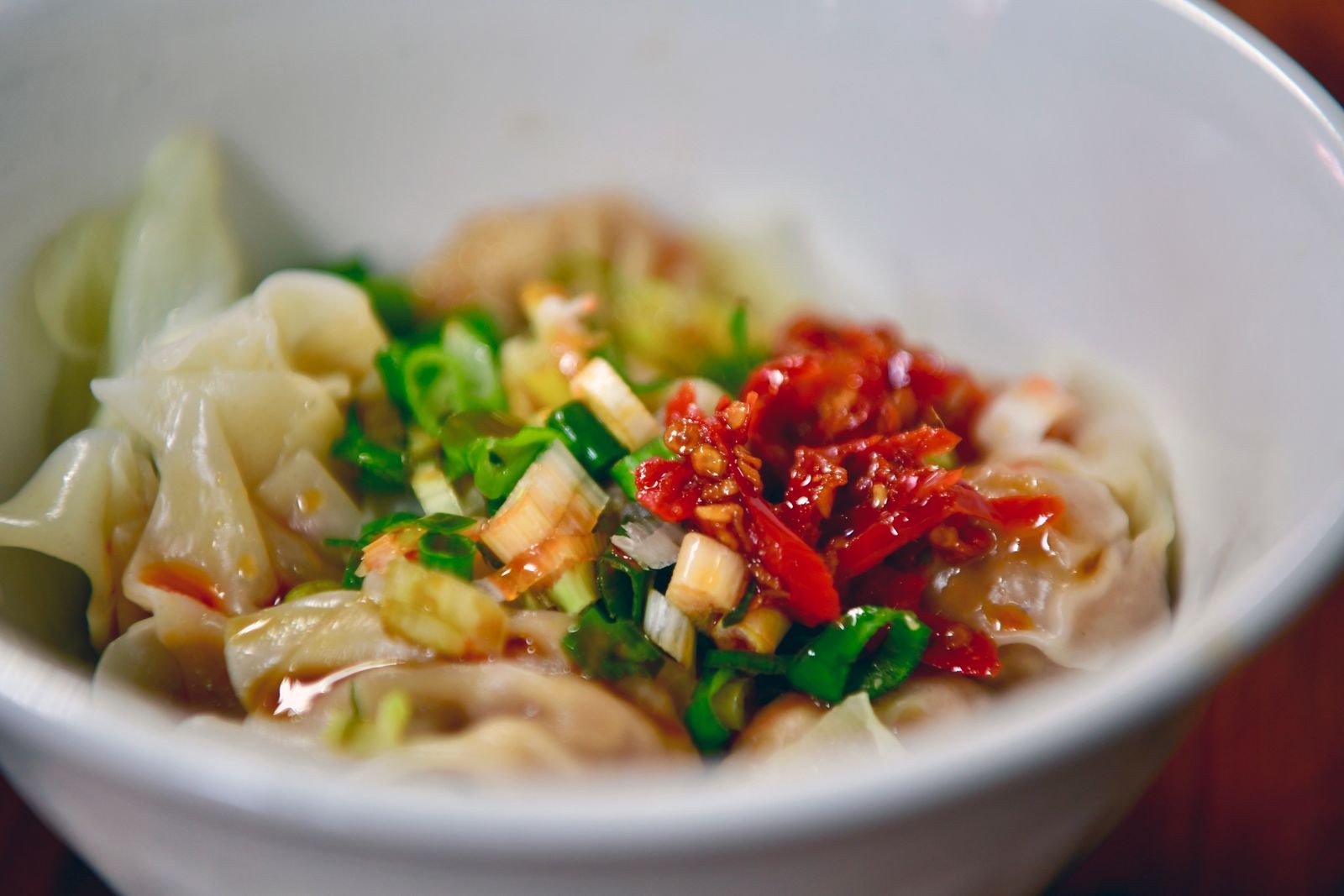
鸡肉抄手 jīròu chāoshǒu, Hechuan’s chicken wontons, are where the district seat eats its breakfast, and they break from the basin norm in one detail that decides everything: the filling is minced chicken, not pork, beaten with ginger water until it turns springy, folded into thin wrappers and served either in a clear chicken broth or drained and dressed with red chili oil, soy and crushed Sichuan pepper for the dry bowl. The shops that claim the century-old lineage still wrap by hand in the window, trays of pleated wontons marching out faster than the steam can rise, and the morning queue orders by number without looking at a menu. This is the breakfast page of the Hechuan food column.
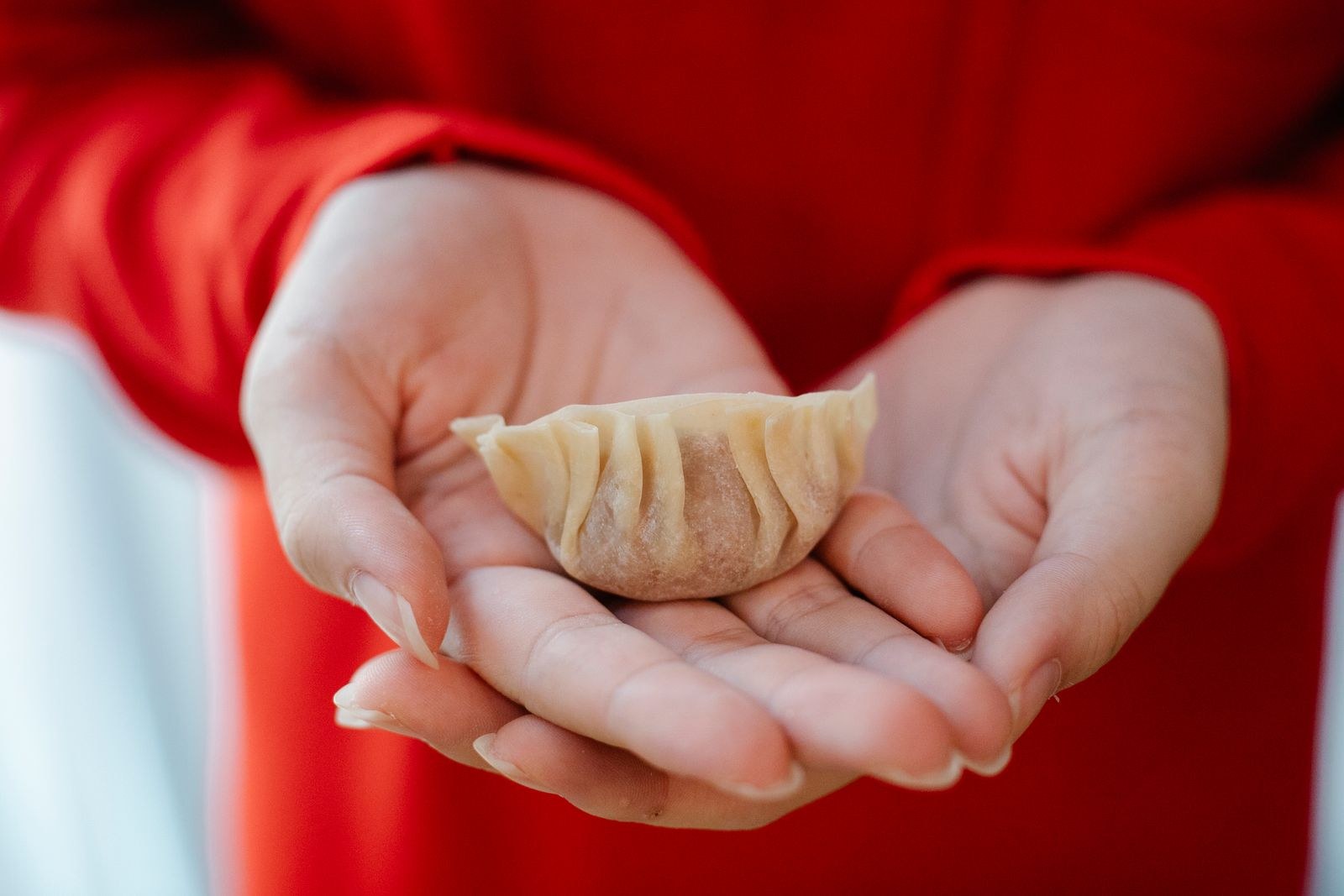
The chicken filling is the whole difference, and it is made the hard way. Minced chicken is beaten with ginger water – added a spoon at a time, each one worked in before the next – until the meat turns loose, springy and pale, the texture that makes a wonton bounce rather than sit; the ginger water perfumes the meat from inside and takes the dryness chicken carries next to pork. The wrappers are rolled thin, because a delicate filling wants a delicate skin, and the fold is the Sichuan one, the two corners drawn across each other like crossed arms – which is what 抄手, chaoshou, the basin’s word for wonton, means.
The two formats split the morning. The soup bowl keeps the broth bare – a clear chicken stock with nothing to shout over the wrapper – so the texture leads and the filling’s ginger note carries; the dry bowl drains the wontons and dresses them with red chili oil, soy and crushed Sichuan pepper, the skin taking the dressing while the filling stays the point. The regulars’ answer to a cold morning is the dry bowl with an extra spoon of chili crisp stirred in at the table, and the choice between the two is less about taste than about the weather and the hour.
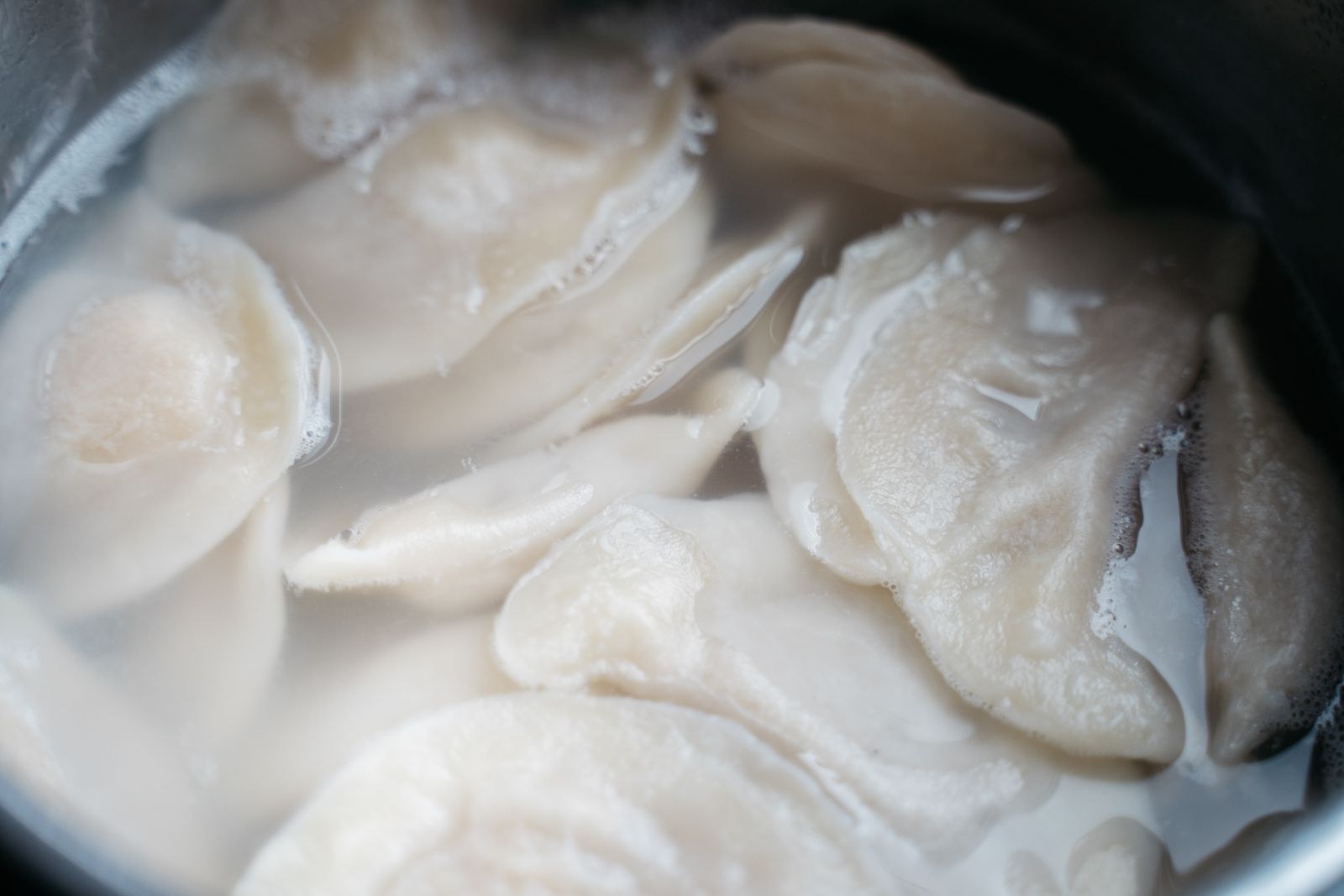
What the record supports and what it does not is worth stating plainly, because a breakfast counter with a claimed lineage is exactly the kind of subject that collects invented detail. The record consulted names the chicken filling beaten with ginger water, the thin wrappers, the two formats – clear chicken broth or the dry chili-oil bowl – and the hand-wrapped counters whose lineage the shops themselves put at a century; it does not name a founding shop, a founding year or a documented recipe, and none is invented here. The honest page reports a counter format the district seat runs at more than one door, each house wrapping its own.
What the visitor does is go at the counter’s own hour and choose by the weather. The morning queue moves by number and moves fast, and the wontons are at their best within a minute of landing – the wrapper is a texture with a clock, and it waits badly – so eat at the counter, not out of a takeaway box. Order the dry bowl with chili crisp on a cold morning and the soup bowl when the day is warm, and let the filling, not the dressing, tell you what the format is about. All checked October 2026.
Words and Names
鸡肉抄手 jīròu chāoshǒu, chicken wontons, the breakfast counter dish of the district seat of 合川区 Héchuān Qū, Hechuan District: minced chicken beaten with ginger water until springy, folded into thin wrappers, served in a clear chicken broth or drained and dressed with red chili oil, soy and crushed Sichuan pepper. 抄手 chāoshǒu is the Sichuan basin’s word for wonton – crossed arms, for the fold. The shops put their lineage at a century and still wrap by hand in the window; no founding shop, founding year or posted price is on the public record consulted, and none is invented here.
What the Locals Know
The local knowledge is the clock, not the legend. A wonton is a texture with a countdown – the thin wrapper is at its best in the first minute and slackens by the third – so locals eat at the counter and never order away, and the wrapping bench in the window is not theatre but the freshness display: what goes into the pot was folded while you queued. The second thing locals know is the split: the soup bowl for the taste of the filling and the broth, the dry bowl for chili oil and crushed pepper worked into the skin, with the extra spoon of chili crisp the recognised cold-morning upgrade. What the record does not carry is any ranking of counters, and the page declines to make one – the queue ordering by number is the review.
flowcloud would say that Hechuan chicken wontons are the district seat’s breakfast institution – minced chicken beaten with ginger water until springy, wrapped thin and folded like crossed arms, served in a bare clear broth or drained under red chili oil, soy and crushed Sichuan pepper, the counters that claim the century-old lineage still wrapping by hand in the window – and that the honest page reports a counter format run at more than one door, with no founding shop or price on the record and none invented. All checked October 2026.
Where to find it: the chicken-wonton counters run through the morning streets of the district seat in 合川区 Héchuān Qū, Hechuan District, a short walk from the riverside hotel quarter; no specific counter address, posted price or founding year is on the public record consulted and none is invented here, and the wrapping bench in the window is the practical guide. The wontons are eaten at the counter within minutes of landing. Pair this page with the district-seat hotel page for the riverside base the breakfast runs from, and with the thick-rice-noodle page for the district’s other morning clock.