
合川桃片 Héchuān táo piàn, Hechuan peach slices, is the calling-card confection of 合川区 Héchuān Qū, Hechuan District, the Chongqing district whose old-street counters still cut and box it while you watch: glutinous rice soaked, roasted, ground and steamed into dense loaves with rock sugar and a kernel of walnut in every slice, the loaves then cut thin enough to curl without snapping – the test the old candy houses still judge their batches by. The trade goes back to the salt-road decades of the 1840s, when the district’s shops turned river-borne sugar and mountain walnuts into a sweet that travelled well, and it has been the souvenir three generations of travellers have carried home from the district seat ever since. A fresh slice is dry, faintly chewy and nut-heavy rather than sweet – tea is assumed, and this is the first page a Hechuan food reader should read.
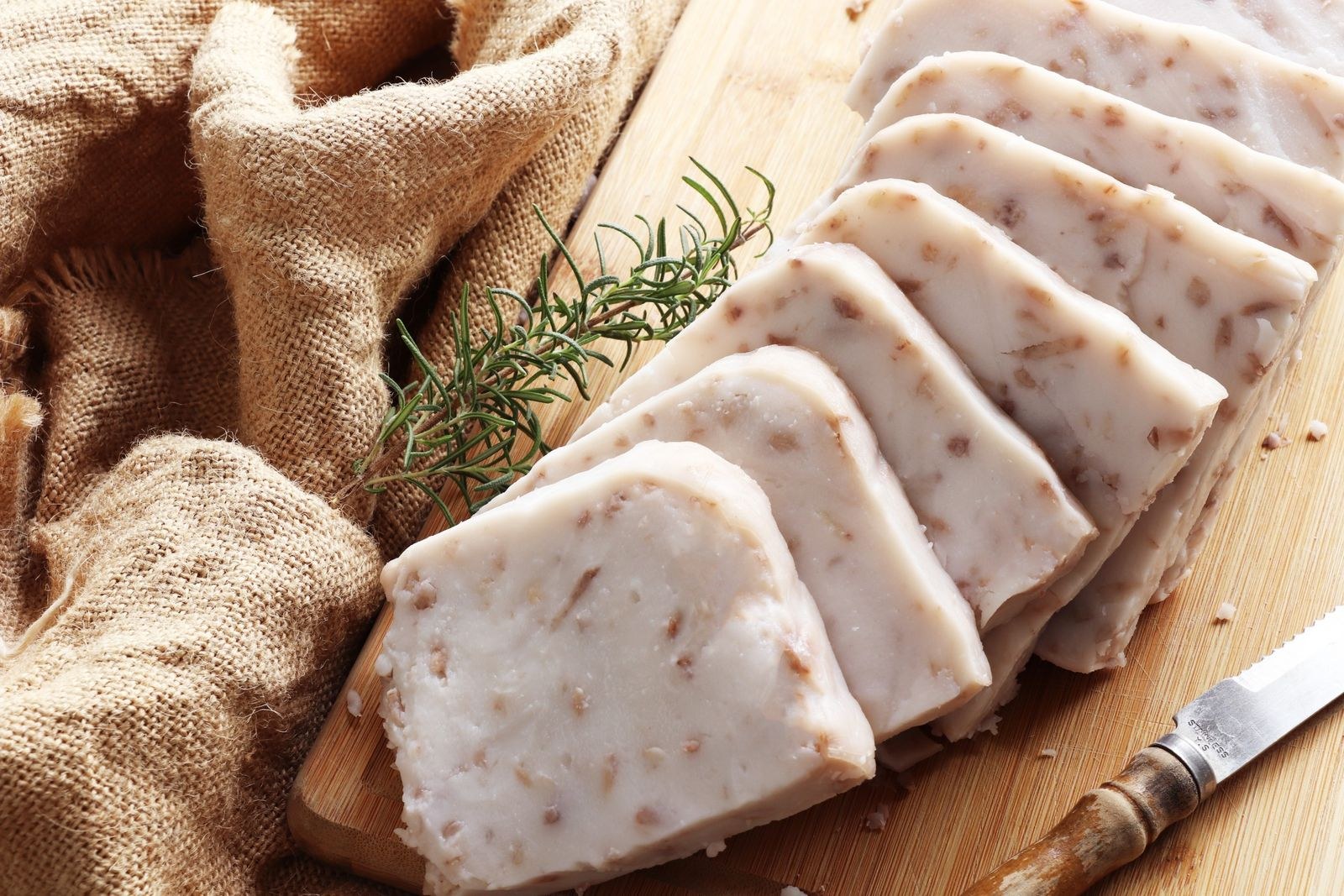
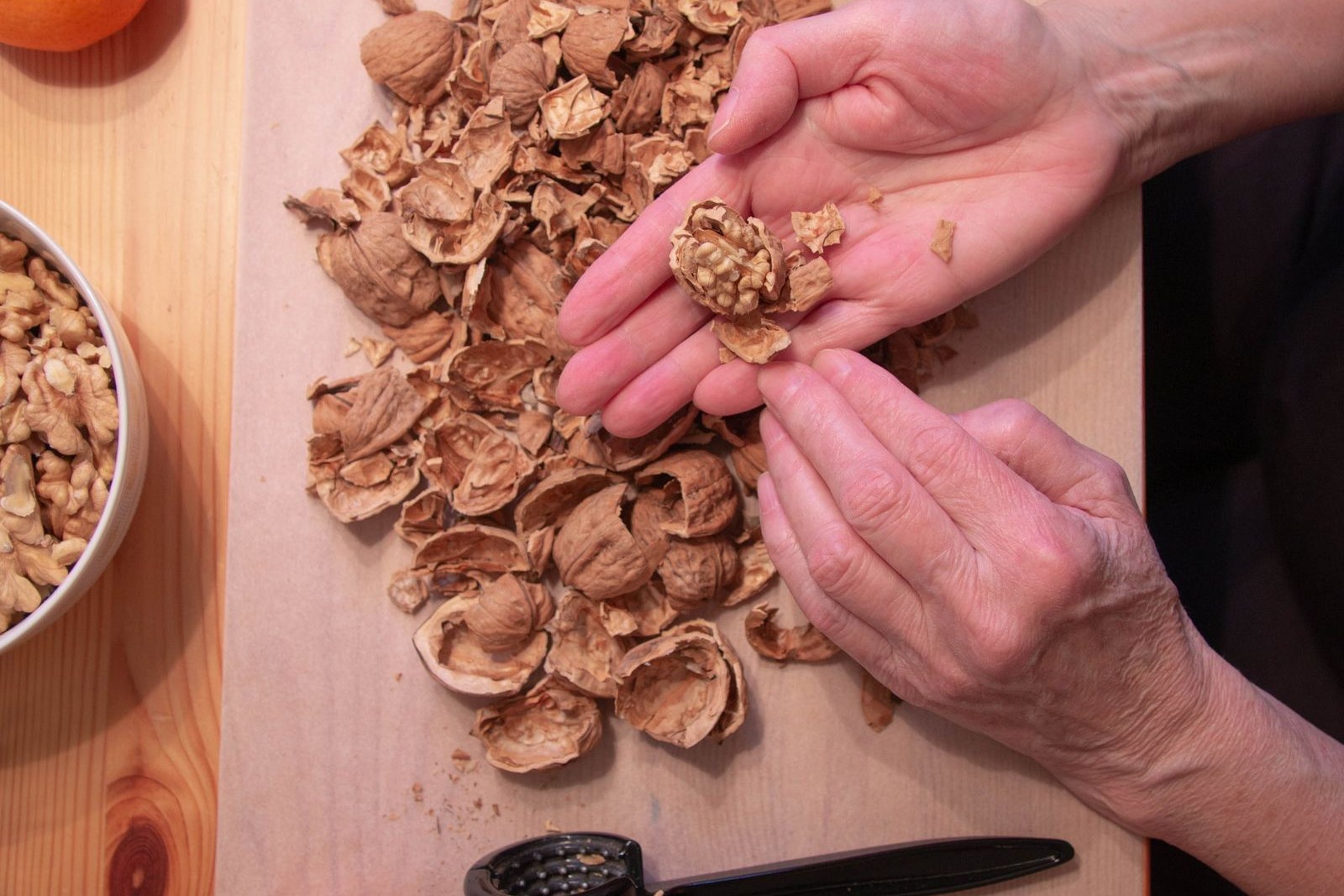
The craft explains the texture at once. The rice is soaked, roasted and ground before it is steamed, because the roast keeps the slab from turning dense and gluey; the sugar is rock sugar cooked to a syrup that binds without stiffening; and the walnut halves are laid into the loaf as it is pressed, so that every slice carries its kernel. The pressing is done by hand in wooden frames, the loaves are rested, and then comes the step the trade is judged by – the blade. A candy-house blade takes a loaf down into slices thin enough that a piece curls over a finger without breaking, and the houses that survived the century keep the same hand-presses and the same thin blades for exactly that reason.
The salt road explains the format. Hechuan’s candy houses worked the decades when river-borne sugar and mountain walnuts met in the district’s shops, and a confection that pressed into slabs, wrapped in paper and stacked in boxes was exactly the product the road could carry – a sweet built to survive a boat deck and a mountain track and still arrive unbroken. That is why the texture is dry rather than moist, why the sweetness is held back, and why the walnut does the flavour work: a slab that had to travel could not be sticky, and a trade built on travellers could not be cloying. The same logic made it the railway-station souvenir of three generations, sold wherever the district’s visitors gathered to go home.
What the record supports and what it does not is worth stating plainly, because a century-and-a-half confection is exactly the kind of subject that collects invented detail. The record consulted names the salt-road decades of the 1840s, the rice craft – the soak, the roast, the steam, the rock sugar and the walnut in every slice – the curl test, the surviving hand-presses and thin blades, and the old-street counters that cut and box while you watch; it does not name a founding house, a founding year or a documented first recipe, and none is invented here. The honest page reports a trade of candy houses rather than one famous shop, and dates the category to its era rather than to a year.
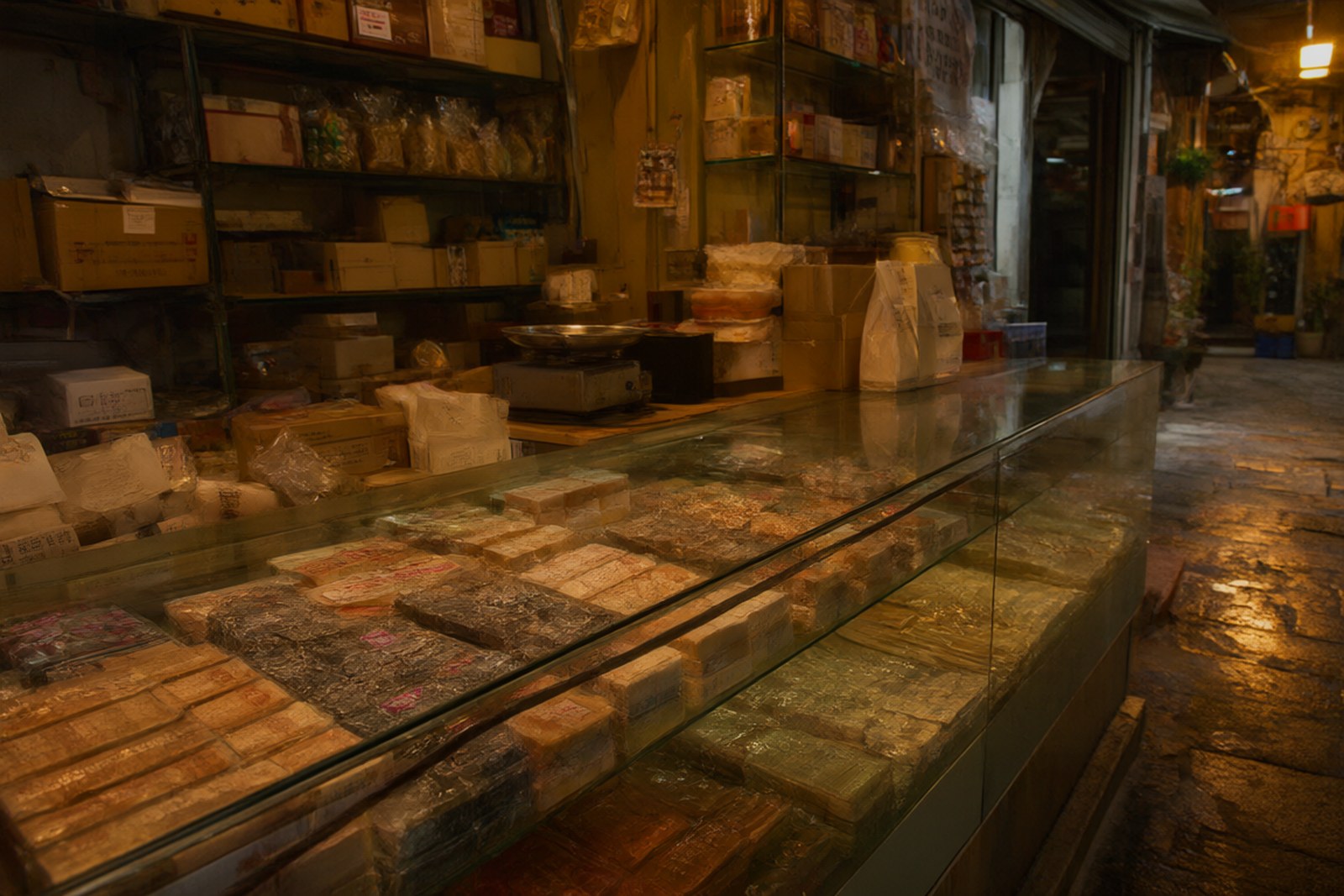
What the visitor does is buy where the blade is and test the curl at the counter. The old-street shops cut and box the slabs while you watch, and a fresh slice – the one that bends over a finger and comes back – is the argument for buying at the source, because the texture is a clock: the older the slab, the further it dries toward a snap. Eat it with hot tea, which the dryness and the walnut both assume, and carry the box home within its paper rather than loose in a bag. All checked October 2026.
Words and Names
合川桃片 Héchuān táo piàn, Hechuan peach slices, the wafer-thin glutinous-rice confection of 合川区 Héchuān Qū, Hechuan District: rice soaked, roasted, ground and steamed into dense loaves pressed by hand with rock sugar and a walnut kernel in every slice, then cut thin enough to curl without breaking. The trade goes back to the salt-road decades of the 1840s, when river-borne sugar and mountain walnuts met in the district’s shops, and the surviving houses keep the same hand-presses and thin blades. No founding house, founding year or posted price is on the public record consulted, and none is invented here.
What the Locals Know
The local knowledge is the curl, not the box. A fresh slice flexes and returns; a slab that has waited too long snaps at the fold – which is why locals buy from counters that cut in view rather than from stacked, pre-sealed boxes, the blade in the window being the freshness guarantee. The second thing locals know is the pairing: the slab is dry by design, so hot tea is not an accompaniment but part of the eating, and the walnut-heavy slices from the loaf’s ends are the connoisseur’s cut. The sweetness should register after the nut, not before it; a slice that leads with sugar has drifted from the house style the trade judges itself by. What the record does not carry is any ranking of shops, and the page declines to make one – the counter that cuts while you watch is the review.
flowcloud would say that Hechuan peach slices are the salt road’s travelling sweet still working – glutinous rice soaked, roasted, ground and steamed into dense loaves with rock sugar and a walnut kernel in every slice, cut thin enough to curl without breaking, the test the old candy houses still judge their batches by, a trade that goes back to the 1840s and has been the district seat’s souvenir for three generations – and that the honest page reports a trade of candy houses rather than any famous shop, with no founding house, year or price on the record and none invented. All checked October 2026.
Where to find it: the cutting counters run along the old street of the district seat in 合川区 Héchuān Qū, Hechuan District, close to the rebuilt riverside quarter under the pagoda; no specific shop address, posted price or founding year is on the public record consulted and none is invented here, and the counter that cuts and boxes while you watch is the practical guide. The slab is eaten dry with hot tea and travels well within its paper. Pair this page with the Wenfeng pagoda street page for the old street the counters stand near, and with the district-seat hotel page for the riverside base the souvenir runs home from.