
合川肉片 Héchuān ròu piàn, Hechuan pork slices, is the dish that carries the district’s name on Sichuan menus across the basin: lean pork cut thin, dusted in egg-and-starch, fried until the edges lift and turn gold, then tossed hot in a sour-sugar glaze with ginger, garlic and scallion so the coating drinks the glaze without going soft. The recipe’s rules are defended by the district’s restaurants like a border – the sweetness up front, the vinegar catching at the back, and no tomato anywhere in the pan. It is a home-kitchen dish that restaurants adopted rather than the reverse, and in Hechuan it anchors every banquet table as the local calling card. This is the savoury page a Hechuan food reader should read second.
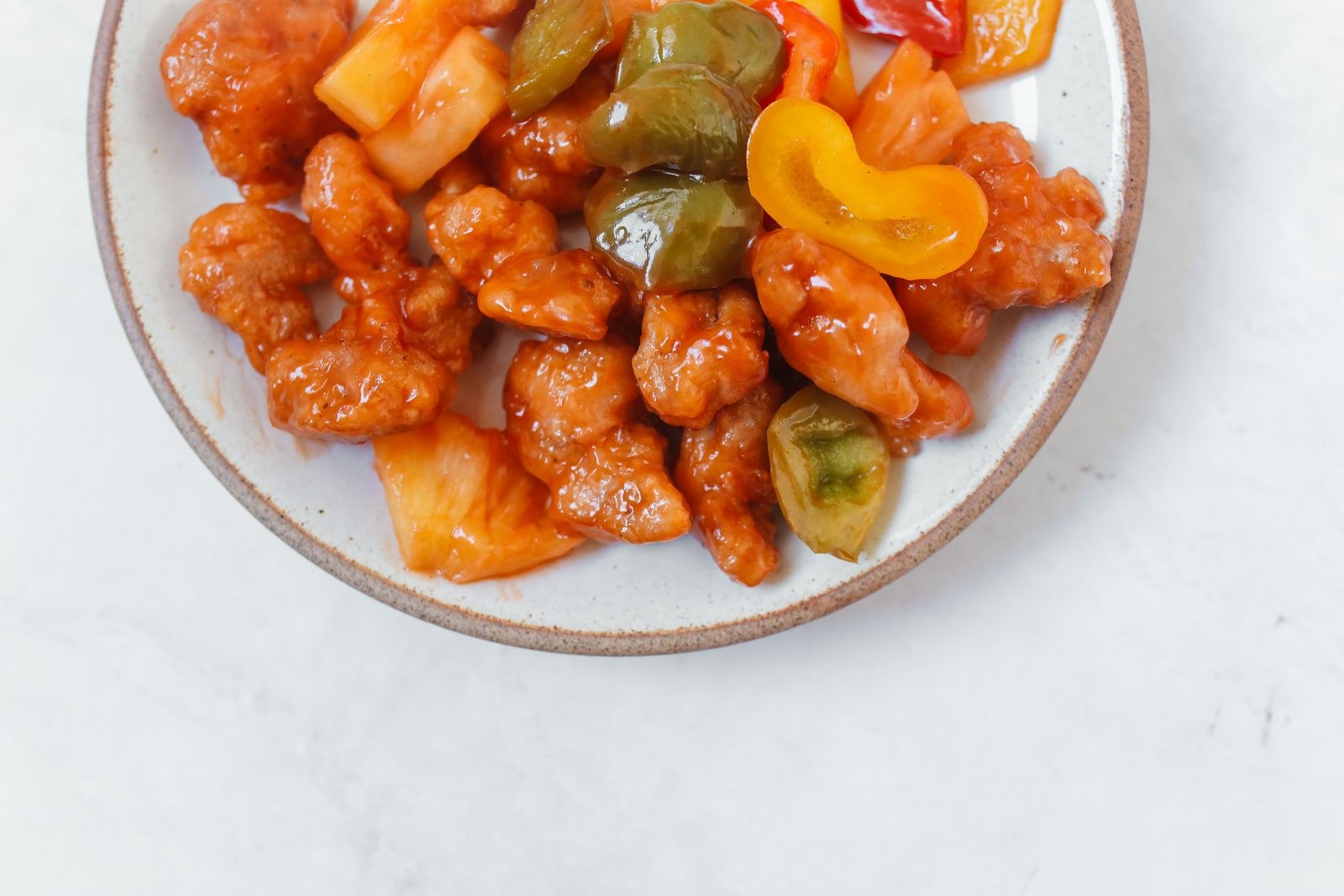
The method is a study in texture, and every step earns its place. The lean slices are dusted in egg and starch so the fry builds a shell that lifts at the edges and turns gold without hardening; the glaze is sugar and vinegar cooked to the point where it coats a spoon, hitting the wok only at the end, so the hot slices drink it in the toss and stay crisp underneath. Ginger, garlic and scallion go in with the glaze for the savoury spine of the dish, and the order of sensation the district quotes is the honest one: sweetness first, the vinegar catching at the back of the palate, the fried shell holding the line between them.
The dish’s reach is the argument for its rank. Sichuan menus across the basin list Hechuan pork slices as a classic – a named dish out of a district seat, which is a thing few county kitchens achieve – and the restaurants here defend the recipe the way classics get defended, by refusing the shortcuts. The tomato-based sweet-and-sour that flattened so many regional dishes never got through: the local rule is sugar and vinegar only, and a plate that blushed red would be sent back. At the table it works as the balance point, the plate a family orders to set against the hot dishes around it, which is how a sweet-and-sour fry became a banquet’s anchor rather than its footnote.
What the record supports and what it does not is worth stating plainly, because a named classic is exactly the kind of dish that collects invented lineage. The record consulted names the dish, the format – the egg-and-starch dusting, the gold fry, the sour-sugar glaze with ginger, garlic and scallion, no tomato – the basin-wide classic status and the banquet anchor; it does not name an inventor street, a founding restaurant or a dated first recipe, and none is invented here. The debate over which street invented it has run for decades and been settled only in the usual way – every family swears its own – and the honest page leaves it exactly there.
What the visitor does is order it early and eat it hot. The plate is built around a clock: the coating drinks the glaze in the first minutes and holds its crisp, and a slice that waits goes soft, so the dish belongs to the start of the meal, not the end. Order it as the sweet plate among the hot dishes, the way the district’s own tables do, and test the loyalty rule yourself – the glaze should taste of sugar and vinegar, never of tomato. All checked October 2026.
Words and Names
合川肉片 Héchuān ròu piàn, Hechuan pork slices, the sweet-and-sour fry of 合川区 Héchuān Qū, Hechuan District: lean slices dusted in egg-and-starch, fried until the edges lift and turn gold, then tossed hot in a sugar-and-vinegar glaze with ginger, garlic and scallion, sweetness up front and vinegar behind, no tomato in the pan. Sichuan menus across the basin carry it as a classic, and it anchors the district’s banquet tables as the local calling card. No inventor street, founding restaurant, dated recipe or posted price is on the public record consulted, and none is invented here.
What the Locals Know
The local knowledge is timing, not lore. The plate has a clock – crisp in the first minutes, soft if it waits – so locals order it as the second or third dish to land, not the first, and eat it while the shell still argues with the glaze. The second thing locals know is the loyalty rule: sugar and vinegar only, no tomato, and a kitchen that blushes the plate red has broken the recipe the district defends. Home versions run lighter on sugar than restaurant versions, and every family swears its own is the original – the same settlement the street debate reached decades ago. What the record does not carry is any ranking of restaurants, and the page declines to make one – the plate that arrives glistening and still crackling is the review.
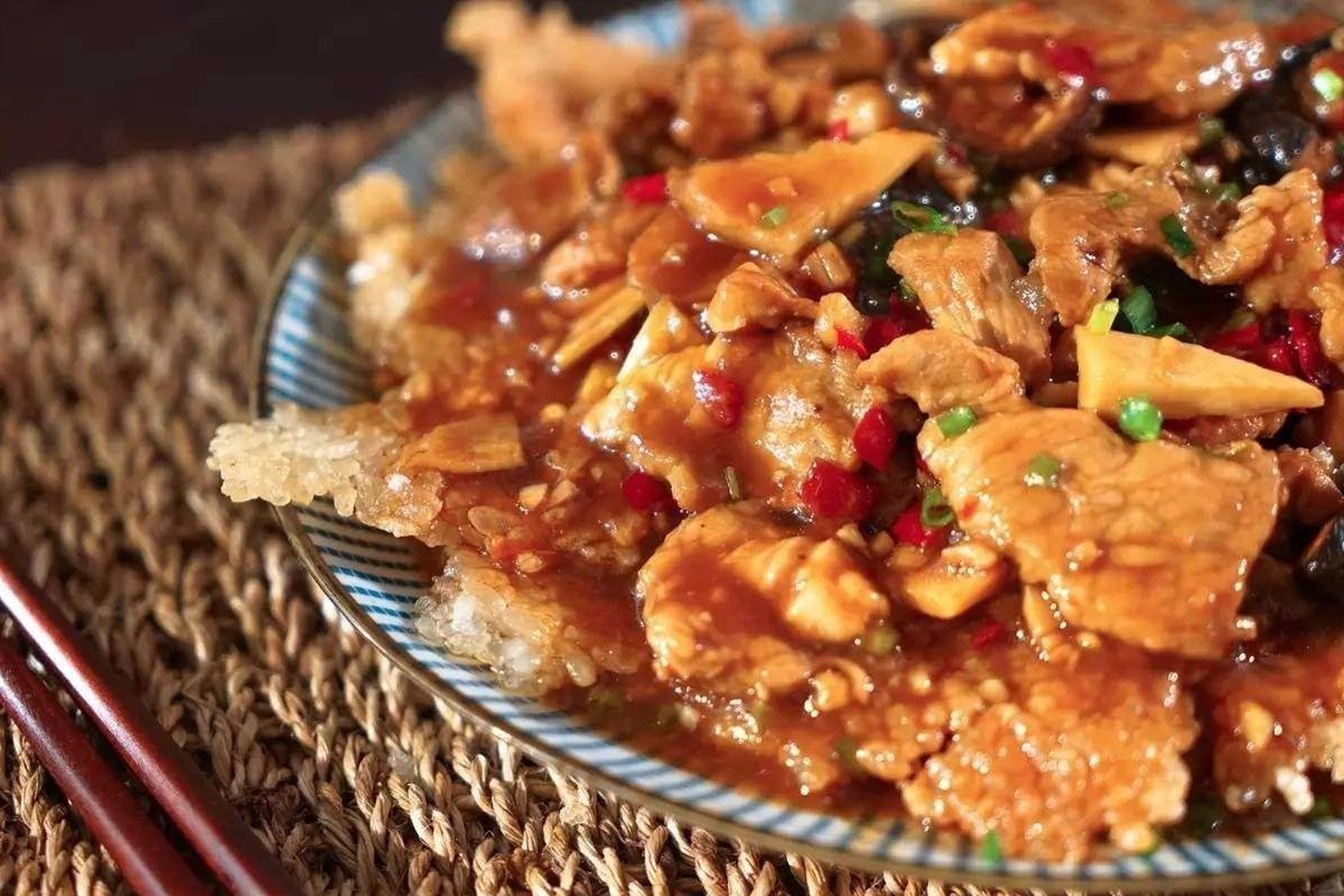
flowcloud would say that Hechuan pork slices are the dish that put the district’s name on Sichuan menus – lean slices egg-washed and fried gold, tossed hot in a sugar-and-vinegar glaze with ginger, garlic and scallion, the coating drinking the glaze without going soft, sweetness up front and vinegar behind, no tomato in the pan – and that the honest page reports a home-kitchen classic the restaurants adopted rather than any founding house, with the inventor-street debate left unsettled exactly as the district itself leaves it. All checked October 2026.
Where to find it: the dish runs across 合川区 Héchuān Qū, Hechuan District, from the banquet tables of the district seat to the farmhouse kitchens on the approach road under the Diaoyu fortress, where the district’s own dishes – pork slices, river fish, morning noodles – are the menu; no specific restaurant address, posted price or founding year is on the public record consulted and none is invented here. The plate is eaten hot and early in the meal. Pair this page with the hill-hotel page under the fortress for the farmhouse end of the district’s table, and with the chicken wonton page for the counters that own the other end of the day.