
Heji Noodle Shop
There is a sentence that old Changsha people still use to describe their own city’s cooking, and it is not a compliment to anyone:
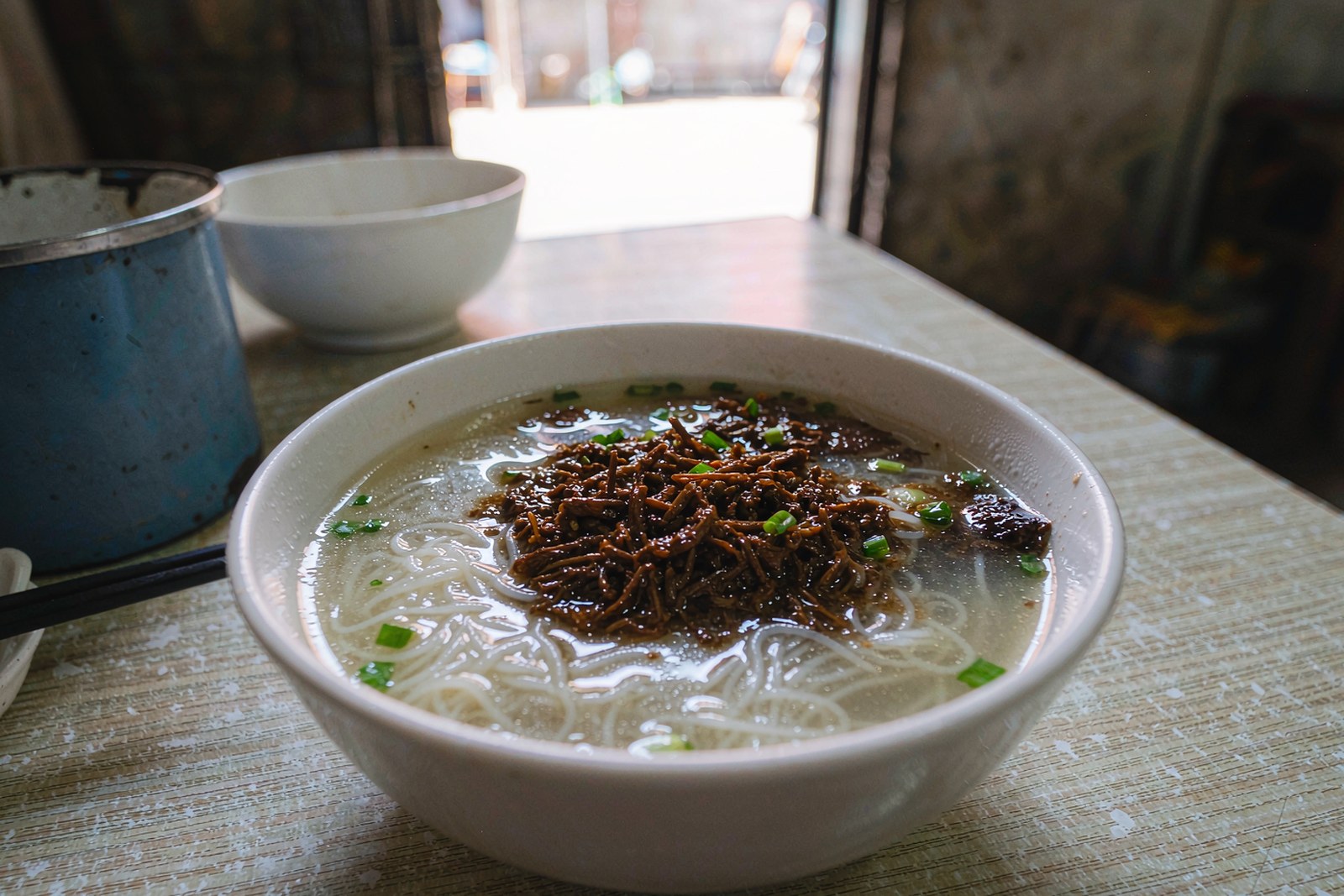
赶得北门的粉,丢了南门的包子。 Rush to the north gate for the noodles, and you lose the south gate for the buns.
It means you cannot have everything — the noodle shop that is worth crossing the city for is up at the north gate, and the good buns are down at the south, and a man has to choose. The buns are 德园. The noodles are 和记.
和记粉馆 (Heji Fendian) has been on the north side of the old city since 1906, which makes it a year younger than the fire that erased most of that city and one of the oldest continuously operating kitchens in Changsha. It is a noodle shop, not a restaurant. It costs about as much as a bus fare. And it is the single best place to understand what “北门的粉” — the north-gate noodle — actually means as a style.
A Widow at the Drawbridge
In 1906, outside Changsha’s north gate, at the drawbridge, a widow named 吴有珍 (Wu Youzhen) set up a rice-noodle stall. She had two sons — 李益和 and 李福生 — and no other way to feed them. That is the whole founding story, and it is worth sitting with for a moment: the two most famous old noodle shops in Changsha, 和记 and 周记, were both begun by families who were, quite simply, broke. One arrived from Xiangtan with a millstone on a barrow; this one started at a bridge with a pot.
The stall traded well, because the noodles were honest and the woman who ran it was warm to her customers. She named the shop 和记 — Heji, “the house of harmony” — after 和气生财: harmony brings in money. The name is not decoration. In the accounts that have survived, 和记’s reputation rests as much on how it treated people as on what it cooked, which for a one-woman business at a city gate is not sentimentality. It is the business model.
The stall became a shop on 外湘春街 (Wai Xiangchun Street), and the shop became a name. Over a century later, 和记 is still trading — and still on 湘春路.
The Three Refusals
This is the part worth remembering, because it explains why the bowl tastes the way it does.
和记 made its own 米粉 — its own rice noodles, from raw rice, on the premises. That was already unusual by the late twentieth century and it is close to unheard of now. And it worked to three rules, remembered in the trade as 三不, “the three nots”:
- 米不淘出清水不磨 — do not grind until the rice has been washed to clear water.
- 火不大不蒸 — do not steam until the fire is at full roar.
- 皮子不冷不折 — do not fold the sheet until it has gone cold enough to hold.
Three sentences, and each one is a refusal to save time. Washing rice to clear water takes longer than washing it twice. Waiting for the steamer to be properly violent takes longer than putting the tray in early. Cooling a sheet of noodle before folding it takes longer than folding it hot. Every rule costs the shop minutes. Every rule is what makes the noodle taste of rice rather than of water.
The house also had its own operating disciplines — 勤换勤撇泡, change the soaking water often and skim it often; 少端, carry less; 勤送, deliver more often — the sort of instruction that exists because somebody once watched a batch go wrong and never wanted to see it again.
The result is a noodle that is described, in the old descriptions, as 细腻 for its texture, 洁白 for its colour, and cut to an even thickness. You will not consciously notice any of that when you eat it. You will notice it if you eat a bowl of machine-extruded 米粉 afterwards.
“One Boil Counts as Three Fresh”
The second rule of the house is a saying: 汤开、水开、码子滚 — the broth boiling, the water boiling, the topping rolling — followed by the explanation, 一滚当三鲜: one boil is worth three kinds of fresh.
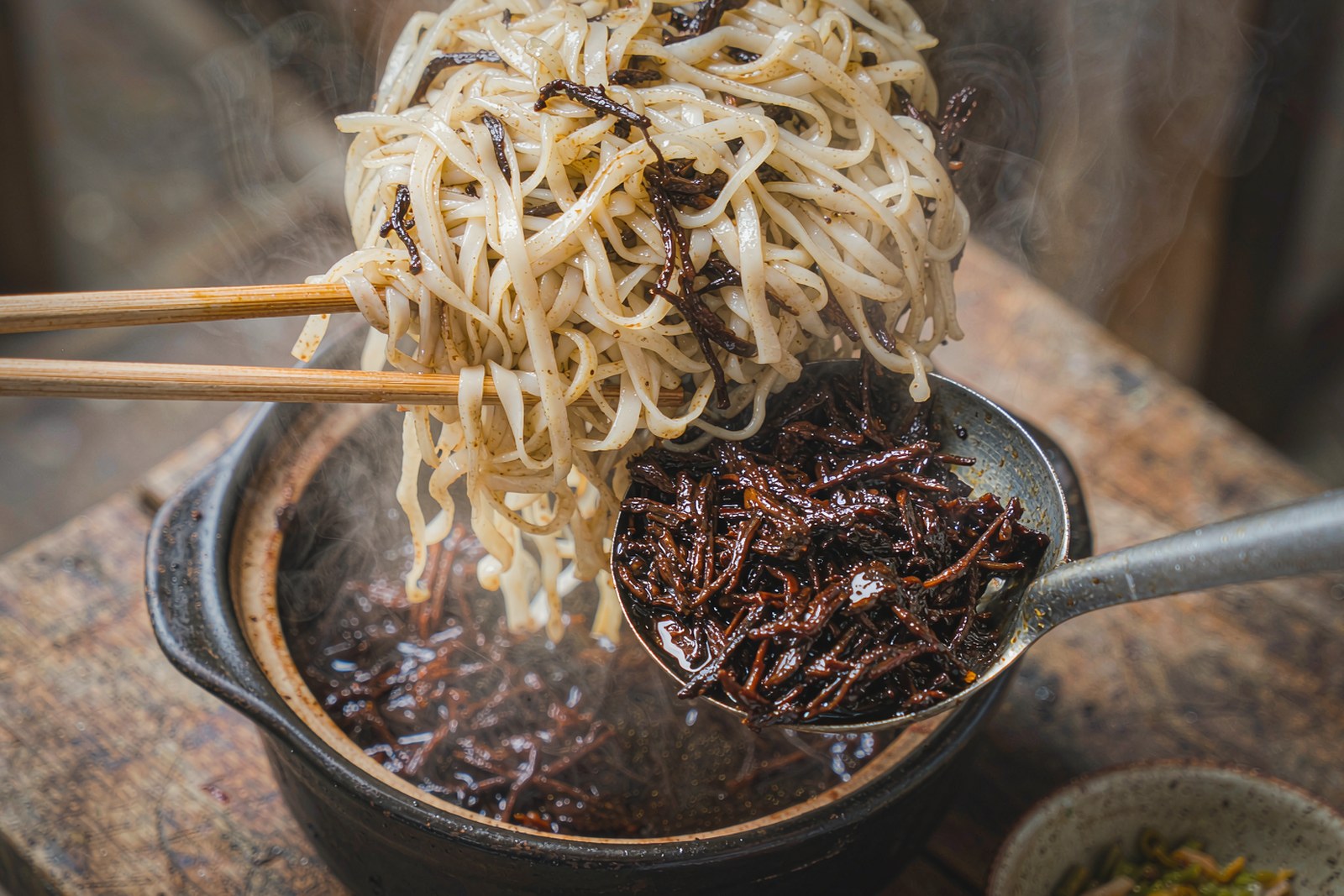
Unpacked, it means three separate things must all be at a hard boil at the moment they meet. The bone broth the noodles are finished in. The plain water they are blanched in. The 煨码 (wei ma), the braised topping that goes over the top, which must come out of a pot that has never been allowed to drop below a roll.
Changsheng logic is full of this kind of folk thermodynamics, and mostly it is nonsense dressed up as wisdom. This one is not. A bowl of rice noodles is assembled in under a minute, and the entire experience — the silkiness of the noodle, the way the broth clings, whether the topping tastes braised or simply warm — depends on whether each element arrived hot enough to do its job. Let anything cool by thirty seconds and the bowl becomes ordinary. 和记’s whole reputation sits on that half-minute.
What to Order
The house 招牌 are 肉丝粉, shredded-pork noodles; 牛肉粉, beef; 三鲜粉, “three fresh”; and 冬菇菜心粉, shiitake and choy sum. All standard Changsha toppings, none of them exotic. That is the point — 和记 is not a shop that invented something; it is a shop that does the ordinary thing correctly.
Order 肉丝粉 first, on your first visit. Shredded pork braised in soy, a spoon of it over the noodles, and broth that tastes mostly of bones and a little of lard. It is the plainest bowl in the shop and the one that tells you whether the broth is any good, which in a north-gate shop is the whole question.
Then add one thing from the condiment counter and stop. 酸豆角, pickled long beans, is the classic. 剁椒, chopped chili, is the other. Both are free. Neither is the dish.
The North Gate and the South Gate
The proverb is worth understanding properly, because it is a precise piece of local geography.
The old city had two food districts, and they specialised. The south gate — 南门口 — was flour, sugar and frying: the buns, the rice cakes, the fried things. The north gate was rice and soup: noodles, broth, braised toppings, the slow 煨码 tradition. One gate was breakfast food you could carry. The other was breakfast food that came in a bowl.
和记 is the surviving monument of that second tradition. So is the style it made: a north-gate bowl is judged on its broth and its 煨码, not on how much chili you can stand or how crisp the skin is. If you have eaten at 周记 down in the old town and found it restrained, 和记 is the same philosophy, one gate north and twenty years older.
The Director Who Said It Could Kill You
The shop has one celebrity anecdote, and it is a good one.
陈晓卿 (Chen Xiaoqing), the director of the documentary series 《舌尖上的中国》 (A Bite of China) — the programme that made regional Chinese food a national subject — ate at 和记 and talked about noodles at the table at length, ending up with the line that has followed the shop ever since: 好吃得不要命 — good enough to kill you. It is the kind of sentence that gets printed on walls. But the reason it stuck is that 陈晓卿’s whole argument as a documentarian is that the most interesting food in China is not in famous kitchens but in everyday ones, and 和记 is exactly the case he was making.
Practicalities
Go in the morning. This is a breakfast shop and its logic assumes you are eating before nine. Six-thirty to eight is when the broth is young and the room is local; after that the toppings start to run down.
The historic address is 外湘春街 (Wai Xiangchun Street) in 开福区 (Kaifu district), the north side of the old city — the street where the widow’s stall stood — and the shop trades today on 湘春路, near the 黄兴北路 junction. Public listings for the current premises are not consistent, and shops like this do move within a street, so check the location before you set out; the metro for the area is line 1 to 培元桥 or 开福寺.
Expect to pay under twenty yuan for a bowl. Take the 肉丝粉 first, and eat it before you touch the condiments.
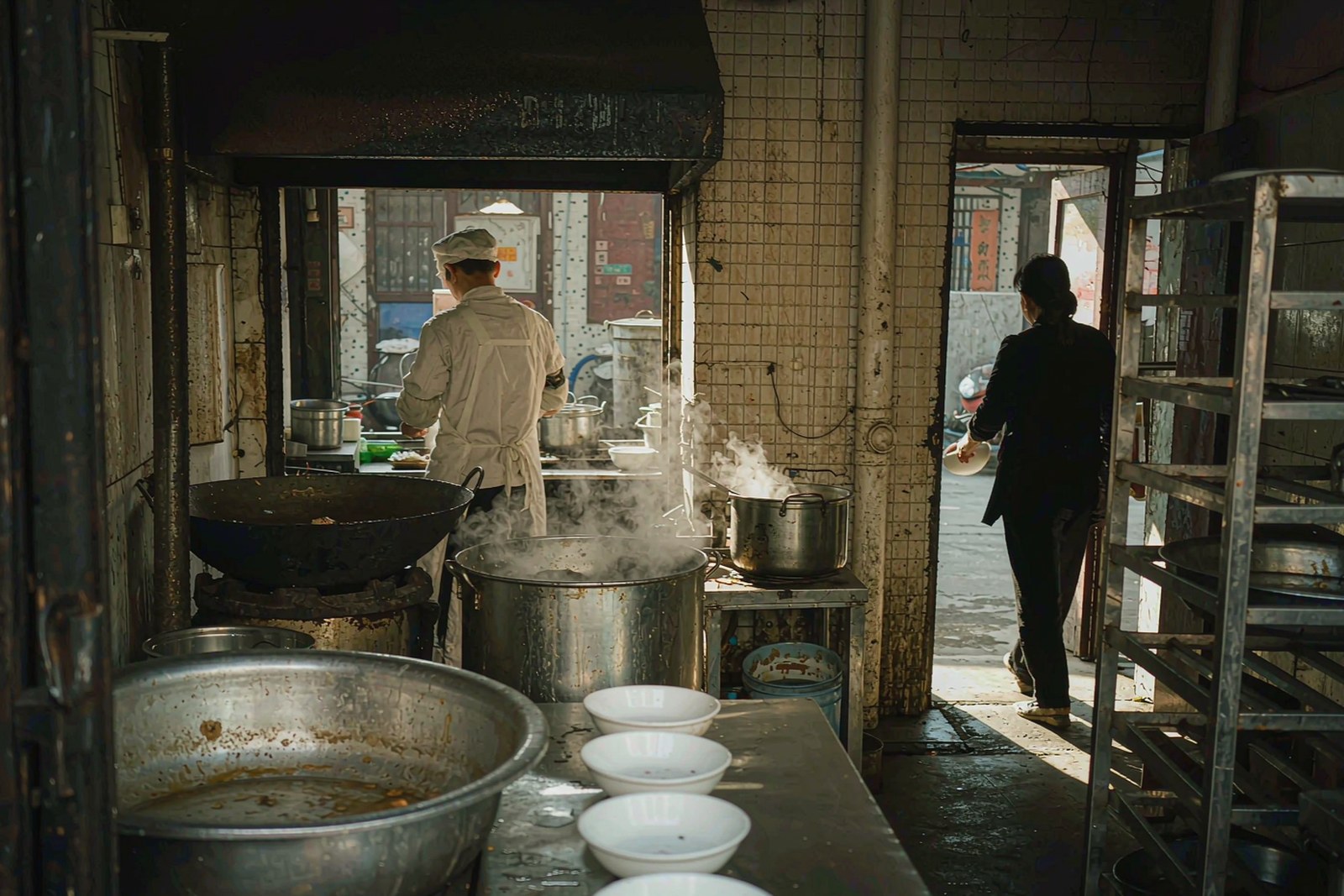
flowcloud would say that the oldest thing in a noodle shop is never the recipe, it is the patience — and that a kitchen which refuses to grind rice until the water runs clear has already told you everything it intends to charge you for.
Where to find it: 和记粉馆 (Heji Noodle Shop), 湘春路, 开福区, Changsha — north of the old city centre, near the 黄兴北路 junction; metro line 1 to 培元桥 or 开福寺. Morning trade, from opening until the toppings run out. Order 肉丝粉 or 牛肉粉; the broth is the reason to come. Under twenty yuan.