Hele Crab
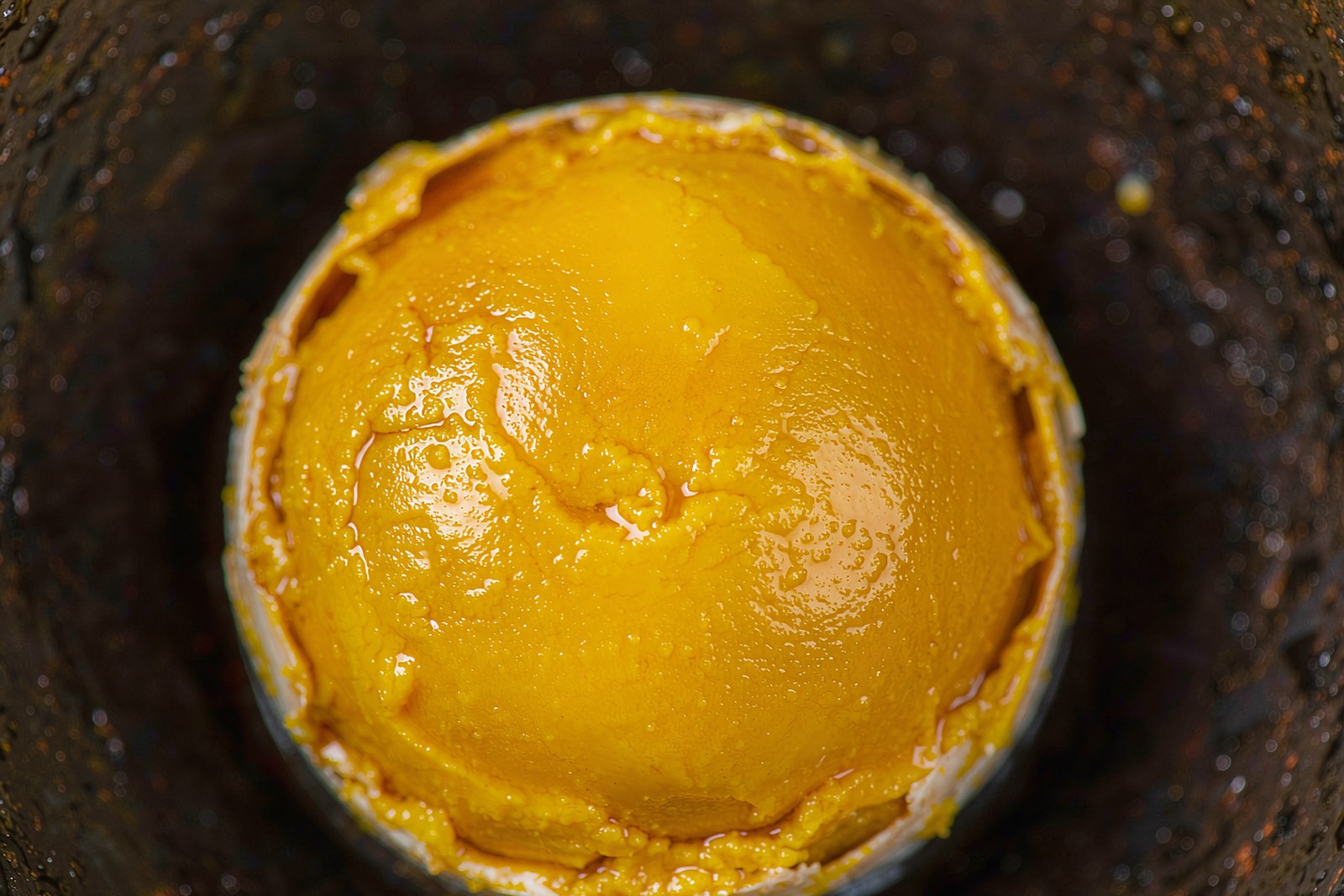
When the lid comes off the plate, what you get first is the colour. It is a deep, saturated orange-red, the colour of a thing that has been cooked simply and well, and under the shell there is a mass of golden roe that glistens like a salted duck egg yolk that has been set in the sun.
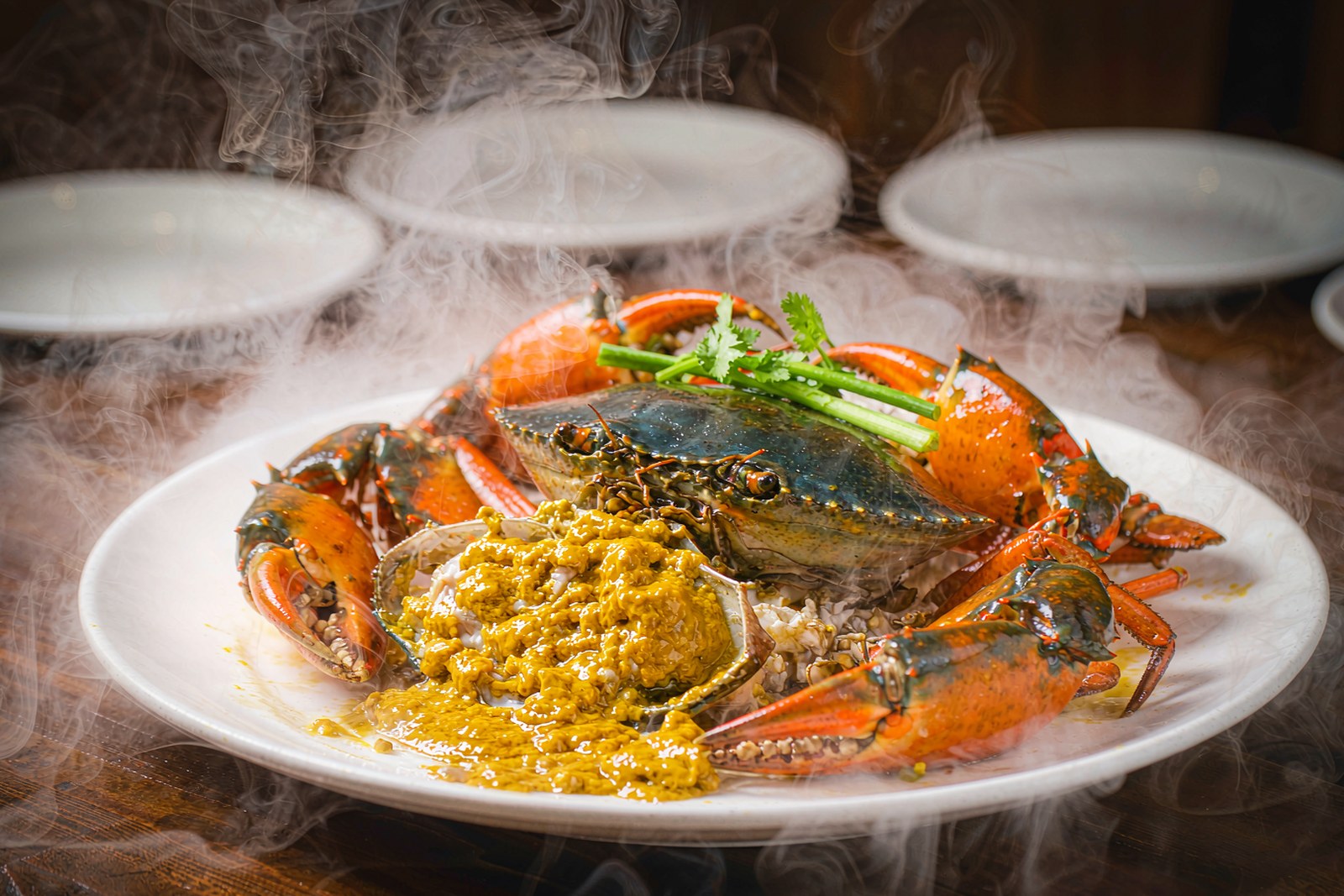
This is 和乐蟹 (Hélè xiè), Hele crab, and it is the only seafood among Hainan’s 四大名菜 (sì dà míng cài) — the province’s four famous dishes. The other three — 文昌鸡, 加积鸭 and 东山羊 — are all land or water-fowl. This is the single dish on that list that comes out of the sea, and it earned its place by being, many people argue, the most luxurious thing Hainan eats.
The Only Seafood on the Famous List
和乐蟹 comes from one specific place: the 小海 (Xiǎohǎi, “Small Sea”) of 和乐镇 (Hèlè Zhèn, Hele Town) in 万宁 (Wànníng) county, on Hainan’s east coast. It is a 锯缘青蟹 (jùyuán qīngxiè, the serrated-edge mangrove crab), and it is a national 地理标志产品 (dìlǐ biāozhì, geographical indication) — which is the official way of saying that this crab is the product of a particular patch of water, and not something you can farm the same way anywhere else.
The reason the crab is so good, and the reason it cannot be replicated, is the water. The 和乐镇 coast is where three rivers — the 太阳河 (Tàiyáng Hé, Sun River), the 龙首河 and the 龙尾河 — all run into the 小海, meeting the sea’s tides. The result is a half-salt, half-fresh lagoon, shallow and fed by both, thick with 海草 and 海菜 (sea grass and sea vegetables) and the small fish and shellfish that the crabs feed on. The 小海 is one of the largest lagoons in China, and its particular mix of nutrients and water is what gives the crab its fat, sweet meat and its extraordinary roe.
The crab’s reputation dates back to the Ming and Qing dynasties, when the local chronicles record it as a dish for officials and wealthy households, and when it was sent to court as tribute — 贡品 (gòngpǐn). The phrase the Hainan people use for it is 海中人参,水上黄金 — “the ginseng of the sea, the gold on the water.”
How You Tell It Is the Real Thing
There are two things that distinguish a true 和乐蟹, and they are worth knowing because the country produces a great deal of crab that is marketed as one.
First, look at the roe. The 和乐蟹’s 脂膏 (zhīgāo, the fat and roe) covers almost the entire back shell — it spreads across the whole underside — and it is firm and set, almost solid, the colour of a salted duck egg yolk. An ordinary river crab has roe that is soft and runny and collected in a single block, and far less of it. The 和乐蟹 has so much that the shells crack open to reveal a solid golden mass.
Second, the meat. 和乐蟹 meat is thick and full-bodied and tender, with a sweetness and a firmness that comes from the fact that these crabs live in fast-moving water where the rivers meet the tide, and have to swim against it. Locals describe it with four characters: 香、鲜、酥、嫩 (xiāng, xiān, sū, nèn) — fragrant, fresh, crisp, tender. The shell is fan-shaped and dark on the back, red on the belly, with the serrated edges that give the species its name, and it is noticeably heavier for its size than a river crab.
How It Is Cooked
There are a dozen ways to cook 和乐蟹 — steamed, boiled, stir-fried, roasted, baked — but there is one way that the island insists upon, and that is 清蒸 (qīngzhēng), steamed plain.
The logic is the same as with 文昌鸡: a seafood this good needs nothing between it and the table. The crab is cleaned, steamed just until the shell turns orange and the roe sets, and then served whole or cracked open, with a dipping sauce rather than any heavy seasoning. The sauce is the classic Hainan accompaniment — 蒜蓉 (minced garlic), 姜蓉 (minced ginger), 海鲜酱油 (seafood soy), a little vinegar and chilli, and a squeeze of the small green 酸桔 (suān jú, calamansi lime) that the island grows everywhere. The squeeze of acid is the move that makes the whole thing sing, cutting through the richness of the roe.
A few of the more elaborate preparations exist for occasions — the 酥炒蟹块 (crisp-fried crab), 金桂蟹黄 (golden osmanthus crab roe), 鲍汁蒜蓉蒸 (abalone-sauce steamed), and the 清蒸 and 金炒 are the two you will most often see. But order the 清蒸 first, and do not let anyone talk you out of it.
The Hard Truth About Authenticity
I have to give you the honest version of this, because almost nobody does.
Authentic 和乐蟹 from the 小海 is now genuinely rare. Over the last couple of decades, over-fishing and changes to the lagoon’s environment have pushed the wild population to the edge, and the true wild and farmed 和乐蟹 produced in Hele town amounts to perhaps a hundred 斤 (about fifty kilos) a day, gathered handful by handful from the local fishermen. The collector buys it from the boats and sends it to a handful of restaurants in 海口, 三亚 and 万宁.
That means the vast majority of “和乐蟹” served across Hainan is a different crab, brought in from elsewhere. The local people will tell you that only at weddings and important family occasions do they go out of their way to buy the genuine article, and even then they have to ask a fisherman they know.
So the practical advice is this: if you want the real thing, go to 和乐镇 itself, and to one of the small restaurants on the 小海, and ask specifically about the crab’s origin. The genuine Hele crab costs well over a hundred yuan a 斤 at the dock — expect to pay a fair restaurant price for it, and to be able to taste the difference. If you simply want a good crab, you will find plenty of good mud crabs around the island, but know that you are not eating the 地理标志 original unless you have gone to the source.
What the Locals Know
- Steamed plain is the only way. Order 清蒸 and let the crab speak. Everything else is a secondary option.
- The calamansi is the secret. The squeeze of green 酸桔 over the roe is the difference between good and memorable.
- Go at the right season. The best crabs are caught in two windows: 清明到端阳 (roughly April to June, when the meat is sweetest) and 中秋到冬至 (autumn to winter). Off-season is a different crab.
- Buy whole, not dressed. Have them show you the whole crab so you can see the roe covering the shell. A pre-broken crab hides its quality.
- Go to the source for the real thing. The 小海 in 和乐镇 is where the genuine 地理标志 crab lives; everywhere else you are likely eating a substitute.
The Name
和乐 (Hèlè) is the town’s name, and it is the name of the crab. It is not a poetic name — it simply means that the crab comes from Hele, in the way that 文昌鸡 means the chicken comes from Wenchang. The characters 和乐 mean “harmony and joy,” which is a fortunate coincidence and a slightly charming one, given that the dish is served at weddings and celebrations. 蟹 (xiè) is simply “crab.”
flowcloud would say that a thing that exists only because three rivers meet a lagoon in exactly one place is not a dish but an argument — and that the best argument for going to the source is that the source is where the roe covers the shell the way it was always meant to.
Where to find it: For the genuine article, go to 和乐镇 (Hele Town) on the 小海 (Xiao Hai) in 万宁 (Wanning) county and order it there. Elsewhere, look for 清蒸和乐蟹 at the better Hainan seafood restaurants in 三亚 and 海口, and ask about the origin. Steamed plain with a dipping sauce of garlic, ginger, seafood soy, chilli and a squeeze of green calamansi. Around ¥100+ per 斤 at the dock for the true 和乐蟹; expect a premium in restaurants. Best from April–June and autumn–winter. It is the only seafood among Hainan’s four famous dishes.