
It arrives in a bowl the size of a washbasin, and it arrives first. Before the cold dishes, before the wine, before anyone has been properly greeted, the 头碗 tóuwǎn lands in the middle of the table and the meal is understood to have begun. It is a tower. On the bottom sit sweet things, above them eggs fried to a wrinkled gold, above those balls of puffed batter and pork, then pale fish balls, then thin slices of salted duck egg, and on the very top a crown of stir-fried pork kidney and wood ear in a glossy sauce. Underneath all of it is broth. This is 衡阳土头碗 Héngyáng tǔtóuwǎn, also called 玉麟香腰 Yùlín xiāngyāo, and no banquet in this city is legitimate without it.
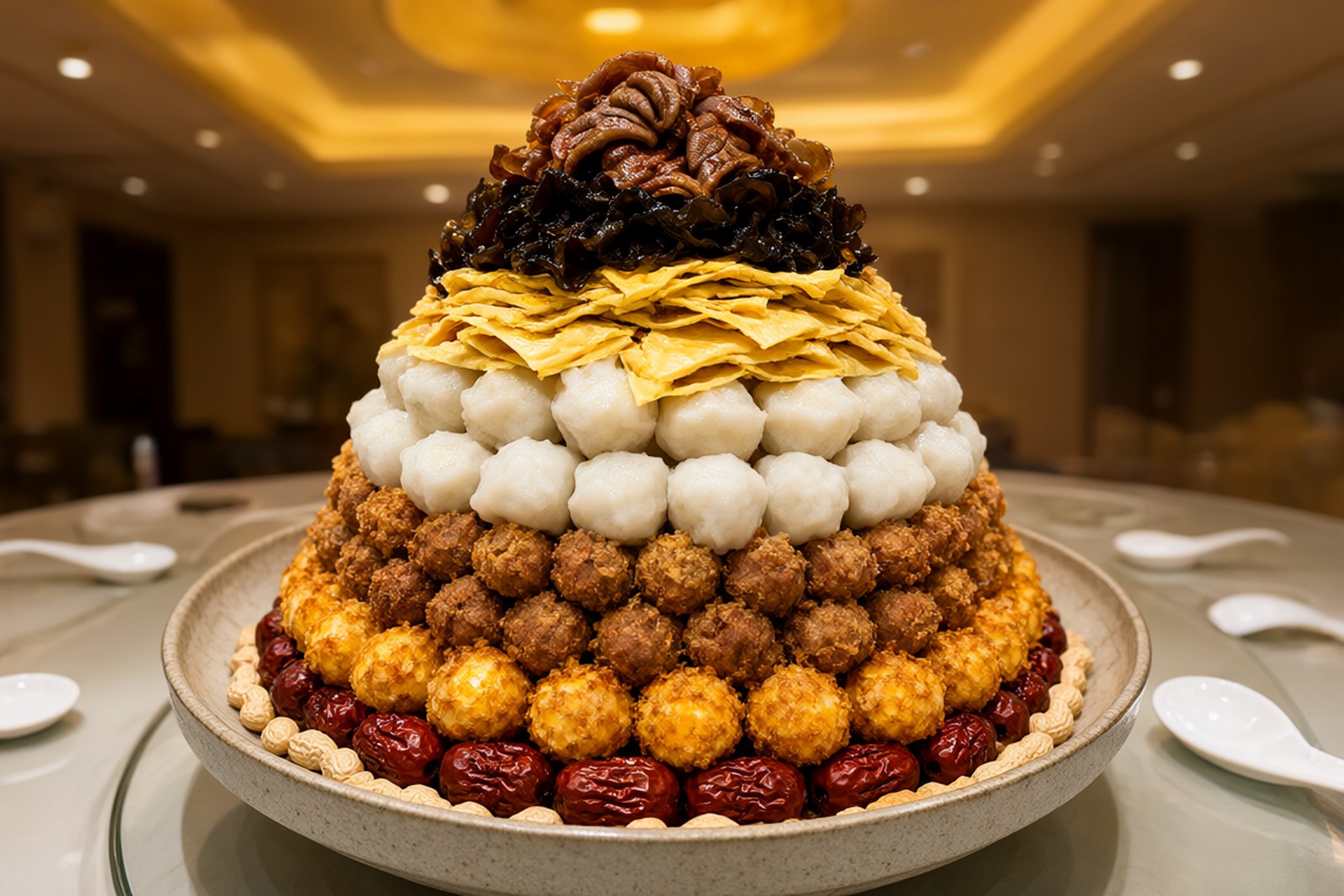
The dish is credited to 彭玉麟 Péng Yùlín, the nineteenth-century naval commander, who was born in 渣江镇 Zhājiāng Zhèn in 衡阳县 Héngyáng Xiàn and who, the story goes, wanted an opening dish for a table of dignitaries that would outshine anything ordinary. He told his cook to gather the best of the region’s small dishes, stack them from broad to narrow so the shape rose like a pagoda, and send them out under one name. 玉麟香腰 — Yulin’s aromatic waist, the waist being the layered middle of a thing — was the result, and the shape was read as 步步高升 bùbù gāoshēng, rising step by step. It migrated from the general’s kitchen into ordinary ones, kept its position as the first dish of a formal meal, and picked up the plainer name most people use now: 土 tǔ, meaning local, honest and cheap, three virtues rather than a criticism. In 1979 it went into the national 中国菜谱 Zhōngguó Càipǔ, the canonical cookery compendium.
Nine Layers and What They Mean
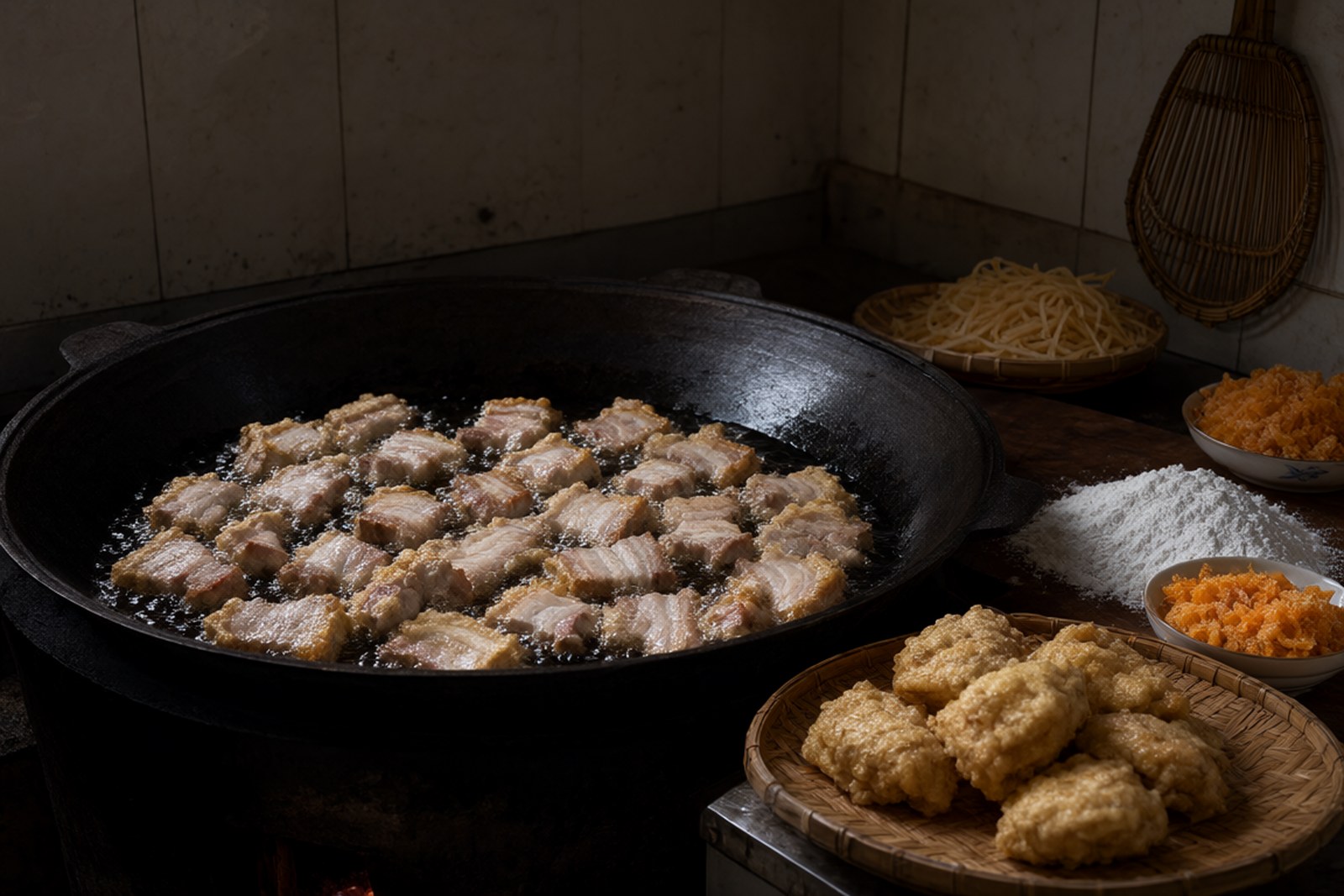
Different kitchens count differently — seven-layer and nine-layer versions are both called 七层楼 qīcénglóu and 九层楼 jiǔcénglóu — but the sequence is stable. Working up: 花生米 huāshēngmǐ, peanuts braised in stock, or 红枣 hóngzǎo, red dates stewed sweet; 虎皮蛋 hǔpídàn, boiled eggs rolled and deep-fried until the whites blister, ideally quail eggs; 锅烧丸 guōshāowán, balls of shredded sweet potato bound with flour and rice flour and fried, also called 红薯坨 hóngshǔtuó; 黄雀肉 huángquèròu, the centrepiece, thin slices of pork belly in a batter sweetened with dried orange peel and 湖之酒 húzhījiǔ and fried until crisp; 蛋片 dànpiàn, thin omelette sheets; 鱼丸 yúwán, hand-beaten grass-carp balls; and finally the 盖码 gàimǎ, the topping of kidney, liver, wood ear, bamboo shoot and red pepper stir-fried and thickened. Each layer is cooked separately before assembly, which is why the work takes most of a day, and the base steams for one to two hours with stock poured over it.
The symbolism is as layered as the food, and locals will happily explain it to you: fish balls for 年年有余 niánnián yǒuyú, abundance year after year; sweet-potato balls for reunion; dates for early good fortune; eggs for completeness. They are the sort of meanings nobody thinks about while eating and everybody notices when the dish is missing.
Words and Names
头碗 tóuwǎn is the first bowl, and the word also names the enormous civilian serving bowl — roughly 40 centimetres across — that gave the dish its shape. 玉麟香腰 Yùlín xiāngyāo, 宝塔香腰 bǎotǎ xiāngyāo for the pagoda shape, and 管堆子香腰 guǎnduīzi xiāngyāo are the older names. 黄雀肉 huángquèròu, literally sparrow meat, has no sparrow in it; 锅烧丸 guōshāowán and 红薯坨 hóngshǔtuó are the same sweet-potato ball. 盖码 gàimǎ is the finishing topping, 湖之酒 húzhījiǔ the local sweet rice wine, and 扣碗 kòuwǎn the technique of packing a bowl and turning it out.
What the Locals Know
Do not start at the top. A local will take from the middle first, where the batter-fried pork and the fish balls have been soaking in the juices of everything above them, and will leave the sweet base for last. If the fish balls are bouncy rather than tender, the fish was frozen — at this altitude of formality that is a real complaint, not a quibble. The dish is heavy and is meant to be shared by six or more; two people ordering one will not finish it and should not try. If you see 海参香腰 hǎishēn xiāngyāo on a menu, that is the same tower with sea cucumber on top, and the price will say so. Expect ¥80 to ¥160 in a serious restaurant, less in a plain 土菜馆 tǔcàiguǎn, and expect to wait — some houses ask for the order an hour ahead. Places that come up repeatedly are 陆府酒楼 Lùfǔ Jiǔlóu and the countryside kitchens around 茶山坳 Cháshān’ào in 珠晖区 Zhūhuī Qū.
flowcloud would say that 土头碗 is a dish that only makes sense in a place with real winters and real family tables, since it exists to be too much food, deliberately, in the name of an occasion.
Where to find it: the banquet restaurants and 土菜馆 tǔcàiguǎn of 衡阳市 Héngyáng Shì, especially around 珠晖区 Zhūhuī Qū and the old 金甲岭 Jīnjiǎlǐng area, plus the 衡东 Héngdōng country-cooking houses that treat it as their signature. Order it as 土头碗 or 玉麟香腰, ask how many layers the kitchen builds, and go with at least four people.