
Three Sips and a Full Bowl: Highland Barley Wine
三口一杯敬远客,青稞酿出雪原歌 Sān kǒu yī bēi jìng yuǎn kè, qīngkě niàng chū xuěyuán gē – Three sips and a full bowl honor the far-come guest; barley brews the songs of the snow plain
青稞酒 qīngkě jiǔ highland barley wine, chang, is the plateau’s home brew – whole highland barley steamed, cooled and fermented with a yeast starter, then steeped and strained into a milky, lightly sour drink of only a few degrees of strength. In the villages around 西藏自治区日喀则市 Xīzàng Zìzhìqū Rìkāzé Shì Shigatse it is brewed after every harvest, and in the city it carries the weight of ceremony: festival toasts, wedding bowls and the famous welcome ritual that travelers meet the moment they cross a farmhouse threshold.
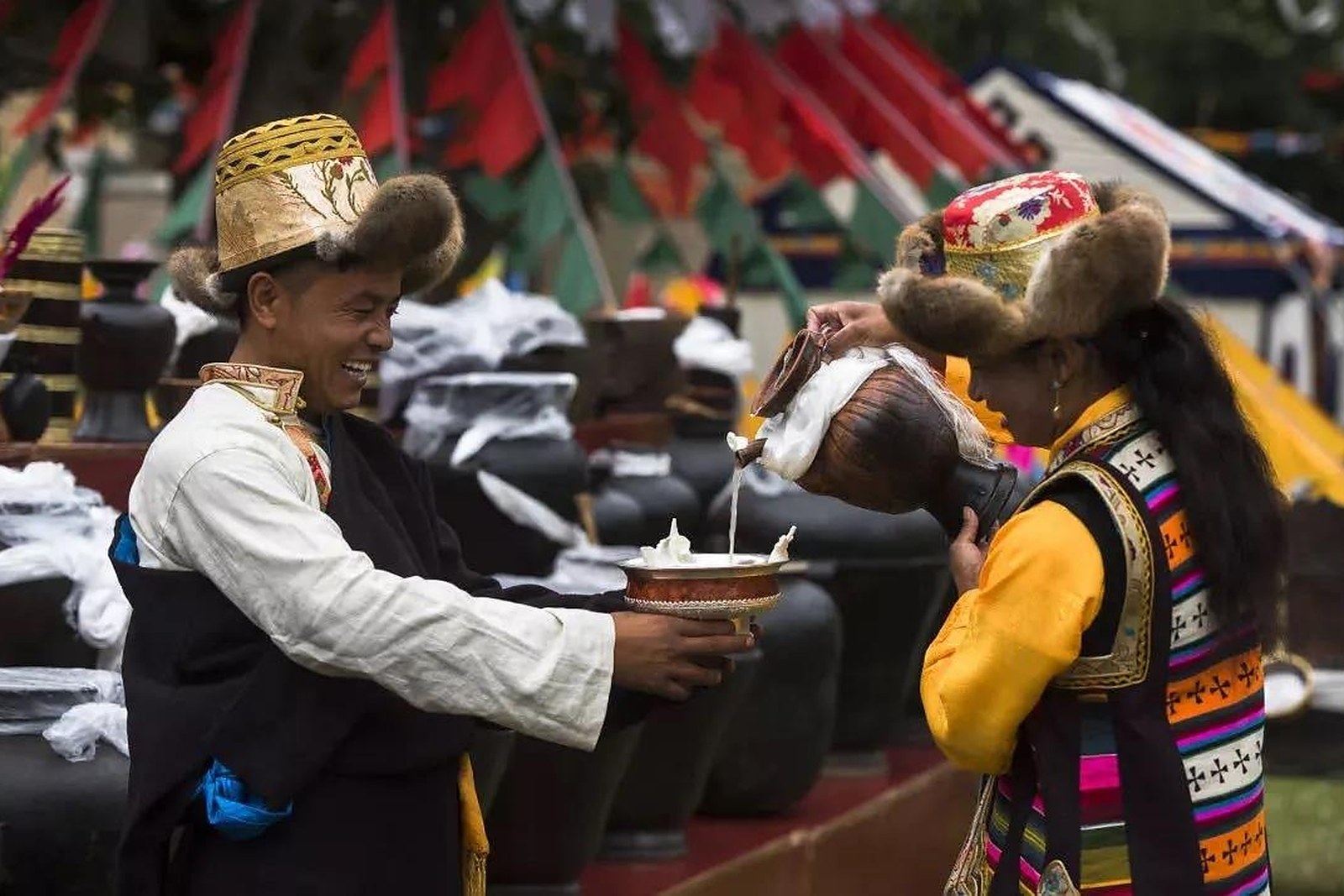
The welcome ritual is the heart of it. A guest is handed a bowl topped with a pinch of butter; you drink a first sip, the host refills; a second sip, refill again; and on the third the bowl must be drained to the bottom – three sips, one full bowl, in a sequence that turns a drink into an introduction. The rule is gentle but real: refuse outright and the host’s smile thins; play the ritual through and the table opens, the songs start, and the thermos keeps coming.
The taste surprises lowland palates. Chang is barely alcoholic – a few degrees at most – but it pours thick, milky pale gold, sweet-sour on the first sip with the roasted warmth of the barley underneath, faintly fizzy and dangerously easy at altitude. Farm-table chang comes from thermos flasks with the grain’s sediment still in it; city restaurants bottle a cleaner version; and festival tents smell of warm grain and yeast from the moment the first bowl is poured.
What chang really carries is the social year. Harvest brews mark the fields’ success; New Year bowls run from house to house for days; and the songs that accompany refills – call-and-response couplets older than anyone singing them – turn every drinking table into a small performance. The barley that fills the cup is the same crop that fills the tsampa bag, and between bowl and bag the plateau’s one great grain does both of its jobs: food and celebration, side by side.
The same 西藏自治区日喀则市 Xīzàng Zìzhìqū Rìkāzé Shì Shigatse holds more flavors worth chasing: 朋必 péngbì the grasped pea-starch snack, 藏面 zàng miàn the yak-broth noodle bowl, 藏包 zàng bāo the steamed yak-meat buns, or 奶渣 nǎizhā the dried cheese curds – four more doors into the same Shigatse table.
Words and Names
青稞酒 qīngkě jiǔ highland barley wine, chang; 青稞 qīngkě highland barley, the plateau’s staple grain; 三口一杯 sān kǒu yī bēi three sips and one full bowl, the welcome ritual; 酒曲 jiǔqū the yeast starter that drives the ferment; 敬酒歌 jìngjiǔ gē the toast songs that refill the bowl; 酥油 sūyóu the pinch of butter that crowns the guest’s bowl.
What the Locals Know
The pour is the politeness – a host who tops your bowl before you ask is paying you the highest compliment, and the correct response is pace, not refusal. The first bowl is ceremonial and the second is conversation; by the third, the songs decide the tempo. And the vintage question is real: every household’s chang tastes of its own yard, its own water and its own starter, which is why locals ask whose brew, not how strong. All checked November 2026.
flowcloud would say chang is the harvest in a bowl: the valley’s one grain turned celebration, drunk by ritual, sung into refills, and always poured before the question is asked.
Where to find it: Village guesthouses and farm tables around the Nyang valley pour the real thing after harvest; city Tibetan restaurants stock bottled chang year-round, and festival tents pour it by the thermos. All checked November 2026.