
Raw Crab, Red Roe: the Cold Dish That Rules Ningbo Tables
红膏一冻琥珀色,盐水一炝满桌鲜 Hónggāo yī dòng húpò sè, yánshuǐ yī qiàng mǎn zhuō xiān – The red roe chills to amber; one brine-curing and the whole table turns fresh
红膏炝蟹 hónggāo qiàngxiè red-roe marinated crab is the cold dish that sits at the head of every Ningbo feast table – a live swimming crab drowned in cool saturated brine for hours, then served raw, its roe cured to a slab of translucent amber and its flesh turned dense, sweet and faintly saline like the sea condensed. The technique is Ningbo’s oldest preservation trick upgraded to art: just enough salt to firm the meat without curing it stiff, timing that varies with the season’s crab, and a chill that sets the famous roe to jelly. One crab cut into pieces dresses a table; the rice cooked after it is not optional.
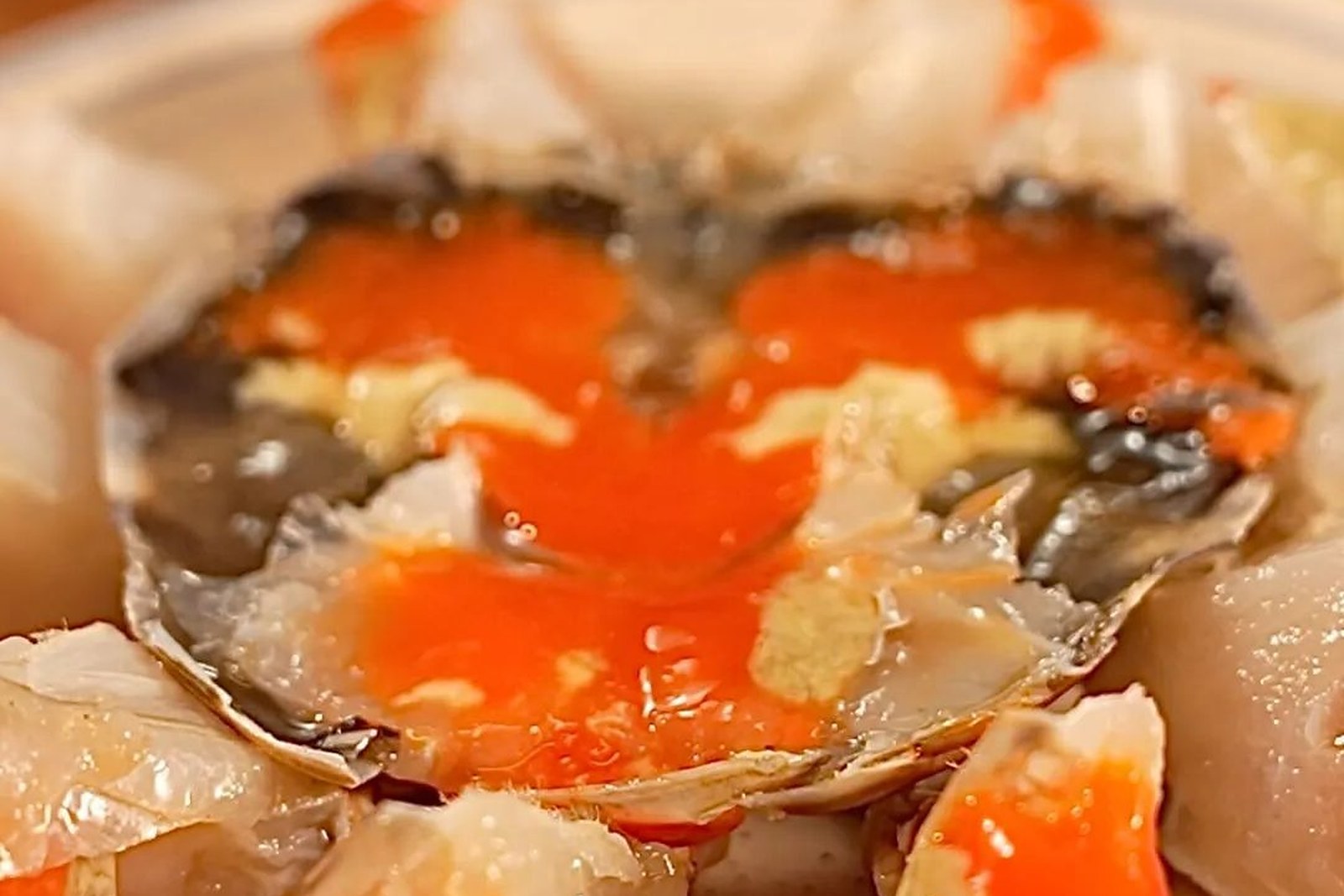
The grade is all in the roe: 满膏 mǎn gāo full-roe hens, caught in the cold months, carry the amber slab that photographs like stained glass. Fishermen’s wives in Shipu still cure their own, and the market stalls around the harbor sell the crabs already brined – eat them within a day, and never at room temperature for long.
The dish anchors the 腌笃鲜-style coastal pantry logic: the sea preserved just enough to keep, eaten cold against hot rice and hot soup. Ningbo banquet menus open with it the way other cuisines open with ham, and locals judge a seafood restaurant within the first piece – roe set but not hard, flesh sweet with no harsh salt edge.
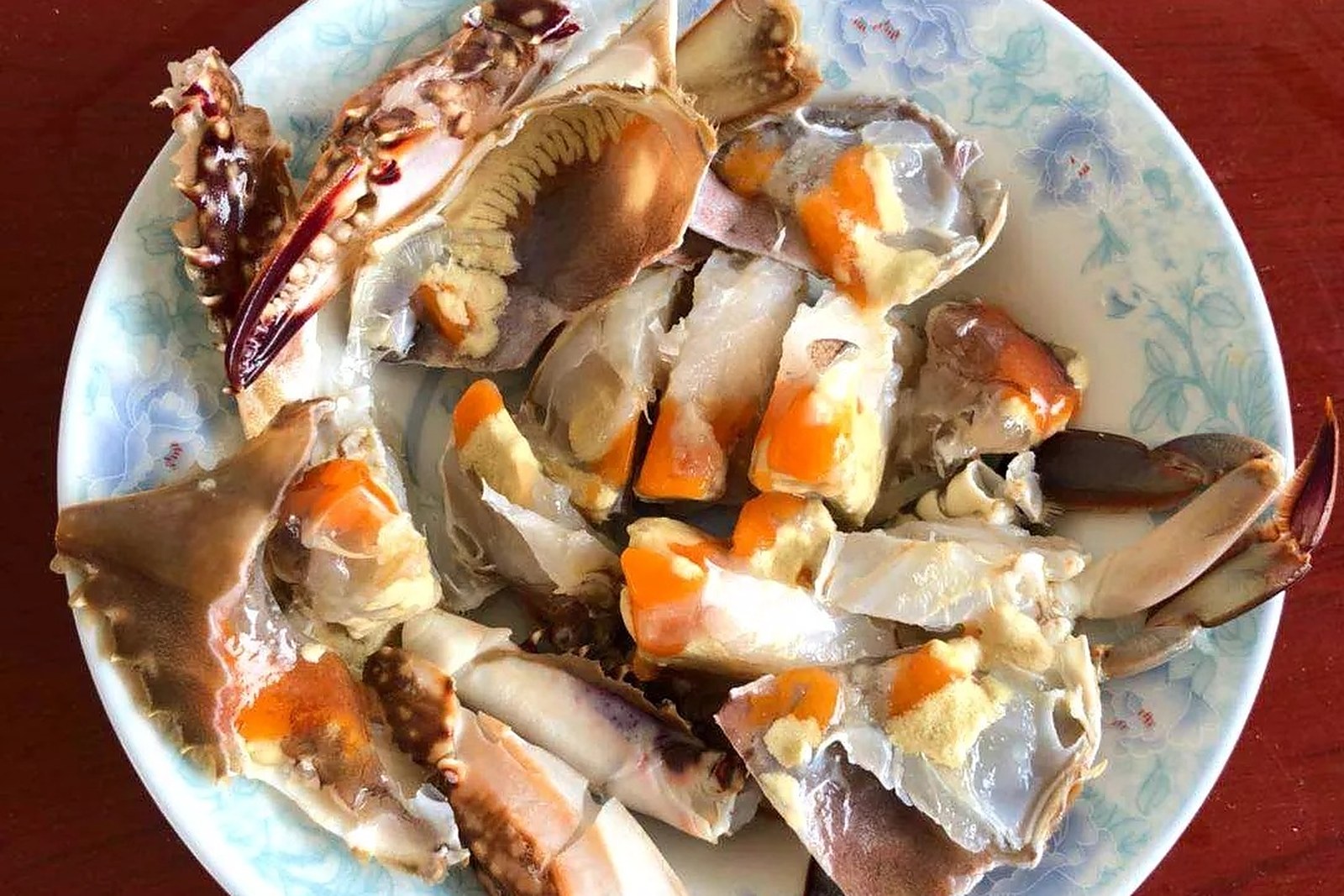
Eat it the local way: pieces cold from the fridge, dipped in nothing or a breath of rice vinegar, over steaming white rice – the contrast is the point. First-timers should start with a leg piece; the body carries the full brine hit, and the roe piece is the finale you work toward.
The same city holds more flavors worth chasing: 宁波汤圆 Níngbō tāngyuán the black-sesame soup rounds, 宁波年糕 Níngbō niángāo the water-milled rice cakes, 雪菜黄鱼 xuěcài huángyú the pickled-greens croaker soup, or 水晶油包 shuǐjīng yóubāo the sweet lard buns – four more doors into the same 宁波市 Níngbō Shì Ningbo City table.
Words and Names
炝蟹 qiàngxiè brine-marinated crab, the coastal cure; 红膏 hónggāo the red roe that names the dish; 满膏 mǎn gāo full-roe, the grade that matters; 石浦 Shípǔ the fishing port where the best crabs land.
What the Locals Know
Brine timing is the family secret – hours, not days, adjusted by water temperature and crab size – and the tell of an over-cured crab is flesh that strings instead of flaking. Purists buy live hens and brine at home; everyone else follows the harbor stalls, and both agree the dish dies in the freezer.
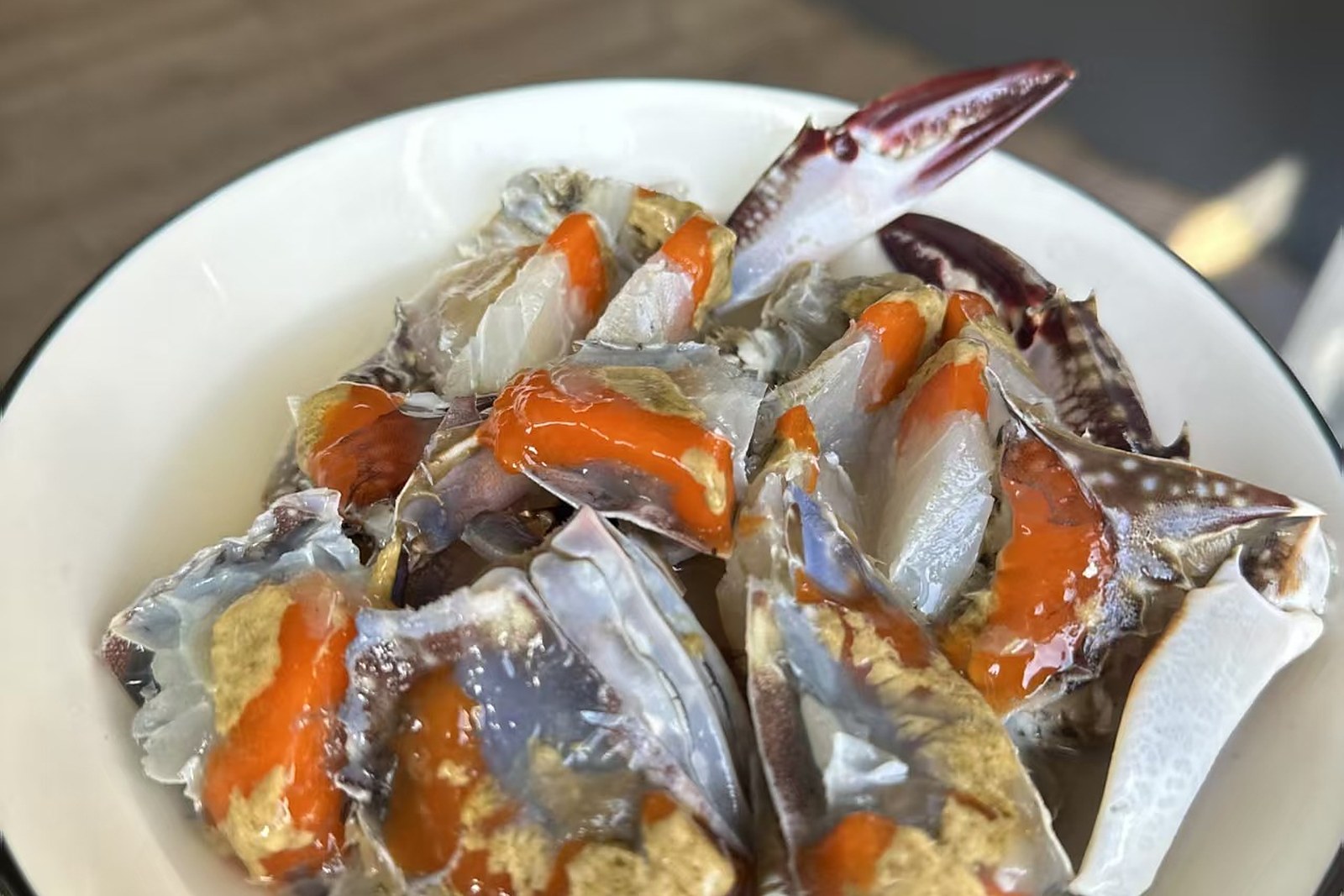
flowcloud would say honggao qiangxie is the sea at its most confident: raw crab that needs nothing but salt and cold, roe cured into amber glass – a dish that opens a feast the way a stamp opens a year of letters. All checked November 2026.
Where to find it: Marinated-crab counters sit in the seafood halls of 石浦 Shípǔ Shipu and the cold-dish cases of Ningbo’s restaurant rows around 天一广场 Tiānyī Guǎngchǎng Tianyi Square – the pick is any case holding amber-roe hens cut to order, priced by season, best eaten the day of purchase. All checked November 2026.