
The Valley That Stains Your Hands: Honghuayu Mulberries
一峪桑烟红五月,紫珠入口手难白 Yī yù sāng yān hóng wǔyuè, zǐ zhū rù kǒu shǒu nán bái – One valley goes mulberry-red in May; eat the purple beads and your hands will not stay white
红花峪桑葚 Hónghuāyù sāngshèn ripens each early summer in the mulberry orchards of 罗庄子镇 Luózhuāngzǐ zhèn Luozhuangzi town in 天津市蓟州区 Tiānjīn Shì Jìzhōu Qū Jizhou District – fat purple-black fruit from valley groves that hold the region’s geographical-indication listing, and a picking season that turns the whole hamlet into a roadside market. The fruit runs sweeter and longer than the plain hedgerow mulberry, which is why the valley got its own name on the label.
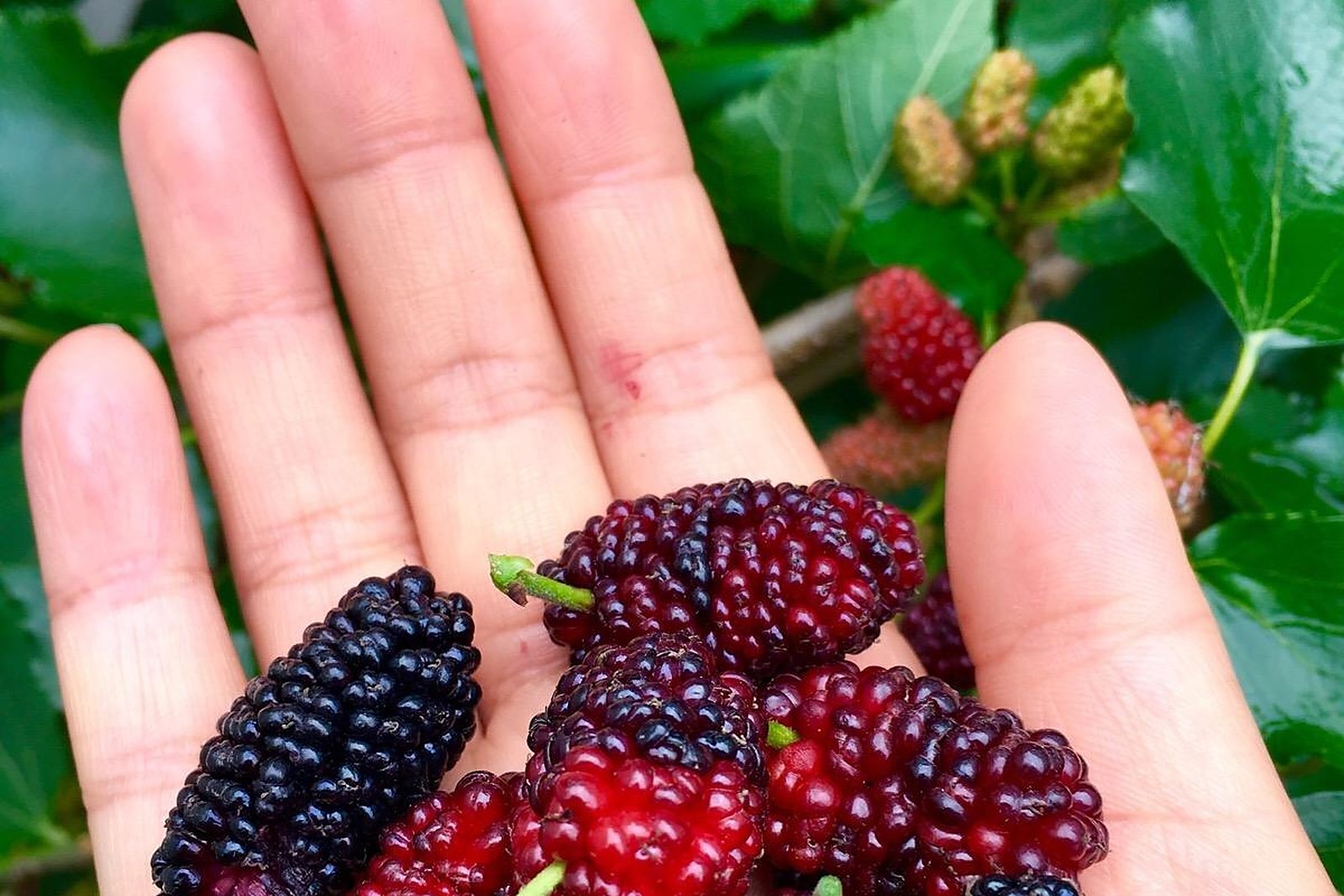
The harvest is hands-on by definition. Pickers walk the rows with shallow baskets, the ripe fruit coming off the branch with the lightest pull, and the staining juice is the honest receipt of a morning’s work – purple fingertips for days. The groves keep low heads for exactly this reason: children pick alongside grandparents, and the rows hum like a village holiday.
The fruit splits into two trades. Fresh mulberries sell same-day at the valley stalls and the town markets – fragile, jam-sweet, gone in a day – while the surplus dries or turns into mulberry paste and wine at the village workshops. The dried berries steep into a dark tea the mountain households drink all winter, and the paste folds into the same farmhouse breakfast spread as the cured eggs.
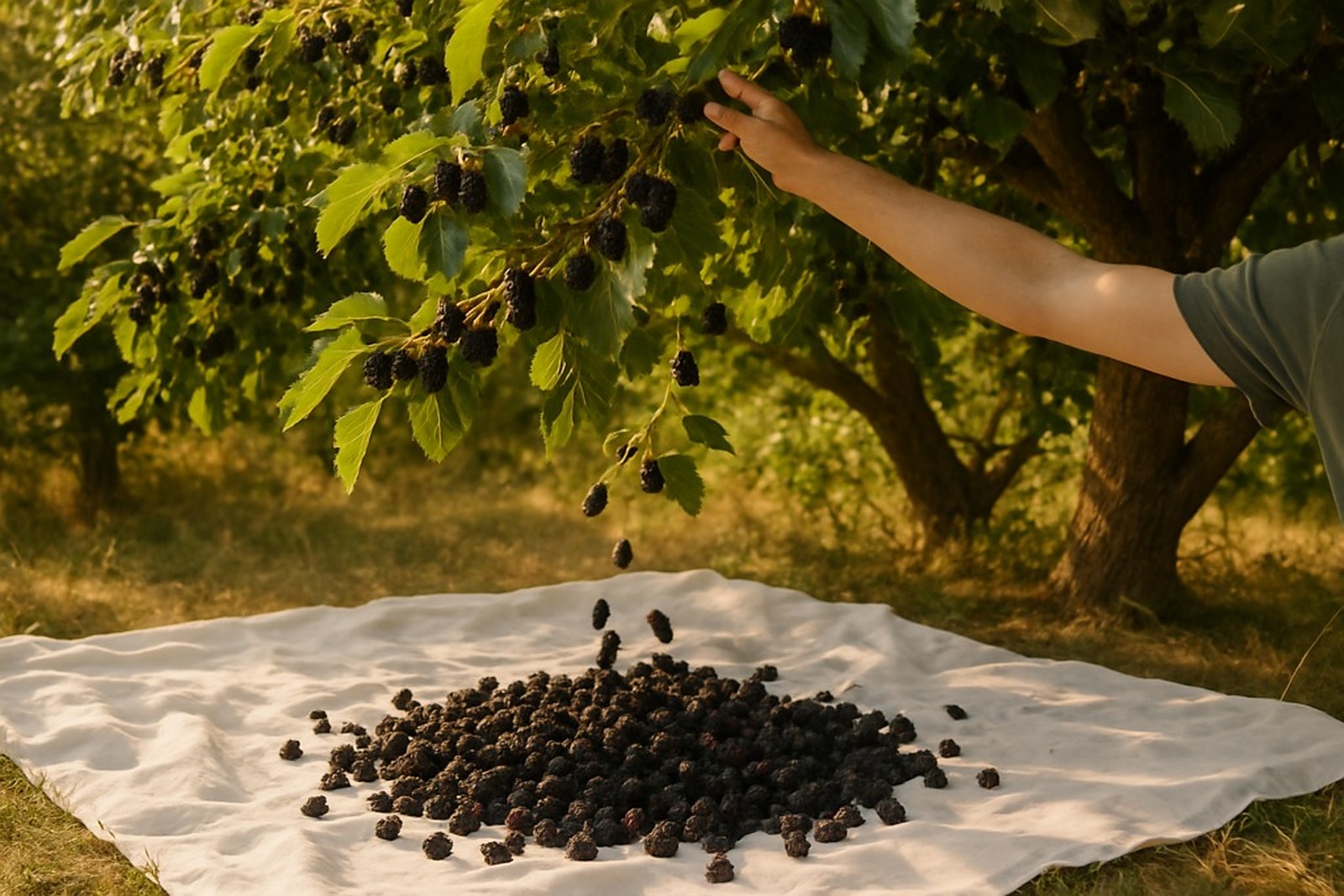
The season is short and the valley knows it. Three weeks of May into June carry the whole crop, weekends fill with Tianjin families driving up for the picking, and the orchard gates weigh baskets by the kilo with the same brass scales their fathers used. Come July the trees rest, the stalls fold, and the valley’s year has already been made.
The same 天津市蓟州区 Tiānjīn Shì Jìzhōu Qū Jizhou District holds more flavors worth chasing: 贴饼子熬小鱼 Tiēbǐngzi áo xiǎoyú the iron-pot fish and cakes, 麻酱鸡蛋 májiàng jīdàn the sesame-cured eggs, 州河鲤 Zhōuhé lǐ the reservoir carp, or 咯吱盒 Gēzhī hé the fried mung-bean rolls – four more doors into the same Jizhou table.
Words and Names
桑葚 sāngshèn the mulberry; 红花峪 Hónghuāyù the valley that names the fruit; 采摘 cǎizhāi picking, the season’s whole economy; 桑葚膏 sāngshèn gāo the mulberry paste; 地理标志 dìlǐ biāozhì the geographical-indication listing.
What the Locals Know
Color, not size, grades the fruit: the blackest berries are sweetest, the red ones still argue, and a white-shouldered berry means the row needs another day. Rain the day before picking waters down the sugar – regulars wait out one dry spell before driving up. And the wise visitor brings a flat basket, not a bag; a kilo of mulberries stacked in plastic arrives home as juice. All checked November 2026.
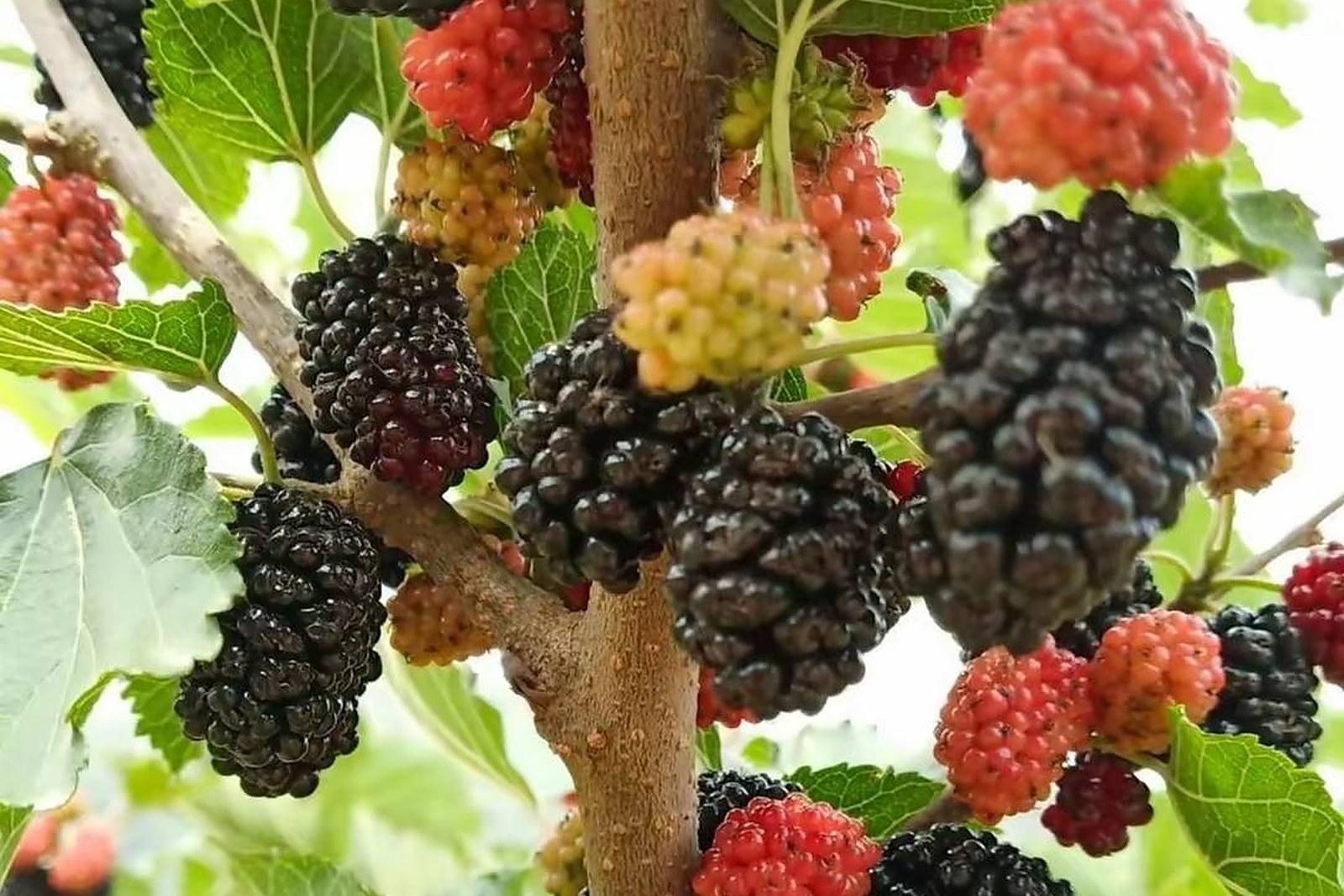
flowcloud would say the mulberry valley runs on a three-week year: one crimson month when the whole district remembers the road to Luozhuangzi, and eleven of patient jam.
Where to find it: The orchard stalls in the mulberry valley sell the morning pick in season, and the town shops stock the village paste, wine and dried fruit all year. All checked November 2026.