
Red-Willow Skewers: The Tamarisk-Branch Lamb Roared Over Charcoal, Juices Running Down the Twig in the Night Markets of Urumqi, Xinjiang
红柳为签肉为魂,炭火一夜满巷烟。Hóngliǔ wéi qiān ròu wéi hún, tànhuǒ yī yè mǎn xiàng yān – Red willow for the skewer, lamb for the soul; one night of charcoal and the whole lane breathes smoke.
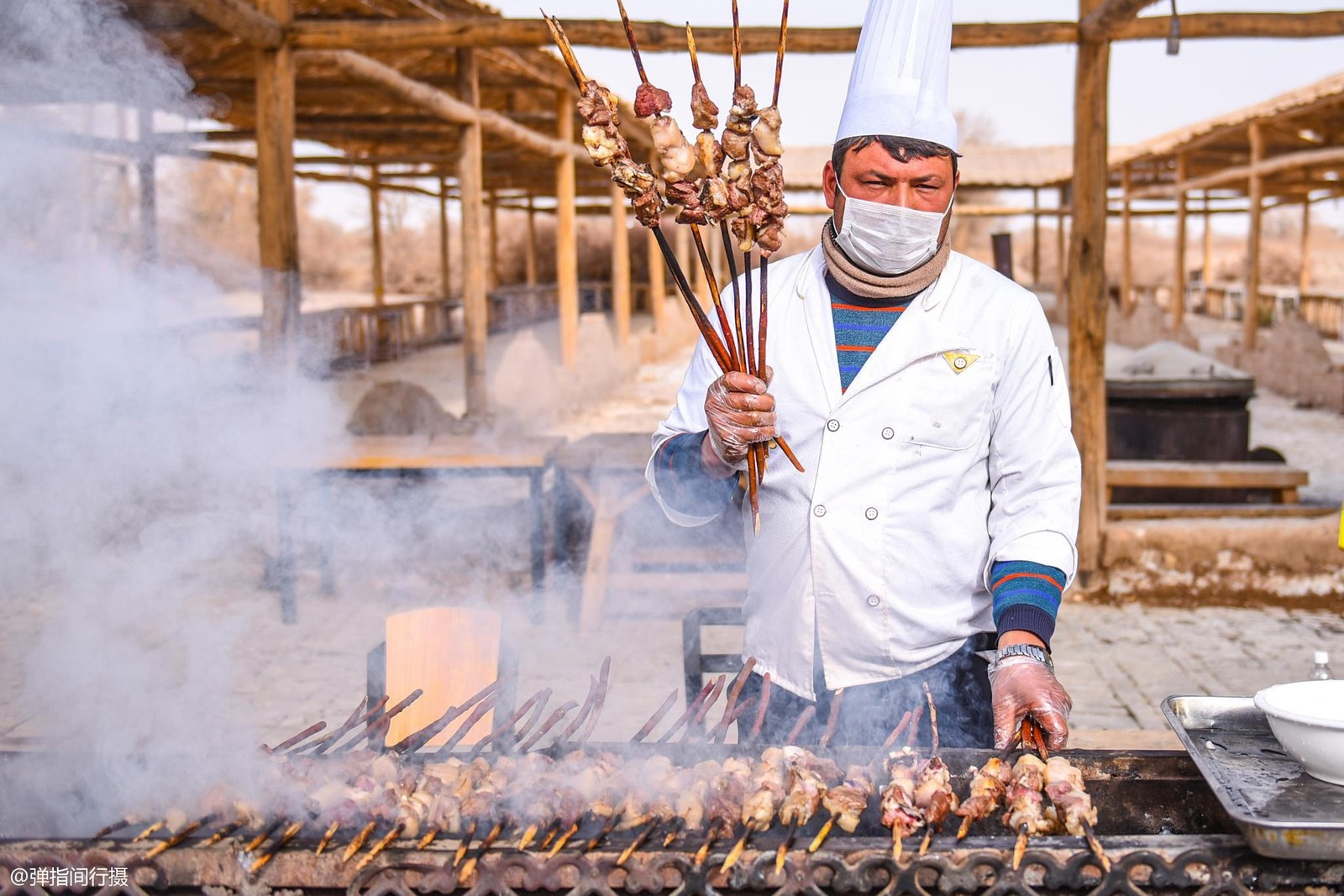
红柳烤肉 Hóngliǔ kǎoròu red-willow skewers are the grill’s loudest signature in Urumqi – fists of lamb threaded onto split twigs of 红柳 hóngliǔ red tamarisk, the woody stems bleeding a faint sap into the meat as the charcoal roars. The twig is the point: thicker than any bamboo stick, it keeps the meat’s centre rare-sweet while the fat crisps, and the bark perfumes the crust in a way steel needles never will. Skewer men work the night corners of the bazaar quarter and the neighbourhood grill rooms in between, fanning coals with cardboard squares, dusting the meat with cumin and chilli at the last breath. The register is street-side plenty: paper-thin naeng as a plate, raw garlic cloves on the side, fingers doing the cutlery.
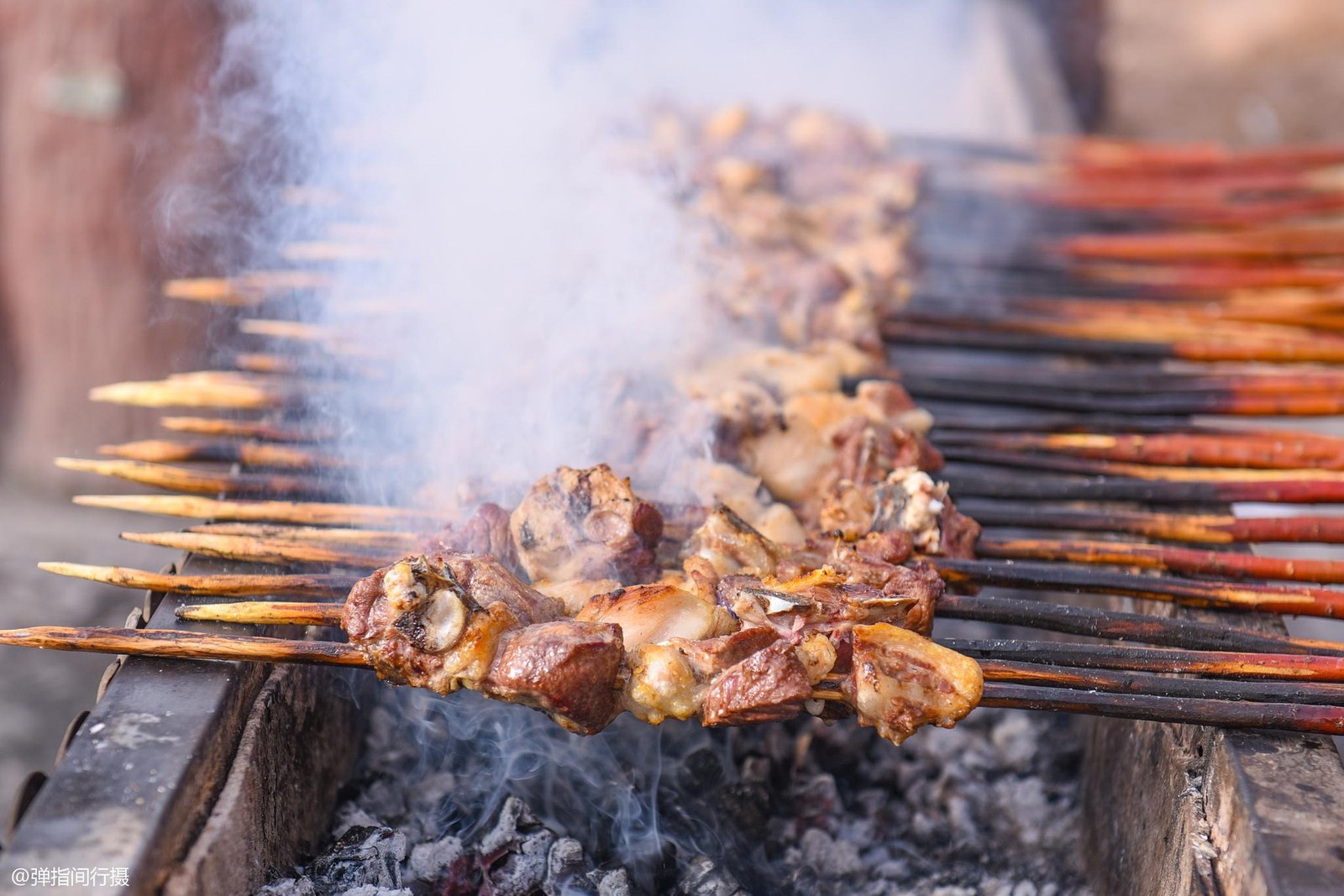
Call it honestly: charcoal money by the stick. Getting there is one door: the heaviest grill rows ring the 大巴扎 Dàbāzhā Grand Bazaar’s night face and spill down the side streets of 二道桥 Èrdàoqiáo Erdaoqiao (worth confirming the details for the night rows’ hours, which the season lengthens and the winter wind shortens), and the neighbourhood 烤肉 kǎoròu rooms grill all evening for the local tables without a tourist metre running. A skewer prices at street-money by the stick, a grill-table feast at well-under-a-hundred-yuan money for a hungry pair – though exact figures are worth confirming the details on rather than quoting, the sticks repricing with the lamb market. The crowds run to the evening: the lanes fill after sundown, the smoke runs thickest before the late buses, and a pre-dusk first seating, when the coals are fresh and the first lambs of the night are still pink in the middle, is the eater’s own hour.
The honest star is the twig itself – 红柳 hóngliǔ red tamarisk, split green and pointed by hand. What gets oversold is the “exotic game” framing: the grill rows sell theatre, but the classic skewer is simply good lamb, salt, cumin and fire, and the twig’s sap is a whisper rather than a sauce. What repays is the difference the branch makes: the fat stays where steel would let it drip, the crust takes the bark’s faint pepper-grass note, and the meat’s centre keeps a juiciness the thin-stick rows of other cities cannot hold (worth confirming the details for which houses cut their own twigs and which buy them bundled, grill doors turning over as seasons do).
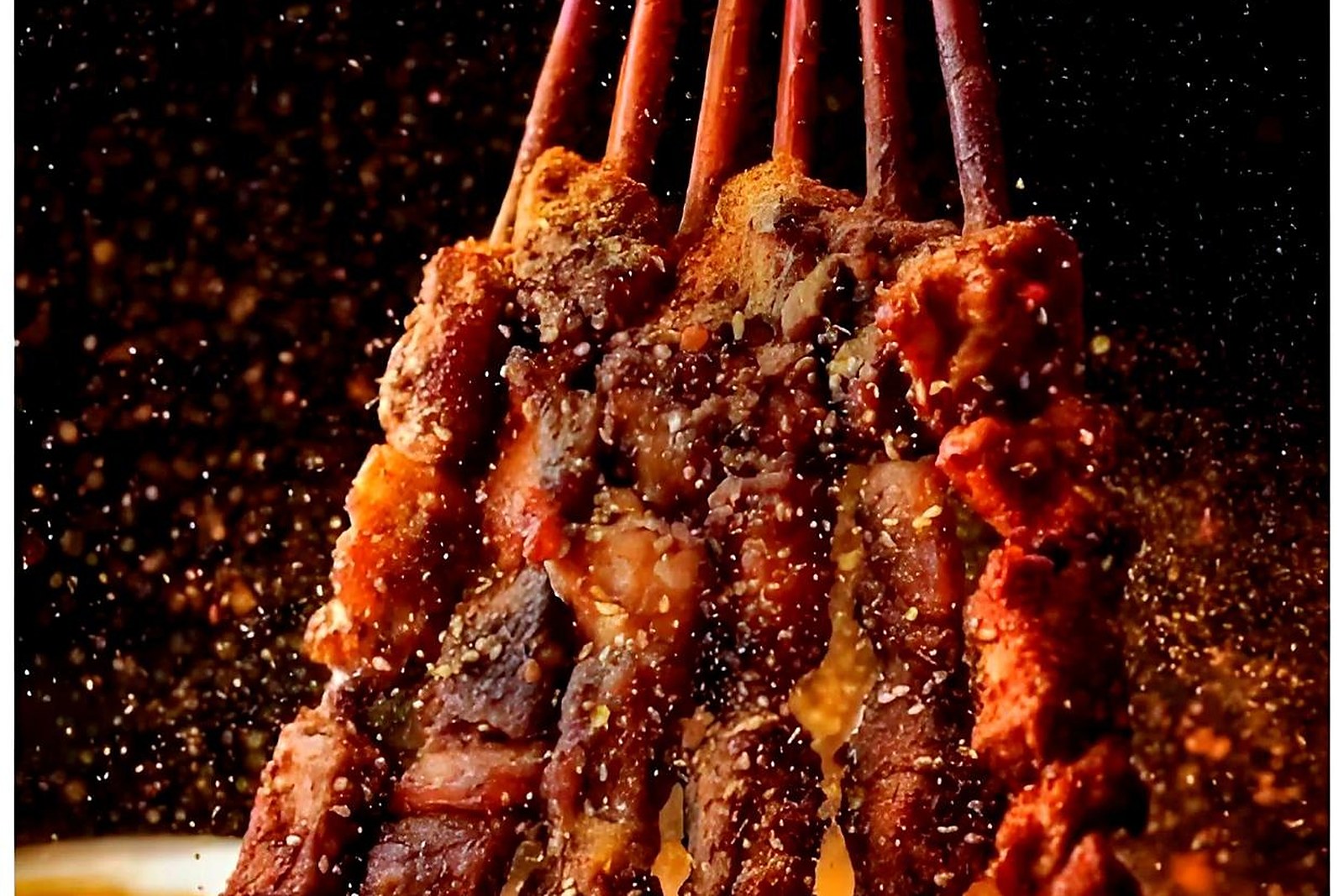
The town’s deepest habit is the skewer’s arithmetic: lamb counted in sticks, not plates – a measure that makes the grill the city’s cheapest feast and the reason the night lanes walk with everyone holding three or five, the smoke following the crowd home.
The rest of this Urumqi list keeps other tables: the group platter of 新疆大盘鸡 Xīnjiāng dàpánjī the big plate chicken anchors the indoors, the golden rice of 羊肉抓饭 Yángròu zhuāfàn the lamb pilaf steams the noon, the tandoor crust of 馕 Náng the nang bread rides in every bag and the pulled ribbons of 拉条子 Lātiáozi the latiaozi fill the noodle houses – four more doors into the same 乌鲁木齐市 Wǔlǔmùqí Shì Urumqi City.
Words and Names
What the Locals Know
flowcloud would say that the 红柳烤肉 Hóngliǔ kǎoròu is the charcoal’s arithmetic and the night lane’s handshake – lamb by the stick, smoke by the metre, cumin on the wind – and that the honest move is to eat the first skewer plain, let the twig’s whisper speak before the chilli does, and follow the smoke to whichever coals burn loudest, because the lamb set the price and the twig keeps the score. All checked November 2026.
Where to find it: 乌鲁木齐市 Wǔlǔmùqí Shì Urumqi City, Xinjiang – the night grill rows of the Grand Bazaar quarter and the neighbourhood 烤肉 kǎoròu rooms between, where the 红柳烤肉 hóngliǔ kǎoròu red-willow skewers keep the stick-count register and the cumin-chilli dust lands at the last breath, reached on foot through the bazaar’s evening streets or by bus to the Erdaoqiao stops (worth confirming the details for which rows light in deep winter and which wait for spring, grill doors turning over as the wind allows), where the trade keeps the evening clock – sundown the lanes fill, pre-dusk the first coals, late buses the last smoke; street-money to well-under-a-hundred-yuan money by the stick, so call it worth confirming the details rather than a fixed number, and let the twig cast the vote. Red-willow skewers are the charcoal’s own arithmetic of the night lanes, lamb counted stick by stick – the taste of 乌鲁木齐市 Wǔlǔmùqí Shì Urumqi City eaten one cumin-dusted, bark-perfumed stick at a time. All checked November 2026.