
The Centerpiece Head of the Fish Feast: Hongshao Yutou
酱色鱼头聚满桌,潮白水暖鱼正肥 Jiàngsè yútóu jù mǎn zhuō, Cháobái shuǐ nuǎn yú zhèng féi – A soy-glazed fish head gathers the whole table; the warm Chaobai grows fat fish
红烧大鱼头 hóngshāo dà yútóu braids the Chaobai’s big carp heads into the brick-red gravy that anchors 天津市宝坻区 Tiānjīn Shì Bǎodǐ Qū Baodi District’s fish-feast tables – soy, sugar and star-anise simmered long enough that the collagen gelatinizes the sauce around tender cheeks, gelatinous lips and the sweet patches behind the gills. It is the shared centerpiece by definition: ordered whole, served proud, and eaten across the length of a conversation.
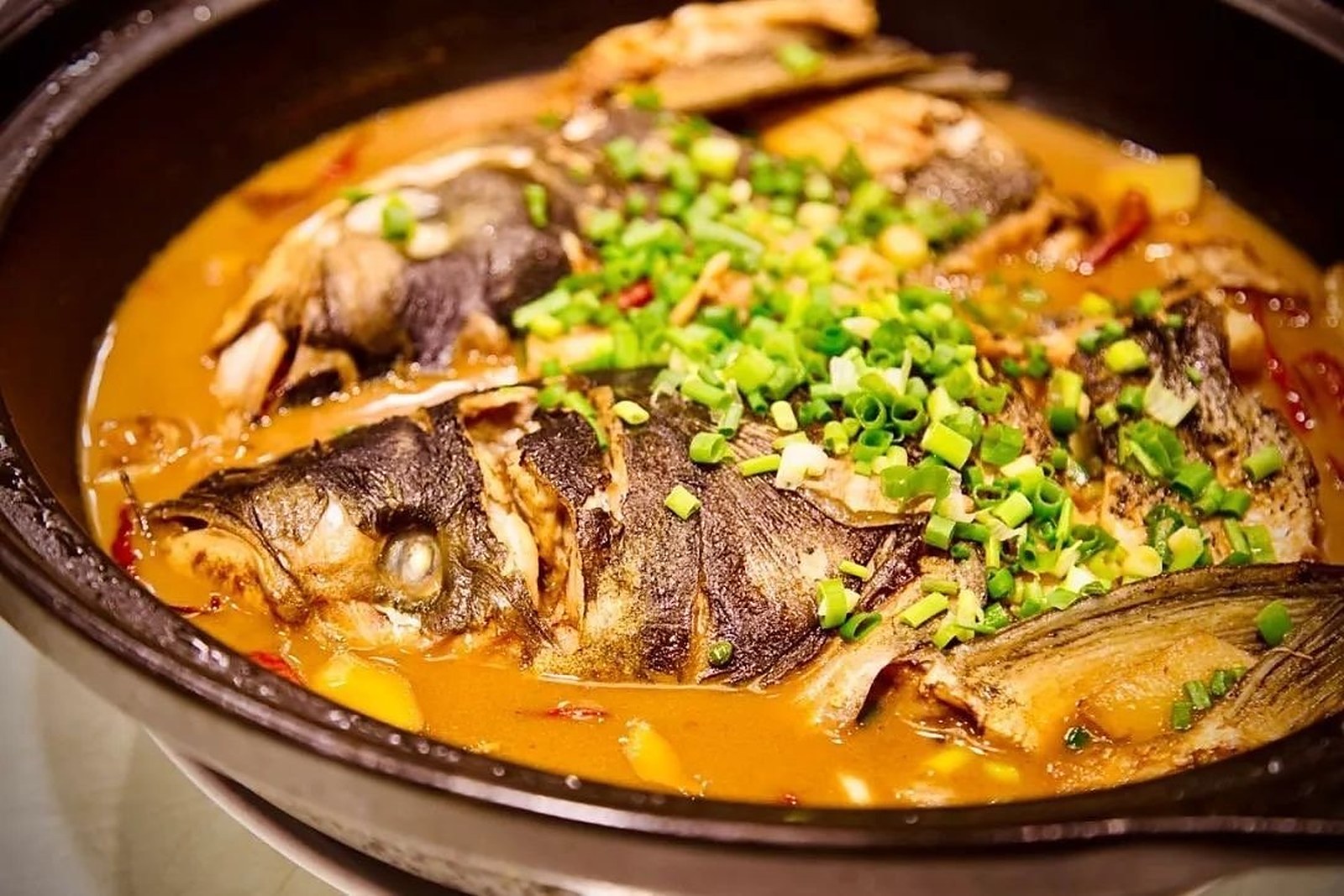
The head is chosen like a cut of meat. Fat silver carp and bighead from the river ponds – three to five pounds of head per pot – split and cleaned, then seared to set the skin before the gravy goes in. The sauce is Tianjin standard: soy for color, rock sugar for gloss, anise and ginger for depth, and a long, unwatched simmer that the older kitchens insist cannot be hurried.
The texture map is the dish’s pleasure. Cheeks come tender and dense, the lip and collar carry the gelatin, the eye-cheek pockets hide the sweetest two bites, and the brain – for those who know – is the quiet prize at the center. Around it all, the gravy thickens to a coat that clings to everything on the table: tofu, noodles, the mantou halves everyone pretends not to want.
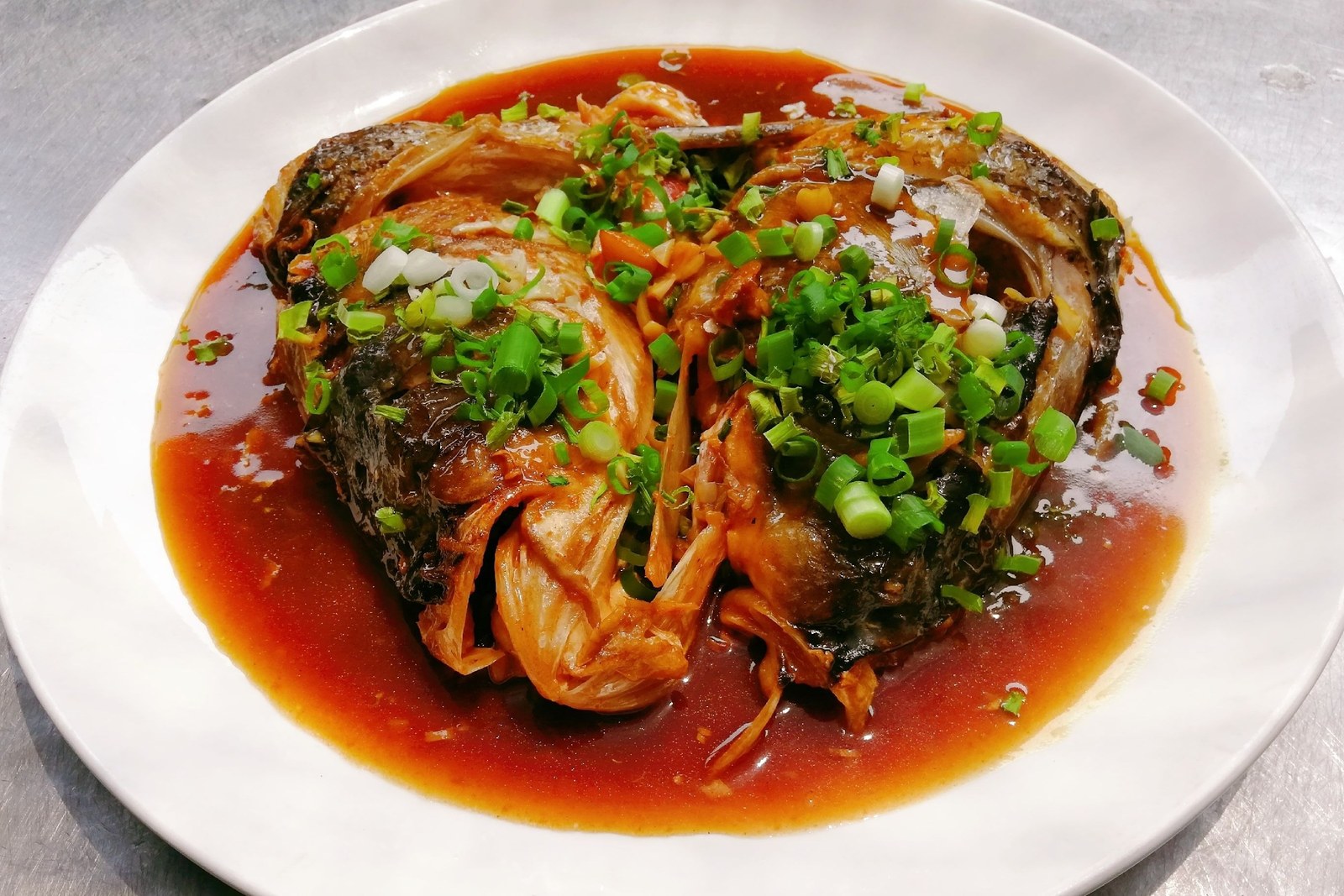
The feast runs around the pot. Claypot served bubbling keeps the gravy reducing table-side; tofu and vermicelli go in mid-meal to drink the sauce; and the last act is always the same – mantou split and dragged through the red. River towns across the north argue over their versions; Baodi’s claim is the balance, sweetness leading soy by exactly one step.
The same district holds more flavors worth chasing: 卷馅肉饼 juǎnxiàn ròubǐng the layered meat pancake, 嘎鱼辣酱 gāyú làjiàng the yellow-catfish chili stew, 烙饼卷带鱼 làobǐng juǎn dàiyú the bread-wrapped braised hairtail, or 蒜香饹炸 suànxiāng lèzha the garlic bean crisp – four more doors into the same Baodi District table.
Words and Names
红烧 hóngshāo the red-braise method; 鱼头 yútóu the fish head, the dish’s whole point; 胶原 jiāoyuán the collagen that sets the sauce; 胖头鱼 pàngtóuyú the bighead carp that supplies the best heads; 饽饽 bōbo the steamed bread dragged through the gravy at the end.
What the Locals Know
The gravy should coat the spoon, not pool – thin sauce means a short simmer and a shortcut kitchen. Ask for the head split but not stripped; the intact cheeks steam better. And save mantou for the last round: dragging bread through the red is the dish’s real finale. All checked November 2026.
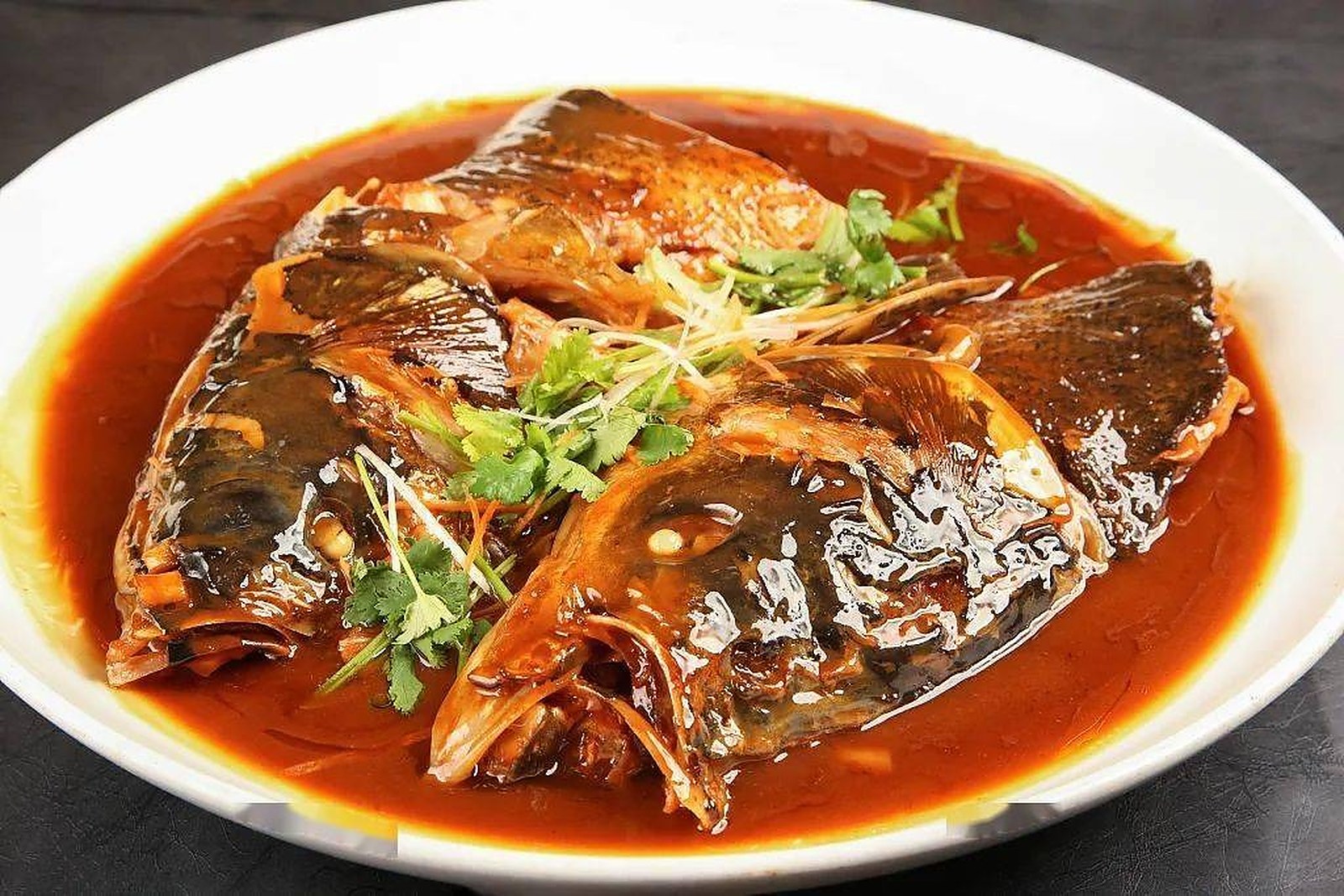
flowcloud would say hongshao yutou is the river’s handshake: one big head, one patient pot, and a table that finds every sweet corner of the fish before the bread finishes the sauce.
Where to find it: The district’s fish-feast restaurants along the river road run the reference claypots, the hotel banquet kitchens plate the formal version, and the paddy-village farmhouses braise their own pond fish head for booked tables. All checked November 2026.