
Paper Shells and Sweet Kernels: The Walnut Groves of Hotan
千年核桃树,一捏壳自开 Qiānnián hétao shù, yī niē ké zì kāi – Walnut trees a thousand years old; one squeeze and the shell opens
正文:和田核桃 Hétián Hétao Hotan walnuts are the oasis’s oldest export – groves planted along the canals since the Silk Road centuries, some of the trees older than the towns around them, and a paper-thin shell that opens with one squeeze of the hand. The variety that made the region famous cracks clean, shakes free in whole halves, and carries a sweetness that supermarket walnuts only describe. In 和田地区 Hétián Dìqū Hotan Prefecture the walnut is not a snack; it is infrastructure – in the bread, the sweets, the nursing foods and the economy.
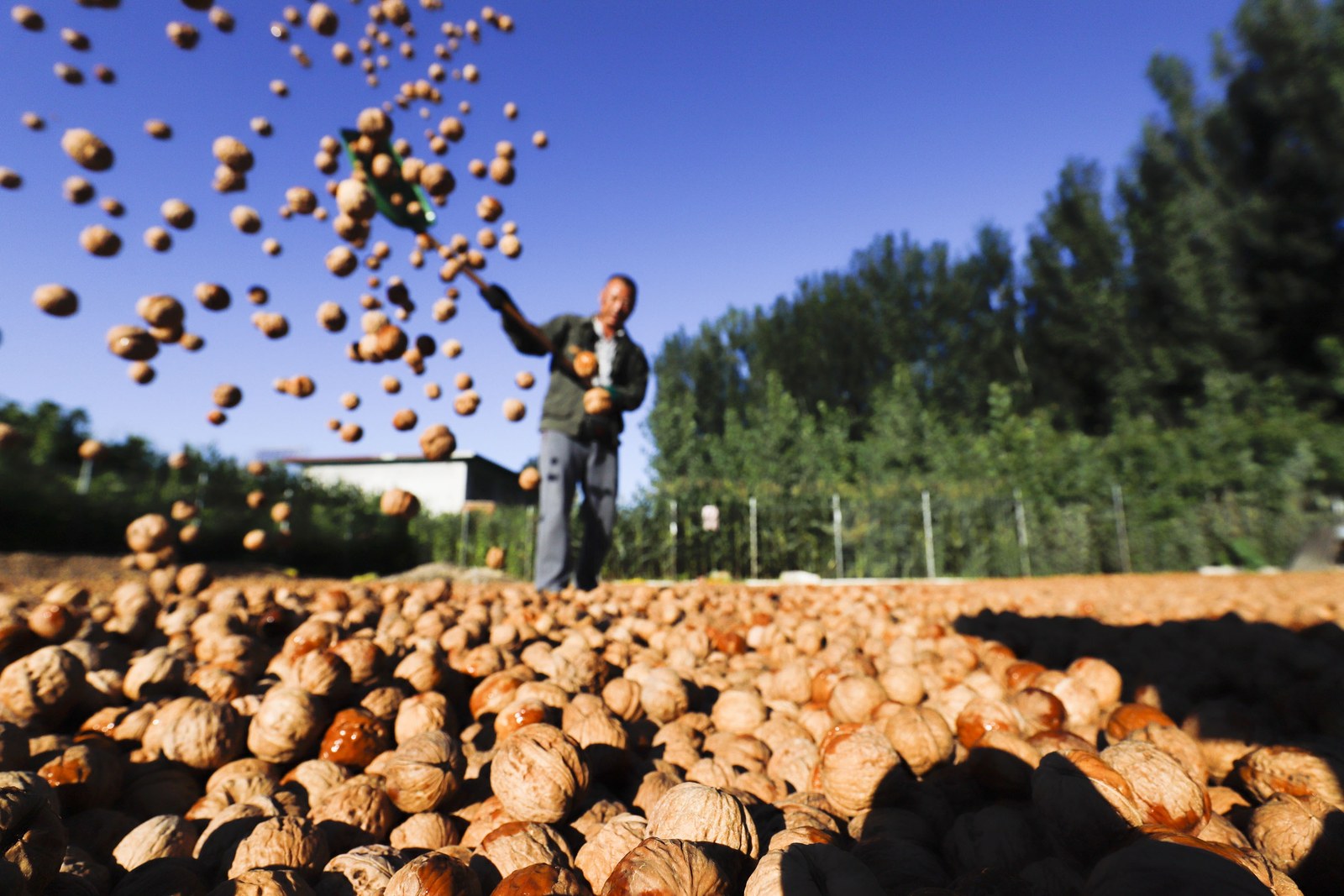
The groves themselves are the first surprise. Walnut trees line the roads for kilometres, their canopies closing over the canal roads into green tunnels that run hotter-cooler than any air-conditioning; the oldest trees – trunks like small towers, generations of initials carved and healed – still bear heavily. Autumn turns the harvest into the county’s festival: the green husks split, the knockers work the branches with long poles, and the roadside becomes a market where fresh-hulled walnuts sell by the sack with the morning’s dew still on them.
The varieties reward a little learning. The paper-shell walnut – the one that cracks in your fist – is the connoisseur’s purchase; the thick-shell “old tree” nuts store better and taste sweeter for the wait; and the early-season green walnuts, boiled and eaten soft like a vegetable, are a local season that outsiders almost never meet. Dried fruit sellers grade by size and oil content, and the top grades go into gift boxes that travel across China at New Year – Hotan walnuts are the standard the whole trade measures against.
Beyond the cracked shell, the same 和田地区 Hétián Dìqū Hotan Prefecture holds other flavors: 和田烤蛋 Hétián Kǎodàn Hotan roasted eggs, 红柳烤肉 Hóngliǔ Kǎoròu red-willow kebabs, 玫瑰花馕 Méiguīhuā Náng rose naan, and 和田老酸奶 Hétián Lǎosuānnǎi Hotan yogurt – four more doors into the same 和田地区 Hétián Dìqū Hotan Prefecture. With the walnuts settled, our Hotan travel map fills the day.
The walnut’s place in the local kitchen runs deep. Bakers press chopped walnuts into naan and pastries; the sweet shops candy them with the rose jam; and the nurseries of the region – the foods prescribed for new mothers and recovering elders – are built on walnut paste with milk and honey. The dried-fruit rows of the grand bazaar hold the industrial versions – candied, honeyed, spiced – but the connoisseur’s move is the simplest one: buy the season’s paper shells, crack them by hand at the table, and eat the kernels with tea while the shells pile up like proof.
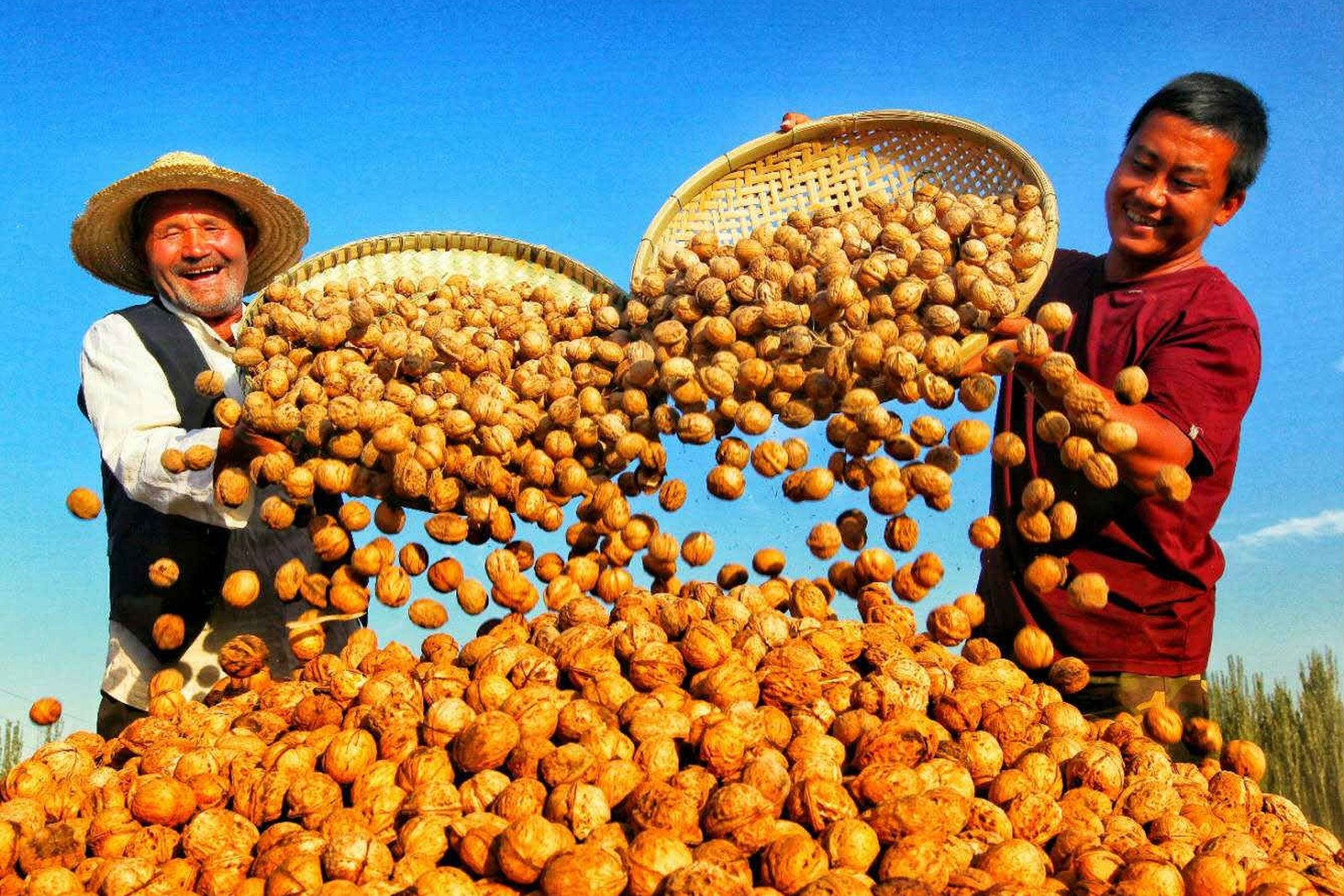
The groves also anchor the oasis’s economy beyond food. The wood is carved; the shells feed the craft kilns; and the orchard country – walnut, grape, mulberry and rose in rotation – is the reason the oasis holds its shape against the desert. Travellers who walk the grove roads in harvest season see the whole economy standing on its roots: families shaking the trees, buyers grading at the roadside, and the lorries loading for the cross-desert run to the railway.
Practicalities first. Walnut season runs September into October; the roadside stalls and the grand bazaar’s fruit rows sell through the year, with prices dipping at harvest. Buy paper shells by the sack, have a kilo cracked to test the lot, and carry the fresh green walnuts home in autumn only if your luggage forgives the stain – the husk dyes everything it touches, which is precisely how the old craft workshops make their ink.
Beyond the shell, the walnut reads the oasis: the groves shade the canals, the shells line the craft rows, and the kernel sweetens the bread you ate this morning. Hotan’s economy is a walnut grove with a city inside it.
Words and Names
What the Locals Know
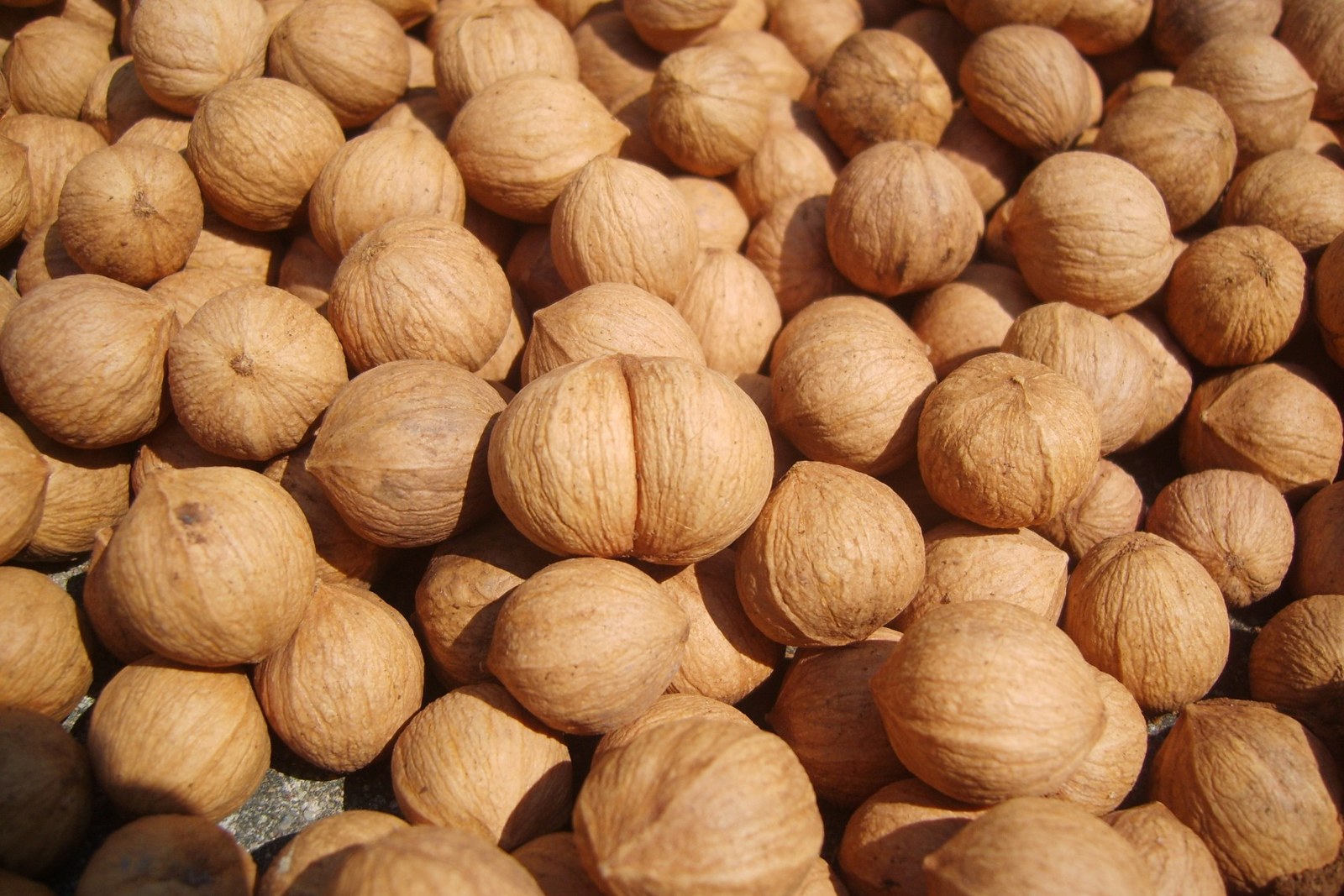
flowcloud would say the Hotan walnut is the oasis in miniature: a thousand-year tree, a shell that opens in one squeeze, and a kernel sweet enough to explain the whole Silk Road’s detour – buy them by the sack and eat the proof. All checked November 2026.
Where to find it: The walnut stalls line the grand bazaar’s dried-fruit rows and the grove roads east of the city through September-October; buy paper shells by the sack, crack at the table, and taste the fresh-season kernel against any walnut you have ever bought. All checked November 2026.