Hou’an Noodles
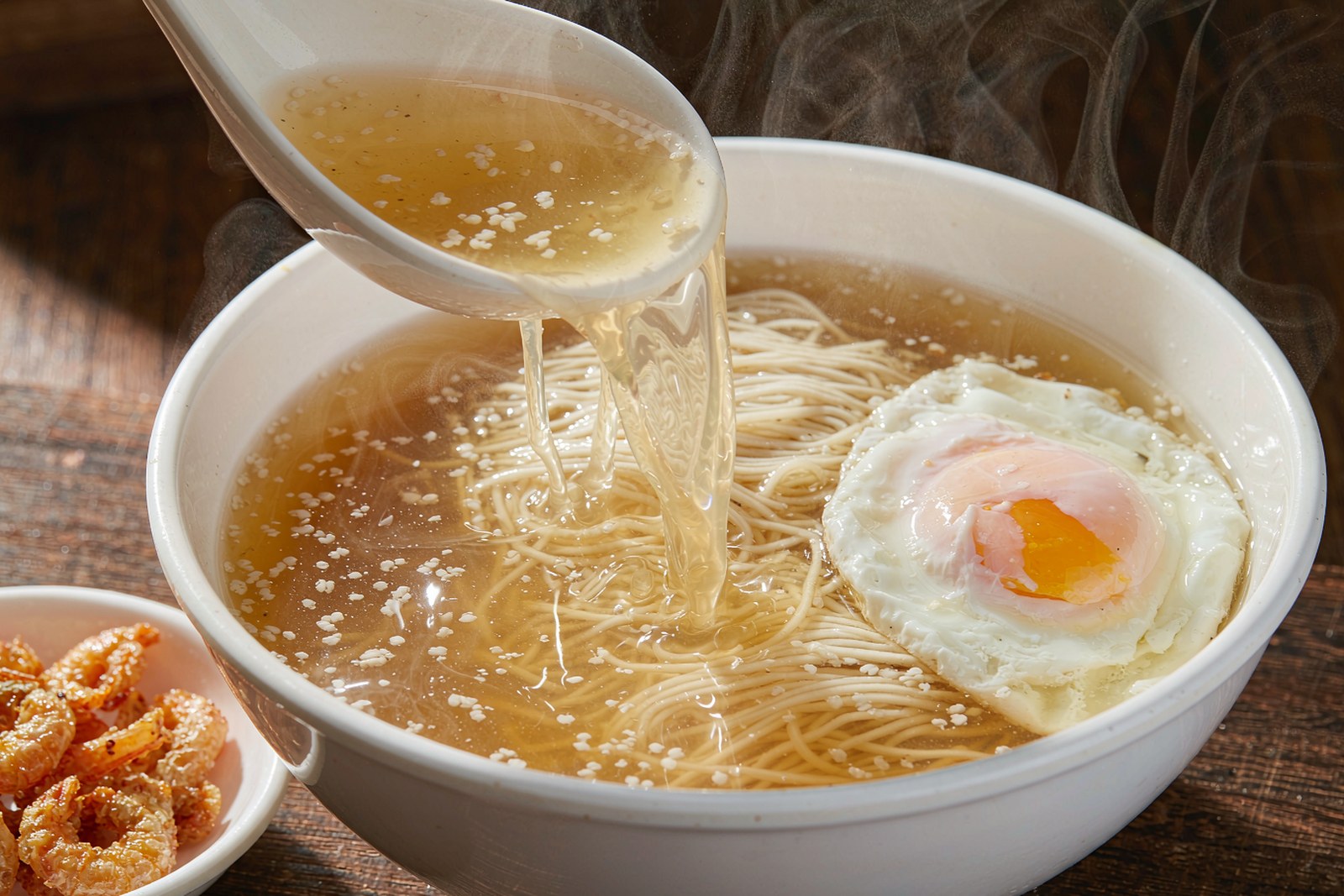
The broth is the colour of pale amber and it is still moving when the bowl reaches you, and the smell that comes up off it is the smell of a thing that has been simmering for hours. Pork bone, some ginger, a heat from white pepper, and underneath it all a faint saltiness that tells you there is something from the sea in there too.
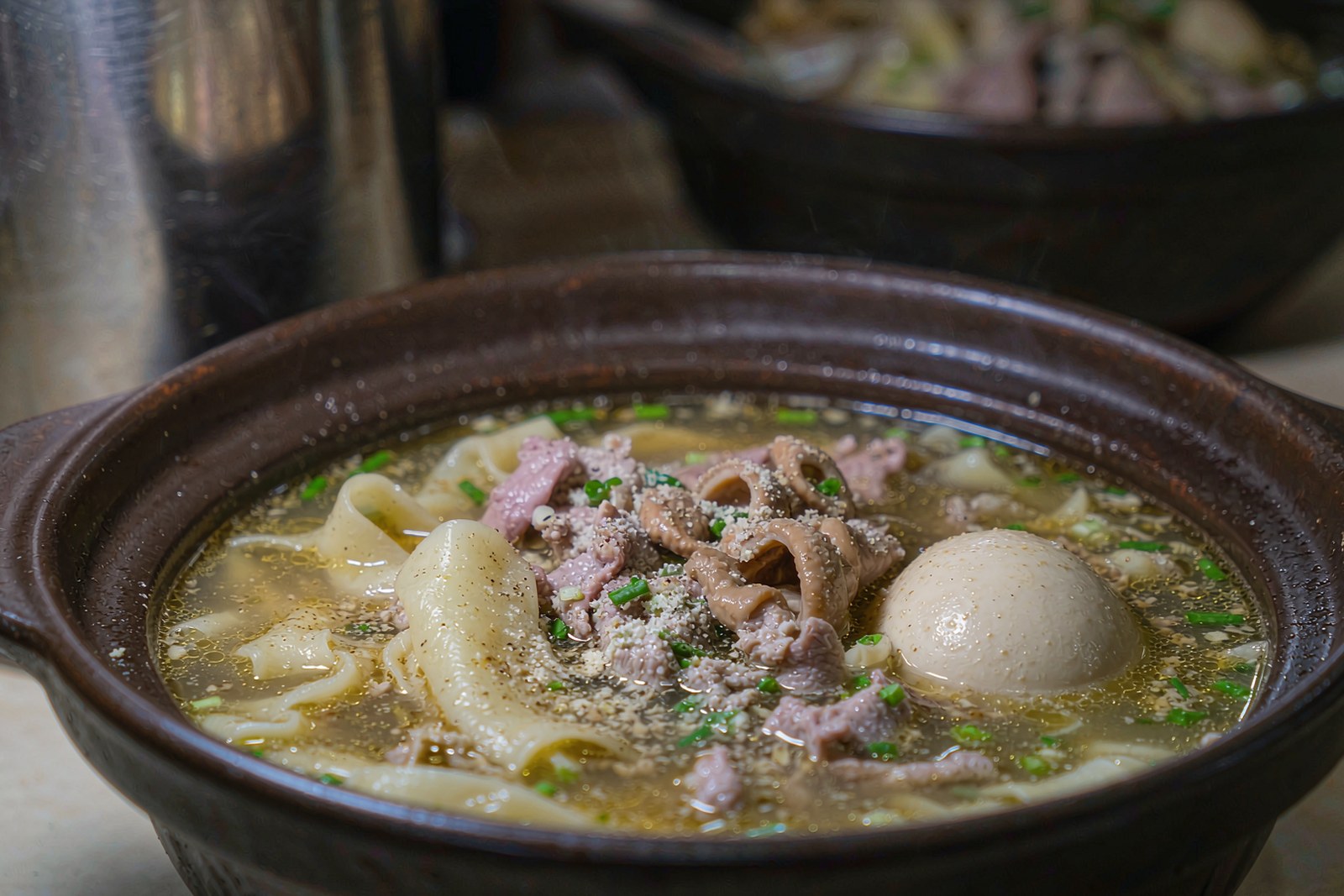
This is 后安粉 (Hòu’ān fěn), Hou’an noodles, and it is the great breakfast of 万宁 (Wànníng) county — and, many would argue, the most comforting single bowl of noodles in Hainan. In a province that has more noodle genres than most provinces have restaurants, 后安粉 is the one that locals go on about in the morning with a kind of devotion.
From a Small Town on the East Coast
后安粉 is named for 后安镇 (Hòu’ān Zhèn, Hou’an Town) in 万宁, a small town on Hainan’s east coast, and the town is the whole story. It is a small place — not many people, not much industry — but it is a place that lives on its noodles, and the streets of the town are lined with 粉店 (fěndiàn, noodle shops), every one of them steaming with the same broth.
The 万宁志 (Wànníng Zhì, the Wanning county gazetteer) dates 后安粉 back to the 宋代 (Sòng Dài, Song dynasty), which would make it a thousand-year-old dish, and the customary legend is one of those local stories that is impossible to verify and impossible not to tell. A young man of 后安, the story goes, was renowned for his martial skill, and when a thug came to the town to terrorise the people, it was this young man who drove him off. A sixteen-year-old girl, having fallen for him, chose the finest of the town’s seafood and simmered it into a noodle broth to thank him. The broth was so good that it spread through the town, and the method is the one the town still uses today.
Whether the romance happened or not, the practical truth behind the story is reliable, and it is the same as so much of Hainan’s best food: the town sits close to the sea, and it had access to good, fresh seafood. The original 后安粉 was made with the local catch — hence the faint note of the sea in the broth — and the town has never quite lost that.
The Broth Is the Whole Argument
Ask anyone in 万宁 what makes a 后安粉, and they will not mention the noodles first. They will mention the soup. 一碗后安粉是否成功,最重要的便是汤 — “the most important thing in a 后安粉 is the broth.”
The broth is built from pork bone — and here is where it gets specific — from 粉肠 (fěncháng), the small intestine, and from 大肠 (dàcháng), the large intestine, and from various pork offal, simmered together with pepper and a little dried shrimp for that marine depth. It is cooked for a long time — four hours is the minimum worth mentioning, and more is better — until the bones have given up everything, and it comes out clear, golden and deeply savoury. A good 后安粉 broth is 鲜甜, fresh and sweet, without being heavy.
Then the noodles, which are their own craft. The rice is a good local 籼米 (xiānmǐ, indica rice), ground by hand on a stone mill — 石磨 (shímó) — into a fine paste, then spread thin and steamed on a tray to make a soft, slightly translucent 粉皮 (fěnpí, noodle sheet), which is cut into wide, soft ribbons. The result is a noodle that is thin, slightly translucent, and with a real springiness.
And then the toppings — the thing that makes a 后安粉 a meal and not a bowl of noodles. You get slices of lean pork, pieces of 粉肠 and 大肠, and the crucial addition: a whole egg, cooked in the broth. The classic move, the one every regular knows, is 加蛋 (jiā dàn, “add an egg”), and if the egg is soft-boiled — 溏心蛋 (tángxīn dàn) — the yolk runs into the broth when you break it, and the whole bowl is elevated. A handful of chopped scallions on top, a dusting of white pepper, and a small dish of crispy fried small shrimp on the side to add to the broth for crunch, and the bowl is complete.
How You Eat It
There is a correct way to finish a bowl of 后安粉, and the locals are strict about it.
You eat the noodles and the pork and the egg first, spooning the broth over each mouthful. Then, and this is the non-negotiable part, you drink the broth. All of it. The regulars say that a 后安粉 is not finished until the bowl is empty of liquid, and they are not being polite — the broth is the best thing in the bowl, and to leave it is to waste the dish. The trick 加汤 (jiā tāng, “add soup”) is exactly what it sounds like: when you have eaten your way through, you ask the shop to top up the bowl, and they do, bringing more of that golden broth with extra slices of meat and a fresh bloom of egg.
Add 胡椒 (hújiāo, white pepper) and the 黄灯笼椒 (huáng dēng lóng jiāo, yellow lantern chilli) to taste. The pepper wakes the broth; the chilli makes it sing. Most 万宁 people take both.
A Noodle That Left Home
For a long time, 后安粉 was a local thing. Then, in the 1990s, the 万宁 people began to leave their town for 海口 and the rest of the island, and they took the noodle with them. The most famous of the destination shops is 吴记第一家后安粉店, which opened in 1997 and became the reference point for 后安粉 outside 万宁; today there is a whole network of 万宁-run 后安粉 shops across the island, and some of them keep the old habit of staying open twenty-four hours a day, all night, so that the broth is always there.
The best-known shops in 海口 are on 城西路, 龙华路 and 金盘路, and several of them are open around the clock. It is, famously, a breakfast, but it has become more than that — it is the thing a 万宁 person anywhere reaches for at any hour.
What the Locals Know
- Add the egg, and ask for it soft. 加蛋 with a soft-boiled yolk is the move; the yolk running into the broth is the point.
- Drink the broth. Do not leave it. The broth is the reason the bowl exists.
- Use the 加汤 trick. When you have eaten your way down, ask for the top-up and get a fresh pour of that golden soup.
- Pepper and yellow chilli to taste. 后安粉 is traditionally not aggressive — it is savoury and fresh — and the pepper and chilli are there to be added, not to dominate.
- The crispy fried shrimp on the side. Add a few to the broth for crunch, and it is the difference between good and great.
The Name
后安 (Hòu’ān) is the town’s name in 万宁. 粉 (fěn) is noodles. The full name means “Hou’an noodles,” and the naming is as direct as Hainan gets — the dish is named for the small east-coast town that made it. The town itself is tiny in the scheme of the island, but its name is now attached to one of the two or three most eaten breakfasts in the province.
flowcloud would say that the most honest thing about 后安粉 is that it is a bowl of bone broth cooked for four hours with an egg in it — and that a place which measures the quality of a noodle shop by how long it simmers its soup, and keeps the shop open all night, has its priorities exactly right.
Where to find it: For the original, go to 后安镇 (Hou’an Town) in 万宁 (Wanning); the classic is 吴记第一家后安粉店, opened 1997. Across the island, look for 万宁-run 后安粉 shops in 海口 on 城西路, 龙华路 and 金盘路 — several stay open 24 hours. Wide soft rice noodles in a golden pork-bone, offal and pepper broth with sliced pork, 粉肠, 大肠, a whole egg and scallions. A few yuan a bowl (around ¥10–15 in the cities, less in 万宁). Add the soft-boiled egg and the crispy fried shrimp, and drink the broth.