
Houshayu Eats: Wenyu Riverside Tables, Expat Kitchens and the International Food Strip of Shunyi District, Beijing
温榆河畔炊烟起,万国楼台一街香。Wēnyú hé pàn chuīyān qǐ, wànguó lóutái yī jiē xiāng – By the Wenyu River the cooking smoke rises; ten nations’ dining rooms season a single street.
后沙峪食街 Hòushāyù shíjiē the Houshayu food strip is the one Beijing street where the dumpling shop and the döner grill share a wall, and the address is a river bend: 后沙峪镇 Hòushāyù Zhèn Houshayu town in 顺义区 Shùnyì Qū Shunyi District, Beijing, beside the 温榆河 Wēnyú Hé Wenyu River and hard against 中央别墅区 Zhōngyāng Biéshù Qū the “Central Villa District” – the capital’s oldest expat villa belt, grown around the international schools that pull families from Seoul, Frankfurt and elsewhere into one school run (worth confirming which campuses sit where this year). The strip runs in clusters: the junction locals call 罗马环岛 Luómǎ huándǎo the Roman Roundabout, the 双裕 Shuāngyù lanes, and the shop rows along the main roads between them (worth confirming which cluster runs which specialty). The menu is a migration archive read backwards: Korean stew houses and grill rooms for Seoul families, bakery-cafés and sausage-and-beer rooms for the European belt, kebab counters, izakaya, brunch rooms – and underneath, the older Chinese layer of noodle shops, dumpling houses and home-style kitchens that fed the village before the villas. The naming is the tell: nobody planned a food street here; the school calendars planned it.
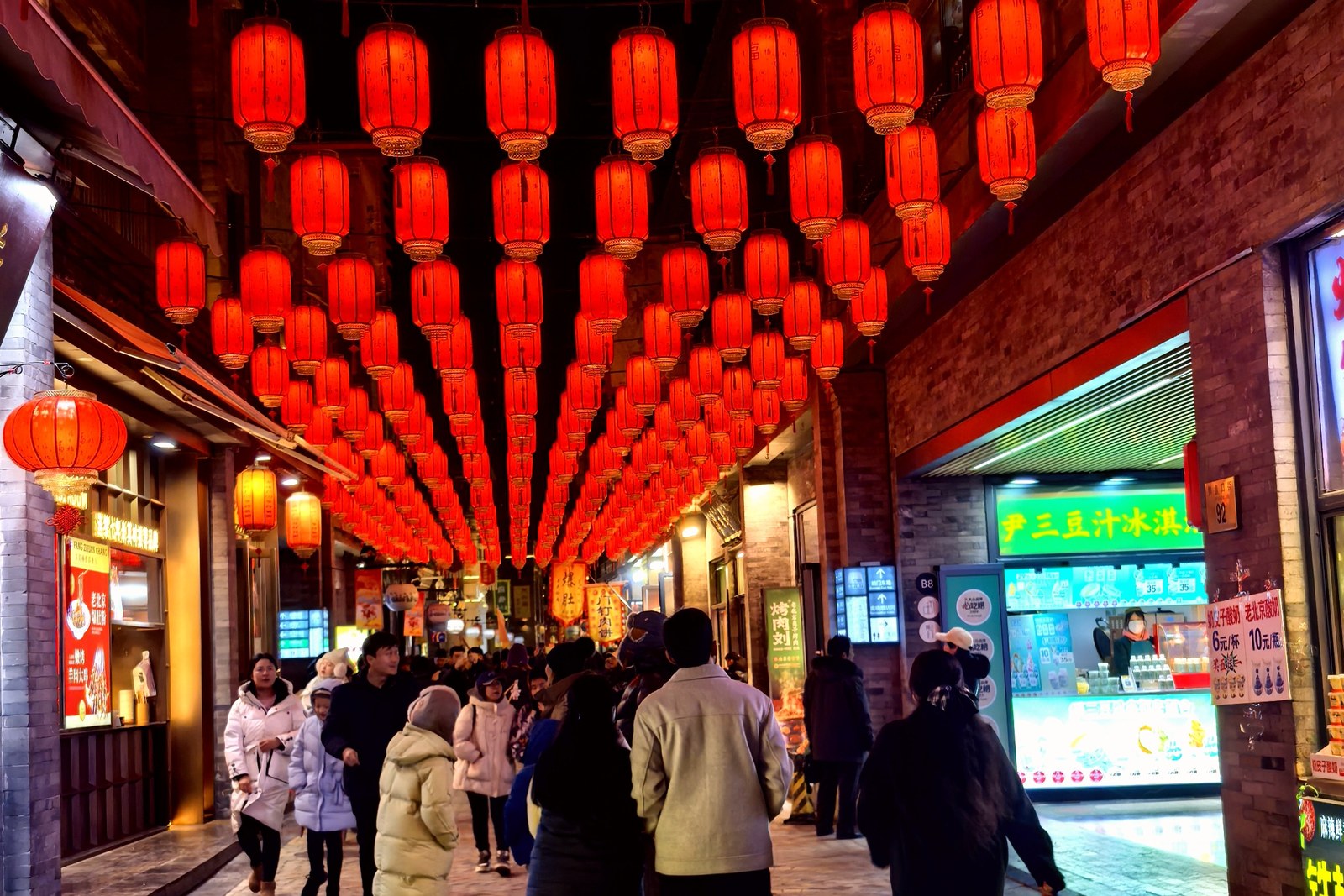
The eating is a two-menu grammar written for a street that serves two cities at once, and it leans 一街两味 yī jiē liǎng wèi “one street, two tastes” to match the crosswalk. The anchor is the Korean side at full strength: bubbling 军队锅 jūnduì guō army-base stew, charcoal-grilled short rib, cold noodles in summer, the Korean grocers’ shelves beside – a Seoul neighbourhood transplanted to a river bend – and the European counterweight: dark bread by the loaf, sausages by the plate, wheat beer by the glass, weekend brunch with strollers three deep (worth confirming which houses run which week’s specials). The Chinese layer is the cheaper, older half: 兰州拉面 Lánzhōu lāmiàn Lanzhou hand-pulled noodles, dumpling counters, northern home-style stir-fries – the lunches of the drivers, builders and aunties who keep the villas running. The day has three peaks: the school run, the weekend brunch, the football night – and the strip serves all three without changing its apron.
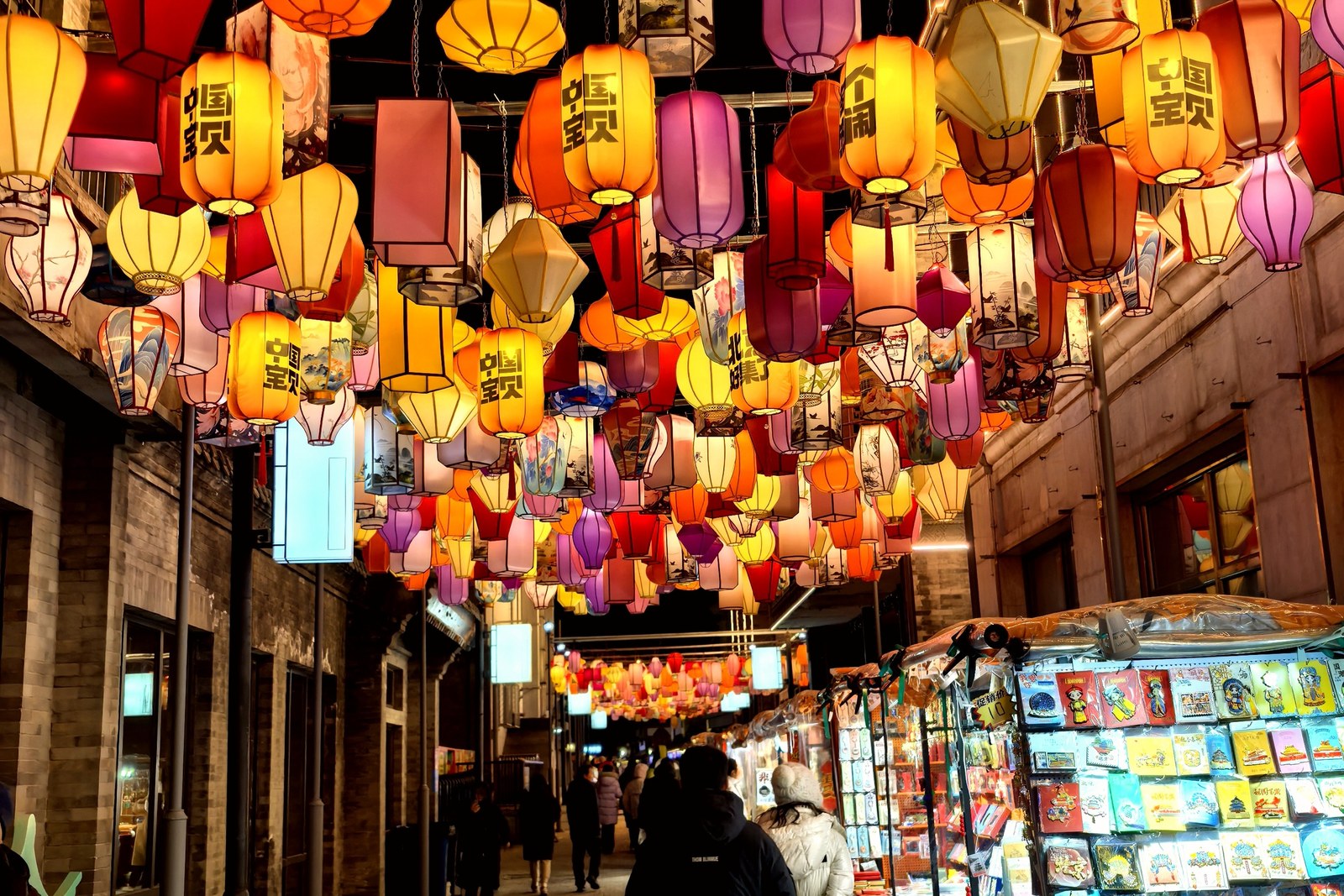
The honest grade is geography plus the school-year clock. In 顺义区 Shùnyì Qū Shunyi District, Beijing the strip is fullest in term time, thinnest in the July-August weeks when half its customers fly home (worth confirming the lull against the year’s calendar); prices run a city notch above the district average, and the honest test is the queue’s language: a line mixing Korean, German and Shunyi dialect at one counter means the kitchen answers no single palate (worth confirming the details, evening by evening). A per-person bill runs on the continent ordered – the Korean grill and the German beer hall read differently at the till – so call it worth confirming the details rather than a fixed number, and come hungry in both directions: dinner here need not choose a passport.
The wry truth is that 后沙峪食街 Hòushāyù shíjiē is over-rated as an “international food court” and under-rated as a settlement map: travel lists file it under novelty, while the actual thing – a village that fed a river crossing, then a villa belt, then three waves of expat families, each wave writing its menu into the shopfronts and leaving the last one’s dumplings untouched – is urban geography the listings never explain. The strip’s own joke has the right shape: one road, two currencies, and a dumpling shop that outlived them all. The self-deprecating footnote, and the district braid: a food writer will praise “authenticity” to a Korean owner whose whole answer is to point at the local families at the next table, photograph the bilingual menu at heroic shutter, and then call the strip “commendably global” as if a school calendar were a cuisine – which is the honest grade: 后沙峪食街 Hòushāyù shíjiē is a working street the writer will globalise more than he finishes, and the family at the next table has ordered a second round of ribs and argued the bill in three languages before the shutter closes. The same 顺义区 Shùnyì Qū Shunyi District, Beijing thread runs on: the white bottles of 牛栏山二锅头 Niúlánshān èrguōtóu Niulanshan erguotou line the shop shelves, the green bottles of 燕京啤酒 Yānjīng píjiǔ Yanjing beer crack open at the district’s summer tables, the winter greenhouses of 顺义草莓 Shùnyì cǎoméi Shunyi strawberries fill with picking families, and the terrace lamps of 祥云小镇餐吧 Xiángyún Xiǎozhèn cānbā Xiangyun Town’s bistros burn past midnight – one district, four more tables.
Words and Names
- 后沙峪镇 Hòushāyù Zhèn / Houshayu Town · the river-bend town that grew the international tables - 温榆河 Wēnyú Hé / Wenyu River · the water the strip sits beside - 中央别墅区 Zhōngyāng Biéshù Qū / the Central Villa District · the capital’s oldest expat villa belt - 罗马环岛 Luómǎ huándǎo / the Roman Roundabout · the junction locals use as the strip’s address - 火沙路 Huǒshā Lù / Huosha Road · the spine road the shop rows follow - 韩国超市 Hánguó chāoshì / Korean groceries · the shelves that stock the expat pantries - 国际学校 guójì xuéxiào / international schools · the campuses that set the street’s clock - 顺义区 Shùnyì Qū / Shunyi District · the Beijing district holding the strip
What the Locals Know
- Read the queue, not the menu: a counter mixing Korean, German and local dialects is the honest one – the street grades itself at the door (worth confirming, evening by evening).
- Mind the school-run clock: term time is full and the July-August weeks are thin – the strip empties when the schools do (worth confirming the year’s calendar).
- Order both sides of the street: Korean grill for the table, Chinese noodle counter for the late night – dinner here need not choose.
- Park early or walk: the junction lanes jam at pickup hours and weekend brunch, and the honest parking is a street away (worth confirming which lots are open).
flowcloud would say that the 后沙峪食街 Hòushāyù shíjiē is the Wenyu riverside tables, expat kitchens and the international food strip of Shunyi District, Beijing – a 温榆河 Wēnyú Hé bend where 罗马环岛 Luómǎ huándǎo shopfronts file a migration archive in menus, from 军队锅 jūnduì guō to dark rye – and that the honest move is to read the queue, mind the school run, and order both sides of the street, because the river settled the town and the school calendars wrote the menu. All checked October 2026.
Where to find it: Shunyi District Shùnyì Qū, Beijing – the restaurant clusters around 罗马环岛 Luómǎ huándǎo the Roman Roundabout and along 火沙路 Huǒshā Lù Huosha Road in Houshayu town by the Wenyu River, where Korean grills, bakery-beer rooms, izakaya and older Chinese counters trade side by side through the day and late (worth confirming the week’s specials and which houses close one day a week); a per-person bill runs on the continent ordered, so call it worth confirming the details rather than a fixed number. Houshayu eats is the Wenyu riverside tables, expat kitchens and the international food strip of Shunyi District, Beijing, river before passport.