
Huairou Kill-the-Pig Stew: Charcoal Pots, Farmhouse Hotpot and the Cold-Night Supper of Huairou District, Beijing
炭火铜锅猪肉嫩,怀柔农家一桌香。Tànhuǒ tóngguō zhūròu nèn, Huáiròu nóngjiā yī zhuō xiāng – Over the charcoal fire the copper pot’s pork turns tender; at the Huairou farmhouse table one plate drifts with fragrance.
怀柔杀猪菜 Huáiròu shāzhūcài Huairou kill-the-pig stew is the charcoal-pot supper Beijing’s north drives out for, and the address is a street: the row of 老北京铜锅涮肉 lǎo Běijīng tóngguō shuànròu old-Beijing copper-pot houses along the market roads of 怀柔区 Huáiròu Qū Huairou District, Beijing, where the trade grew from roadside family kitchens into house brands carrying the district’s name (worth confirming the details of the first signboard, dated differently by the houses). The fame is young enough to check: in the late twentieth century a cluster of roadside kitchens began serving the copper-pot dish by the road, the trade grew into a standing line, and the district earned the billing of a pork-pot country (worth confirming which houses claim the oldest bed). The craft most visitors under-rate is the refusal of shortcuts: the pot runs 清汤锅底 qīngtāng guōdǐ clear-broth base – plain water dressed with scallion, ginger and a few dried shrimp, not a stew – precisely so the pot cannot lie about the meat; and the meat is 手切鲜猪肉 shǒuqiē xiān zhūròu hand-cut fresh pork, sliced to order from chilled cuts, never the frozen rolls a lesser pot hides behind. The naming is the tell: a dish that takes the district’s name answers to the road where the pot was the fastest honest meal a driver could buy.
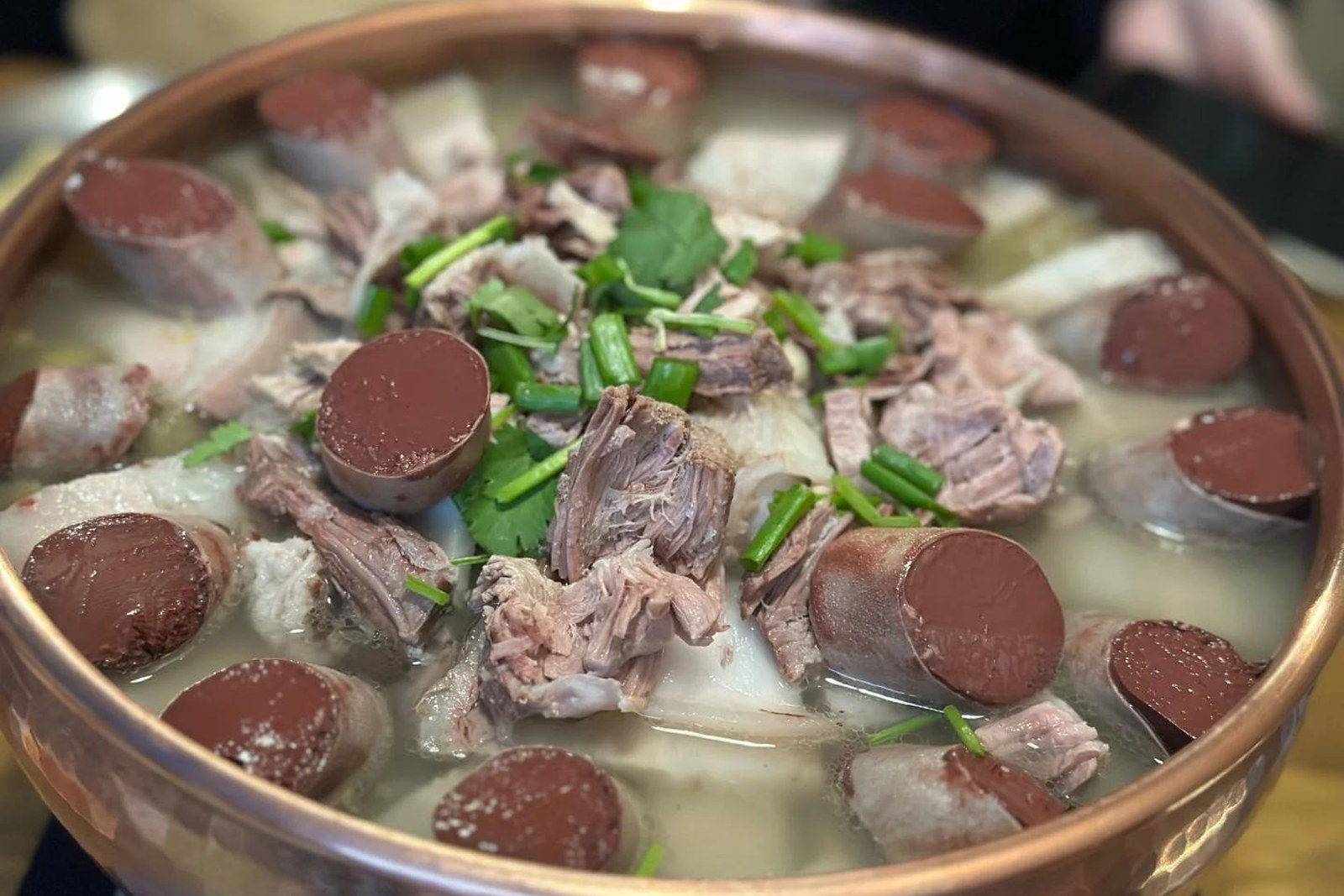
The eating is a swish-and-dip grammar written for meat graded in seconds, and it leans 鲜 xiān fresh-clean plus 嫩 nèn tender to match the charcoal pot. The anchor is the plate of fresh-cut slices – marbled, pliable – cooked by 三起三落 sān qǐ sān luò three lifts and three dips – seconds in the boil, not a minute more – then drowned in the house dip: 芝麻酱 zhīmajiàng sesame paste thinned to cream, sharpened with 韭菜花 jiǔcàihuā leek-flower sauce and a mashed 酱豆腐 jiàngdòufu fermented-beancurd cube, finished by each diner with chilli and coriander. Around the meat the pot runs its supporting cast: 酸菜 suāncài sauerkraut strips to cut the richness, 冻豆腐 dòng dòufu frozen tofu cubes to soak the broth, 糖蒜 tángsuàn sugar garlic between rounds, sesame seed cakes 烧饼 shāobǐng for the finish, cabbage and glass noodles after the pork, and the broth at the end (worth confirming the details – every house seasons its dip differently). The pot’s own virtues decide the order: meat before vegetables, because the clear broth must stay clean for the grading, and a table that cooks its sauerkraut first has salted the evening.
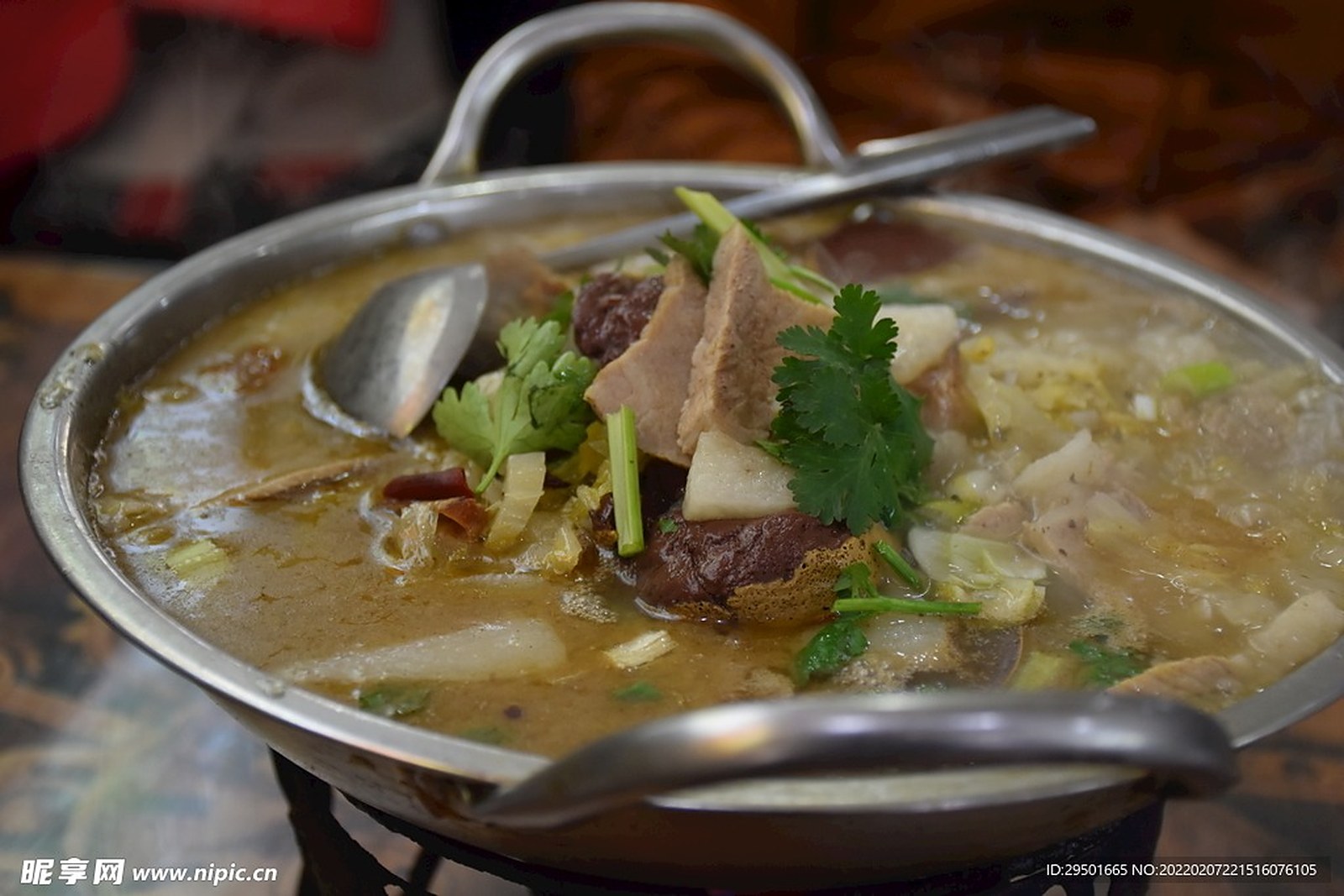
The honest grade is geography plus the freshness clock. In 怀柔区 Huáiròu Qū Huairou District, Beijing the honest eating is at the old houses along the market roads, where pork arrives from the local farms and is sliced where diners can watch (worth confirming the details – which houses cut their own). The test costs nothing: press a slice to the plate and lift – fresh pork clings, defrosted rolls slide – then taste one slice plain, because a clear-broth pot has nowhere to hide a tired animal. The craft is pedigreed – the rinsed-pork technique sits on the district’s intangible-heritage rolls (worth confirming which year and level) – but the eater’s test is still the lifted plate, not the plaque. A per-person bill runs on the plates of pork, so call it worth confirming the details rather than a fixed number, and come in the cold half of the year: charcoal pots fill fast on winter weekends.
The wry truth is that 怀柔杀猪菜 Huáiròu shāzhūcài is over-rated as a brand war and under-rated as a freshness discipline: the roadside signage files it under “famous old Beijing hot-pot”, while the actual thing – a clear-water pot designed to make lying impossible, pork sliced to order, a sauce built at the table – is quality control the signboards never explain. The self-deprecating footnote, and the district braid: a food writer will discourse on “charcoal terroir”, photograph the chimney pot at heroic shutter, and then call the dinner “commendably primal” as if fire were a recipe – which is the honest grade: 怀柔杀猪菜 Huáiròu shāzhūcài is a working pot the writer will romanticise more than he swishes, and the family at the next table has finished three plates, argued the sauce ratio and called for the sauerkraut before the shutter closes. The same 怀柔区 Huáiròu Qū Huairou District thread runs on: the iron-pot stews of 怀柔虹鳟鱼 Huáiròu hóngzūn yú Huairou rainbow trout simmer in the stream-side kitchens, the roasted trays of 怀柔板栗 Huáiròu bǐlì Huairou chestnuts warm the winter tables, the dried bags of 怀柔核桃 Huáiròu hétao Huairou walnuts line the market counters, and the pale cups of 怀柔高山茶 Huáiròu gāoshānchá Huairou high-mountain tea steam through the cool mornings – one district, four more tables.
Words and Names
- 怀柔杀猪菜 Huáiròu shāzhūcài / Huairou kill-the-pig stew · the charcoal-pot supper the district named for - 涮猪肉 shuàn zhūròu / instant-boiled pork · the swished-in-clear-broth way Beijing eats pork - 清汤锅底 qīngtāng guōdǐ / clear-broth base · the plain-water pot that makes the meat tell the truth - 手切鲜猪肉 shǒuqiē xiān zhūròu / hand-cut fresh pork · slices cut to order from the chilled cuts - 三起三落 sān qǐ sān luò / three lifts, three dips · the seconds-long cook the thin slices ask for - 酸菜 suāncài / sauerkraut · the sour counterweight served between rounds - 冻豆腐 dòng dòufu / frozen tofu · the sponge cube that soaks the broth - 怀柔区 Huáiròu Qū / Huairou District · the Beijing district holding the pot houses
What the Locals Know
- Order the hand-cut, not the rolls: ask for 手切鲜猪肉 shǒuqiē xiān zhūròu by name – a frozen tray is the house’s confession that it cuts corners.
- Run the plate test: press the slice down and lift – fresh pork clings, thawed slides – and taste one slice plain before the sauce goes on.
- Meat before vegetables: the clear broth grades the pork, and sauerkraut cooked first muddies the pot for every plate after.
- Build the dip yourself: sesame paste base, leek flower and beancurd from the kitchen, chilli and coriander by the spoon – sugar garlic between rounds.
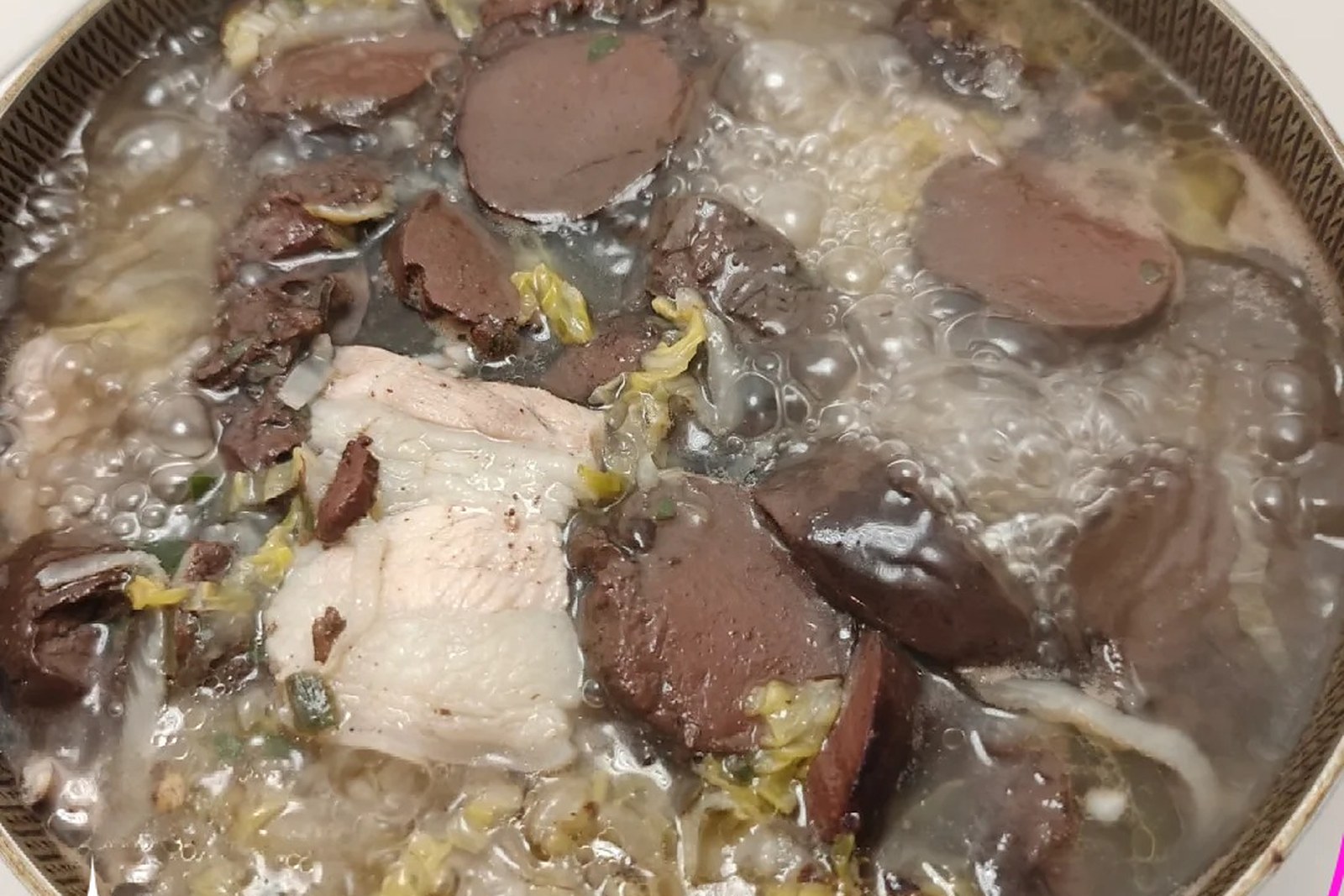
flowcloud would say that the 怀柔杀猪菜 Huáiròu shāzhūcài is the charcoal pots, farmhouse hotpot and the cold-night supper of Huairou District, Beijing – a 清汤锅底 qīngtāng guōdǐ roadside discipline where 手切鲜猪肉 shǒuqiē xiān zhūròu rides the 三起三落 sān qǐ sān luò into a sesame-paste dip – and that the honest move is to run the plate test, taste before the sauce, and let the broth finish, because the clear pot cannot lie and the street would not let it. All checked October 2026. Where to find it: Huairou District Huáiròu Qū, Beijing – the old pork-pot houses along the market roads of the district, where charcoal copper pots, hand-cut pork and the sesame-paste dip run from lunch into the winter night (worth confirming the details – which houses cut their own and their hours); a per-person bill runs on the plates of pork, so call it worth confirming the details rather than a fixed number. Huairou kill-the-pig stew is the charcoal pots, farmhouse hotpot and the cold-night supper of Huairou District, Beijing, broth before sauce. All checked October 2026.
Where to find it: