
Huairou Rainbow Trout: Iron-Pot Stews, Mountain Streams and the Farmhouse Signature of Huairou District, Beijing
山泉铁锅虹鳟嫩,怀柔农家一桌鲜。Shānquán tiěguō hóngzūn nèn, Huáiròu nóngjiā yī zhuō xiān – Over the mountain spring the iron pot’s trout turns tender; at the Huairou farmhouse table one plate runs fresh.
怀柔虹鳟鱼 Huáiròu hóngzūn yú Huairou rainbow trout is the iron-pot stew the mountain district has served for generations, and the address is a valley: the cold-water streams that run down from 燕山山脉 Yānshān Shànmài the Yanshan range into 怀柔区 Huáiròu Qū Huairou District, Beijing, where the village kitchens set their 铁锅 tiěguō iron pots over the fire and let the fish simmer in its own clear stock (worth confirming which villages claim the oldest stream-side kitchen). The craft most visitors under-rate is the water itself: the trout here are raised in 山泉水 shānquán shuǐ mountain-spring water, cold enough to keep the flesh dense and sweet, and the dish is graded by the way the skin holds against the chopstick rather than by the sauce poured over it. The naming is the tell: a district that named its signature dish after the fish answers to the stream where the first kitchen hung its sign – a dish that took the valley’s name because the valley ate it every night. The lineage sits on the district’s intangible-heritage rolls (worth confirming which year and level), but the eater’s test is still the lifted plate, not the plaque.
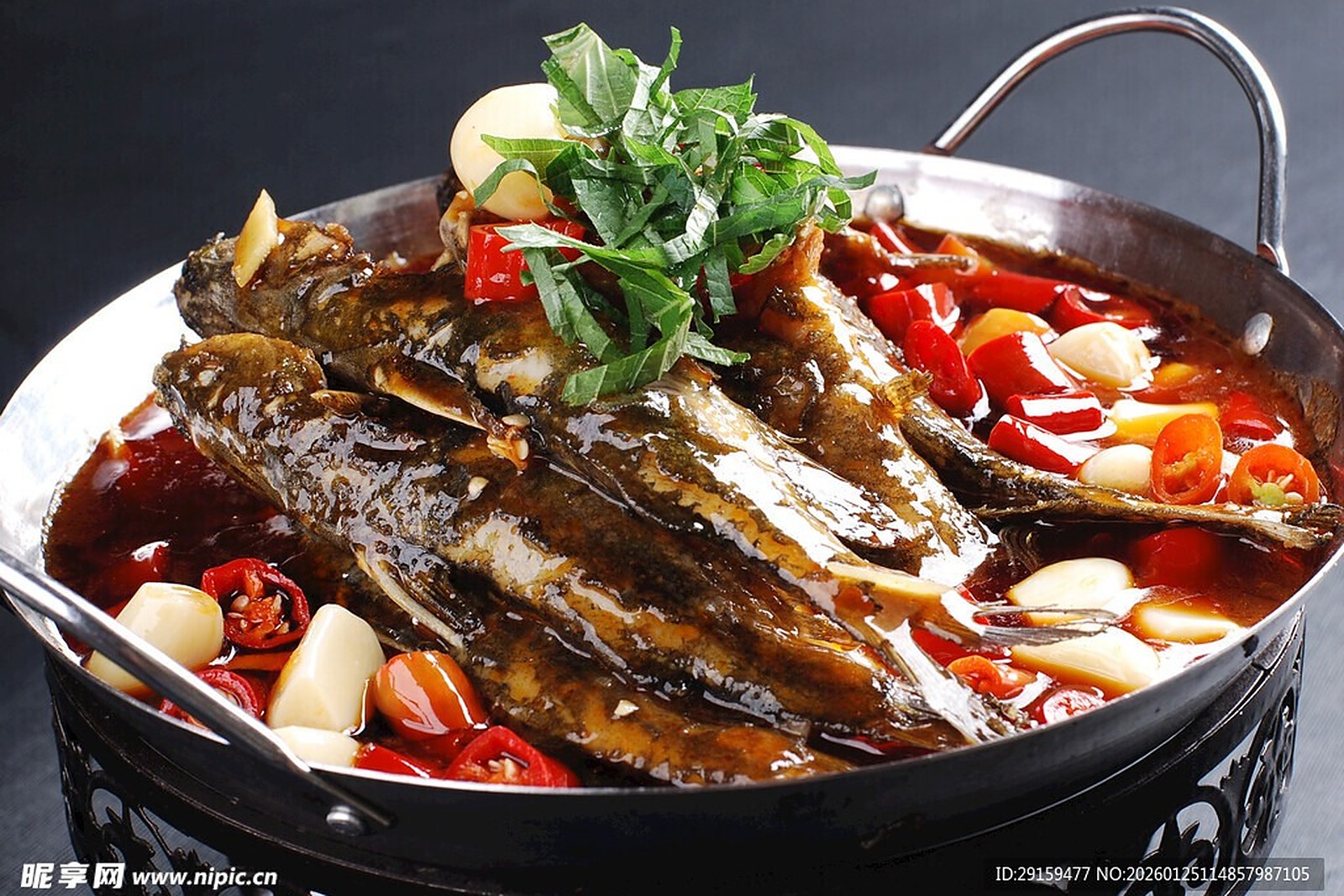
The eating is a slice-and-dip grammar written for fish graded by the way the flesh separates, and it leans 鲜 xiān fresh-clean plus 嫩 nèn tender to match the iron-pot table. The anchor is the whole trout at the centre of the platter: skin glistening with a light glaze, the muscle underneath falling apart in clean flakes, the fat rendered to a translucent amber that melts on the tongue before the salt catches up. Around the fish the table runs its supporting cast: 米饭 mǐfàn steamed rice to soak the broth, a bowl of the 汤 tāng simmering liquor poured over the slices as a finishing pour, pickled 萝卜条 luóbotiáo radish strips to cut the richness, and between courses a cup of 大麦茶 dàmài chá barley tea or plain hot water to reset the palate (worth confirming the details – each house pours its own finish differently). The pot’s own virtues decide the order: the trout arrives last, because the whole table has been building toward the plate that justifies the evening, and a kitchen that serves it first has wasted the build-up.
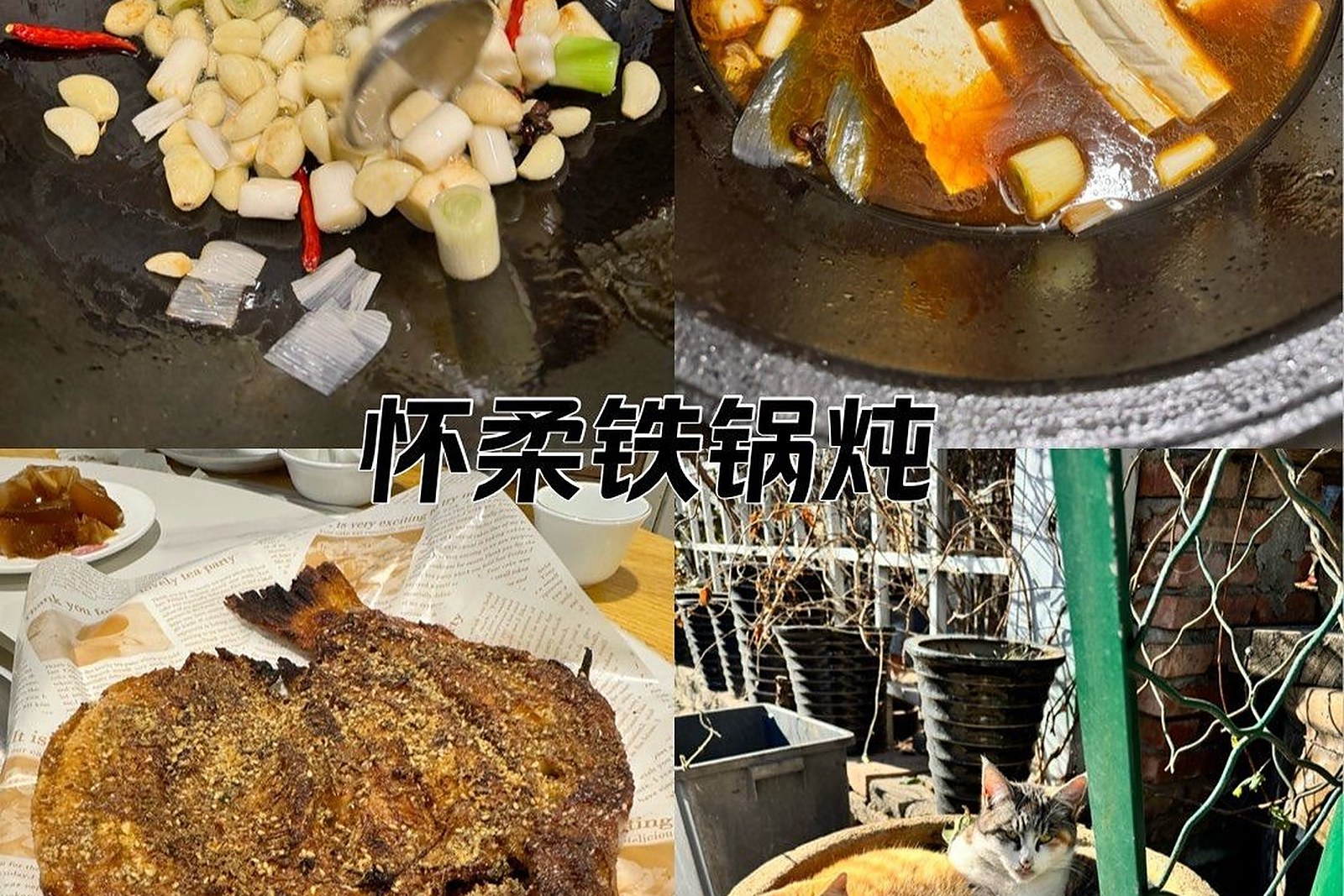
The honest grade is geography plus the simmer clock. In 怀柔区 Huáiròu Qū Huairou District, Beijing the honest eating is at the old houses along the valley roads, where the trout go into the pot in the afternoon and come out after a full hour’s rest – the resting hour is the whole argument, because rushed 虹鳟鱼 hóngzūn yú slides off the bone and never sets its skin (worth confirming which houses still run the slow cycle). The test costs nothing: press the flake with the chopstick and lift – a properly rested trout holds its shape, the gelatin quivers but does not break, and the broth beads on the surface rather than pooling flat – then taste one piece plain, because a clear-stock pot has nowhere to hide a tired cut. A per-person bill runs on the plates and the house’s standing, so call it worth confirming the details rather than a fixed number, and come in the cold half of the year: the old kitchens fill fast on winter weekends, and the best tables are gone by seven.
The wry truth is that 怀柔虹鳟鱼 Huáiròu hóngzūn yú is over-rated as a “local special” sticker and under-rated as a patience discipline: the menu files it under “mountain classic”, while the actual thing – a trout raised in cold spring water, simmered in an iron pot until the gelatin sets, sliced to order and finished at the table with its own liquor – is a slow-craft argument the signboard never explains. The self-deprecating footnote, and the district braid: a food writer will discourse on “old Beijing soul”, photograph the lacquered trout at heroic shutter, and then call the plate “commendably rustic” as if spring water were a recipe – which is the honest grade: 怀柔虹鳟鱼 Huáiròu hóngzūn yú is a working supper the writer will romanticise more than he finishes, and the family at the next table has picked the bones clean, called for the second helping of rice and asked the waiter which house makes the better 汤 tāng before the shutter closes. The same 怀柔区 Huáiròu Qū Huairou District thread runs on: the roasted trays of 怀柔板栗 Huáiròu bǐlì Huairou chestnuts warm the winter tables, the dried bags of 怀柔核桃 Huáiròu hétao Huairou walnuts line the market counters, the steaming pots of 怀柔杀猪菜 Huáiròu shāzhūcài Huairou kill-the-pig stew bubble through the cold nights, and the pale cups of 怀柔高山茶 Huáiròu gāoshānchá Huairou high-mountain tea steam through the cool mornings – one district, four more tables.
Words and Names
- 怀柔虹鳟鱼 Huáiròu hóngzūn yú / Huairou rainbow trout · the iron-pot stew the district named for - 铁锅 tiěguō / iron pot · the vessel that carries the dish forward - 山泉水 shānquán shuǐ / mountain-spring water · the cold base that builds the freshness - 鲜 xiān / fresh-clean flavour · the nose the dish is graded by - 嫩 nèn / tender texture · the melt the slow simmer buys - 汤 tāng / simmering liquor · the finishing pour the table adds - 怀柔区 Huáiròu Qū / Huairou District · the Beijing district holding the stream-side kitchens
What the Locals Know
- Order the whole trout, not the fillet: ask for 整鱼 zhěng yú by name – a house that only offers trimmed fillets is cutting corners on the cut that earned the dish its name.
- Run the flake test: press the piece and lift – a rested trout quivers but holds; a rushed one slides and breaks, and no broth hides the difference.
- Pour the liquor at the table: the 汤 tāng finishing pour is the house’s signature – let it bead on the flakes, not pool in the bowl.
- Come off-peak: the old kitchens serve the trout best when the pot has had its full hour’s rest – mid-week evenings beat the weekend crush.
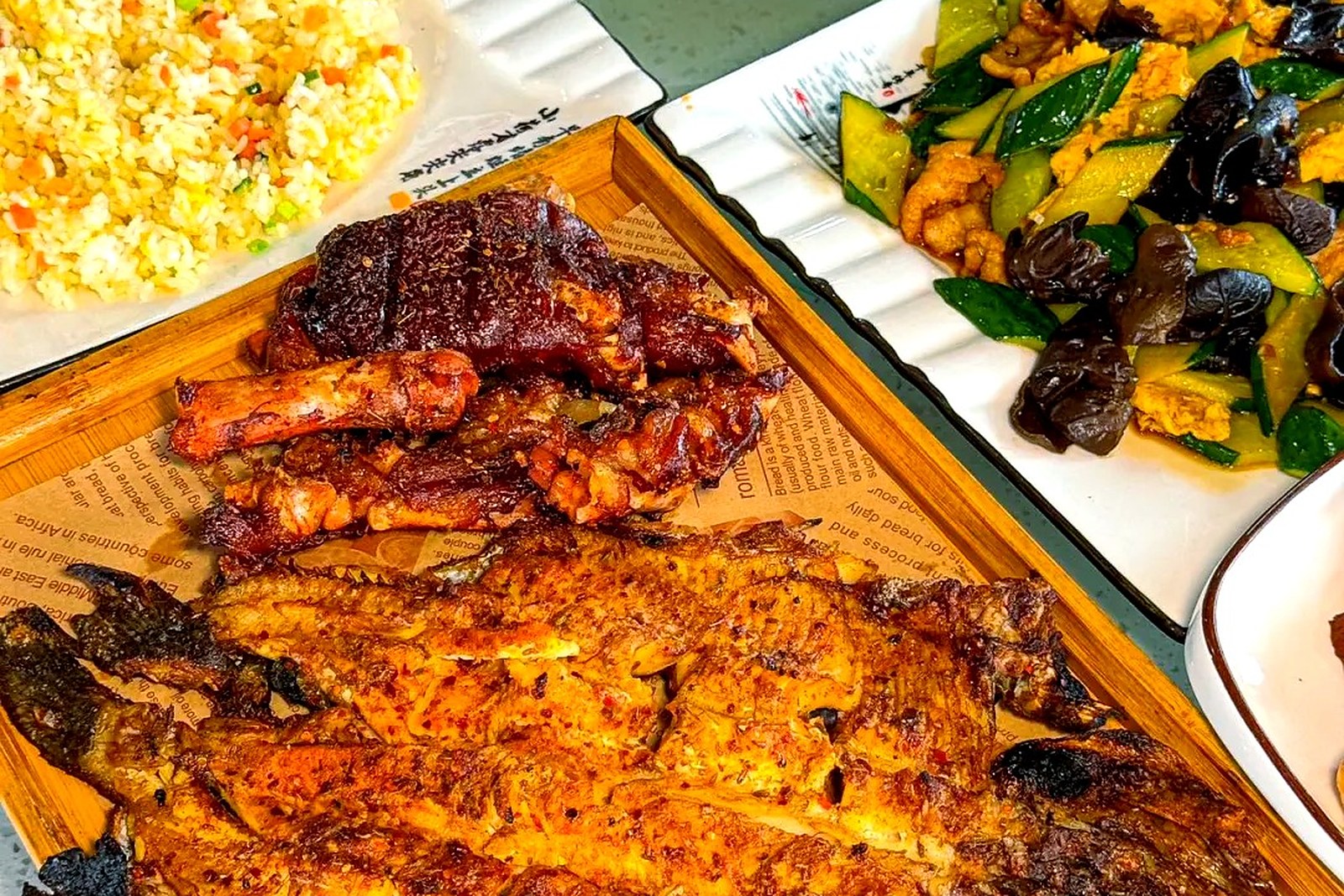
flowcloud would say that the 怀柔虹鳟鱼 Huáiròu hóngzūn yú is the iron-pot stews, mountain streams and the farmhouse signature of Huairou District, Beijing – a 铁锅 tiěguō discipline where 山泉水 shānquán shuǐ rides the slow simmer into a 汤 tāng finish – and that the honest move is to run the flake test, pour the liquor at the table, and let the trout hold its shape, because the pot built the depth and the stream built the skin. All checked October 2026. Where to find it: Huairou District Huáiròu Qū, Beijing – the stream-side kitchens along the valley roads of the district, where 虹鳟鱼 hóngzūn yú comes out of the iron pot from lunch into the winter night (worth confirming the details – which houses still run the slow cycle and their hours); a per-person bill runs on the plates and the house’s standing, so call it worth confirming the details rather than a fixed number. Huairou rainbow trout is the iron-pot stews, mountain streams and the farmhouse signature of Huairou District, Beijing, simmer before slice. All checked October 2026.
Where to find it: