
黄流老鸭 Huángliú lǎoyā, the Huangliu old duck, is the dish that made the name of 黄流镇 Huángliú Zhèn Huangliu Town in 乐东黎族自治县 Lèdōng Lí Zú Zìzhì Xiàn, Ledong Li Autonomous County, and it is a dish built on one stubborn rule: the bird has to be old. Not a duckling and not a young bird from a fast pen, but a hen that has laid eggs for more than a year. A couple opened the first old-duck shop in the town in the 1980s, the recipe has passed down for some forty years since, and local writers place the dish just after Hainan’s canonical four, Wenchang chicken, Jiaji duck, Hele crab and Dongshan goat, without ranking it, which is how this text puts it too.
The rule is the whole dish. The county’s own account, carried by the provincial government’s website, says the point of Huangliu old duck is the old bird, because only a duck that has laid eggs for a year or more is used and the long life is what puts flavour and chew into the meat. The town’s inheritor of the craft, 邢苗 Xíng Miáo, gives two tests for choosing one: look at the feet, because a duck that has walked for a year grows calluses on them, and look at the rump, because a bird with good fat has a full rump. That is the picking, and it is a kitchen rule rather than a marketing line, which is why it sits at the front of this article.
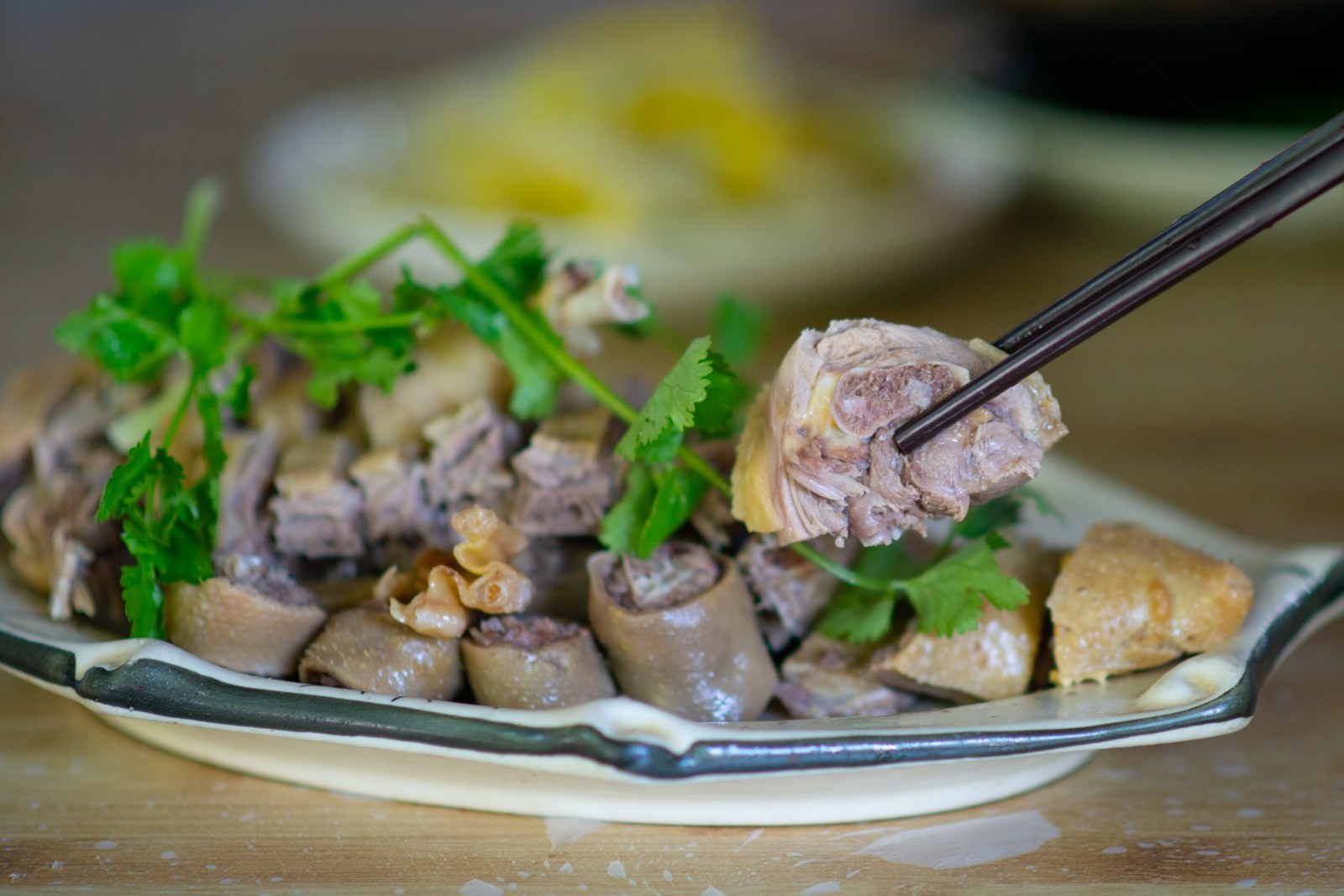
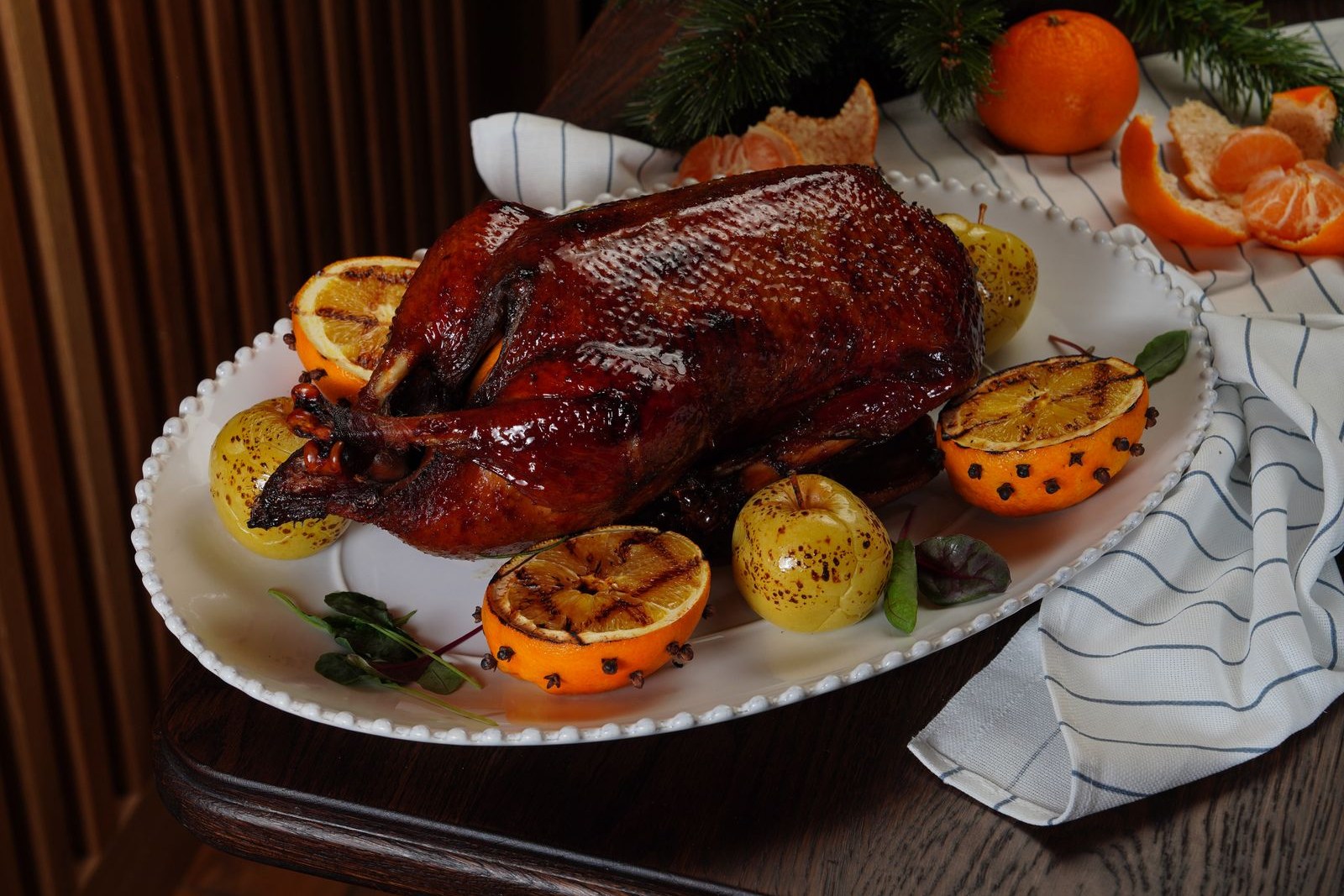
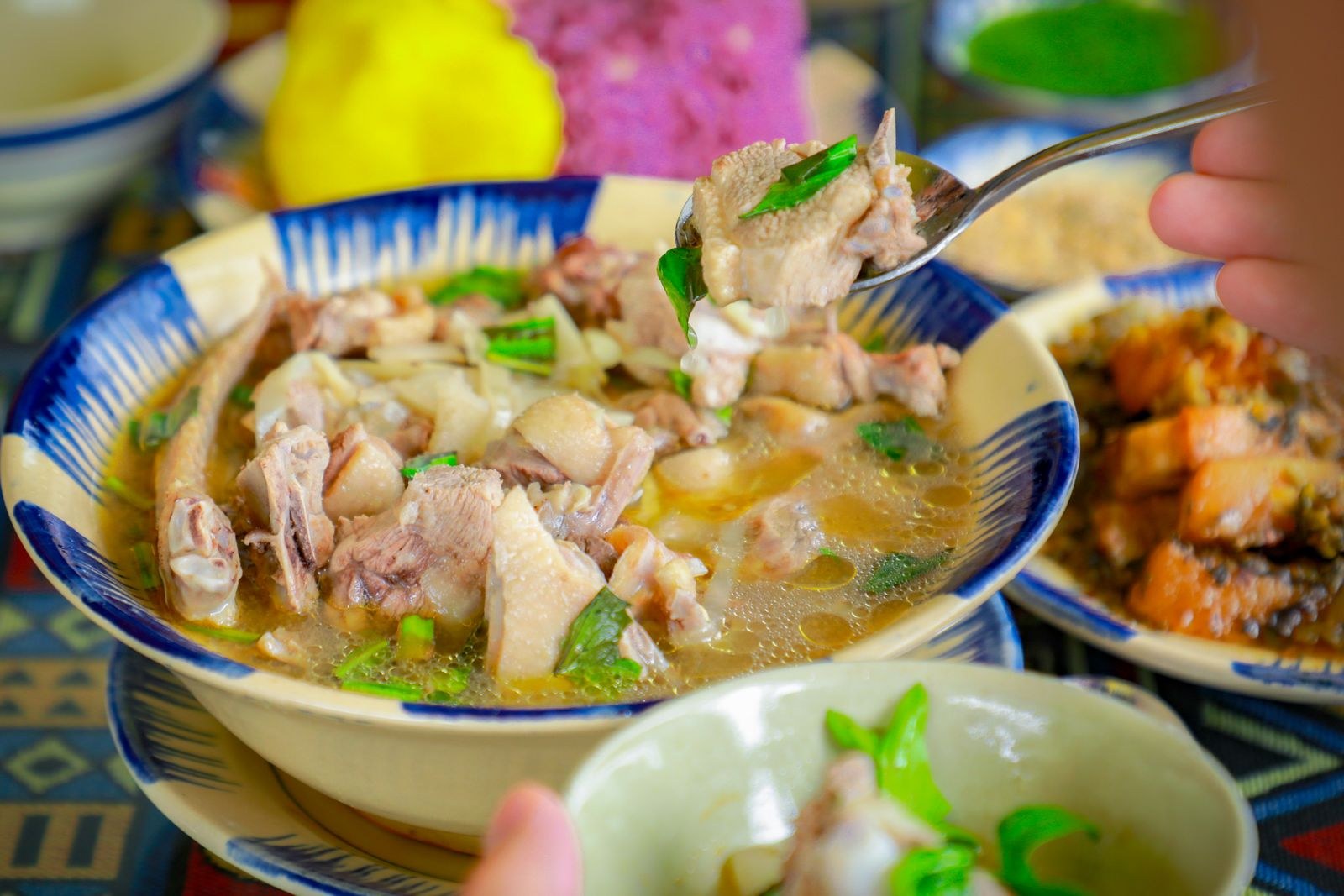
The three ways the dish is usually served are white-cut, dry-fried and braised in a clay pot, and each is a different cook. White-cut, 白斩 báizhǎn, is the plainest and the hardest to hide in: the bird goes into water brought to the boil with salt packed into the belly, then is held at a bare simmer, turned every ten minutes and left about forty-five minutes until a chopstick pushed into the leg runs clear of blood, and cooled and chopped back into the shape of a whole duck. Dry-fried, 干煸 gānbiān, is the farmhouse way, the bird worked slowly in a wok with a mixed seasoning until it takes on colour and chew, and it is the version most eaters call the most savoury. The clay pot, 老鸭煲 lǎoyā bāo, is the slowest: the duck is seasoned first and then set in a small clay jar to steam over water until the meat is tender but still holding together. Around those three sit the soups, duck simmered with winter melon or papaya, with lotus root and peanut, or with lotus seed and mushroom.
The dip is where the town’s cooks say the soul of the dish lives. Boiling duck broth is poured over minced garlic and ginger, the juice of a sour tangerine is squeezed in, chilli goes in, and salt and sugar are added until the sauce balances sour, salty, sweet and hot at once; it is the same sauce for the white-cut bird and the reason the meat never tastes flat. In 2020 the town’s repertoire was set down in a competition: a Hainan tourism food fair held in Ledong on 28 September that year judged an eighteen-dish list that the county now bills as 黄流老鸭十八吃 Huángliú lǎoyā shíbā chī, eighteen ways with Huangliu old duck, from old-salt duck and ginseng duck to coconut cold duck and a duck-and-softshell-turtle soup. The gold that day went to a 尖峰溪香源农庄 Jiānfēng xī xiāngyuán nóngzhuāng farmhouse for its 黄流相思老鸭, the silver to a Liguo town shop for white-cut duck and the bronze to a Huangliu restaurant for the turtle soup, a single day’s judging rather than a fixed menu, and printed here as exactly that.
The trade around the dish is real but lightly documented. Nearly a hundred dishes from eleven towns and two state farms were entered at that 2020 fair, which did three and a half million yuan of on-site business and signed twenty-six million yuan of contracts, a fair’s own figures for a fair’s own week. The county has since folded the old duck into its brand plan, listing it with the five-toe pig and the Foluo Changhou goose as its livestock names to develop. What the record refuses is a price with authority behind it: a 2025 visit found whole birds at about 120 yuan apiece in Huangliu, while an old Sanya guide still offers them at thirty-five yuan, a figure long stale, so this text prints the newer number with its year and says plainly that no official price exists. Two more traps are worth naming. A cluster of Huangliu-duck restaurants in downtown Sanya is not the town of origin, and the story that the recipe is centuries old appears in no source; the county’s own date is the 1980s.
Words and Names
黄流老鸭 Huángliú lǎoyā is the dish, named for 黄流镇 Huángliú Zhèn Huangliu Town; 白斩 báizhǎn is the white-cut method and 干煸 gānbiān the dry-fried one, with 老鸭煲 lǎoyā bāo the clay-pot braise. 酸桔 suānjú, the sour tangerine, is the fruit whose juice sharpens the dipping sauce, and 黄流酷粉 Huángliú kùfěn is the town’s rice-noodle bowl that usually comes to the table with the duck. 黄流老鸭十八吃 Huángliú lǎoyā shíbā chī is the eighteen-way repertoire set down in 2020. The site’s other poultry pages keep their own birds and counties; this one keeps a town’s old duck, its rule and its sauce.
What the Locals Know
The way to eat the dish is to go to the town. The provincial government’s own food writing says that the way to taste real Ledong cooking is to walk the streets around 黄流镇市场 Huángliú Zhèn shìchǎng, the Huangliu town market, where the shops are plainer than a hotel dining room and the food is fresher for it. Several old-duck houses cluster there, each with its own recipe, and the three that took medals at the 2020 fair, the Jianfeng farmhouse, the Liguo town white-cut shop and the Huangliu restaurant with the turtle soup, are the ones the county’s own reporting names.
Pair the duck with the town’s other bowl. 黄流酷粉, the town’s rice noodles, are dressed with small freshwater shrimp, fried peanuts, pickled greens and scallion and loosened with hot broth and a house sauce, and the two dishes are usually eaten together. The wider county table is worth a sentence: the 2020 judging also fixed a top-ten list of Ledong dishes, and among them are the Foluo Changhou goose, a smoked small fish, a herb-simmered ant chicken and a pumpkin-leaf dish, so the old duck has company. For the day’s plan, the sensible west-coast order is the salt pans and the fishing harbour in the morning, old duck and kufen at midday in Huangliu, and the rainforest ridge in the afternoon. What the record refuses, once more: any official price, any century-old history for the recipe, and any place on a formal ranking of Hainan’s great dishes.
flowcloud would say that the Huangliu old duck is a town dish built on one rule, a hen that has laid for more than a year, served white-cut, dry-fried or braised in a clay pot, dipped in garlic, ginger and sour tangerine, and billed by the county as eighteen dishes in one repertoire.
Where to find it: the old-duck houses and the streets around 黄流镇市场 Huángliú Zhèn shìchǎng, the Huangliu town market, in 黄流镇 Huángliú Zhèn Huangliu Town, 乐东黎族自治县 Lèdōng Lí Zú Zìzhì Xiàn Ledong Li Autonomous County, Hainan; the 2020 award-winning kitchens were a Jianfeng farmhouse, a Liguo town shop and a Huangliu restaurant, and the town is served by the west ring railway stop at 黄流站 Huángliú Zhàn. A whole bird runs from about 120 yuan upward on a 2025 snapshot and the price floats, so ask before the duck goes in the pot.