
Huangcun Helao Noodles: Press-Bed Threads, County-Seat Kitchens and the Old Bowl of Daxing District, Beijing
饸饹床压千条线,黄村滚汤一碗香。Hélao chuáng yā qiān tiáo xiàn, Huángcūn gǔntāng yī wǎn xiāng – The helao press squeezes out a thousand threads; the Huangcun rolling broth fills one fragrant bowl.
黄村饸饹面 Huángcūn hélao miàn Huangcun helao noodles are the pressed-thread bowl the county seat has fed its markets and neighbours for generations, and the address is a town: 黄村镇 Huángcūn Zhèn Huangcun town, the historic county seat of 大兴区 Dàxīng Qū Daxing District, Beijing, where the market street kept its row of noodle kitchens long after the city around them changed hands (worth confirming which village kitchens claim the oldest bed). The tool is the dish’s whole argument: the 饸饹床子 hélao chuángzi helao press bed, a wooden – now sometimes iron – frame levered over the pot, into whose cylinder a stiff dough is pressed so the strands extrude straight into the 滚水 gǔnshuǐ rolling water; the name itself, the food histories say, rides down from the steppe tongues, one of the borrowings the frontier counties never gave back (worth confirming the etymology, which dictionaries argue). The craft most visitors under-rate is the texture the press alone makes: extruded under force, the dough’s gluten stays dense and springy – a chew no rolled-and-cut noodle copies – which is why the kitchens kept the bed after the machine age made everything faster. The naming is the tell: a dish named for its tool, from a town named for its villages, within sight of the fields that grew the wheat.
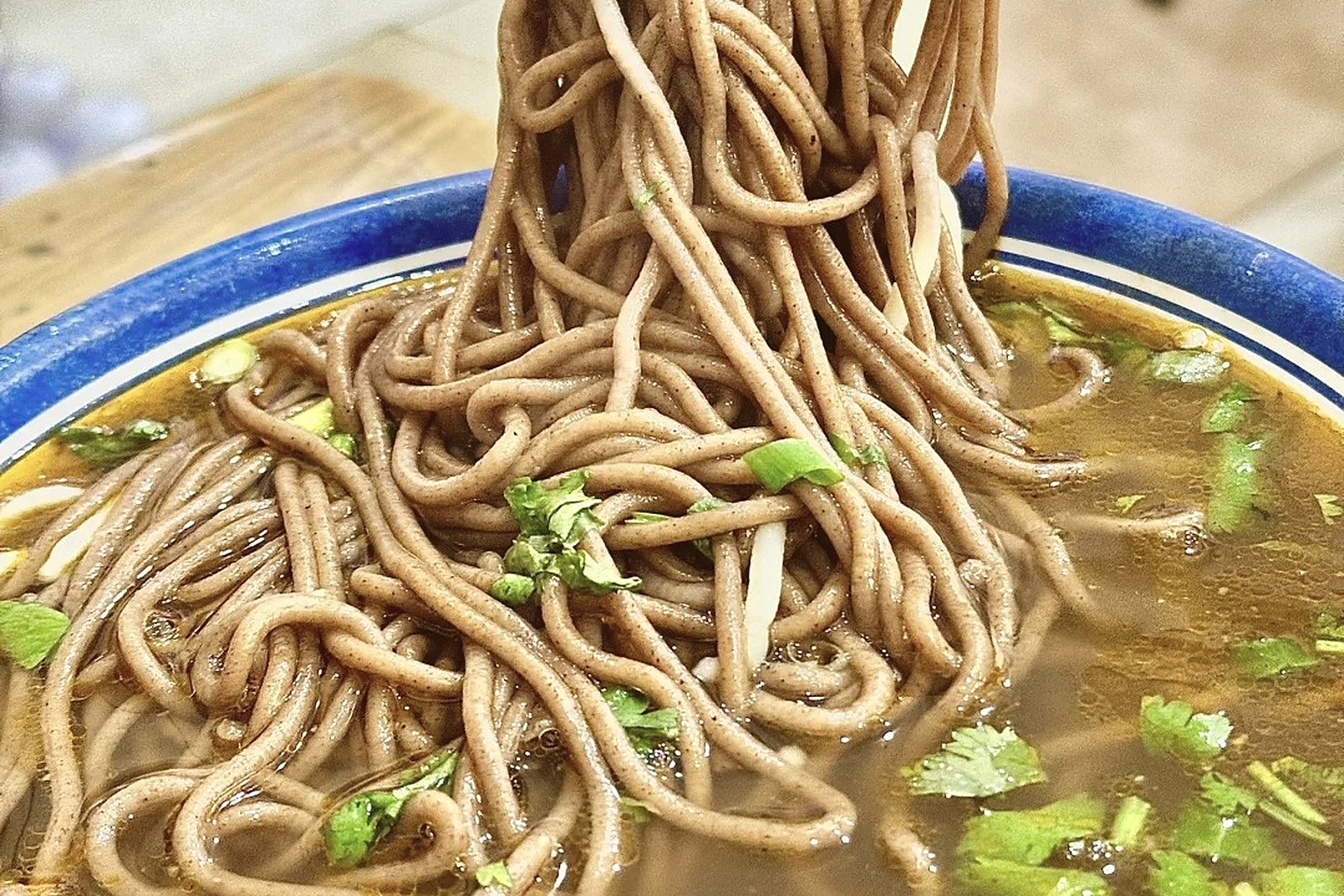
The eating is a bowl-and-broth grammar written for a noodle that means to be eaten hot and fast, and it leans 筋道 jīndao chewy-springy plus 咸香 xiánxiāng salt-savoury to match the county-seat table. The anchor is the bowl at the stove: threads pressed to order, drained and dressed with the kitchen’s 卤 lǔ gravy – pork and seasonal vegetables stewed to a spoonable 臊子 sàozi topping – set on the table with pickles, raw garlic and dried chillies (worth confirming the details – each farmhouse kitchen guards its own recipe). The seasonal switch is the locals’ argument: summer bowls run 过水 guòshuǐ cold-rinsed, threads chilled and the gravy laid thin, a market-day dish for hot months; winter bowls come out steaming, gravy heavy, broth underneath, fuel for the drive home. Around the bowl the county-seat tables keep their standing book: corn porridge, steamed buns, and in mushroom weeks the gravy changes house (worth confirming the hills’ calendar).
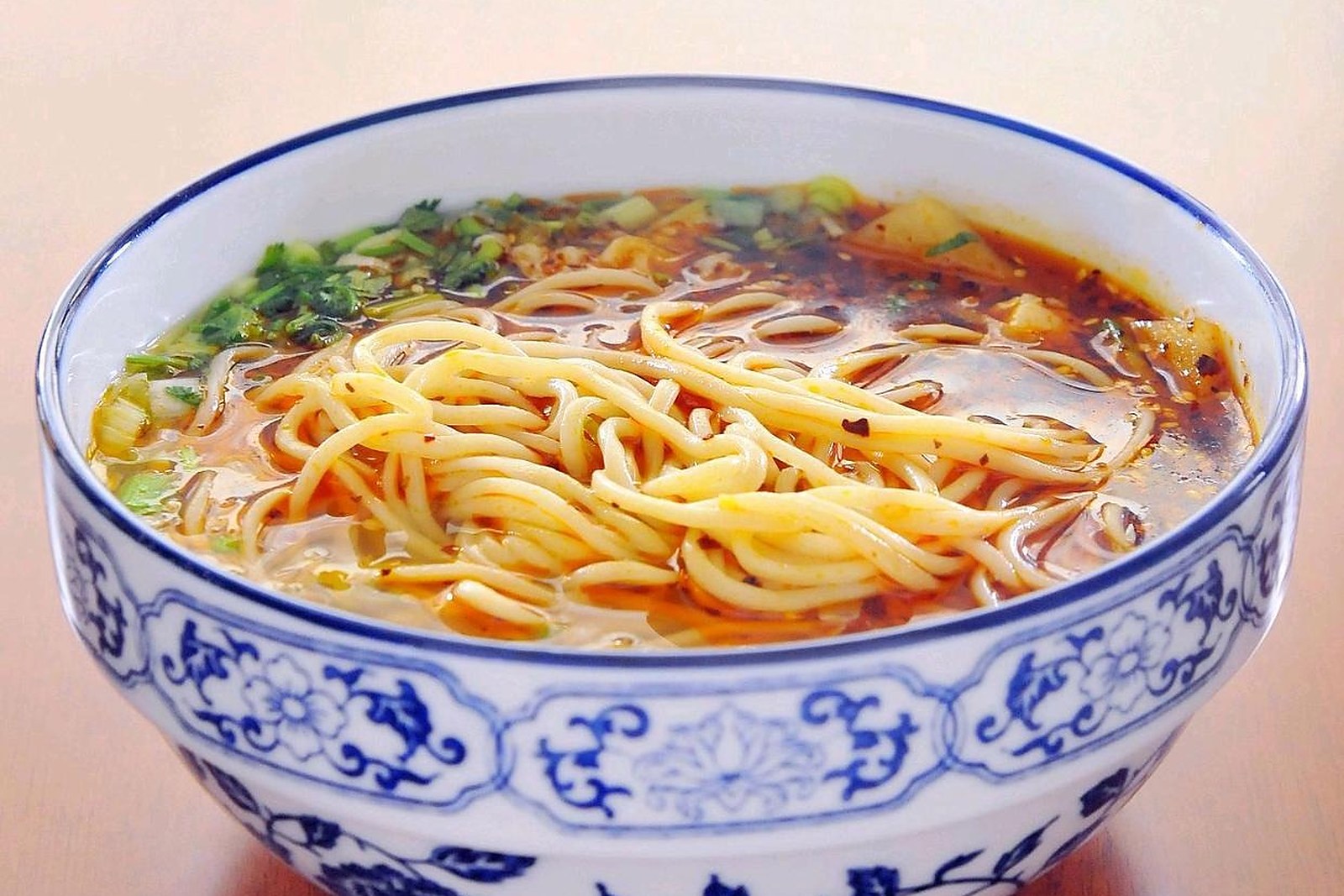
The honest grade is geography plus the pressing clock. In 大兴区 Dàxīng Qū Daxing District, Beijing the honest eating is at the noodle kitchens along Huangcun’s market street and at village tables that hang out a hand-painted sign on busy weekends, where the press bed sits in view of the stove and the strands go from bed to bowl directly (worth confirming the details – which kitchens press to order). The test costs nothing: watch the press – helao pressed for your bowl lands springy and separate; strands boiled ahead clump and tire – and no gravy hides the difference. The craft is counted on the district’s intangible-heritage rolls (worth confirming which year and level), but the eater’s test is still the press in view, not the plaque. A per-person bill runs farmhouse-cheap, so call it worth confirming the details rather than a fixed number, and come hungry at a proper meal hour: a village kitchen presses to its tables, and a table arriving between presses waits for the next batch.
The wry truth is that 黄村饸饹面 Huángcūn hélao miàn is over-rated as rustic nostalgia and under-rated as mechanics: the heritage lists file it under “old county-seat flavour”, while the actual thing – a lever machine that turns dense dough into springy strands by physics, kept alive in kitchens that preferred the bed to any machine – is simple engineering the menu never explains. The self-deprecating footnote, and the district braid: a food writer will philosophise about “peasant food ways”, photograph the lever at heroic shutter, and then call the bowl “commendably rustic” as if wood were a seasoning – which is the honest grade: 黄村饸饹面 Huángcūn hélao miàn is a working county-seat bowl the writer will romanticise more than he finishes, and the hikers at the next table have drained their bowls, ordered the pickle plate twice and asked which trail the mushrooms came from before the shutter closes. The same 大兴区 Dàxīng Qū Daxing District thread runs on: the lacquered shanks of 大兴烧肉 Dàxīng shāoròu Daxing braised pork rest in the old kitchens, the flaky trays of 大兴糕点 Dàxīng gāodiǎn Daxing pastries line the old-brand counters, the rows of 大兴草莓 Dàxīng cǎoméi Daxing strawberries redden the winter greenhouses, and the copper pots of 大兴铜锅涮肉 Dàxīng tóngguō shuànròu Daxing copper-pot mutton steam through the cold nights – one district, four more tables.
Words and Names
- 黄村镇 Huángcūn Zhèn / Huangcun Town · the county-seat town the noodles are named for - 饸饹面 hélao miàn / helao noodles · the pressed threads of the county-seat table - 饸饹床子 hélao chuángzi / helao press bed · the lever tool that extrudes dough into the pot - 筋道 jīndao / chewy-springy · the texture only the press bed makes - 卤 lǔ / gravy · the spooned dressing on the bowl - 臊子 sàozi / minced topping · the pork-and-vegetable crown of the hot bowl - 过水 guòshuǐ / cold-rinsed · the summer serving the valley uses - 大兴区 Dàxīng Qū / Daxing District · the Beijing district holding the county-seat kitchens
What the Locals Know
- Watch the press, not the menu: noodles pressed for your bowl run springy and separate – strands boiled ahead clump, and no gravy hides it (worth confirming which kitchens press to order).
- Take the seasonal switch: summer asks for 过水 guòshuǐ cold-rinsed, winter for the steaming gravy bowl – order against the weather, not the photo.
- Order the pickle plate: mountain brine and raw garlic cut the wheat heaviness as the valleys always ate.
- Time the drive to the bowl: come off the market roads at a meal hour – a village kitchen presses in batches, and a late table waits for the next one.
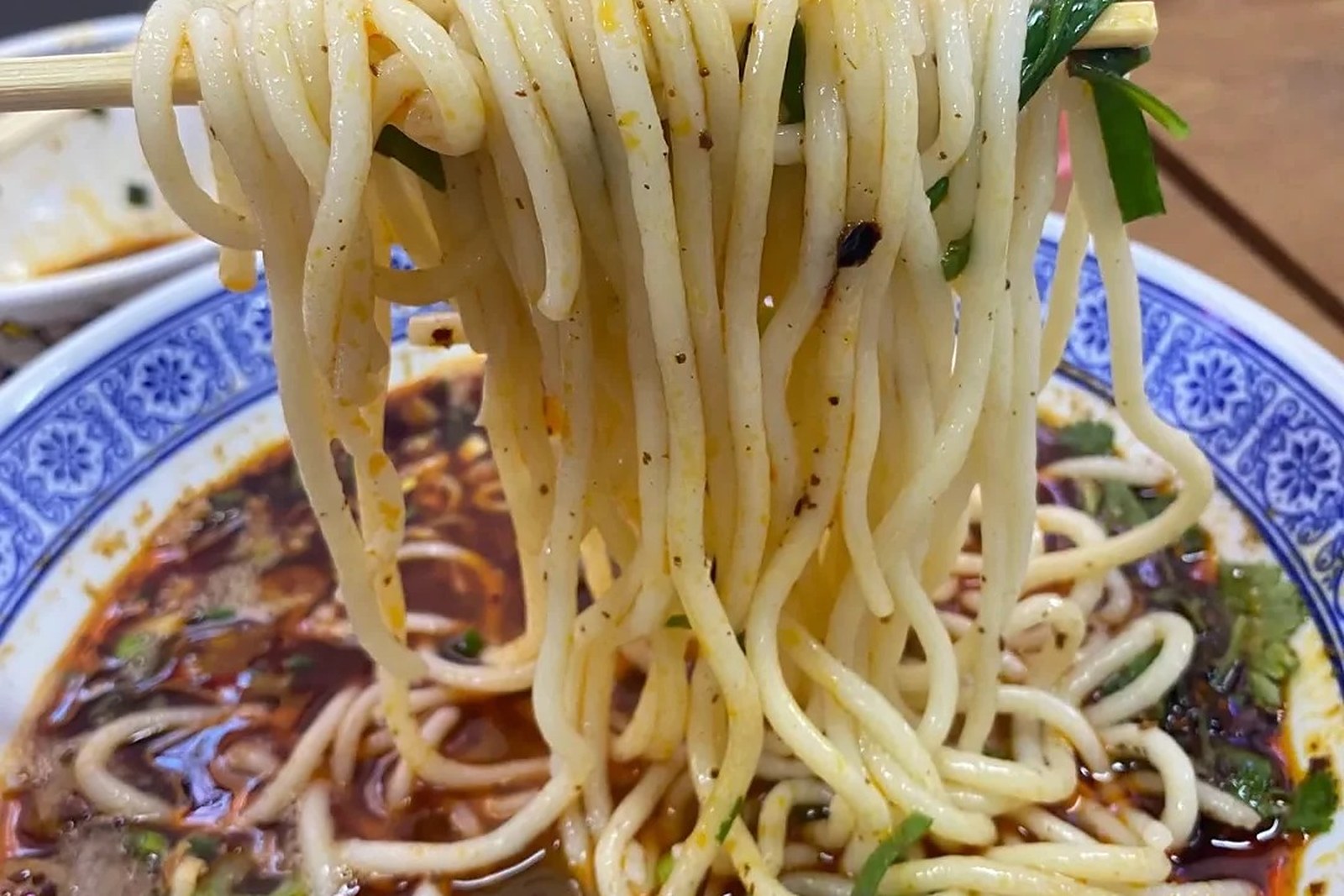
flowcloud would say that the 黄村饸饹面 Huángcūn hélao miàn is the press-bed threads, county-seat kitchens and the old bowls of Daxing District, Beijing – a 饸饹床子 hélao chuángzi lever that argues 筋道 jīndao into the strands and a 臊子 sàozi gravy that finishes them – and that the honest move is to watch the press, take the seasonal switch, and order the pickle plate, because the bed built the texture and the market built the appetite. All checked October 2026.
Where to find it: Daxing District Dàxīng Qū, Beijing – the noodle kitchens and village tables along the market street of 黄村镇 Huángcūn Zhèn Huangcun town, where 饸饹面 hélao miàn is pressed to the bowl through the year, busiest on market weekends (worth confirming the details – which kitchens press to order and their hours); a per-person bill runs farmhouse-cheap, so call it worth confirming the details rather than a fixed number. Huangcun helao noodles are the press-bed threads, county-seat kitchens and the old bowls of Daxing District, Beijing, press before bowl.