
湘莲 Xiāng lián, Xiang lotus, is the lotus seed of 湘潭县 Xiāng tán xiàn and the crop the county is known for all over the country. It is not a lotus flower article and not a wetland: it is a seed crop, dried, husked, cored and graded, sold by the tonne through a single town, and it has one of the longest unbroken agricultural pedigrees in the province. The county has been growing it for the better part of two thousand years, and the name was fixed by a poet – 江淹 Jiāng Yān, writing the 莲华赋 Lián huá fù in the Southern Dynasties, is credited with joining the character for Hunan to the character for lotus and giving the region’s seed the name it still carries.
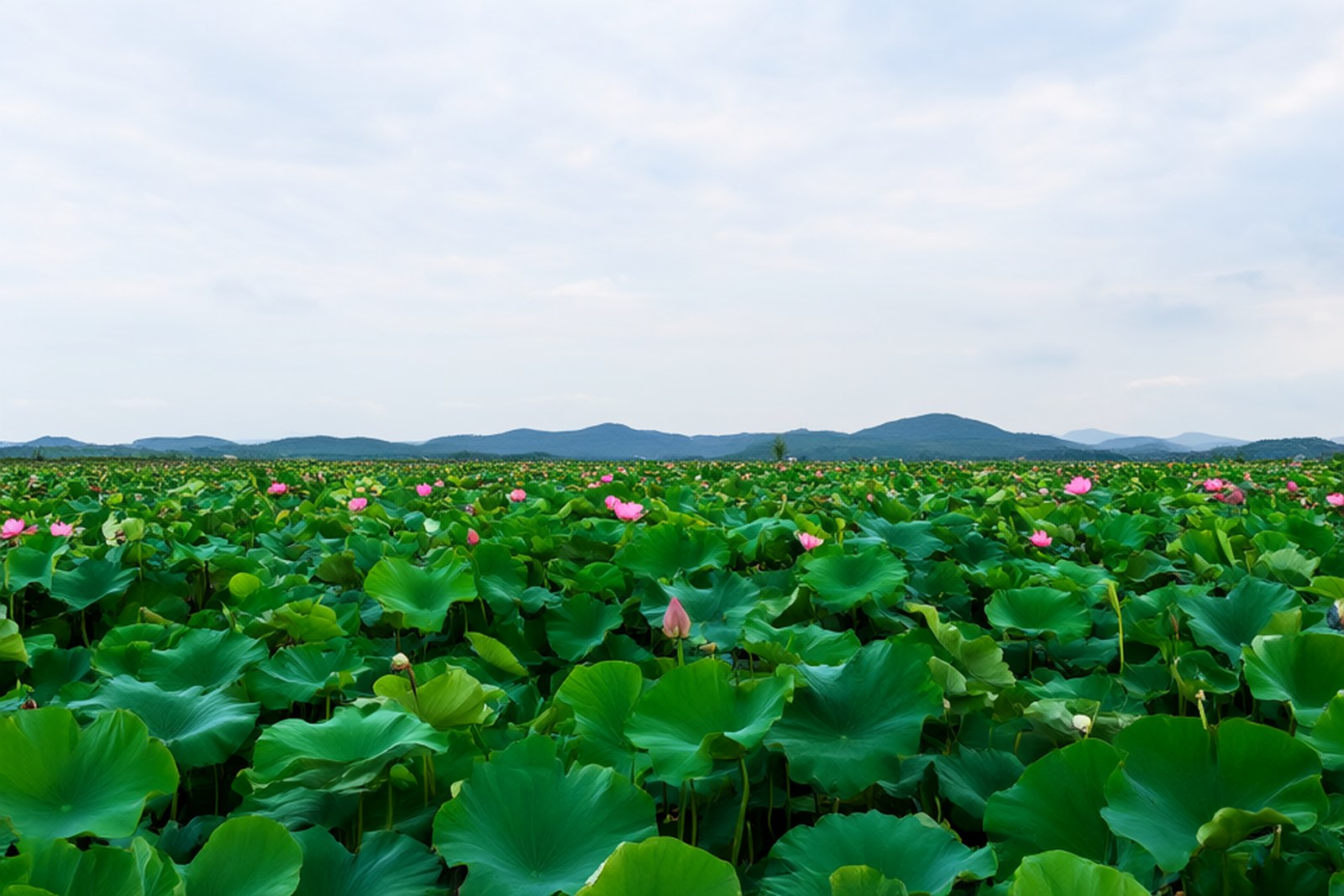
The county’s own boast is a couplet – 湘莲甲天下,潭莲冠湖湘, Xiang lotus is the best under heaven and the Tan lotus the best in Hunan – and the phrase has been in use long enough to have lost its authorship. The variety that carries the reputation is 寸三莲 cùn sān lián, the three-to-an-inch lotus, named for the size of the seed rather than anything to do with the flower; it has been recorded as a tribute product since the Ming dynasty, when it went to the imperial court, and the qualities claimed for it are a milk-white interior, a faint fragrance and a texture that goes soft and mealy without turning to paste. In 1995 the county was formally recognised as 中国湘莲之乡 Zhōng guó Xiāng lián zhī xiāng, the home of Chinese Xiang lotus; in 2010 the national quality inspection authority extended geographical-indication protection to the product; and the county’s varietal work on 寸三莲, including a disease-resistant selection and a four-hundred-mu stock farm that is the only purification and rejuvenation base for the variety in the country, is what keeps the seed from drifting.
The trade is concentrated in one place. 花石镇 Huā shí zhèn, in the south of the county, is a town of about two hundred and sixty square kilometres with a resident population of some fifty-six thousand, sitting on the 涓水 Juān shuǐ and up against the edge of 衡山 Héng shān. It has been a market town for centuries and is now the largest lotus-seed collection and distribution centre in the country: more than ten thousand tonnes move through a year, which is somewhere above seventy per cent of the national trade, and more than seven hundred businesses in the town grow, collect, store, process, ship or sell the seed. The county’s lotus-seed processing cluster turned over 8.4 billion yuan in 2025 with an export share of over seventy per cent, and the town’s industry park is where the packing houses and the cold stores are. Old infrastructure survives alongside it – the town still has its 汉城桥 and 观政桥, its two old bridges, and the 龙口老街 Lóng kǒu lǎo jiē, the old commercial street of the river port that the seed trade was built on.
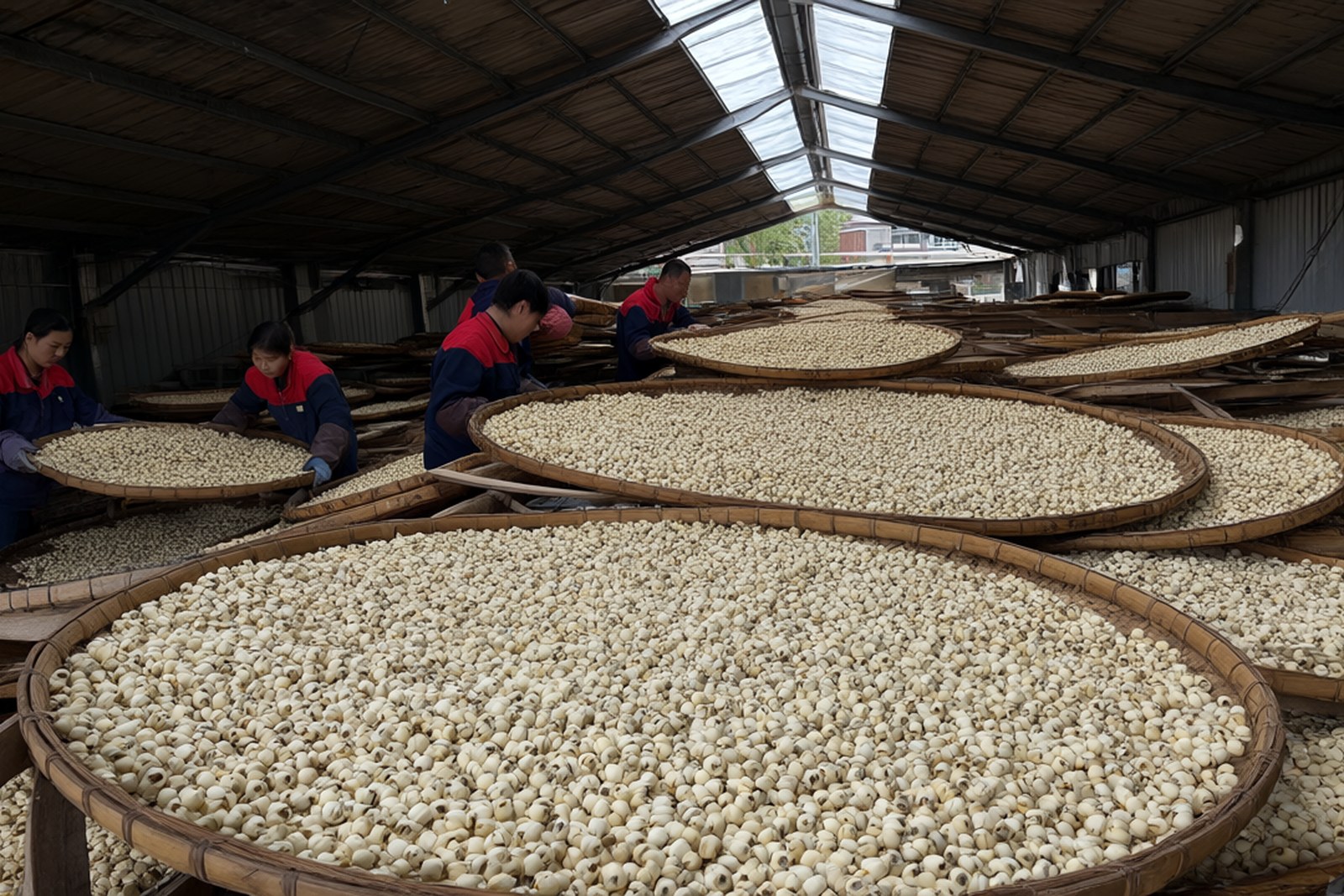
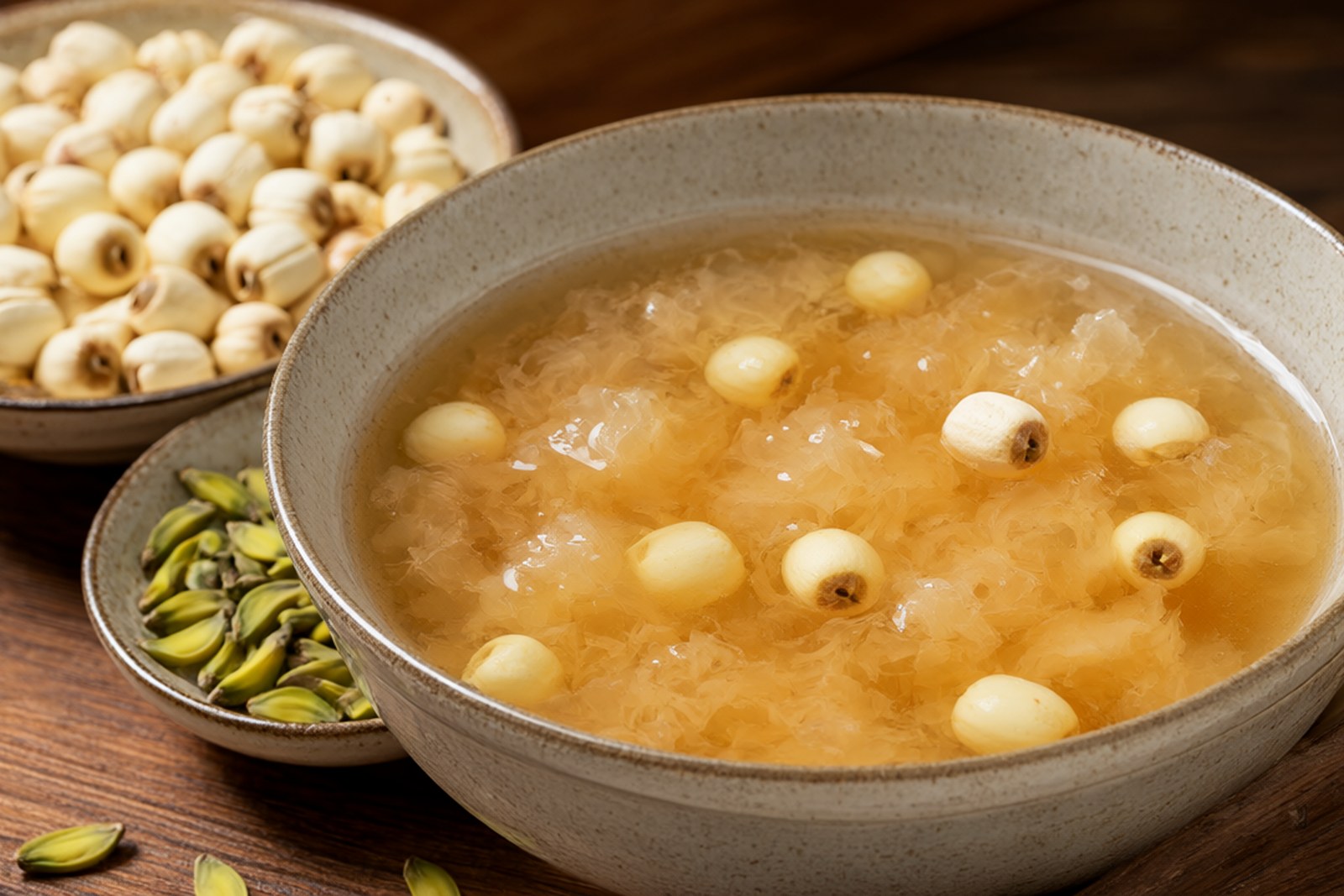
Most of what is sold is 通心白莲 tōng xīn bái lián, cored white lotus, the seed husked, the bitter green germ drilled out of the centre and the kernel dried, which is the form it reaches kitchens in. The work is still largely done by hand because the machine version bruises the kernel, and the sorting sheds of 花石 are where the grades are set: size, whiteness, and whether the germ has been taken out cleanly. In the kitchen the seed goes into soups and congee rather than into anything complicated – 银耳莲子羹 yín ěr lián zǐ gēng, the white fungus and lotus-seed soup, is the standard, sweetened lightly and served either hot or cold; 莲子粥 is breakfast; and the germ that was drilled out, 莲心 lián xīn, is dried separately and sold as a tea, because it is bitter and is reckoned to be the medicinal part. The fresh green seed, 鲜莲 xiān lián, is a summer snack in the lotus towns and is not exported at all.
Words and Names
湘莲 Xiāng lián is the Hunan lotus seed and the protected name of the region’s product; 寸三莲 cùn sān lián is the local variety, three seeds to the inch. 通心白莲 tōng xīn bái lián is the cored white kernel that most of the trade sells, and 莲心 lián xīn, the germ removed to make it, is dried as a bitter tea. 莲子 lián zǐ is the seed itself, 藕 ǒu is the root, which is a different crop eaten as a vegetable, and 荷叶 hé yè, the leaf, is used for wrapping and for tea. 花石 Huā shí is the town, and 涓水 Juān shuǐ the river it stands on.
What the Locals Know
The grade of a kernel is judged by eye in three seconds: it should be round and plump rather than tapered, milk-white rather than chalky or yellowed, and it should ring faintly when dropped on a board, which means it was dried slowly rather than baked. Look at the hole where the germ was drilled out; a clean, straight channel means it was done carefully, and a torn or ragged one means the kernel will cook to mush. The 寸三莲 is smaller than the imported seed and costs more, and it is worth it, because it holds its shape in a long simmer where the big ones collapse. If you are in the county between June and August the ponds are in flower and the town runs 赏荷 routes round them, which is the only time the crop is a spectacle rather than a commodity.
flowcloud would say that a county which has grown the same seed for two thousand years, kept a stock farm whose entire job is to stop the variety changing, and built a town that handles a tenth of the country’s crop, has understood something the rest of the food industry keeps forgetting, which is that the value is in not moving.
Where to find it: the seed market and packing houses of 花石镇 Huā shí zhèn, 湘潭县, where the grades are sold loose and by the bag, and the dry-goods sections of any market in 湘潭市; cored white seed runs roughly ¥40 to ¥120 per five hundred grammes depending on size and grade, and the germ tea rather less. The town is in the south of the county on the road towards 衡山, about an hour by car from the city, and 湘潭站 Xiāng tán zhàn is the nearest main-line station.