
化橘红 huà jú hóng is the dried outer peel of an immature pomelo, and the whole of its reputation rests on a single accident of geology. The tree is 化州柚 huà zhōu yòu, the Huazhou pomelo, grown in 化州市 Huà zhōu shì in the west of 茂名市 Mào míng shì, and nowhere else produces the same fruit. Plant it a county away and two things happen at once: the peel loses the dense grey-green down that covers it, and the naringin content drops by a factor of several. Both changes are attributed to the 礞石 méng shí, the mica-schist, that lies under the Huazhou soil and nowhere else in the province, and the local trade has built its entire claim to authenticity on the fact that you can see the difference with your fingers.
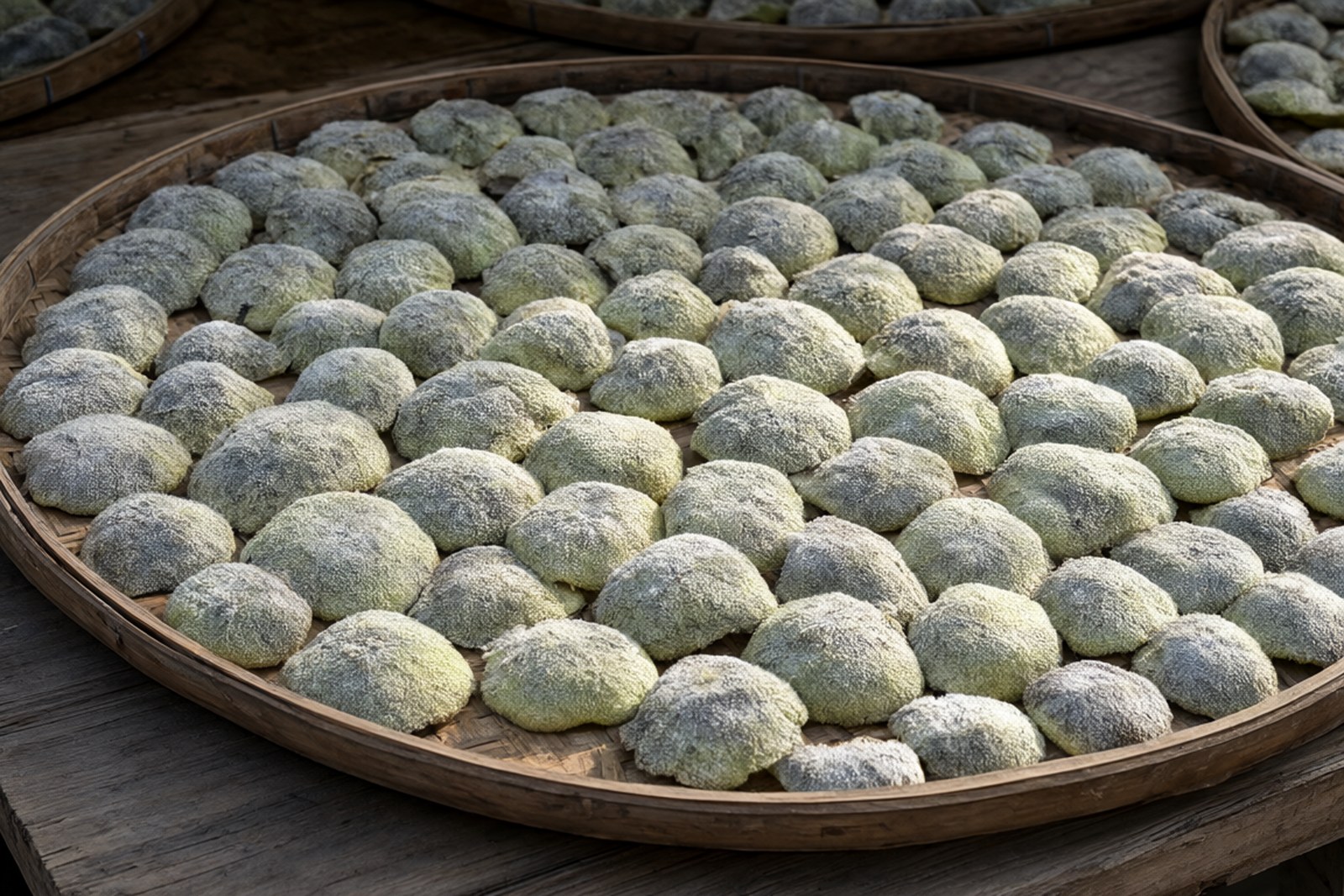
The peel has been a medicine here since at least the Southern Song, when the orchards around Huazhou were first planted, and the trade is one of the oldest continuously worked in the province. Song-era pharmacists placed it among the 南药 nán yào, the southern drugs, and the 本草纲目拾遗 Běn cǎo gāng mù shí yí records it with the formula that the local trade still quotes: it treats phlegm complaints, cuts through greasy and stodgy food, sobers a drunk, loosens the chest and counteracts crab poison. Its standing was settled in the Qing, when the peel went to the court as tribute and a single piece was said to be worth a piece of gold, 一片值一金 yī piàn zhí yī jīn. It entered the national register of protected geographical-indication products in 2006 and the provincial intangible-heritage list in 2012, and in 2024 it was admitted to the national list of substances that are both food and medicine, which is the administrative permission that lets it be sold as a drink rather than a prescription.
What is harvested is not the ripe fruit. The pomelos are picked in high summer while still green and hard, dropped into boiling water for a moment, and then scored so the peel comes away in five or seven segments, 五爪 wǔ zhǎo and 七爪 qī zhǎo, five claws and seven claws, the shapes that were cut for the imperial household and are still the shapes the trade makes. The pulp and part of the white pith are scraped off and the segments are pressed flat and dried. The best grade is not a peel at all: it is the 橘红胎 jú hóng tāi, the fetal fruit, picked when it is barely the size of a walnut and dried whole, whose down covers more than ninety-five per cent of its surface and whose aroma is several times stronger than that of the grown peel. The fetal fruit was written into the provincial standard for medicinal materials in 2011 under the name 柚果 yòu guǒ.
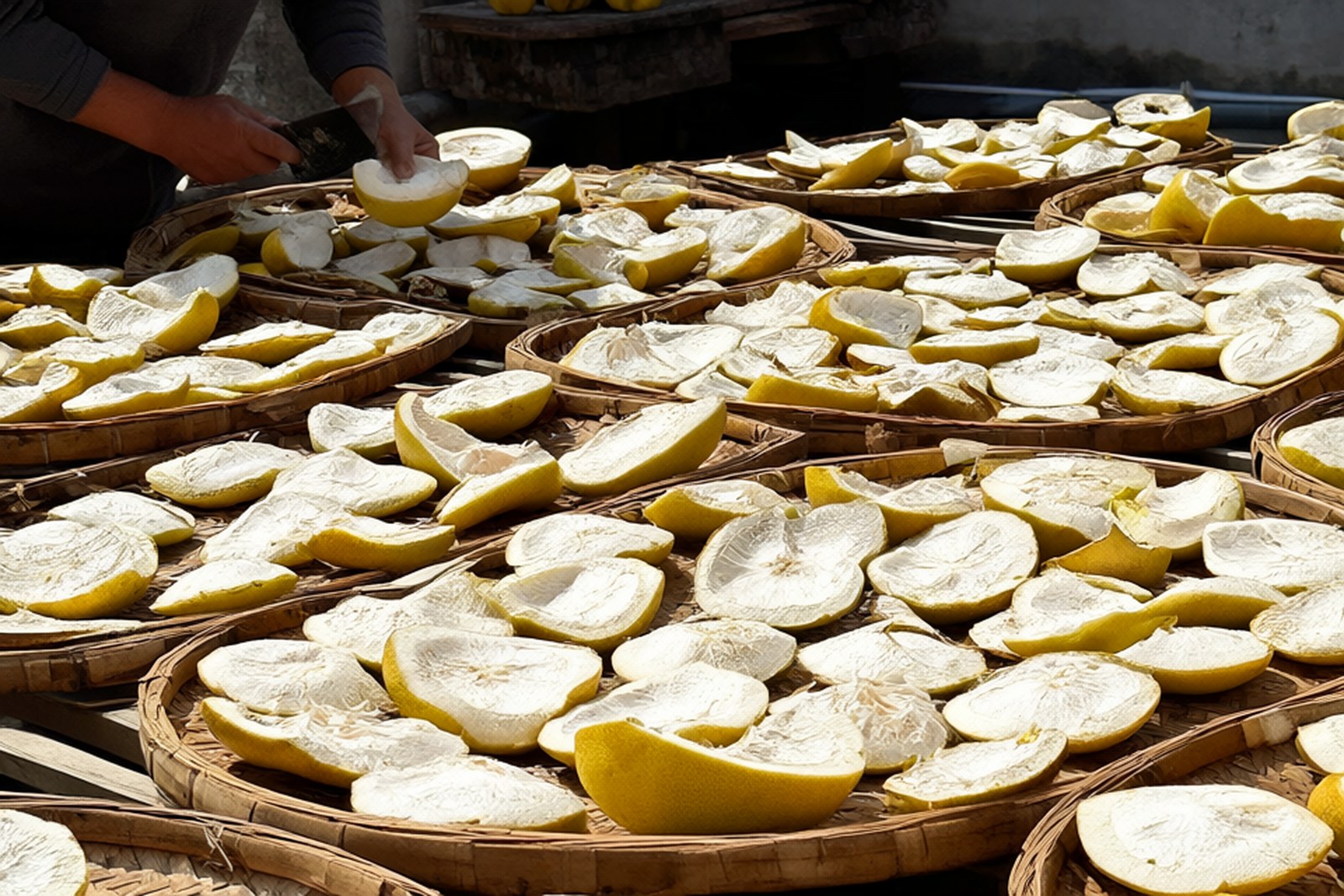
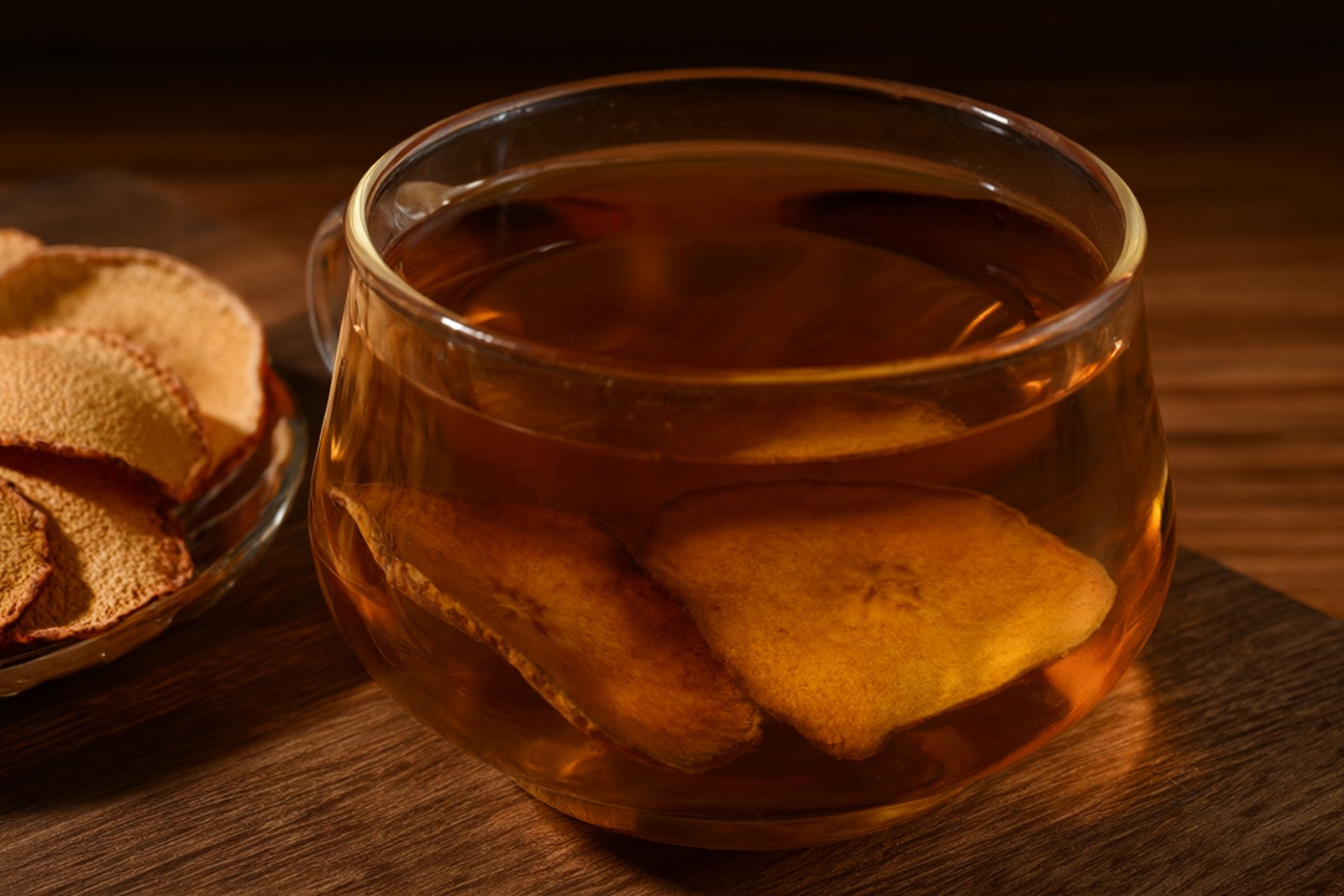
The taste is not friendly. A slice the size of a coin in a cup of hot water gives a bitter, resinous, faintly sweet liquor that turns gold and keeps its strength through four or five refills; the fruit swells like a sponge and sinks. Local households drink it the way other places drink tea, and the moneymaking end of the trade is the modern one, the boiled sweets, the syrups, the lozenges and the ready-to-drink teas that carry the name without carrying the bitterness. The plant is the reason the county has an industry at all, and the county is not shy about it: 化州市 grows the fruit, dries the peel, packs the tea and runs the shops, and the roadside between the orchards is lined with the drying yards.
Words and Names
化橘红 huà jú hóng is the geographical-indication name; 橘红 jú hóng alone is the wider category, which other provinces also produce and which the local trade will tell you is not the same thing. 化州柚 huà zhōu yòu, the Huazhou pomelo, is the botanical source, and 礞石 méng shí is the mineral soil that the local claim rests on. 橘红胎 jú hóng tāi, also sold as 柚果 yòu guǒ, is the whole dried fetal fruit and the most expensive grade. 五爪 wǔ zhǎo and 七爪 qī zhǎo, five claws and seven claws, are the segmented shapes. 正毛 zhèng máo, true down, is the trade’s word for peel that still carries its fur, and it is the first thing a buyer is told to check.
What the Locals Know
Buyers are taught to look before they taste. The down should be dense, fine and natural in colour, and it should feel like a piece of velvet rather than a dusting; peel that has been grown elsewhere is smooth, and no amount of processing puts the fur back. Break a piece and the aroma should be a compound of old orange peel and medicine, not simply citrus. Pharmacies and the trade both repeat the same caveats: it suits a cough with thick phlegm and an overloaded stomach, and it is not for someone who is already dry, weak or running a hot, empty cough, because it is warm and drying and will make that worse. Most of it is drunk as an infusion of one or two slices, about three grammes, in water just off the boil; the medical dose in the pharmacopoeia is three to six grammes a day, and the drink is not a substitute for a doctor.
flowcloud would say that a county which found a mineral in its subsoil, grew a fruit that would only wear its coat above that mineral, sold the coat to an emperor, and then spent eight hundred years refusing to let anyone else grow the fruit, has turned a geological accident into a geography.
Where to find it: the orchards, drying yards and tea shops of 化州市, where the peel is sold loose by weight, in pressed cakes, in gift boxes of the fetal fruit, and increasingly as bottled drinks; a bag of ordinary sliced peel runs tens of yuan and the fetal fruit several times that, and the county’s own registered producers are the safer buy. 化州 sits on the 茂湛 corridor west of 茂名市, reached by road from 茂名站 Mào míng zhàn on the 深湛 railway in about forty minutes, and the peel travels well enough that the shops at the station and in the county town both carry it.