
The River’s White Gold: Zhenjiang’s White-Braised Hui Fish
鮰鱼白汁出长江,奶汤一盏胜琼浆 Huíyú báizhī chū Chángjiāng, nǎi tāng yī zhǎn shèng qióngjiāng – The hui fish in white sauce comes from the Yangtze; one cup of that milk-white broth beats the nectar of the immortals
正文:白汁鮰鱼 Báizhī Huíyú white-braised hui fish is the river on a plate – 鮰鱼 huíyú the longsnout catfish that haunts the deep channels of the Yangtze, simmered with its skin intact in nothing but its own gelatin, stock and a whisper of wine until the sauce turns the colour of milk. The dish is Zhenjiang river cooking at its purest: no soy, no chili, no covering colour, just the fish’s fat rendering into broth until the sauce clings to the spoon. Locals rank the hui – along with the legendary shad and knife fish – among the Yangtze’s “three freshes,” and the hui is the one the river still surrenders, farmed in the river’s backwaters and served in the city’s old river-kitchens all year.
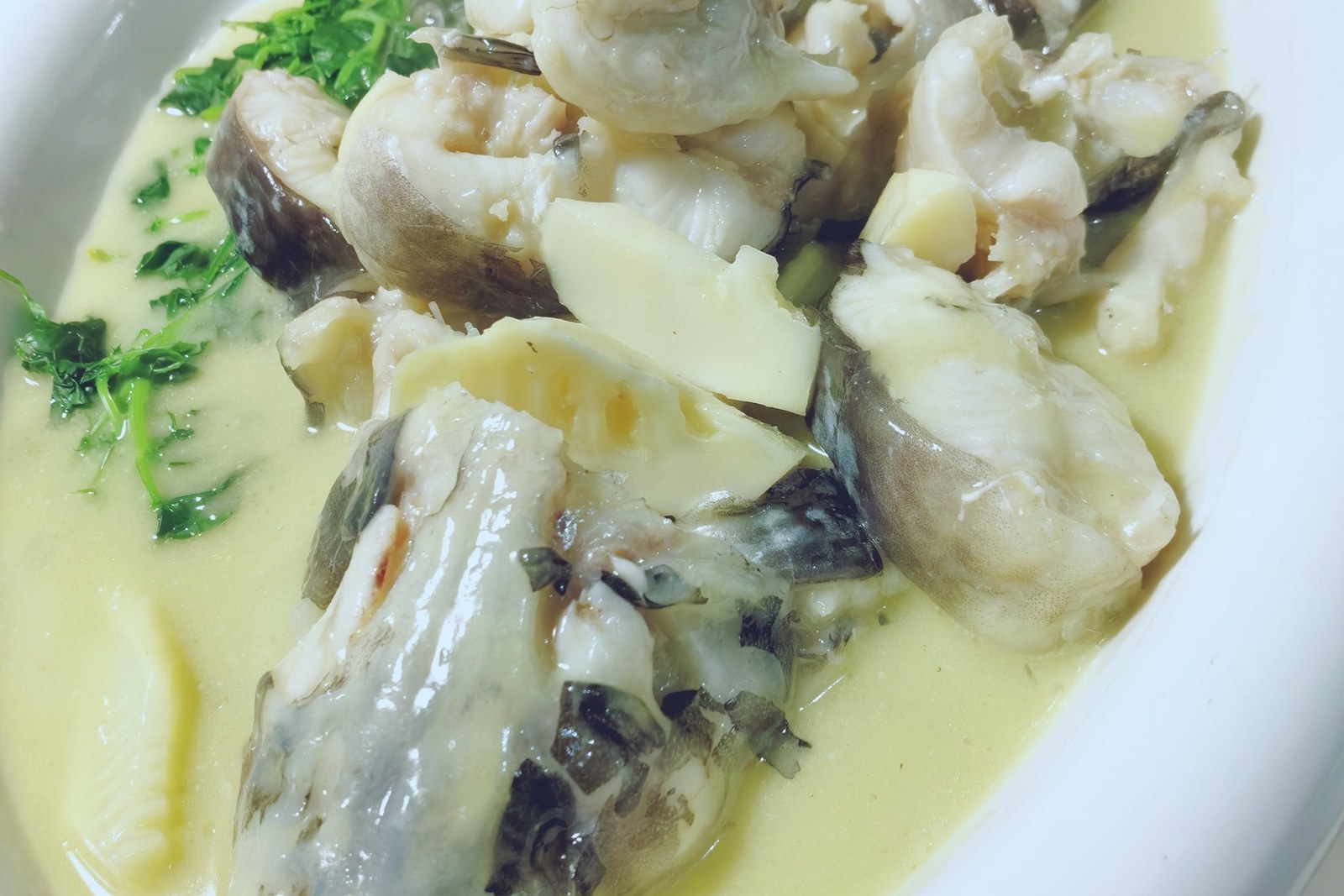
The fish itself is built for this sauce. Its skin is a layer of natural gelatin, its flesh is fatty without fibers, and the classic cut – thick steaks from the shoulder, the head split for the broth – gives the sauce its body: twenty minutes of gentle simmer and the liquid turns opaque, faintly sweet, thick enough to coat the chopstick. The rule the kitchens quote is 白汁不见白油 bái zhī bú jiàn bái yóu – white sauce, but never a film of white grease: richness from collagen, not from oil.
Eat it as the river tables serve it: the platter in the middle, steamed rice alongside, and nothing else to interrupt – the sauce spooned over the rice is considered the point of the exercise, and the skin, quivery and sweet, is fought over. Spring is the fish’s fattest season, and the old houses along the riverfront have served the same recipe for generations; the city’s banquet kitchens keep it on the card as the benchmark of a kitchen’s restraint, the dish a cook cannot hide behind.
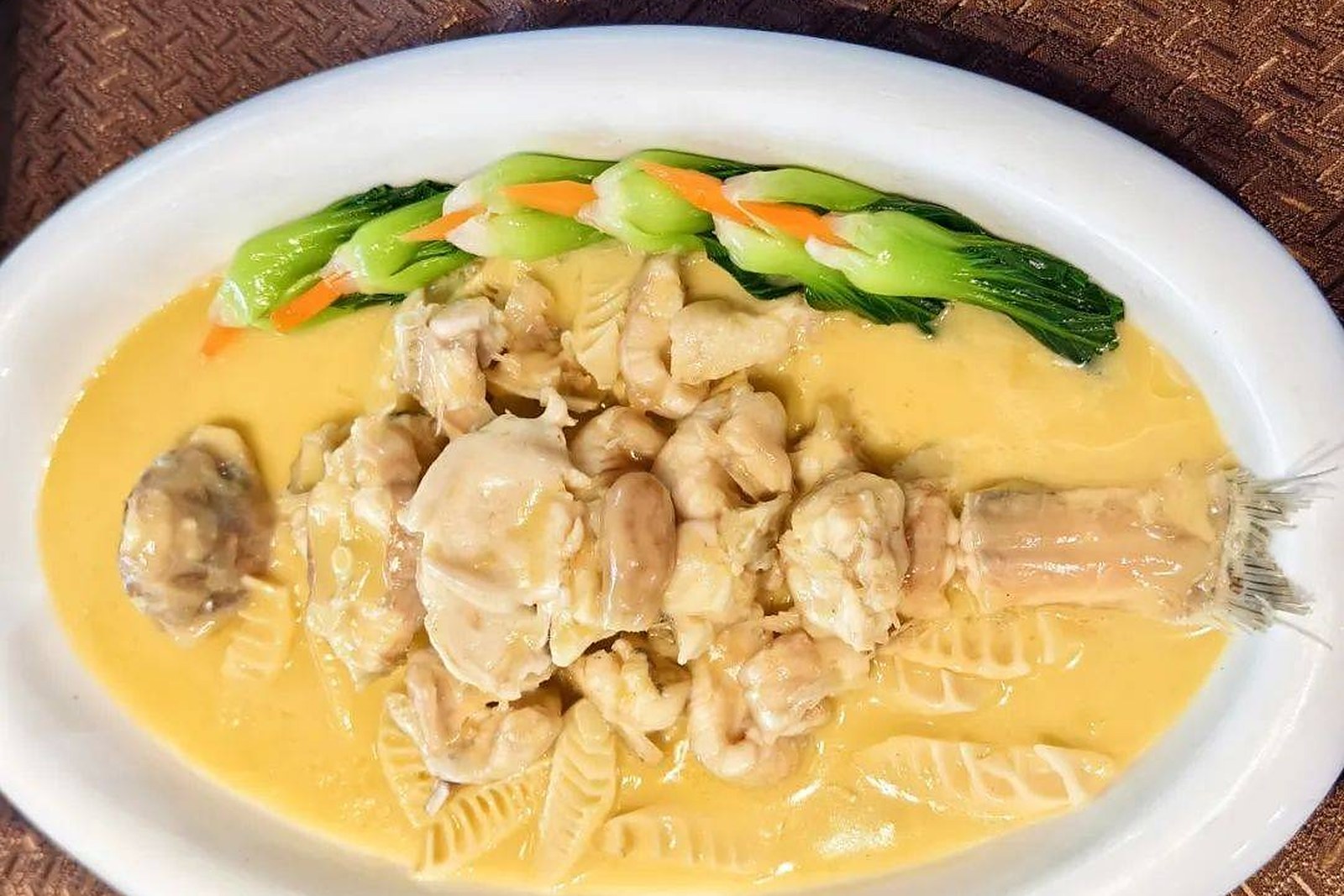
One warning travels with the dish: freshness is absolute. The hui’s flesh fades within hours of the catch, which is why the honest version lives in Zhenjiang’s river-side kitchens rather than far from the water – the best plates come from rooms where the morning’s fish arrives on ice before noon. When the sauce is right, the fish needs nothing: no vinegar, no dip, no garnish beyond a scatter of scallion – a rare dish that asks the cook to do less, not more.
The same city holds more flavors worth chasing: 锅盖面 Guōgài Miàn the pot-lid noodles, 镇江香醋 Zhènjiāng Xiāngcù the aromatic vinegar, 水晶肴蹄 Shuǐjīng Yáotí the crystal pork aspic, or 东乡羊肉 Dōngxiāng yángròu the winter mutton – four more doors into the same 镇江市 Zhènjiāng Shì Zhenjiang City table.
Words and Names
What the Locals Know
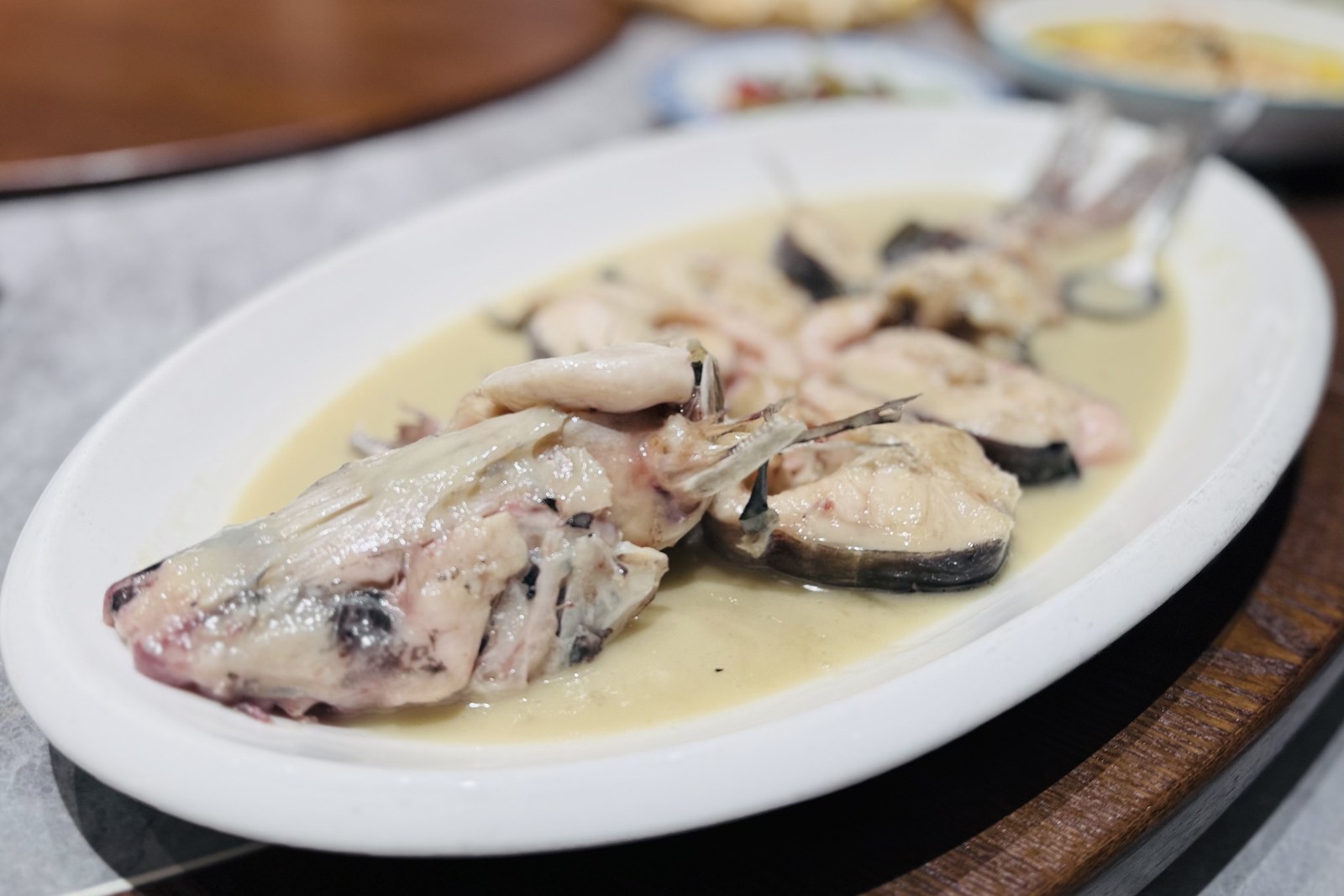
flowcloud would say the white-braised hui is Zhenjiang’s river narrowed to one plate: grey catfish, milk-white sauce, and a kitchen confident enough to add nothing at all. All checked November 2026.
Where to find it: White-braised hui fish is a river-house dish – the old riverfront kitchens and banquet rooms around the centre keep it on the card year-round, spring is the fattest season, and the honest test is the sauce: milk-white, clinging, no oil film; order the whole-fish version for the table, eat the skin, pour the leftover sauce on rice, and skip anything served in brown or golden gravy – that is a different dish wearing the name. All checked November 2026.