
大山草山牧黑山羊,一锅沸汤暖会泽冬。Dàshān Cǎoshān mù hēishānyáng, yī guō fèitāng nuǎn Huìzé dōng – On Dashan grassland the black goats graze; one boiling pot warms a Huize winter.
会泽黑山羊 Huìzé Hēishānyáng Huize black goat is the winter 汤锅 tāngguō soup pot of 会泽 Huìzé Huize, the old copper county in north-eastern 曲靖 Qūjìng Qujing, where the 乌蒙山 Wūméng Shān Wumeng mountains lift the 高原 gāoyuán plateau past 2,000 m and the 大山草山 Dàshān Cǎoshān Dashan grassland carries the summer flocks. The breed is the local 黑山羊 hēishānyáng black goat – sure-footed, slow-grown, carried on mountain forage – and the cut the county insists on is 带皮 dàipí skin-on: the 皮 pí skin is left on the 肉 ròu meat, and after an hour in the pot it turns 糯 nuò glutinous and 胶质 jiāozhì gelatinous, the part regulars fight over. The pot itself is deliberately plain – 羊骨 yánggǔ goat bones and 带皮 dàipí cubes simmered in clear water with 姜 jiāng ginger, 花椒 huājiāo Sichuan pepper and a 草果 cǎoguǒ black cardamom – so the flavour is meant to come from the animal and the 蘸水 zhànshuǐ dip, not from the broth: 糊辣椒 hú làjiāo roasted chili mashed with 花椒面 huājiāo miàn, 腐乳 fǔrǔ fermented tofu, 蒜泥 suànní garlic and 香菜 yánsuī cilantro, and the Yunnan signature, a bunch of fresh 薄荷 bòhé mint for the pot. A goat-pot table is sold by weight, roughly 80-120 yuan a 斤 jīn of meat (worth confirming the details), and the honest shape is a cold-weather meal: the pot arrives boiling, the fire stays under it, and the county’s goat-pot houses do their real trade from the first cold weeks of winter through 早春 zǎochūn early spring.
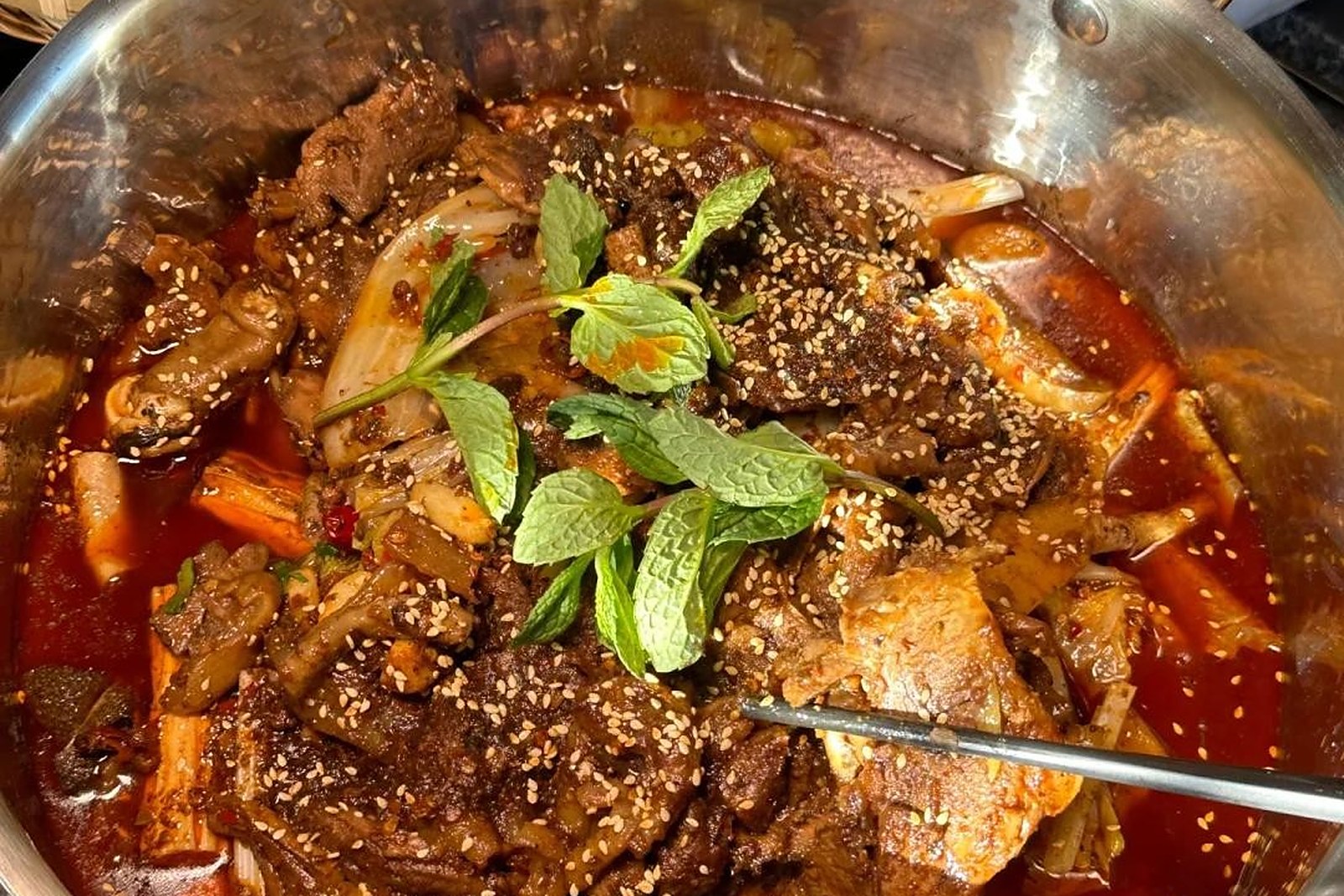
The mechanism is the animal and the clear broth. Goats reared on 乌蒙山 Wūméng Shān slopes walk all day on thin mountain forage, so the muscle is lean, the fat is firm and the 膻味 shānwèi gamy note is stronger than a sheep’s – which is exactly why the pot is built the way it is: the 带皮 dàipí cubes are 焯水 chāoshuǐ blanched first to throw away the scum and the worst of the smell, then simmered slow in fresh water with only 姜 jiāng and a stalk of 花椒 huājiāo, so the broth stays clear and the meat tastes of goat rather than of spice. The skin is the prize and the patience: 带皮 dàipí cuts need a long, gentle simmer – an hour and more – before the 皮 pí softens from leathery to 糯 nuò, and a house that rushes the pot serves skin you cannot chew. The 糊辣椒 hú làjiāo dip is built to be stronger than the broth: dried chilies 烘 hōng roasted in a dry pan until fragrant, mashed coarse with 盐 yán and 花椒面 huājiāo miàn, wet with a little 原汤 yuántāng pot broth – and it is the dip, not the soup, that decides how hot the meal is. The 薄荷 bòhé is the local trick, cooling and fragrant against the rich meat, and the contrast locals draw is with the 曲靖 Qūjìng city restaurants that serve goat in a heavy 火锅底料 huǒguō dǐliào hotpot base: Huize’s version is clear broth, and the dip carries the meal.
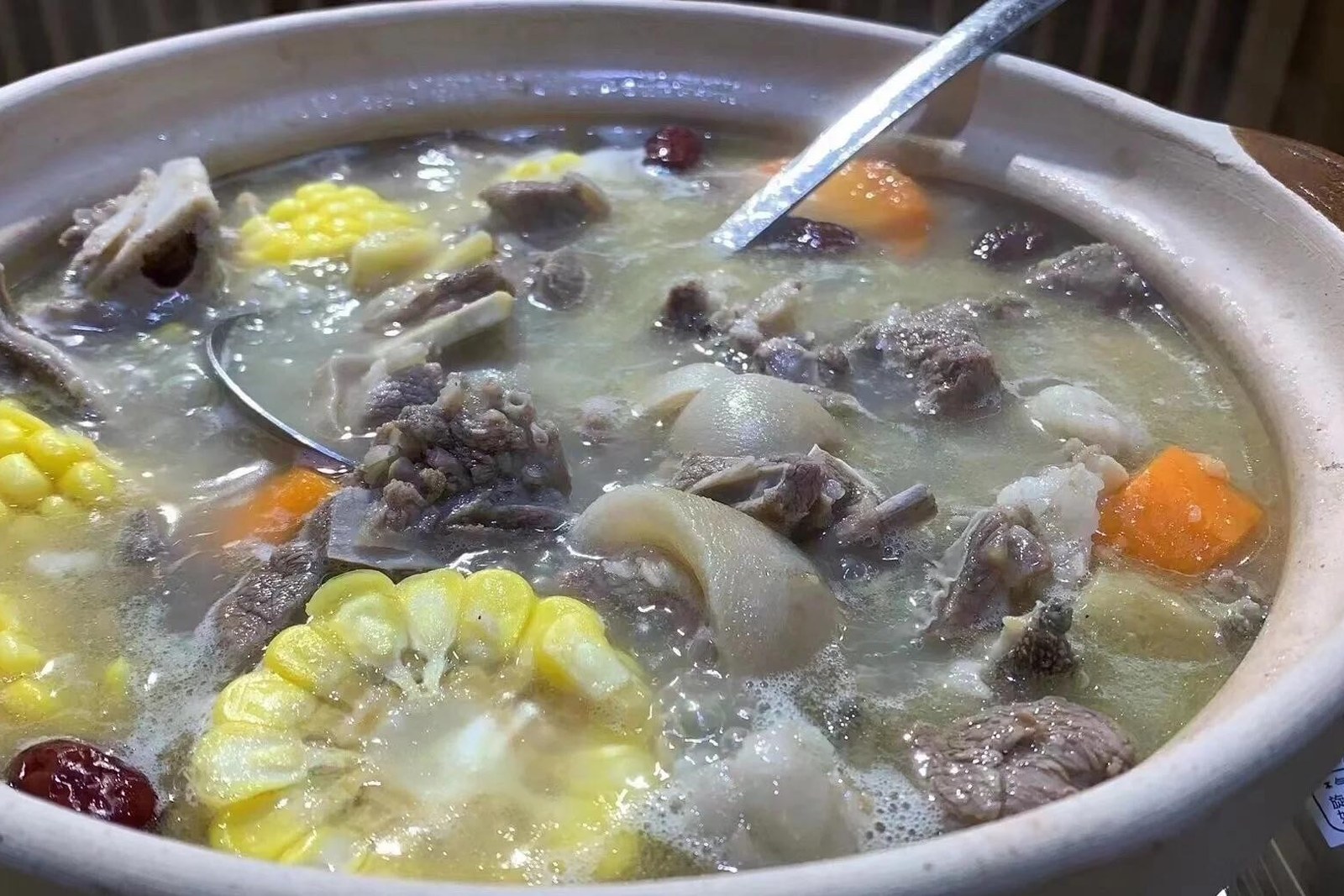
Locals eat it after dark, in the cold. The move is to take a goat-pot table near the 会泽古城 Huìzé Gǔchéng old town – the copper-trade town whose 江西会馆 Jiāngxī Huìguǎn guildhalls stand a street away from the eating rows – order 带皮 dàipí by weight, let the pot boil while the 蘸水 zhànshuǐ is mixed at the table, and take the first pieces plain, out of the clear broth, before the 糊辣椒 hú làjiāo goes on (worth confirming houses and prices). The honest tests are the broth and the skin: the soup should be clear and 奶白 nǎibái milky-pale from the bone, not yellow from powder, and the skin should go 糯 nuò rather than squeak. Newcomers are told that the 膻味 shānwèi is the point – a goat pot with no gaminess has been spiced into submission – and that the 薄荷 bòhé is not decoration: eat it, because it is the herb the pot was built around. Order 杂 zá mixed cuts rather than pure lean if the house offers the choice, since the 皮 pí, the 筋 jīn tendon and the 排 pái ribs are what stretch the pot into a meal, and keep the fire low: the 汤锅 tāngguō is meant to simmer for two hours, not to boil off in twenty minutes. Winter is the season, and the days around 冬至 Dōngzhì the winter solstice are when Huize tables are fullest.
Words and Names
会泽黑山羊 Huìzé Hēishānyáng Huize black goat · 会泽 Huìzé Huize · 曲靖 Qūjìng Qujing · 黑山羊 Hēishānyáng black goat · 带皮 Dàipí skin-on · 汤锅 Tāngguō soup pot · 羊骨 Yánggǔ goat bones · 膻味 Shānwèi gamy odour · 焯水 Chāoshuǐ to blanch · 糊辣椒 Hú Làjiāo roasted mashed chili · 蘸水 Zhànshuǐ the dip · 薄荷 Bòhé mint · 草果 Cǎoguǒ black cardamom · 乌蒙山 Wūméng Shān the Wumeng mountains · 大山草山 Dàshān Cǎoshān Dashan grassland · 会泽古城 Huìzé Gǔchéng Huize old town · 冬至 Dōngzhì the winter solstice
What the Locals Know
The local knowledge about the pot is the broth, the skin and the mint. The soup must be clear and 奶白 nǎibái pale from the bone and the blanched meat – a yellow broth has been built on powder, and a house that adds 火锅底料 huǒguō dǐliào hotpot base is apologising for the goat. The second check is the 带皮 dàipí cut: the skin needs an hour and more of gentle simmer to go 糯 nuò, and skin that squeaks between the teeth means the pot was rushed. The third is the 膻味 shānwèi – the gamy note is the point of the animal, and a goat pot with no gaminess at all has been spiced into submission; the 姜 jiāng and the 焯水 chāoshuǐ blanch are there to clean the smell, not to delete it. The fourth is the dip and the mint: the 糊辣椒 hú làjiāo decides the heat, never the broth, and the 薄荷 bòhé is dropped into the pot because the herb was built around the rich meat. Order 杂 zá mixed cuts with the 皮 pí, 筋 jīn and 排 pái rather than pure lean, and keep the fire low for a two-hour simmer (worth confirming houses and prices).
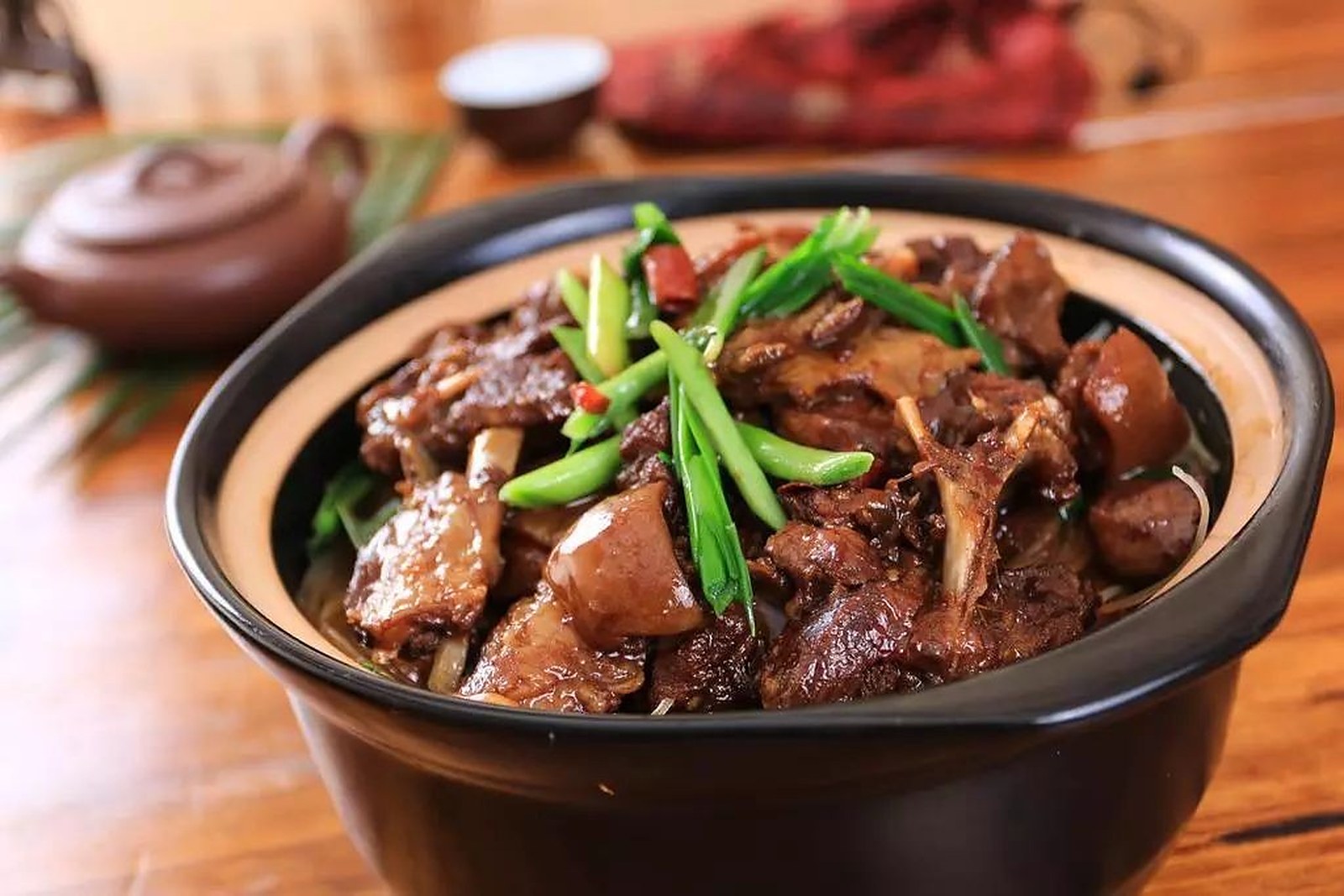
flowcloud would say that the Huize black goat is skin and clear broth – 乌蒙山 Wūméng Shān goat blanched and simmered with ginger until the 皮 pí goes 糯 nuò and the soup turns pale, dipped in 糊辣椒 hú làjiāo with 薄荷 bòhé from the bunch – and that the honest move is a pot by the 斤 jīn near 会泽古城 Huìzé Gǔchéng on a cold night, first pieces plain, because the goat is the flavour and the chili is your choice. All checked October 2026.
Where to find it: the goat-pot houses around 会泽古城 Huìzé Gǔchéng and the county town of 会泽 Huìzé, north-eastern 曲靖 Qūjìng Qujing – meat sold by the 斤 jīn, roughly 80-120 yuan, a table pot with 带皮 dàipí cuts and a 糊辣椒 hú làjiāo and 薄荷 bòhé dip (worth confirming current houses and prices); the honest check is the broth: clear and pale from the bone, not yellow from powder. It is a winter pot, sold from the first cold weeks through early spring. All checked October 2026.