
The Herder’s Skillet: Meat, Dough and Onion in One Pan
面丁肉块一锅香,牧野人家待客忙 Miàndīng ròukuài yī guō xiāng, mùyě rénjia dàikè máng — Dough bits and meat cubes make one fragrant pot; the herding household bustles to welcome its guest
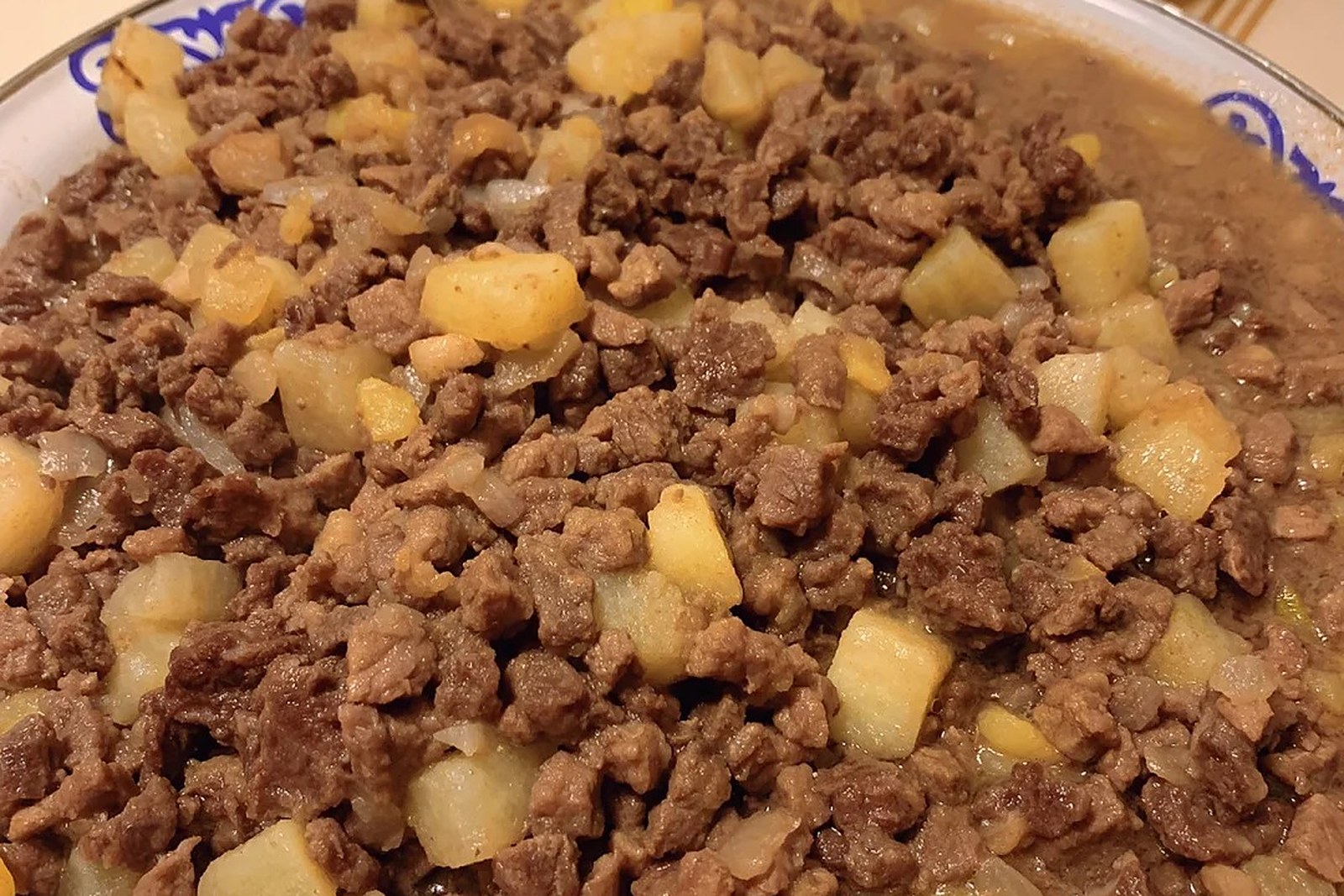
正文:胡尔达克 Hú’ěrdákè huldak is the grassland’s one-pan answer to the question every herding family faces – feed people well, fast, from what the larder holds. The dish is exactly what the name promises in practice: mutton cut in thumb cubes, rendered in its own fat with onions gone sweet and gold, then finished with small dough knots or flat scraps that steam in the meat’s own steam until everything shines. In 北屯市 Běitún Shì Beitun City it runs from the felt tents of the herder camps to the Kazakh family kitchens of town, where it is the weekday king and the honored-guest dish at once.
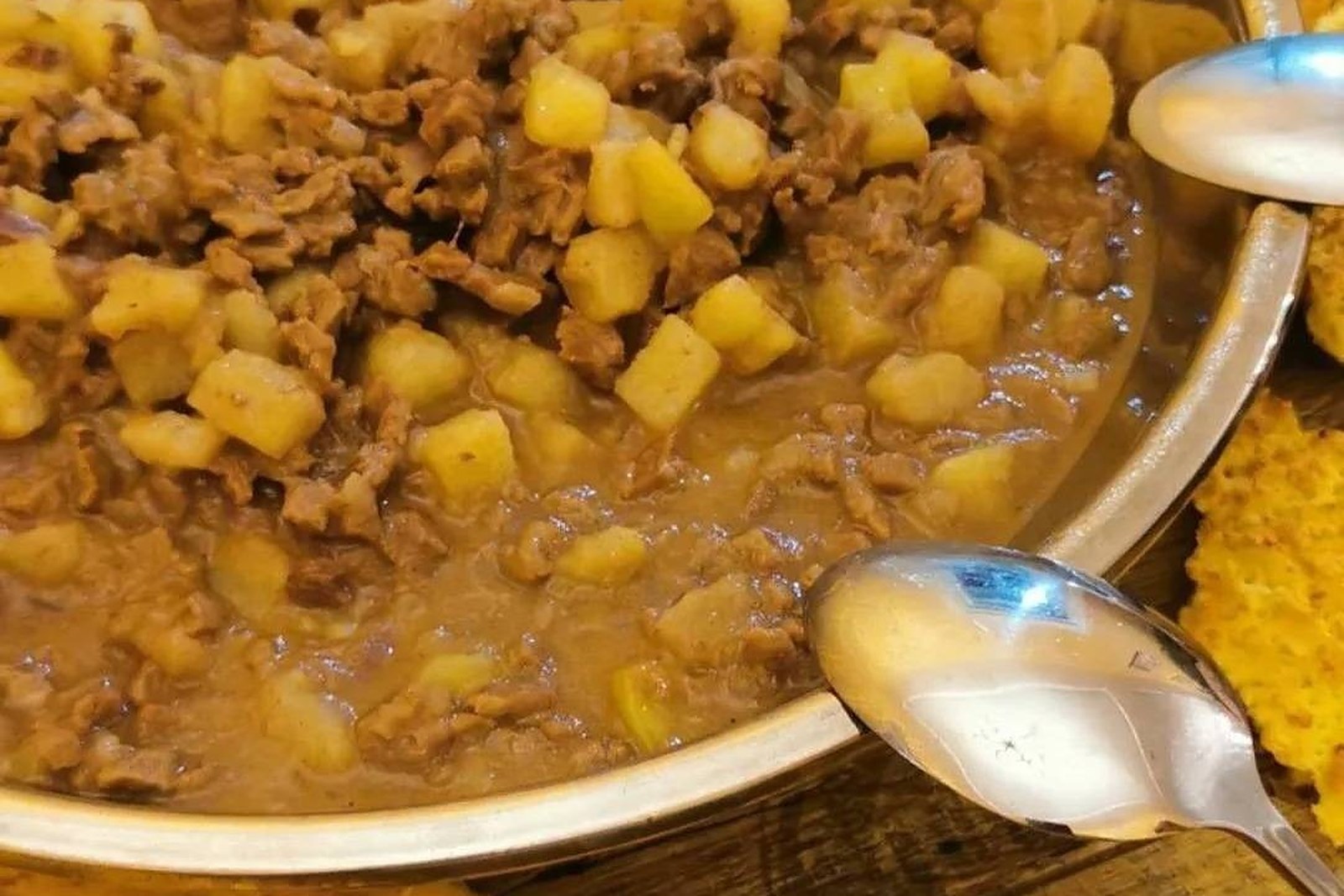
The cooking is the lesson in itself. Good huldak starts with fat-tailed mutton – the tail fat is the cooking oil of the grassland – cut with the knife in cubes, never minced, and fried hard until the edges catch. Onions go in by the mound; the steam and sugar collapse them into a gravy that needs no flour. The dough arrives last, small pieces pinched straight into the pot, and the lid goes on for the final steam – ten minutes that decide everything, the knots rising soft under the meat while the pot underneath builds its crust.
Eating it is family-style by definition. The skillet lands in the middle of the table cloth, bread alongside, tea behind, and everyone eats from the same pan – guests first, the best cubes turned toward them. The texture argument is the pleasure: crisp caramelized meat against soft steamed dough, onion gone to silk, and the salt of the grassland itself in every bite. A pot of milk tea behind it turns lunch into an afternoon.
Versions mark the seasons. Summer huldak runs lighter – young mutton, more onion, the dough thinned – while the winter pot goes heavy with tail fat and root vegetables when the herds come near town. Households argue the dough question the way river towns argue fish: pinched knots, rolled squares or torn scraps, each with its constituency. What never changes is the one-pan faith – a good huldak needs nothing on the side but bread, tea and company.
Beyond the skillet, the same 北屯市 Běitún Shì Beitun City holds other flavors: 额河鱼宴 É Hé Yúyàn the Irtysh fish feast for the river’s own table, 风干狗鱼 Fēnggān Gǒuyú air-dried pike from the winter racks, 驼奶 Tuónǎi camel milk warm from the urn, and 沙棘汁 Shājí Zhī sea-buckthorn juice for the sour-gold close – four more doors into the same 北屯市 Běitún Shì Beitun City. With the skillet settled, our Beitun travel map fills the day.
The tradition deserves its due. Huldak is herder logistics: one pot, one fire, no water wasted, every calorie carried. The dish crossed into town kitchens with the herding families themselves, and Beitun’s version keeps the old proportions – meat proud, onion honest, dough a vehicle not a filler. Eat it in a felt tent at the desert edge once, and every restaurant version afterward reads as a memory of that fire.
Practicalities first. Kazakh family kitchens and herder-camp visits around town serve it at lunch hours; a pan for two is plenty, and it arrives family-style with bread and tea included. Ask for the dough knots – pinched, not rolled – and eat it with the milk tea, never with anything cold.
Words and Names
What the Locals Know
flowcloud would say huldak is the grassland’s arithmetic: one pot, one fire, meat and dough and onion in exact proportion, and a lid that turns a larder into a banquet – herder math that always comes out warm. All checked November 2026.
Where to find it: Kazakh family kitchens around 北屯市 Běitún Shì Beitun City cook huldak to order at lunch; order the pan for two with pinched dough knots, milk tea behind it, and bread for the crust. All checked November 2026.