
Ask someone from 湖南 Húnán what they cook when nobody is watching, and they will almost never say the famous dishes. They will say 辣椒炒肉 làjiāo chǎo ròu — chili fried pork — the plain, fast, fiery plate that appears on home tables and in canteens and in the back rooms of restaurants all over the province. It is not a banquet dish and it is not meant to be. It is the food of a hungry evening.
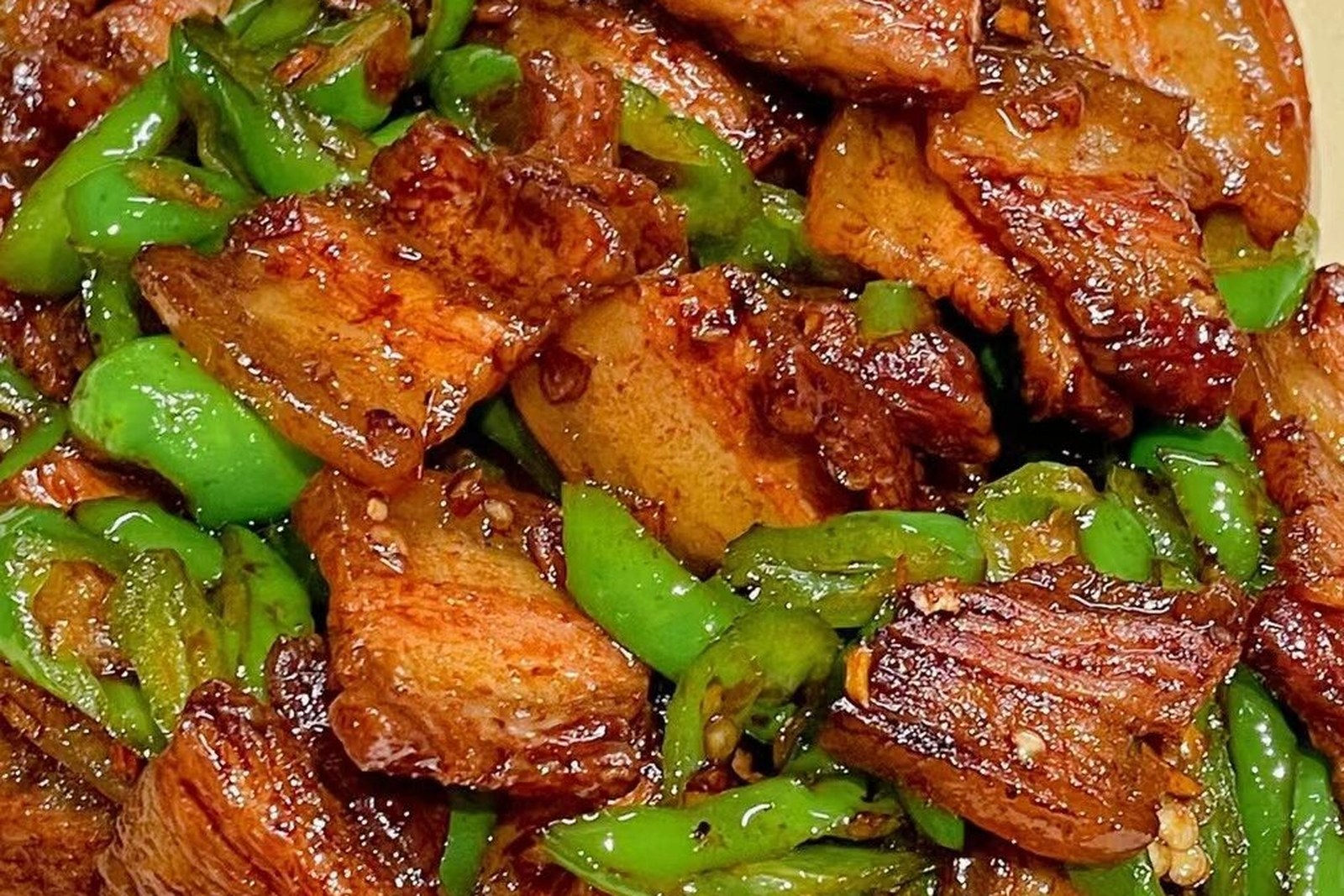
The dish is two things and a very hot pan: sliced pork and a great deal of green chili, cooked so fast that the meat stays tender and the chili keeps its bite. There is garlic, there is usually a spoonful of fermented black beans, and there is soy sauce. That is more or less the whole recipe, and the fact that it can go wrong so easily is exactly why Hunan people argue about it.
How It Is Cooked
The pork is the first decision. Most home cooks use a piece of 五花肉 wǔhuāròu — pork belly — or a mix of belly and lean shoulder, and the belly is rendered first so that its fat becomes the cooking oil. This is the step that gives the dish its character: the pork is not fried in oil, it makes its own.
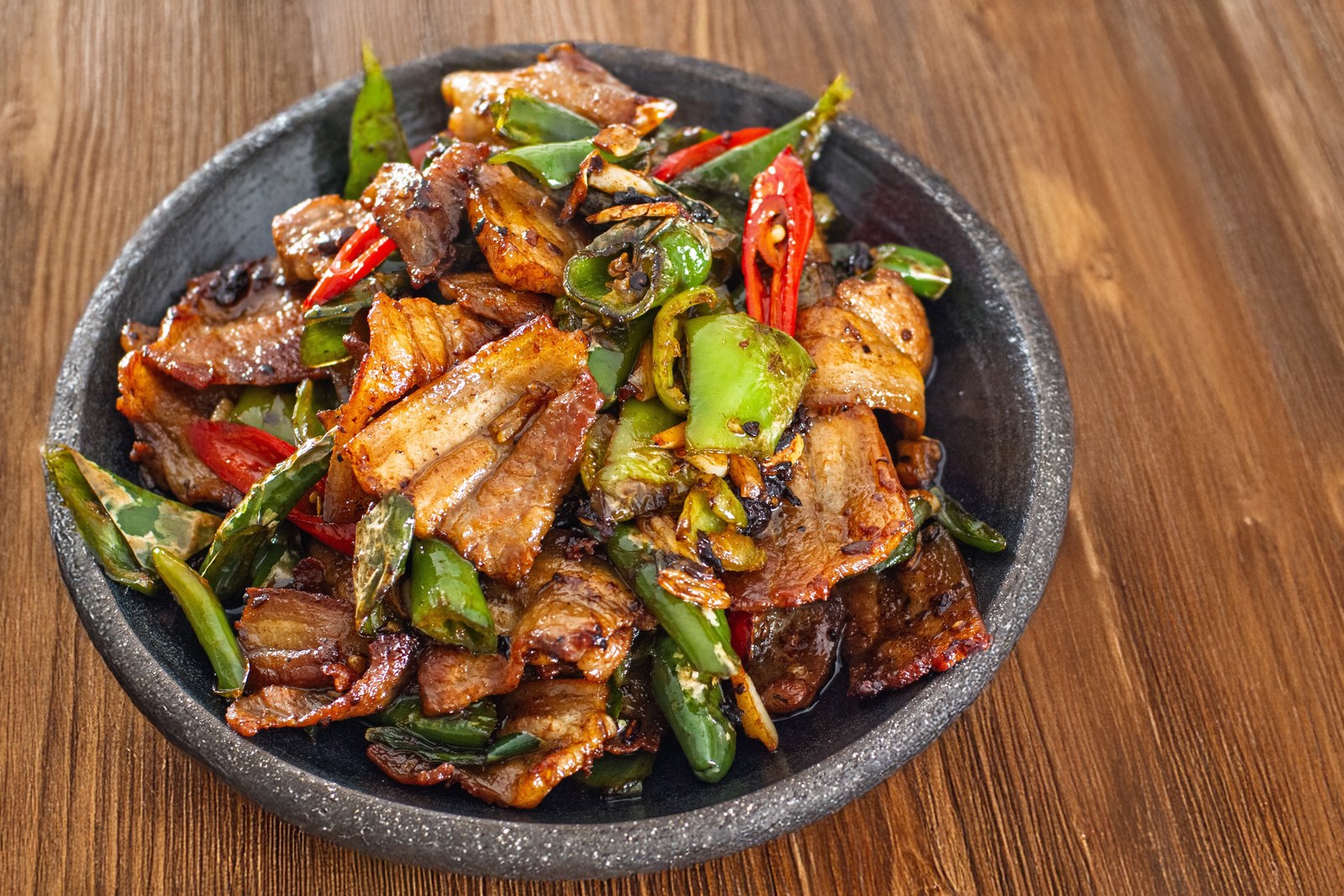
Then the chilies go in. 螺丝椒 luósījiāo, the thin, twisted, seriously hot green pepper that Hunan grows by the field, is the classic choice, though any thin-skinned green chili will do. They are pressed against the hot metal with the back of a ladle until the skin blisters and blackens in patches — the “tiger skin” that every Hunan cook looks for — and only then does the meat go back in to finish together with garlic, black beans and a splash of soy.
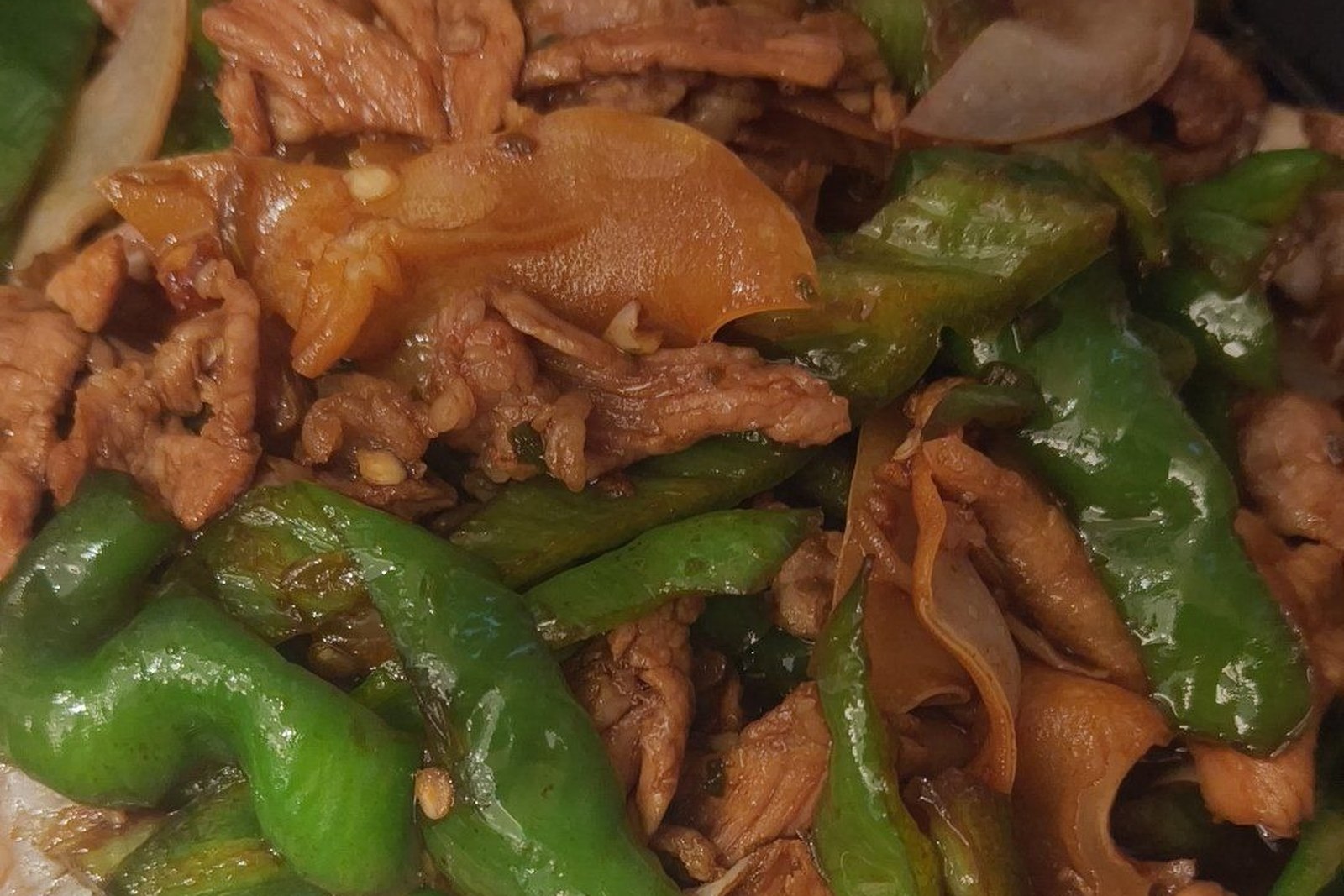
The whole thing takes minutes. The pan must be hot enough that the chilies scorch rather than steam, and the meat must be sliced thin enough that it cooks through in that short time. A slow pan produces a wet, grey, disappointing plate.
What It Refuses
辣椒炒肉 refuses almost everything that modern restaurant cooking reaches for. No sugar to round the edge off. No cornstarch to thicken the sauce. No sweet bell pepper standing in for the real chili. No long simmering, no slow braising, no garnish of sesame or coriander. It is a dish defined by subtraction.
What it asks for instead is heat with flavour rather than heat alone — the chilies should taste of green and smoke as well as fire, and the pork should taste of pork. When the balance is right it is one of the most satisfying things in Chinese cooking, and when it is wrong it is merely hot.
Words and Names
- 辣椒炒肉 làjiāo chǎo ròu — chili fried pork, the plain everyday name
- 农家小炒肉 nóngjiā xiǎochǎo ròu — “farmhouse stir-fried pork”, the restaurant name, promising a countryside version
- 螺丝椒 luósījiāo — “screw chili”, the thin twisted green pepper used in Hunan
- 五花肉 wǔhuāròu — pork belly, literally “five-flower meat”
- 豆豉 dòuchǐ — fermented black beans, the savoury backbone of many Hunan dishes
What the Locals Know
Hunan cooks will tell you the dish is really about the chili, not the meat. Look for chilies that are thin-skinned and firm, and do not be tempted to use a mild supermarket pepper — the point is the heat. They will also tell you to render the belly properly before anything else goes in, and never to add water; the sauce should be nothing but pork fat, soy and the juice the chilies release.
In restaurants, the version called 农家小炒肉 is usually the one to order, since it implies the older, rougher, more generous cooking. If the plate arrives swimming in sauce, it was not cooked hot enough.
Where to find it: 辣椒炒肉 làjiāo chǎo ròu is everywhere in 湖南 Húnán — in 长沙 Chángshā, in 湘潭 Xiāngtán — the prefecture that includes 韶山 Sháoshān, birthplace of 毛 Máo — and in every county town in between — from workaday canteens and rice-noodle shops to the small restaurants that line the old streets. Order it with a bowl of plain rice, which is the only correct accompaniment, and ask for the 农家 version if there is one. Flowcloud would say that the truest dishes are the ones nobody bothers to write down, and that Hunan’s soul is a hot pan, a handful of green chilies and a piece of pork belly. Order the farmhouse version, eat it with rice, and do not ask for it mild.