
The Pillow Dumpling of Huzhou: Huzhou Zongzi
长枕粽里藏鲜肉,两百年香出巷口 Cháng zhěn zòng lǐ cáng xiān ròu, liǎng bǎi nián xiāng chū xiàngkǒu – The long pillow zongzi hides fresh pork; two hundred years of fragrance drift out the lane
湖州粽子 Húzhōu zòngzi is the rice dumpling that refuses the pyramid: where the rest of the south folds zongzi into triangles, Huzhou wraps a long, slim, four-cornered pillow – a bar of glutinous rice around a center stripe of pork, or a ribbon of sweet bean paste – tied neat as a parcel and steamed until the leaf perfume sinks all the way through. The shape is the county’s signature, and so is its ambassador: 诸老大 Zhū Lǎodà the Zhulaozai house, founded in the 1880s, whose pork pillow zongzi became the Yangtze delta’s gift standard and made “Huzhou zongzi” a phrase that needs no explanation within a day’s rail travel.
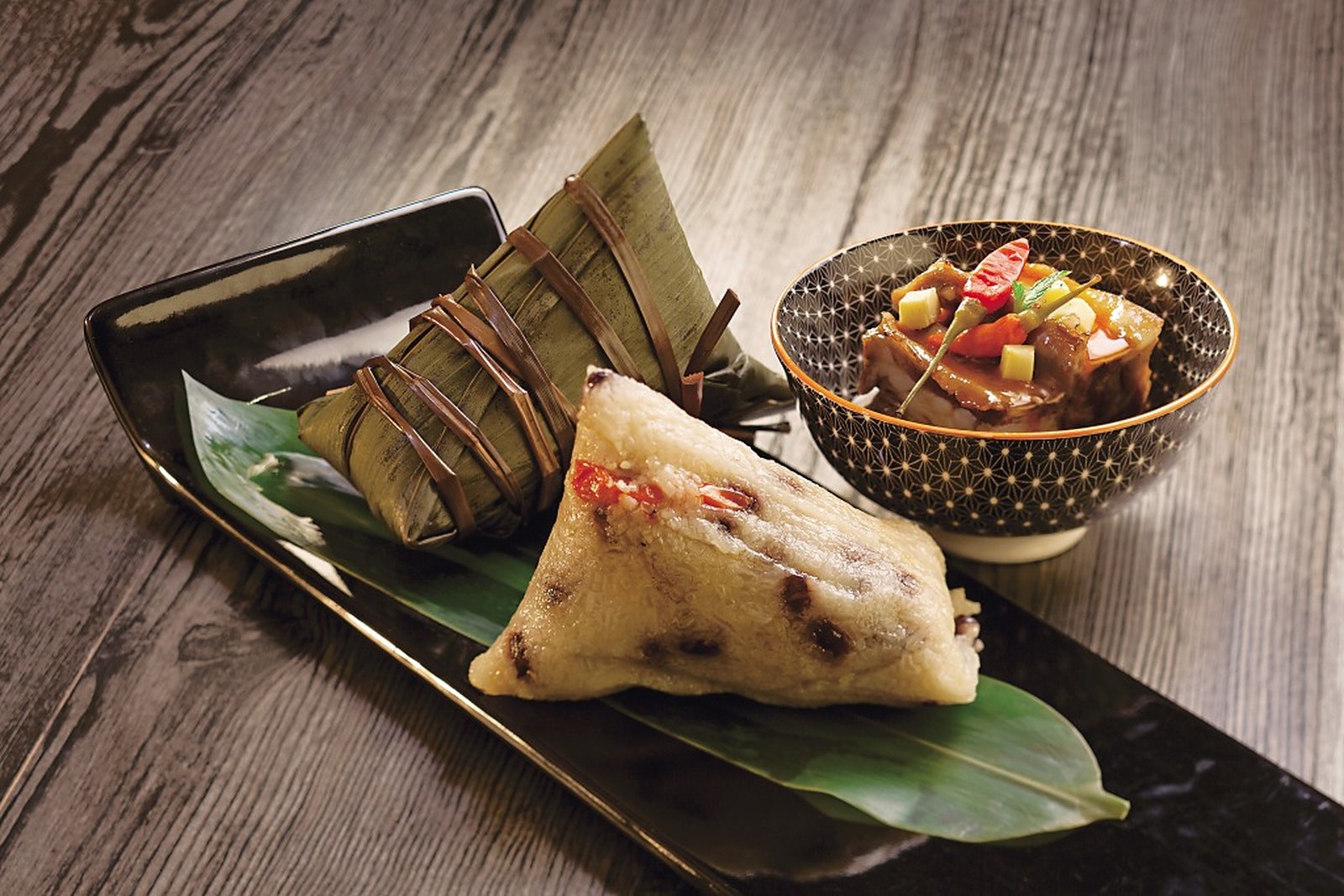
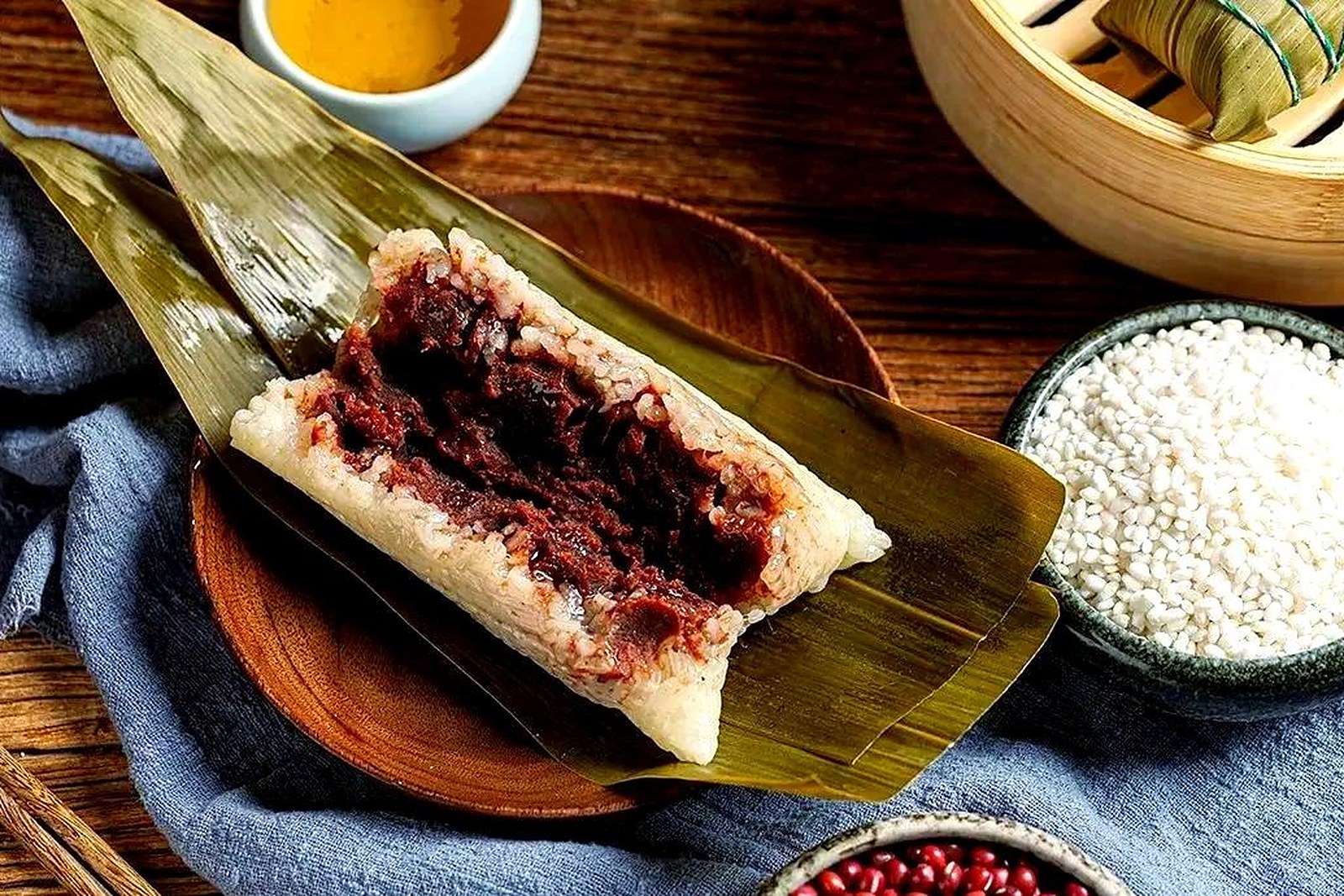
The build starts with the rice – soaked glutinous rice dressed with soy so the grains steam amber – and the leaf, young reed leaf wide enough to wrap the long shape in one pass. The meat goes in as one firm block, fat and lean together, so that after hours of steaming the fat renders into the rice while the lean stays sliceable. Sweet versions wrap 洗沙 xǐshā – stone-ground red-bean paste – and sell out first at the breakfast counters.
The craft shows at the tie: Huzhou wrappers are packed snug – no loose rice sloshing – which is why the cooked dumpling slices like pâté rather than crumbling. Locals eat them two ways: straight from the steamer for breakfast, or cold-sliced and pan-crisped the next day, the amber rice frying until the edges crackle. Both ways require the pillow shape; a triangle simply will not slice.
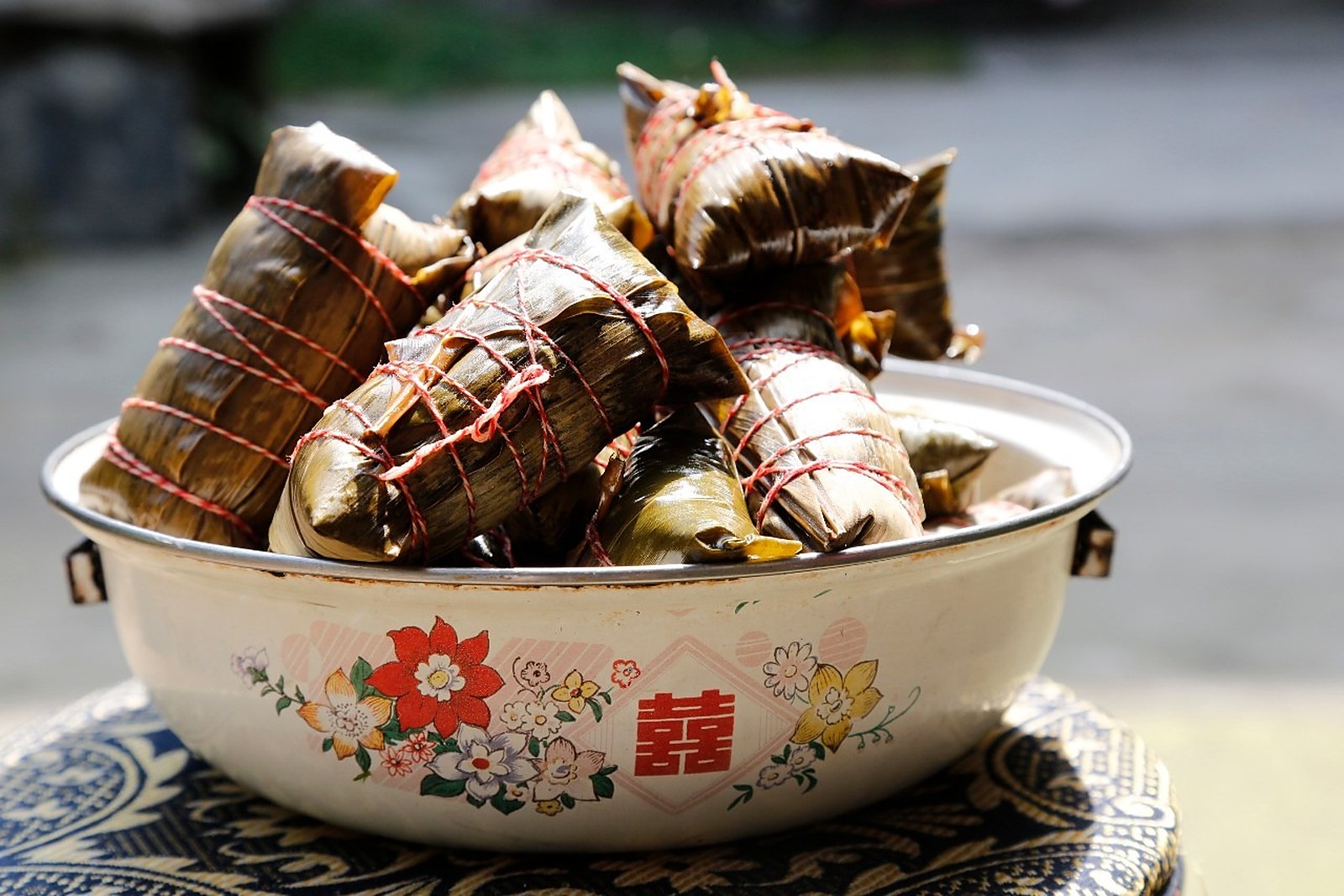
The counter ritual runs all year, not just at the Dragon Boat Festival: breakfast shops stack the steamers, the old houses mail-box their gift tins across the delta, and every Huzhou family argues the ranking of houses – Zhulaozai against the neighborhood shops against a grandmother’s own wrapping. The pillow travels well; Huzhou says that is the test of a proper zongzi.
The same city holds more flavors worth chasing: 千张包子 qiānzhāng bāozi the tofu-skin buns, 烂糊鳝丝 lànhú shànsī the soft eel shreds, 太湖蟹 Tàihú xiè the autumn crab, or 安吉竹笋 Ānjí zhúsǔn the bamboo-shoot banquet – four more doors into the same 湖州市 Húzhōu Shì Huzhou City table.
Words and Names
湖州粽子 Húzhōu zòngzi Huzhou zongzi, the pillow-shaped rice dumpling; 诸老大 Zhū Lǎodà the Zhulaozai house, the founding brand of the 1880s; 洗沙 xǐshā the stone-ground sweet bean paste filling; 枕头粽 zhěntou zòng “pillow zongzi”, the long four-corner shape; 粽叶 zòngyè the reed leaf, the perfume wrapper.
What the Locals Know
Buy the day’s batch, not the display basket – a proper counter sells out by mid-morning and steams again at four. The pan-fried second-day version is the connoisseur’s order: ask for 回锅 huíguō if the shop offers it. And for gifts, the sweet-and-savory mixed tin is the local handshake; pure-pork tins are what you keep at home.
flowcloud would say a Huzhou pillow zongzi is packaging as philosophy: wrap it long, tie it tight, let two hundred years of steam do the branding – and the shape itself, sliced clean on a plate, remains the best advertisement the county ever wrote. All checked November 2026.
Where to find it: Breakfast shops and the old-brand counters across 湖州市 Húzhōu Shì Huzhou City steam them from dawn – five to fifteen yuan a bar, the pillow must slice clean not crumble, and the pork version’s fat should have vanished into the amber rice by the time it reaches you. All checked November 2026.