Jiaji Duck
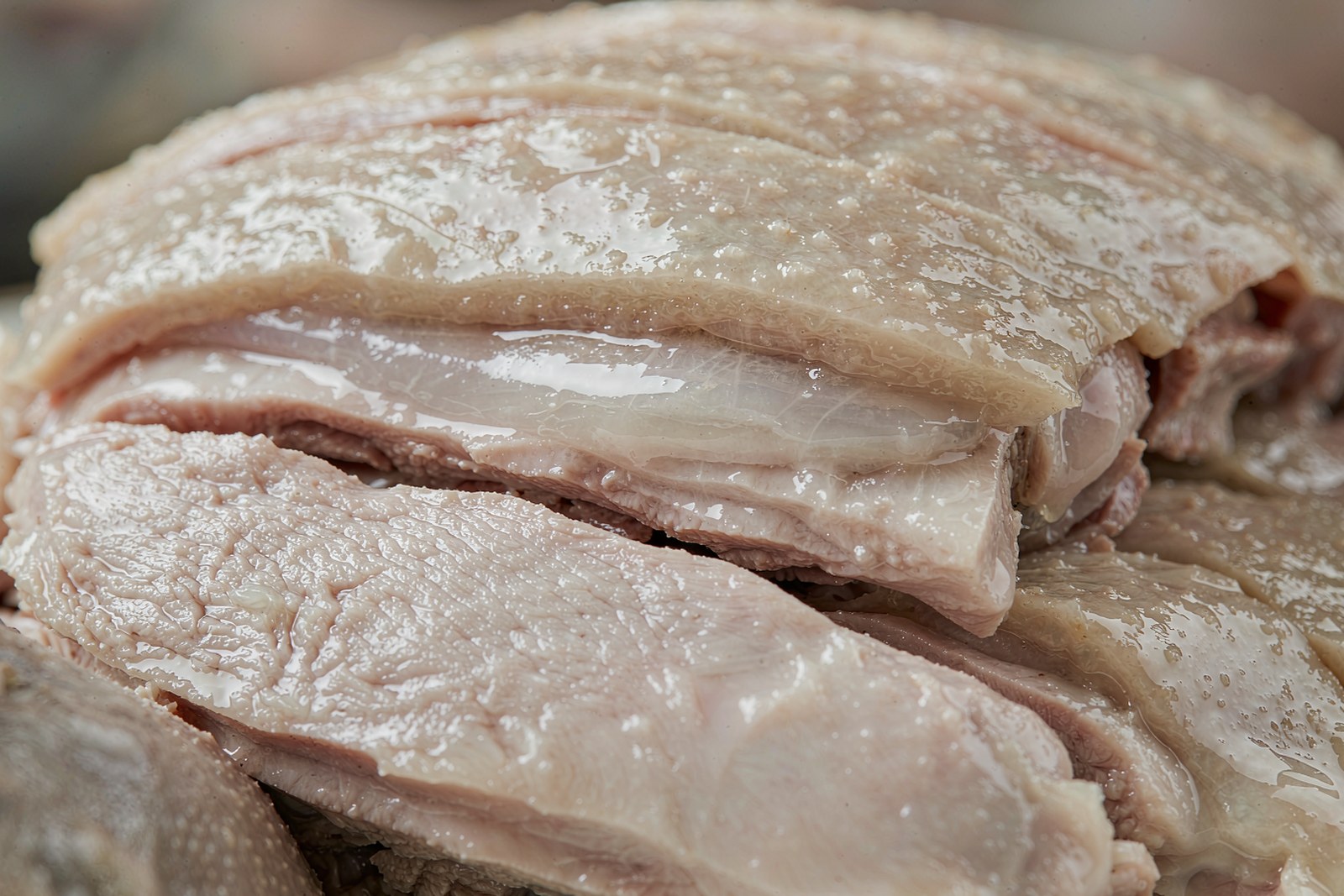
The duck is served cold, and the first thing you notice is the skin. It is pale, almost white, and impossibly thin, and there is a clean translucent layer of fat between it and the pinkish meat beneath that you can see through before you even pick up your chopsticks.
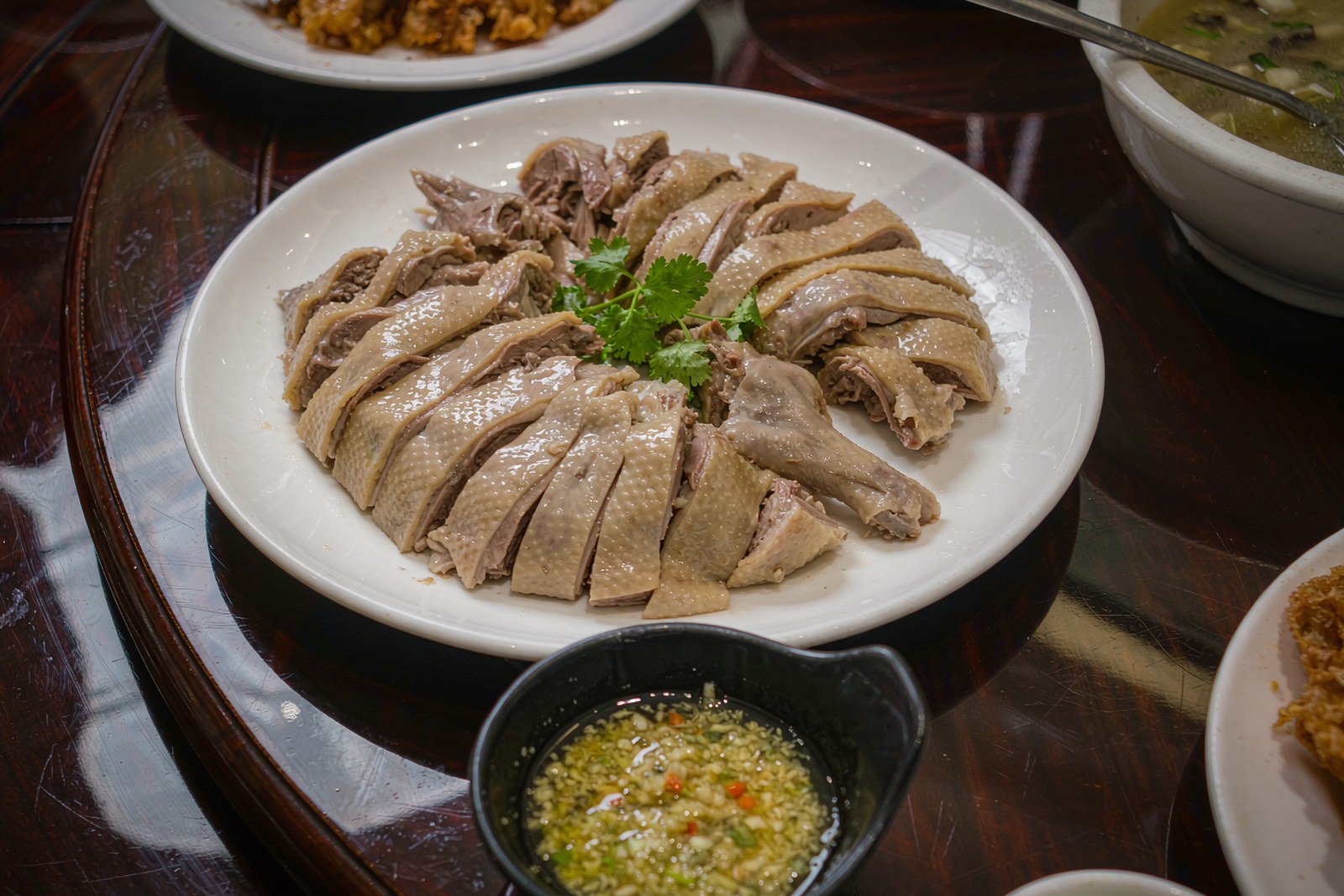
This is 加积鸭 (Jiājī yā), Jiaji duck — sometimes written 嘉积鸭 — and it is the second of Hainan’s 四大名菜 (sì dà míng cài), the province’s four famous dishes. It is the one with the strangest back story, because the most celebrated duck in China’s tropical south is not a native bird at all. It is an immigrant.
A Bird That Arrived from Abroad
Every account of 加积鸭 begins with the same fact, and it is not what you would expect.
The duck is a 番鸭 (fān yā, “foreign duck”) — the name the Hainanese gave to the Muscovy duck that was introduced to the island from 马来西亚 (Mǎláixīyà, Malaysia) and the wider Nanyang, the “southern seas,” roughly three hundred years ago, in the 清光绪 (Qīng Guāngxù) era. The word 番 (fān) is the old Chinese word for “foreign,” and it is the same 番 you find in 番茄 (tomato, literally “foreign eggplant”). The Hainanese simply named the bird for where it came from.
The duck arrived in the far south of the island and, in the town of 加积 (Jiājī) in 琼海 (Qiónghǎi) county, it found a particular home. The town’s breeding methods were different from anywhere else, and the bird that resulted — raised the 加积 way — was different enough to earn the town’s name. By the late Qing, the 加积 duck was not a general 番鸭 but a specific 加积鸭, and the town’s 加祥街 had a 丁 (Dīng) family whose birds were renowned across the county.
The Feeding Is the Whole Secret
The reason a 加积鸭 tastes the way it does is the same reason so much of Hainan’s food is distinctive: the method. And the method here is not subtle.
A true 加积鸭 is raised in two stages. For the first couple of months, the ducklings are let loose by the river and in the orchard, where they feed on freshwater shrimp, small fish, earthworms and insects — all the natural protein they can catch. Then, when the feathers come in, everything changes. The birds are shut in small pens, limiting their movement, and they are hand-fed — 填喂 (tiánwèi, “force-fed”) — a mash of rice, rice bran and peanut cake, rolled into little balls and pushed down the throat, three times a day.
This goes on for a little over twenty days. By the end, the duck has put on a thick layer of fat that has worked its way into the muscle, its beak and feet have gone pale, and the meat has become rich, tender and extraordinarily flavourful without being greasy. A properly finished 加积鸭 has a plump breast, thin skin, soft bones and little fat — the four qualities the county always cites: 脯大、皮薄、骨软、肉嫩 (pú dà, pí báo, gǔ ruǎn, ròu nèn).
The result is a big bird — an adult male can push eleven or twelve 斤, heavier than many geese — and it is a high-protein, relatively lean bird: about 34% protein, among the highest of any poultry, with less fat than a Beijing duck.
White-Cut, and the Sauce
There are three ways to cook 加积鸭 — 白切 (white-cut), 板鸭 (pressed duck) and 烤鸭 (roast) — but there is only one that the county considers the real thing, and that is 白切 (báiqie), the same white-cut method used for 文昌鸡.
The duck is poached gently in water flavoured with salt, ginger and garlic, held at the barest simmer — 微沸而不太滚, barely bubbling, never boiling hard — until it is just done through, then left to cool naturally and chopped into pieces that are arranged back into the shape of the whole bird. The test of doneness is the classic one: poke the top of the leg with a chopstick and look for no blood, and the meat should be elastic.
Then the sauce, which is the entire point of the dish and the part that separates a good 加积鸭 from a merely poached duck. It is made by taking the hot duck broth and pouring it over 蒜蓉 (minced garlic) and 姜茸 (minced ginger), then adding a squeeze of 酸桔 (suān jú, green calamansi lime), salt, sugar and a touch of chilli sauce. These are balanced — 酸、咸、甜、辣 all present — and they are the reason the pale, clean duck works: the sauce is bright and lively and cuts straight through the thin layer of fat.
What to Expect When You Eat It
If you have eaten 文昌鸡, 加积鸭 is its cousin, but it is not the same, and the difference matters.
Both are white-cut, both served cold, both with a ginger-garlic-lime sauce. But where the chicken has a delicacy and a sweetness from its coconut-finished feed, the duck is richer, meatier and more assertive, with a slight gamey depth and a thick layer of silky fat under the skin that is its signature. The duck is heavier and more filling, and the sauce is brighter and sharper — more lime-forward, less mellow than the chicken’s ginger oil.
The 琼海 people will tell you they cannot choose between the two, and they are right not to. Order both if you can.
Where to Eat It
加积鸭 is at its best in 琼海 county and specifically in 加积 town, where the breeding tradition is intact. The town is an hour or so by car from 海口, and its restaurants serve the bird the way it has always been done.
If you cannot get to 琼海, the dish travels — 海口 has several good 加积鸭 houses, and the larger 海南菜 restaurants across the island list it. But as with the 和乐蟹, the standard drops away from the source, and the bird you are served in a tourist area is not always raised the two-stage 加积 way. The China Cuisine Association has listed 加积鸭 as one of its first batch of 中国名菜 (Zhōngguó míngcài, China’s famous dishes), which gives you a sense of how seriously it is taken, and how far it has travelled from a single county town.
What the Locals Know
- White-cut is the only way. Do not order the roast or the pressed duck on your first visit; you will not understand the bird until you taste it 白切.
- The sauce is the point. Do not be shy with the 酸桔 — the lime is what makes the rich duck work.
- Eat the skin with the meat. The thin pale skin and the layer of fat beneath are not something to remove; they are the reason the dish exists.
- It is richer than 文昌鸡. Order it alongside the chicken, not instead of it, and treat the two as a pair.
- Go to 加积 town for the real thing. 琼海 is where the two-stage 填喂 method is still done, an hour from 海口.
The Name
加积 (Jiājī) — the name is also written 嘉积, which is the more common historical form — is the town in 琼海 where the duck became famous. 鸭 (yā) is “duck.” The 博鳌亚洲论坛 (Bó’áo Yàzhōu Lùntán, the Boao Forum for Asia) is in 琼海, which means that the two-stage duck is from the same county that hosts one of the most important conferences in Asia — a coincidence that has given the 加积鸭 more than a few visiting heads of state to impress.
flowcloud would say that the most interesting thing about a bird this famous is that it had to travel halfway across the world to become a local specialty — and that a town which figured out how to feed a duck into perfection is doing something far more sophisticated than most people give it credit for.
Where to find it: In 加积镇 (Jiaji Town), 琼海 (Qionghai) county — about an hour from 海口 — at the town’s duck restaurants. On the island, look for 加积鸭 at the better 海南菜 restaurants in 海口 and 三亚. White-cut (白切) duck with a garlic, ginger, calamansi-lime and chilli sauce. A whole bird is large (up to eleven or twelve 斤); order by the quarter or half for two people. Priced by weight at most restaurants; expect a premium over ordinary duck for the genuine two-stage raised bird.