
Most cured pork is what happens to a pig that was raised quickly. The black pig from 姜家镇 Jiāngjiā Zhèn Jiangjia Town in Banan District is raised slowly on purpose instead, and the district’s agricultural record is unusually willing to say by how much. Three hundred days. Spring water drawn from two hundred and fifty metres down and put through reverse-osmosis purification. Soil in the town rich in zinc and selenium. And then two numbers, which are the reason this page exists: a meat colour score of 3.8 where the industry average is 3.0, and intramuscular fat of 5.1 percent where an ordinary pig gives about 3. At the 2025 China International Meat Industry Week the district’s cured pork took the gold award and the sausage took silver. The pig is 巴南黑猪 Bānán Hēizhū the Banan black pig, and its output has a name of its own: 巴熟黑 Bāshú Hēi, meaning the pig raised by people who know it.
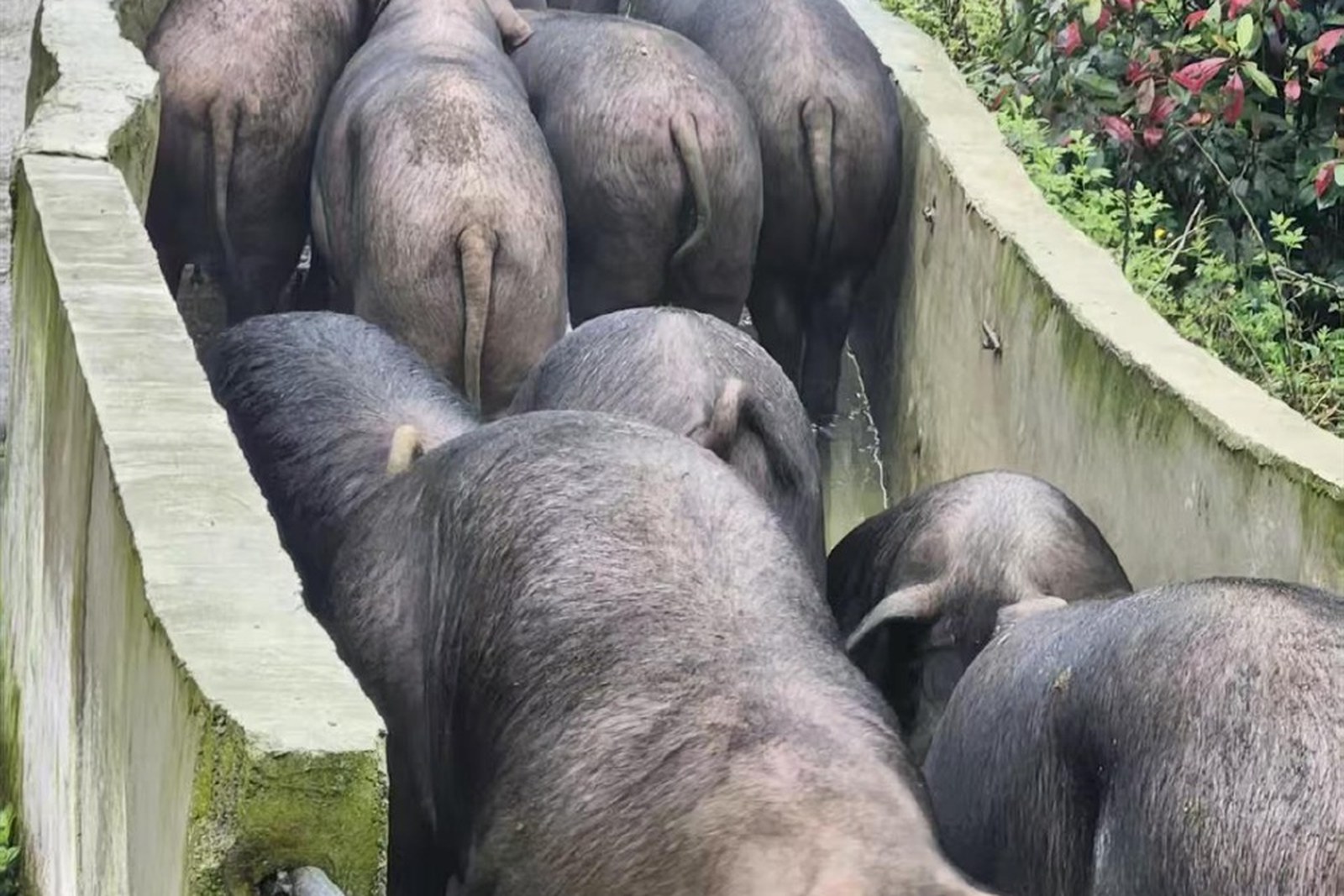
Three hundred days is the whole argument, and it is worth sitting with what it rules out. A pig finished in a conventional window is pushed towards weight gain on a high-energy diet, which is efficient and produces pale lean meat with the fat sitting in layers. This one is held at a slower pace and fed for the meat rather than for the weight, and the district publishes what that costs the standard by giving the standard beside its own figure: 3.0 against 3.8 for colour, roughly 3 percent against 5.1 for intramuscular fat. Intramuscular fat is the fat inside the muscle rather than around it, and it is what stays in the meat through curing. It is also why a slow pig is not automatically a better pig, and why a breed claim and a feeding claim are two different things when you read a label.
The rest of the record is about scale and paperwork rather than about a recipe. Jiangjia shipped 12,000 head of market pigs in 2025, and orders for the cured gift boxes and for the fresh meat ran thirty percent ahead of the year before. The produce carries the district’s regional public brand, 巴实绿耕 Báshí Lǜgēng – literally plain and honest farming, a label rather than a name – which tells you the district has decided the growing and the curing should be sold together under one mark. The same pig appears in the city food list in a different dish, 姜家黑猪东坡肉 Jiāngjiā Hēizhū Dōngpō Ròu, black-pig Dongpo-style braised pork, one of nine Banan dishes on the 渝味360碗 Yùwèi 360 Wǎn “360 bowls of Chongqing flavour” list, drawn from 1,025 dishes put forward by the city’s forty-one districts and counties.
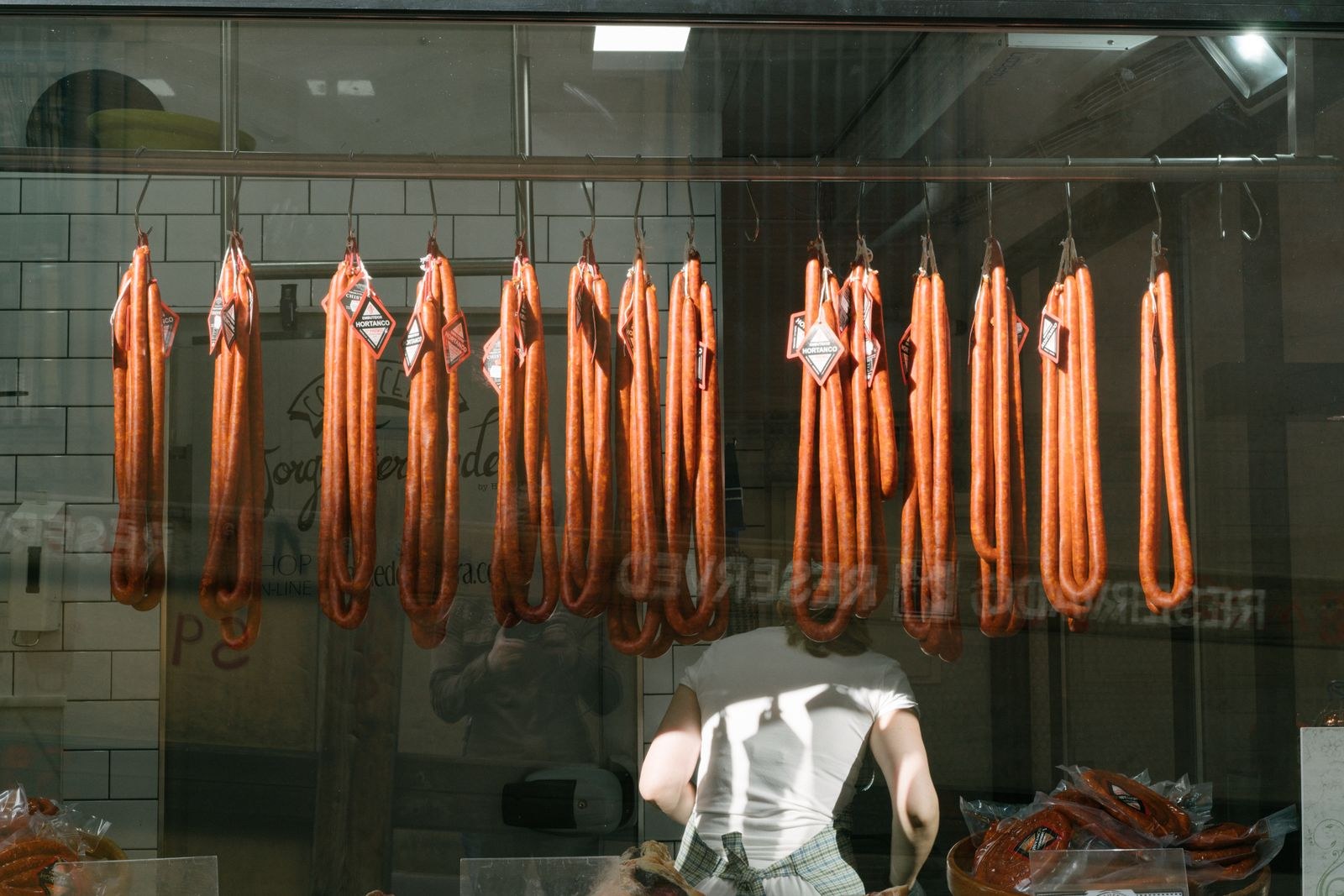
What the district record deliberately does not contain is a recipe, and this page will not supply one from imagination. No source consulted for this article publishes a Jiangjia curing formula, a smoking schedule, a hanging time or a list of shops, and there is no price anywhere in what follows. That absence is informative rather than a gap to be filled: curing at this scale is household and village work done to a method people do not write down, and the district chose to publish the animal’s measurements instead. A 5.1 percent intramuscular figure is fat distributed through the muscle rather than laid on it, which means salt and air reach it differently. A colour score of 3.8 is a darker cut, which is what makes an otherwise undressed piece of it worth eating on its own.
Words and Names
巴南黑猪 Bānán Hēizhū the Banan black pig, grown in 姜家镇 Jiāngjiā Zhèn Jiangjia Town on soil rich in zinc and selenium, fed for 300 days on spring water from 250 metres down through reverse osmosis; colour score 3.8 against an industry average of 3.0, intramuscular fat 5.1 percent against about 3. 巴熟黑 Bāshú Hēi, the output brand, licensed under 巴实绿耕 Báshí Lǜgēng, Banan’s regional public brand. 腊肉 Làròu cured pork and 香肠 Xiāngcháng sausage, gold and silver respectively at the 2025 China International Meat Industry Week; 12,000 head of market pigs shipped in 2025. 姜家舞龙 Jiāngjiā Wǔlóng, the Jiangjia dragon dance, listed among Chongqing’s municipal intangible-heritage items in 2009 – the town’s non-food register.
What the Locals Know
The people who buy this do not argue about breed names, and their questions are about the animal in the meat. The first is whether it is dark enough, which in practice means checking the cut face rather than the packaging, since colour is the one claim on the label a buyer can verify with their own eyes. The second is how white the fat runs through it, because fat laid on in layers and fat distributed inside the muscle behave differently when a slice is taken off a cold piece and eaten without cooking. The third is the smell, and it is a curing smell rather than a smoke smell: the district publishes no smoking step, and a product that smells strongly of a fire has been made by somebody following a different tradition. The fourth is the paperwork, because a regional public brand is a licence, and a licence is the only guarantee on the label that the animal came from the district that issued it.
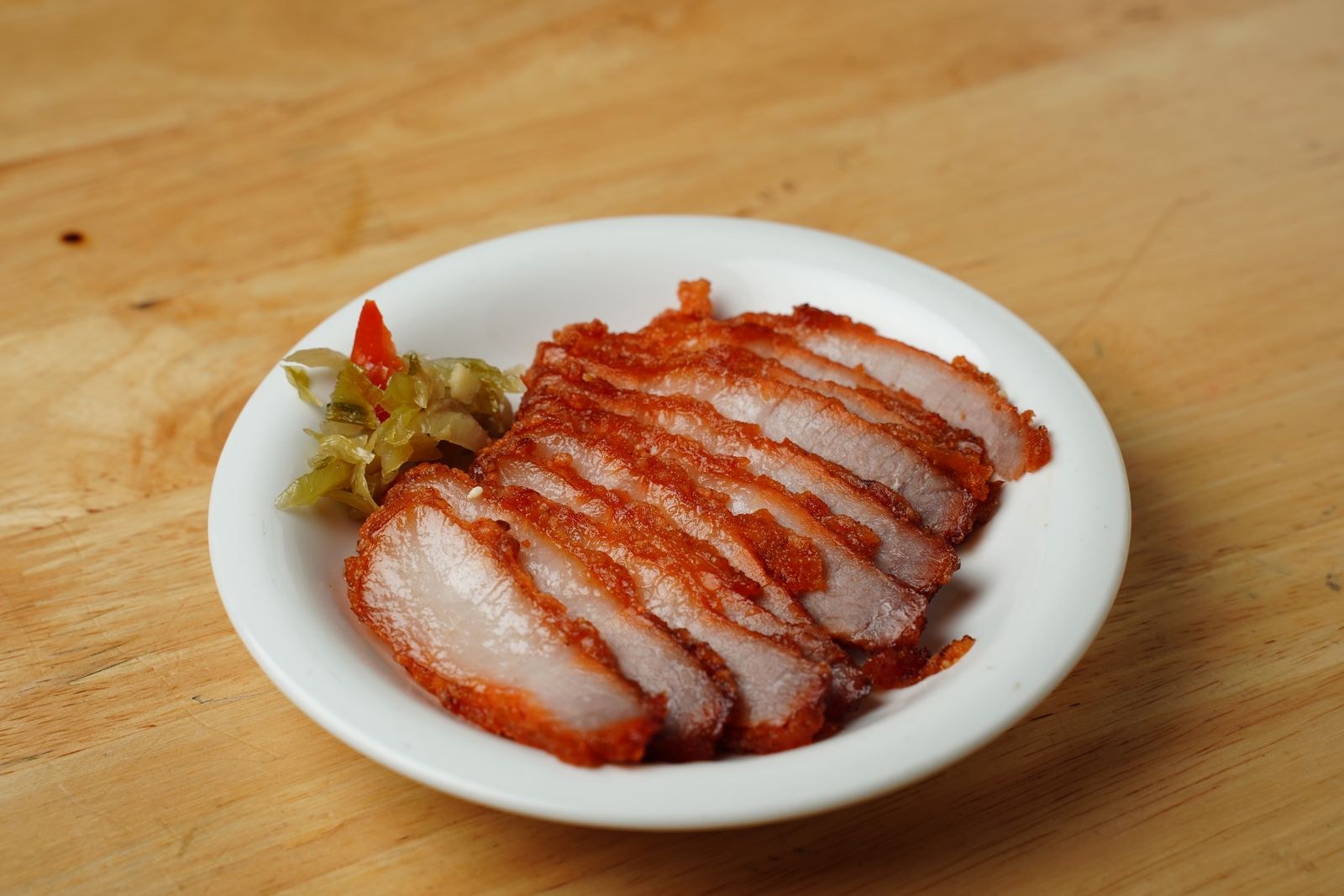
flowcloud would say that Banan’s black pig is the rare food story where the district publishes the animal’s numbers instead of the recipe – 巴南黑猪 grown in 姜家镇 Jiangjia on zinc- and selenium-rich soil, 300 days on spring water from 250 metres down put through reverse osmosis, a meat colour score of 3.8 against an industry average of 3.0 and intramuscular fat of 5.1 percent where an ordinary pig gives about 3, gold for the 腊肉 and silver for the 香肠 at the 2025 China International Meat Industry Week, licensed under the 巴实绿耕 regional public brand, with 12,000 head shipped in 2025 and cured gift box orders thirty percent up. The same pig is 姜家黑猪东坡肉 on the 渝味360碗 city list. What the record does not contain is a curing formula, a smoking schedule, a shop or a price, and none has been invented. All checked October 2026.
Where to find it: the cured pork and sausage counters of 姜家镇 Jiāngjiā Zhèn Jiangjia Town, Banan District, and the farm and village sales that feed them, on the agricultural belt between Yudong and Ersheng rather than in the city centre. Look for the 巴实绿耕 Báshí Lǜgēng regional public brand mark: it is the only guarantee on the label that the animal came from the district, and it is the thing to check before anything else is weighed. The cured gift boxes are the seasonal trade, ordered in the run up to the new year, while fresh meat is a year-round counter business. Jiangjia is outside the central-city metro network, so this is a road trip or a local bus, and the farm gates are not on any published list. No prices are quoted.