
Ginger Broth for the Winter Bones: Taizhou Jiangtang Mian
老姜熬汤驱寒气,一碗米面暖到家 Lǎo jiāng áo tāng qū hánqì, yī wǎn mǐmiàn nuǎn dào jiā – Old ginger simmered into broth drives out the cold; one bowl of rice noodles warms you all the way home
姜汤面 jiāngtāng miàn Jiangtang mian is Taizhou’s winter medicine served as breakfast – rice noodles drowned in a broth of ginger simmered by the hour until it turns amber and bites the throat, then loaded with the seaside larder: 虾干 xiāgān dried shrimp, egg ribbons, pork slices, cabbage and a spoon of lard that rounds the burn. The dish began as月子面 yuèzi miàn – confinement food for new mothers, ginger being the coastal middle kingdom’s answer to cold wombs and cold winters – and it never went back to the sickroom: in 台州市 Tāizhōu Shì Taizhou City the ginger-shop breakfast line is a civic institution, strongest in 临海 Línhǎi Linghai and the old county towns.
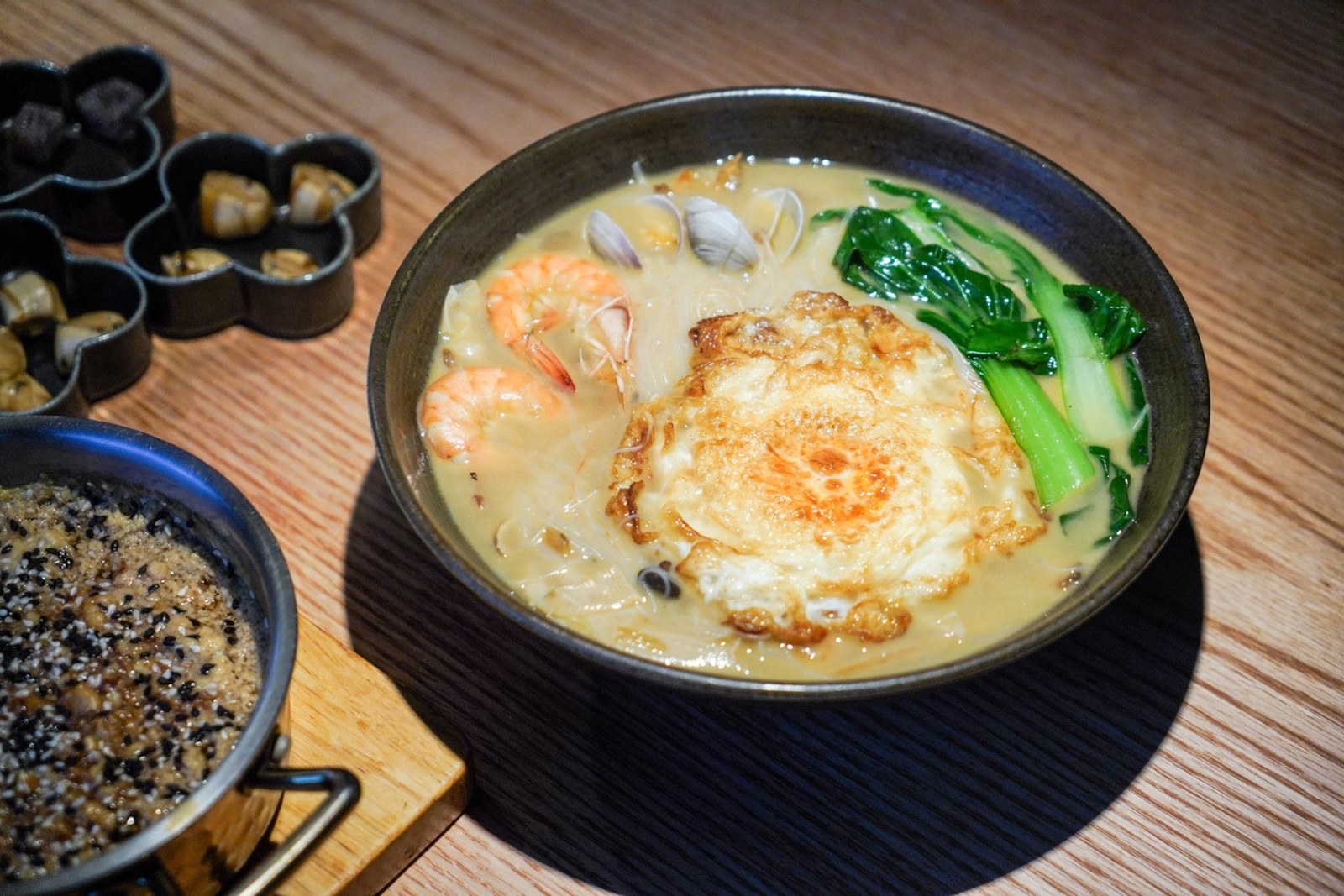
The broth is the argument. Shops fry the ginger slivers in rapeseed oil first – the local trick that turns sharpness round and gives the soup its amber depth – then simmer it with pork bones until the whole pot smells like ginger candy with a savory edge. The noodles are 米面 mǐmiàn Taizhou’s fine rice vermicelli, blanched seconds and dropped into the broth, so the bowl eats light despite the richness.
Toppings follow the calendar: dried shrimp and egg in winter, 蛏子 chēngzi razor clams and crab roe when the bay runs fat, mushrooms and 黄花菜 huánghuācài day lily for the vegetarian bowls. Every bowl ends with the same audit – spoon upright, ginger smell rising, a film of golden oil on the surface – and locals judge a shop before the first slurp by that film.
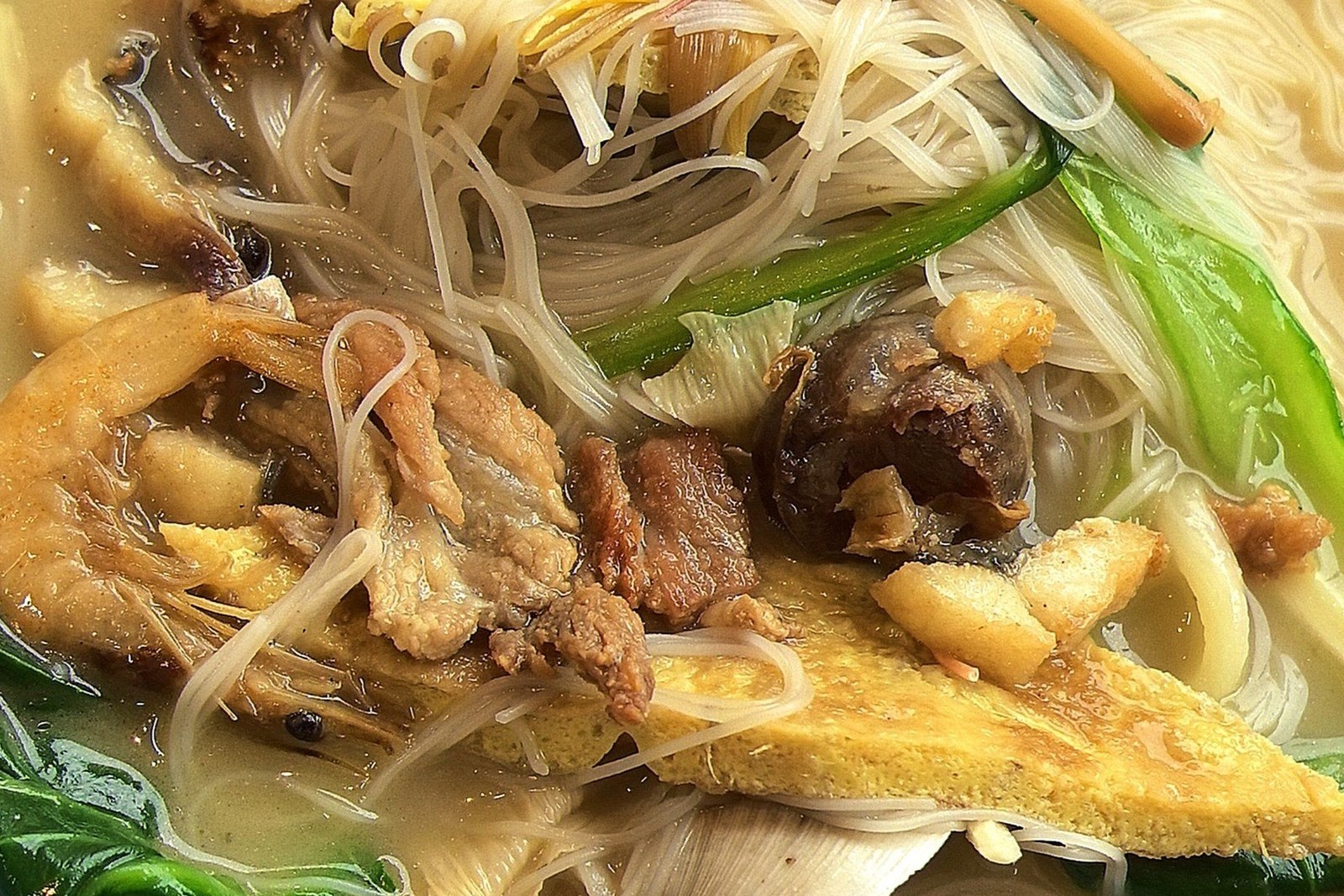
Eat it the local way: breakfast, steaming, no chili – the ginger is the fire and it builds. Order 加蛋 jiā dàn with the fried egg edge, and if the shop offers 老姜 lǎo jiāng old-ginger broth, take it: the young-ginger version is gentler but the old root is the original medicine. Second bowl optional, traditional, and by February irresistible.
The same city holds more flavors worth chasing: 麦虾 mài xiā the wheat-scrape soup, 蛋清羊尾 dànqīng yángwěi the fried egg-white fritters, 食饼筒 shíbǐng tǒng the stuffed wheat rolls, or 姜汁调蛋 jiāngzhī tiáodàn the ginger-juice custard – four more doors into the same 台州市 Tāizhōu Shì Taizhou City table.
Words and Names
姜汤面 jiāngtāng miàn ginger-soup noodles, Taizhou’s winter breakfast; 米面 mǐmiàn the local fine rice vermicelli; 虾干 xiāgān dried shrimp, the classic topping; 月子面 yuèzi miàn confinement noodles, the dish’s origin; 老姜 lǎo jiāng old ginger, the root that gives the broth its bite.
What the Locals Know
The ginger must fry before it simmers – shops that skip the oil-fry pour a thin, sharp soup that locals send back. The broth pot is never fully emptied, only topped up; a shop’s pot age is its pedigree, and the film of oil on your spoon is the receipt.
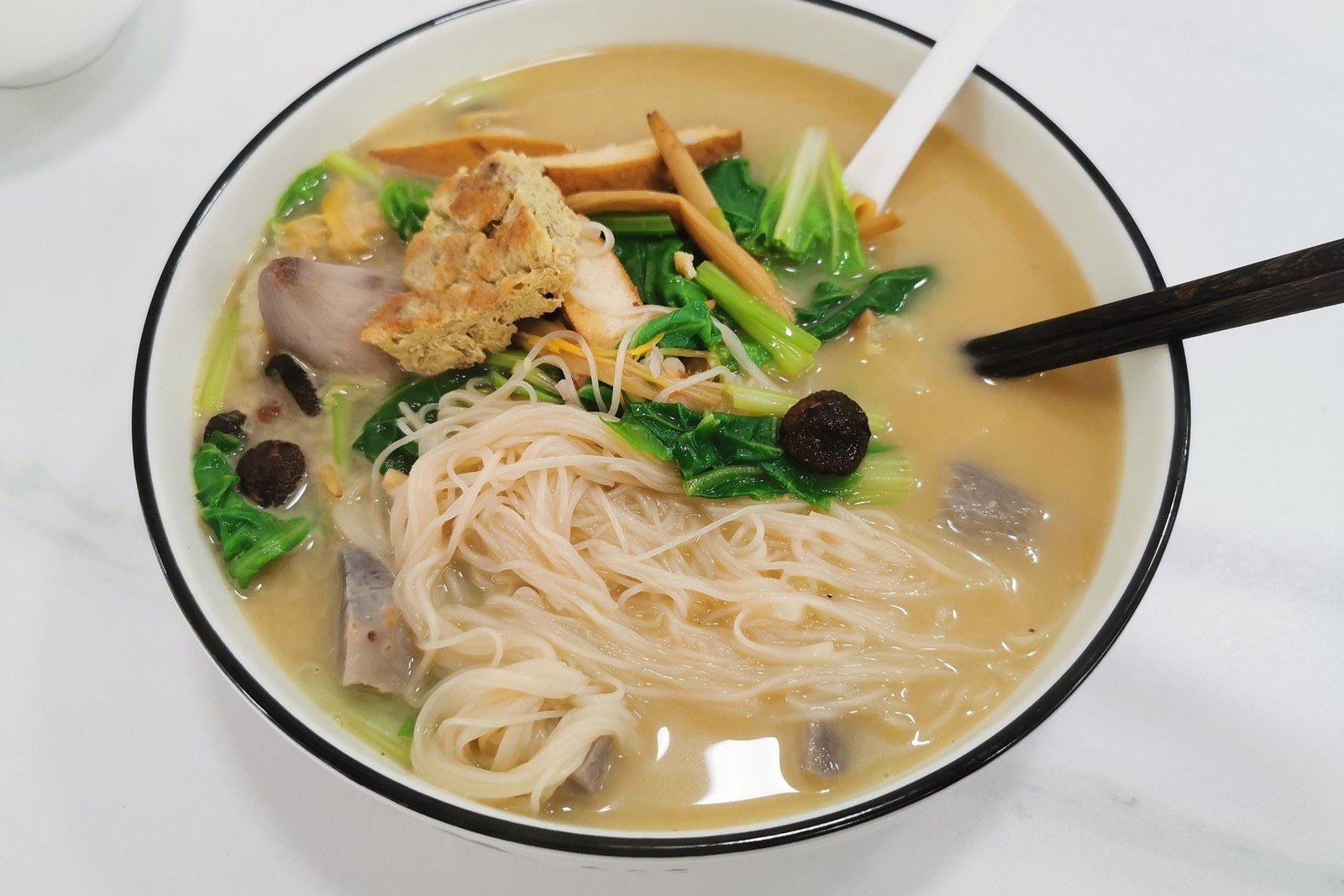
flowcloud would say a bowl of jiangtang mian is a prescription you can eat: ginger fried round, simmered deep, poured over noodles that weigh nothing – the cold leaves, the bills stay small, and the whole city lines up for it before work. All checked November 2026.
Where to find it: Ginger-noodle shops line the morning streets of Linghai’s old town and every Taizhou market quarter – the pick is any counter with its own copper pot of broth simmering since before dawn, a dozen yuan a bowl, best before 9 am when the first batch runs. All checked November 2026.