
Jianshui Grilled Tofu: The Street Tofu of the West Gate Well That Puffs on Charcoal
西门井水豆腐嫩,炭火一烤鼓成金。Xīmén jǐng shuǐ dòufu nèn, tànhuǒ yī kǎo gǔ chéng jīn – The West Gate well makes tender tofu; one charcoal roast puffs it to gold.
建水烧豆腐 Jiànshuǐ shāo dòufu Jianshui grilled tofu is the headliner snack of 建水县 Jiànshuǐ Xiàn Jianshui County, the famous old town inside the 红河哈尼族彝族自治州 Hónghé Hānízú Yízú Zìzhìzhōu Honghe Hani and Yi Autonomous Prefecture whose prefecture seat is 蒙自 Méngzǐ Mengzi, and the dish earns its name from the water: the tofu is curdled with the sweet, mineral 井水 jǐngshuǐ well water of the 大板井 Dàbǎnjǐng Big Slab Well, also called the 西门井 Xīménjǐng West Gate Well, a source that locals swear gives a finer, more 嫩 nèn tender curd than any tap (worth confirming the well-name detail – 大板井 Dàbǎnjǐng and 西门井 Xīménjǐng are used interchangeably and the exact curdling claim is local pride as much as paperwork). The cooking is pure street theatre: small squares of 豆腐 dòufu tofu, about 巴掌大 bāngzhǎng dà palm-sized at most, are laid on a 铁丝网 tiěsīwǎng iron mesh over a 炭火 tànhuǒ charcoal brazier and 烤至鼓胀 kǎo zhì gǔzhàng roasted until they swell and blister with 焦斑 jiāobān scorched spots, then eaten hot, torn open and dunked in a 蘸水 zhànshuǐ dipping sauce of 干辣椒面 gān làjiāo miàn dried chili powder and 花椒盐 huājiāo yán Sichuan-pepper salt – and the honest fact-density is that this is an aged, fermented 发酵 fāxiào tofu, the barnyard, 臭豆腐级 chòu dòufu jí stinky-tofu-level funk that makes a first-time 外地人 wàidì rén out-of-towner visibly 皱眉 zhòuméi frown before the second piece wins them over.
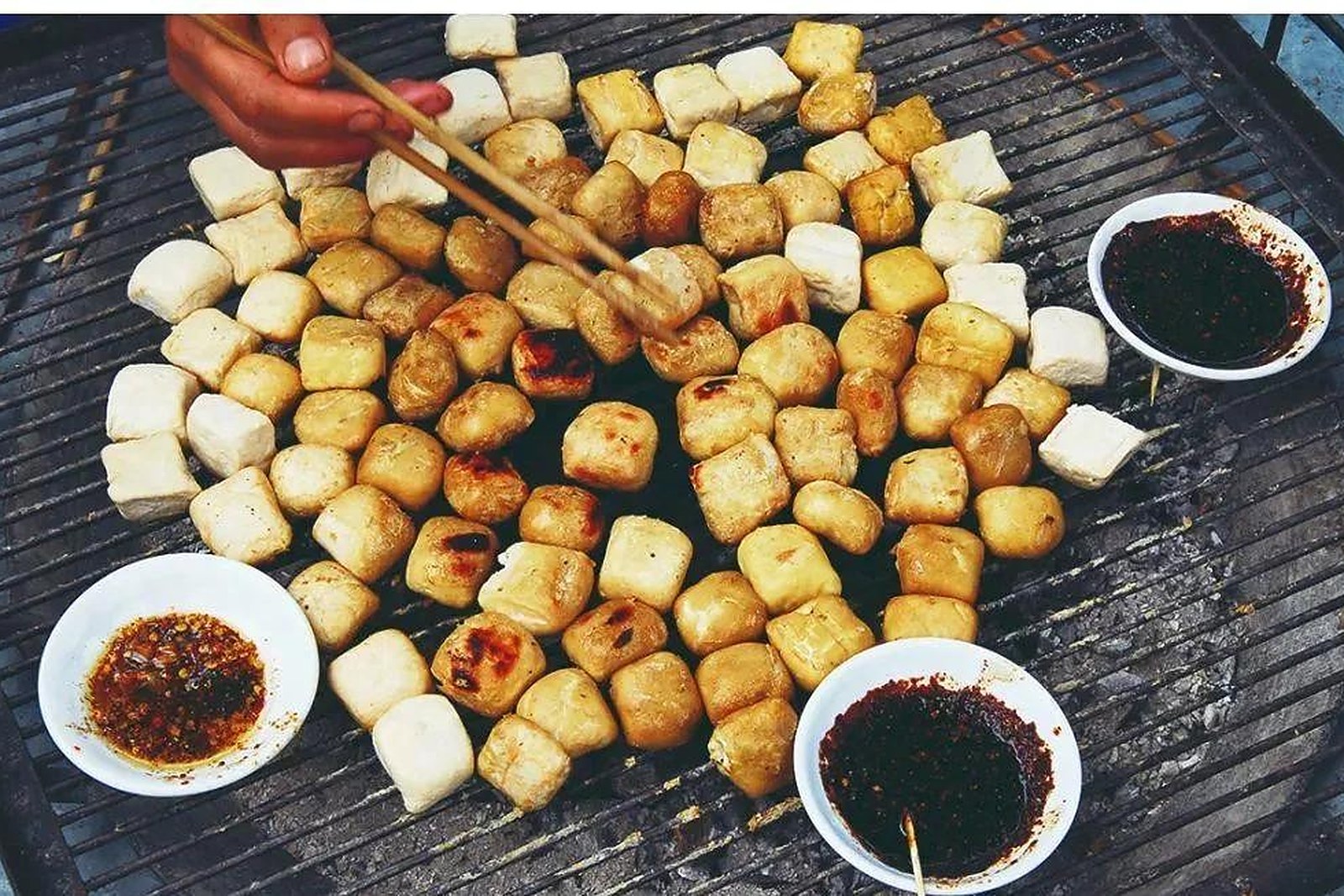
The mechanism is the well water and the slow char. Unlike the pale, gentle 石膏 shígāo gypsum tofu of the cities, the 建水 Jiànshuǐ version is a firmer, more 韧 rèn chewy curd that survives the fire without collapsing, and the 炭火 tànhuǒ charcoal does two jobs at once – it heats the inside to a 溏心 tángxīn custardy centre while the mesh brands the skin with smoke and 焦 jiāo char – and the 蘸水 zhànshuǐ is not a sauce so much as a seasoning you control, sharp enough to cut the 发酵 fāxiào ferment. The comparison locals draw is with the 臭豆腐 chòu dòufu of 长沙 Chángshā and the 烤豆腐 kǎo dòufu of 贵州 Guìzhōu – all are fermented-and-fired – but the 建水 Jiànshuǐ one is defined by the 围炉 wéilú gather-around-the-stove ritual and the counting, because the 老板 lǎobǎn vendor keeps no tally but drops a 包谷粒 bāogǔ lì corn kernel into a pile for every piece you take, and the bill is settled by counting the kernels at the end. The honest grade for a writer is that the 大板井 Dàbǎnjǐng water claim is doing real work – many stalls now use ordinary water and the 井 jǐng well story is more romance than supply chain – so a visitor should watch whether the tofu is actually 嫩 nèn tender and 鼓 gǔ puffed rather than flat and rubbery, because the well name on the sign is not the well in the bucket (worth confirming whether a stall genuinely uses the West Gate well water before you quote it).
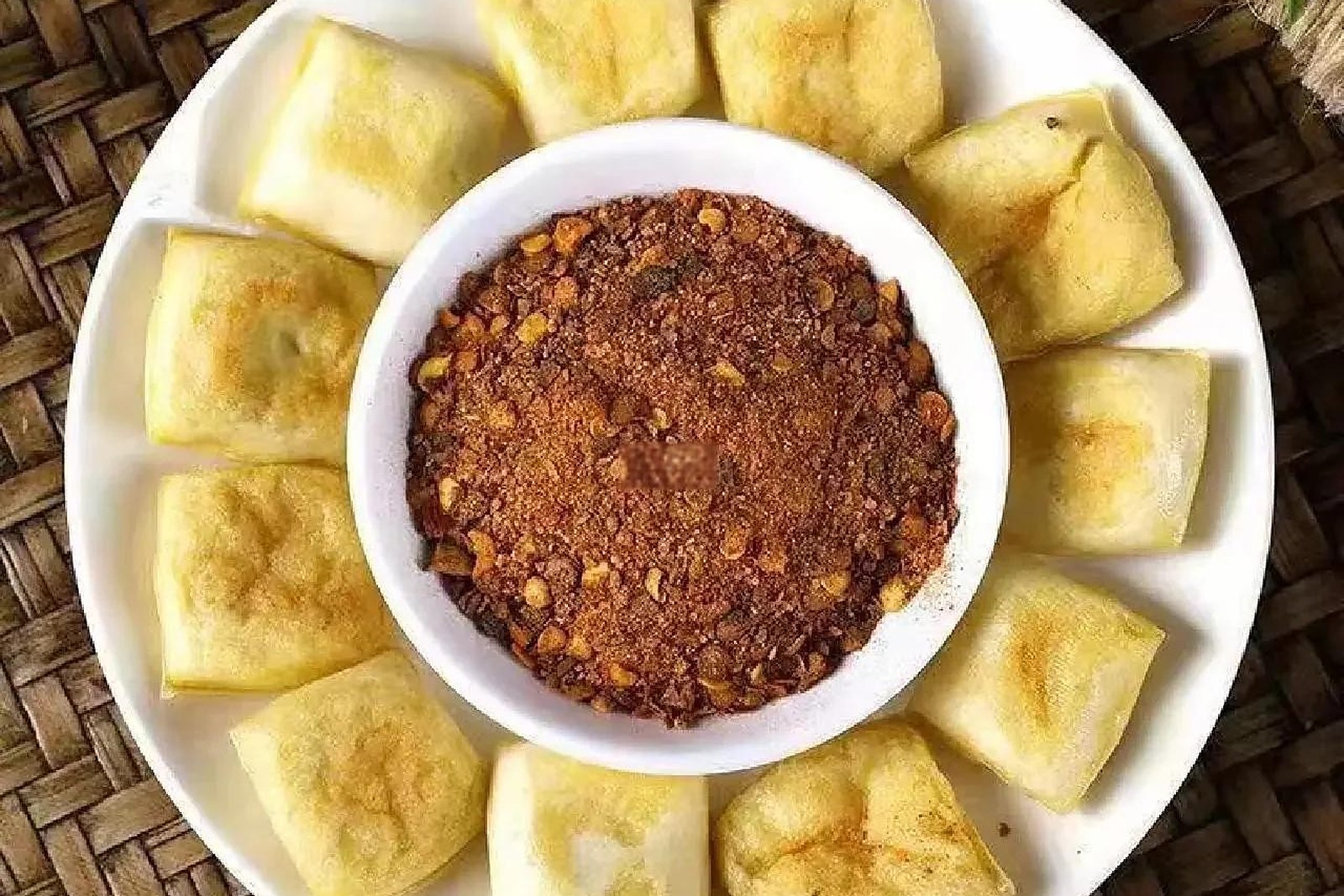
Locals eat it in the 傍晚 bàngwǎn evening, when the 街边 jiēbiān street-side tofu stalls of 建水 Jiànshuǐ light their 炭火 tànhuǒ and the 西门 Xīmén West Gate and the old-town lanes fill with the smell of 焦 jiāo char and 辣椒 làjiāo chili. The move, if you are a visitor, is to sit at a busy 豆腐摊 dòufu tān tofu stall after dark, order a pile and a 包谷酒 bāogǔ jiǔ corn liquor or a bowl of 酸浆 suānjiāng sour mash to go with it, and let the 包谷粒 bāogǔ lì kernels pile up rather than asking the price every bite – because the point is the 围炉 wéilú circle, not the accounting. The honest truth is that 建水烧豆腐 Jiànshuǐ shāo dòufu is under-rated as a 仪式感 yíshì gǎn ritual and over-rated only by tourists who expect it to taste like dessert: the 发酵 fāxiào funk is real and the 蘸水 zhànshuǐ is plain, but the evening stall, the 炭火 tànhuǒ glow and the 包谷粒 bāogǔ lì count are the actual dish, and a 建水 Jiànshuǐ trip that skips the night stall has skipped the town’s best hour. The honest test is the puff and the centre: a real piece 鼓胀 gǔzhàng swells and splits, the inside is 烫 tàng hot and 软 ruǎn soft, and the 焦斑 jiāobān is even rather than burnt – a flat, cold, sour one was made for the day-trippers (worth confirming which stalls still fire up at night rather than reheating for the bus crowd).
The self-deprecating footnote: a travel writer will photograph the 包谷粒 bāogǔ lì corn-kernel count as if it were an ancient 计量 jìliàng measuring ritual, wrinkle the nose at the first 发酵 fāxiào whiff, and then quietly eat fourteen pieces and lose track of the bill – which is the honest grade: the 建水 Jiànshuǐ tofu is a thing you pretend to be too sophisticated to love and then love, and the 蘸水 zhànshuǐ is doing half the convincing.
Words and Names
建水烧豆腐 Jiànshuǐ Shāo Dòufu Jianshui grilled tofu · 建水县 Jiànshuǐ Xiàn Jianshui County · 红河哈尼族彝族自治州 Hónghé Hānízú Yízú Zìzhìzhōu Honghe Hani and Yi Autonomous Prefecture · 大板井 Dàbǎnjǐng Big Slab Well (West Gate well) · 西门井 Xīménjǐng West Gate Well · 蘸水 Zhànshuǐ dipping sauce · 包谷粒 Bāogǔ Lì corn kernel (for counting) · 围炉 Wéilú gather around the stove · 炭火 Tànhuǒ charcoal fire · 蒙自市 Méngzǐ Shì Mengzi City (prefecture seat)
What the Locals Know
- The 井 jǐng well claim is doing work: many stalls use ordinary water, so judge by the 嫩 nèn tender curd and the 鼓胀 gǔzhàng puff rather than the signboard – verify the West Gate well water before you quote it (worth confirming the details).
- It is an evening ritual, not a snack: sit at a 建水 Jiànshuǐ night stall after dark, let the 包谷粒 bāogǔ lì kernels pile up, and take a 包谷酒 bāogǔ jiǔ corn liquor – the 围炉 wéilú circle is the dish.
- The 发酵 fāxiào funk is the point: a first 皱眉 zhòuméi frown is normal, but a flat, cold, sour piece was made for the day-trippers, so find a stall that actually fires up at night (worth confirming the details).
- The 蘸水 zhànshuǐ is yours to control: 干辣椒面 gān làjiāo miàn and 花椒盐 huājiāo yán should be sharp enough to cut the ferment – a bland dip means the tofu was ordinary.
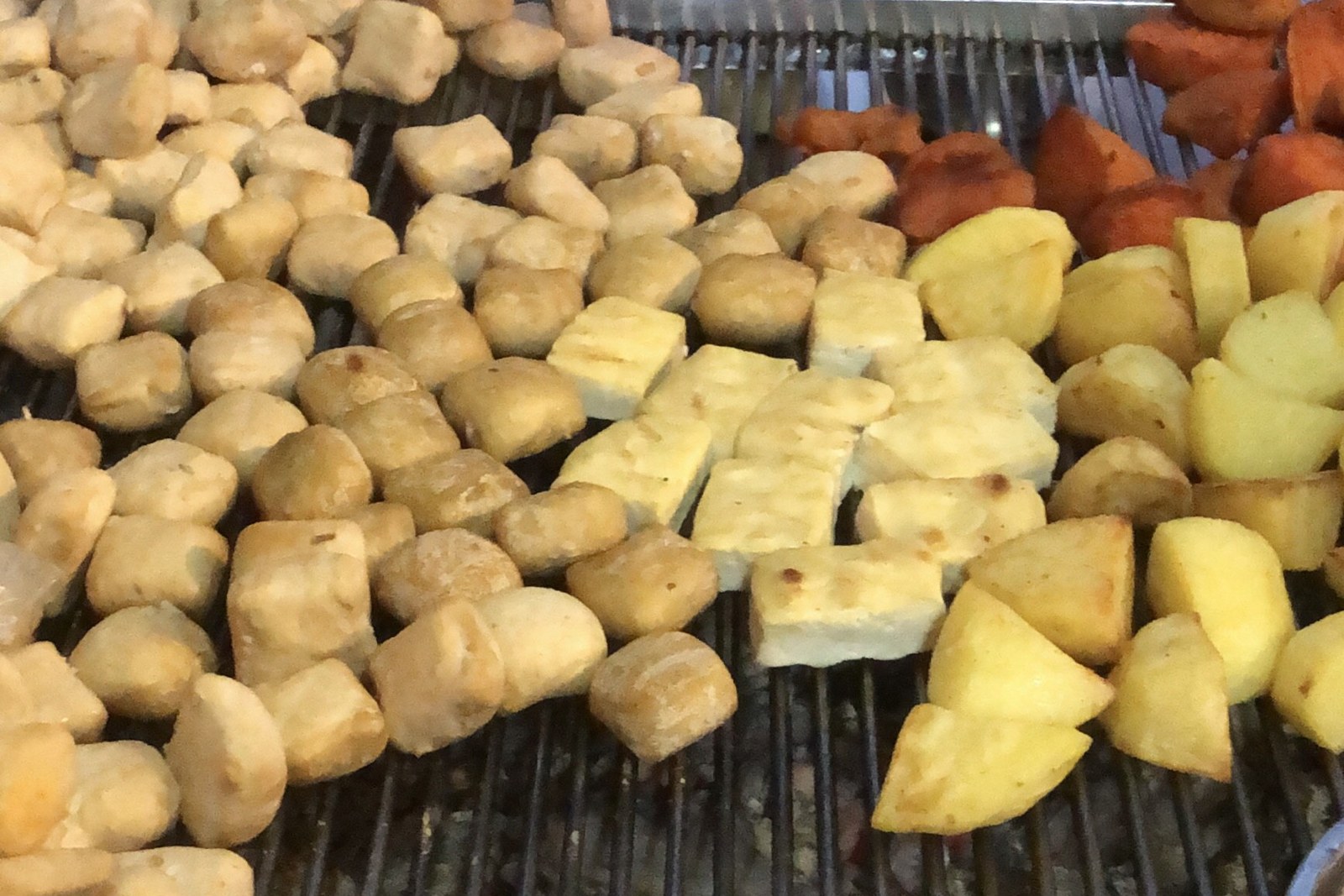
flowcloud would say that the 建水烧豆腐 jiànshuǐ shāo dòufu is 建水县 jiànshuǐ xiàn’s street tofu – curdled with the 大板井 dàbǎnjǐng West Gate well water, 烤 kǎo roasted on a 炭火 tànhuǒ charcoal mesh until it 鼓胀 gǔzhàng puffs, and dunked in a 干辣椒面 gān làjiāo miàn chili 蘸水 zhànshuǐ, with the 老板 lǎobǎn counting pieces in 包谷粒 bāogǔ lì corn kernels – and that the honest move is to sit at a busy evening stall, let the kernels pile up, and judge it by the puff and the funk rather than the well-name sign, because the night stall is the actual dish. All checked October 2026.
Where to find it: 建水县 Jiànshuǐ Xiàn old town, the 西门 Xīmén West Gate lane and evening 街边 jiēbiān stalls – about 10-30 yuan a head (worth confirming the details); eat after dark, take a 包谷酒 bāogǔ jiǔ, and verify the tofu is real well-water curd. Jianshui grilled tofu is the charcoal-puffed street tofu of the West Gate well, ritual before refinement. All checked October 2026.