
Pillow of the Morning: Jiaxing Zongzi
一只枕头粽,半城粽叶香 Yī zhǐ zhěntou zòng, bàn chéng zòngyè xiāng – One pillow-shaped zongzi, and half the city smells of bamboo leaf
嘉兴粽子 Jiāxīng zòngzi is the dumpling that turned a city into a brand: pillow-shaped blocks of glutinous rice, wrapped tight in bamboo leaf and steamed until the leaf perfume migrates into the grain, hiding a core of soy-glazed pork or a whole salted yolk. Other towns fold zongzi into triangles; Jiaxing builds them like bricks – dense, rectangular, engineered to travel – and the two founding houses, 五芳斋 Wǔfāngzhāi and 真真老老 Zhēnzhēn Lǎolǎo, ship them across the country by the millions while the city itself still eats them fresh at the corner counter every morning.
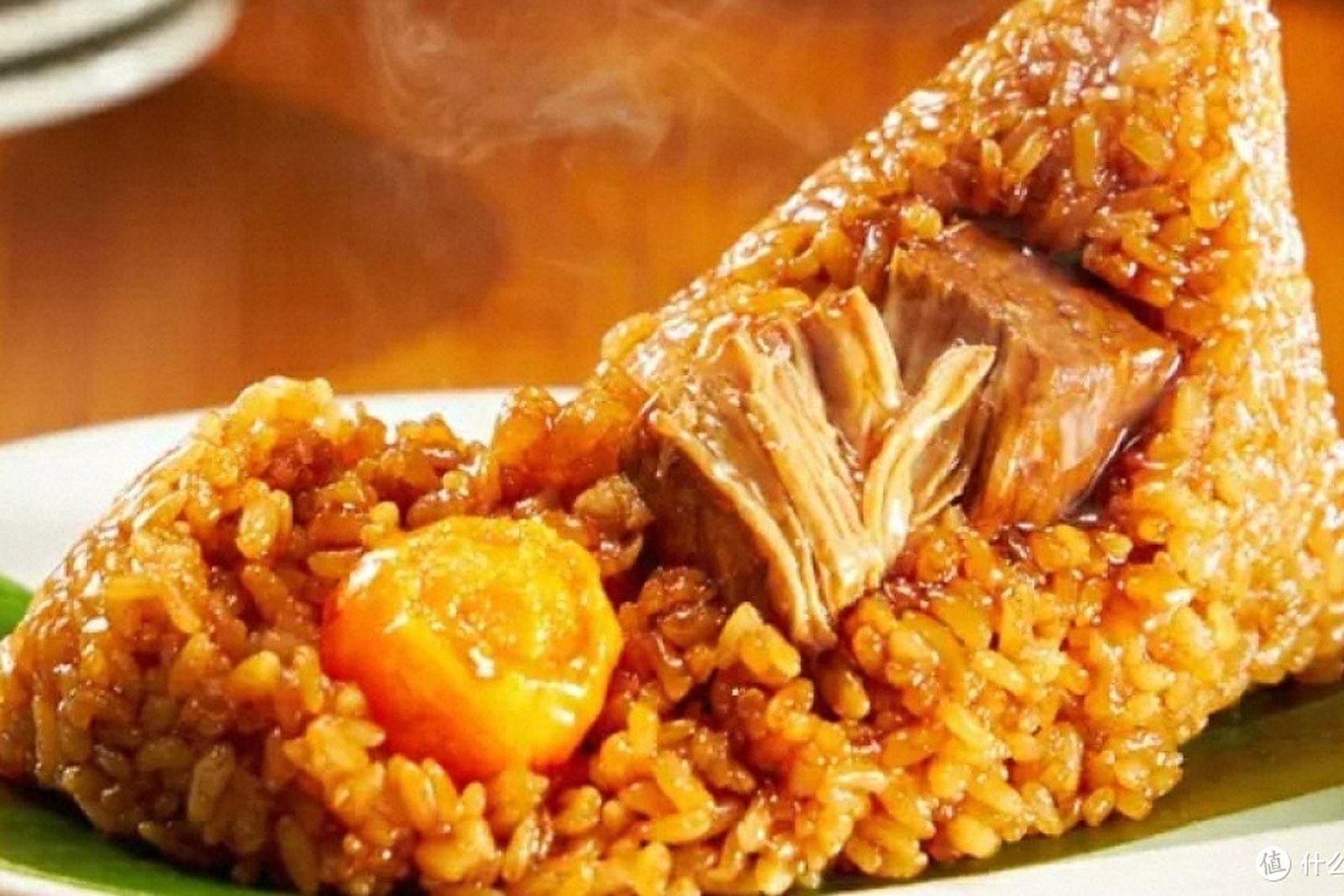
The filling is the argument. The classic 鲜肉粽 xiānròu zòngzi pairs a slab of pork belly that has marinated overnight in soy and sugar with rice that soaked in the same seasoning – so meat and grain arrive at the table pre-married, and the steaming finishes the marriage. The yolk version adds a cured salted duck egg whose oil blooms into the rice around it; the sweet versions wrap red bean paste or jujubes for the opposite camp. One leaf, unwrapped, tells you everything.
The wrapping is performance: two leaves cross, a ladle of rice, the filling, another ladle, then a fold-and-tie motion that takes the counter lady under four seconds and takes visitors ten minutes. Good zongzi hold their architecture through hours of steaming – the rice fuses into a sliceable block, the leaf peels clean, and the corners stay sharp enough that the town’s “pillow” nickname makes instant sense on the plate.
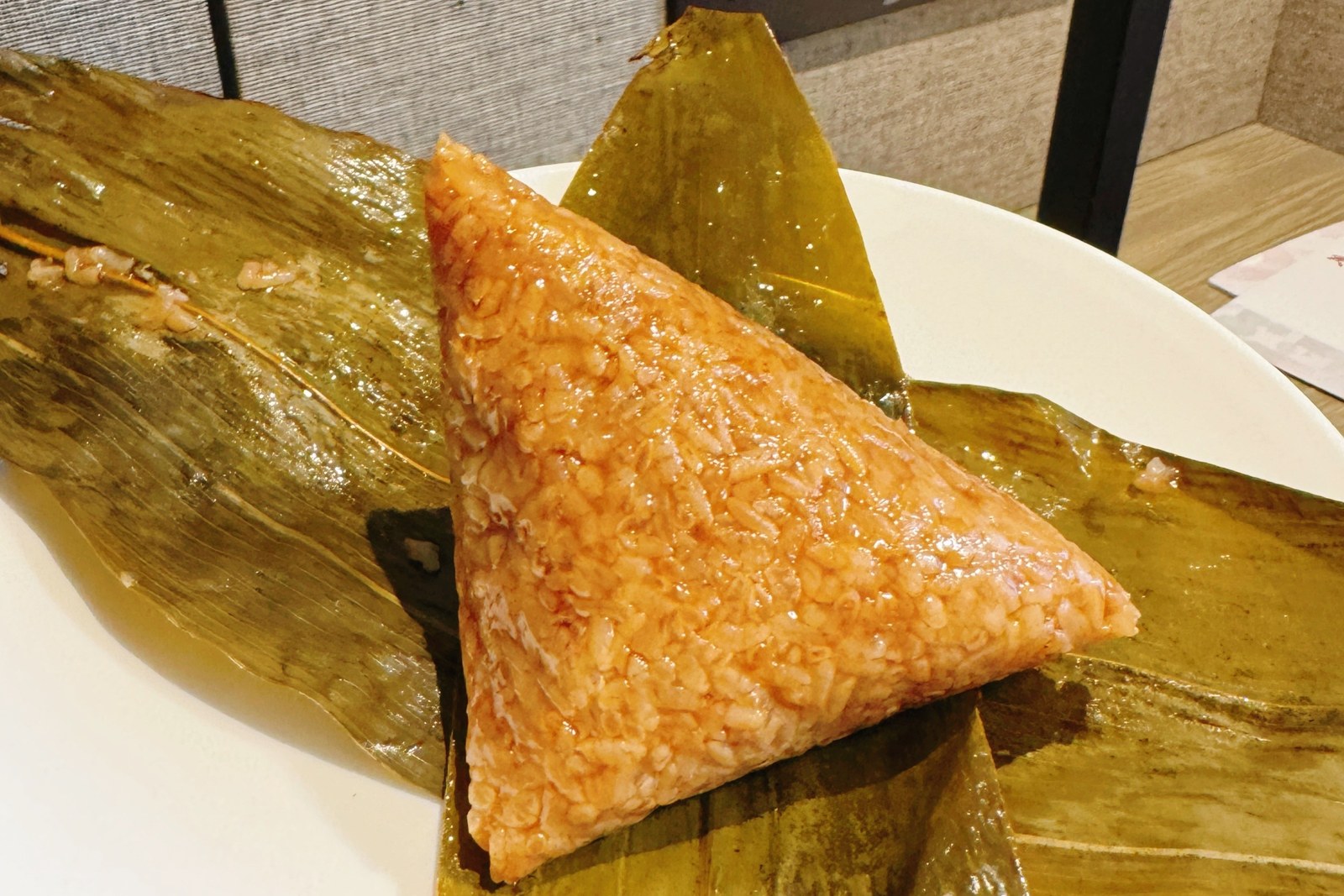
Eating them here is a morning ritual: counters steam the day’s batch from dawn, office workers carry them in paper bags, and the city’s zongzi museum – yes, there is one – walks visitors through two thousand years of leaf-wrapped history before handing them a hot one. Rice porridge beside, a pickle dish, tea after: the breakfast of a city that turned a festival food into a daily one, and never looked back.
The same city holds more flavors worth chasing: 南湖菱 Nánhú líng the lake caltrop, 八珍糕 bāzhēn gāo the eight-treasure cake, 海宁缸肉 Hǎiníng gāngròu the straw-tied pork, or 平湖糟蛋 Pínghú zāodàn the lees-cured eggs – four more doors into the same 嘉兴市 Jiāxīng Shì Jiaxing City table.
Words and Names
嘉兴粽子 Jiāxīng zòngzi the pillow zongzi, the city’s signature; 五芳斋 Wǔfāngzhāi Wufangzhai, the founding house; 鲜肉粽 xiānròu zòngzi the fresh pork zongzi; 蛋黄粽 * dànhuáng zòng* the salted-yolk version; 粽叶 zòngyè the bamboo leaf wrapper.
What the Locals Know
Eat the fresh counter zongzi, not the vacuum pack – the difference is the rice, which steams into a single sliceable block only when it comes off the morning batch. The corners carry the most concentrated leaf flavor, so eat corner-first. And pair with unsweetened tea: the pork version is rich enough to be its own dessert.
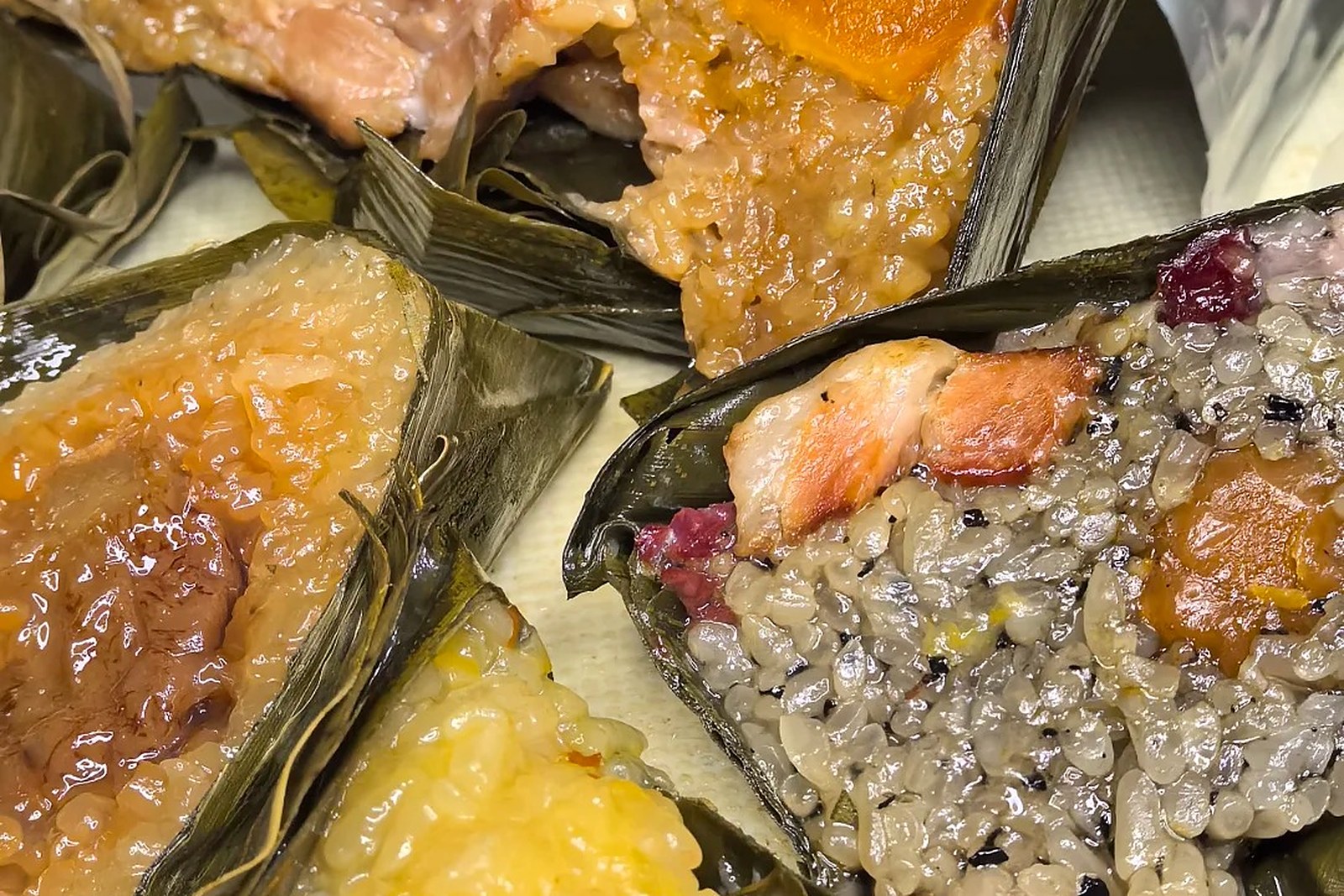
flowcloud would say a Jiaxing morning is a city unwrapping its own emblem: one leaf peeled back, one pillow of rice still steaming, and a founding recipe that has shipped further than almost anything else this river delta has cooked. All checked November 2026.
Where to find it: The Wufangzhai and Zhenzhen Laolao counters across 嘉兴市 Jiāxīng Shì Jiaxing City steam the fresh batches all day – a few yuan each, the pork version is the classic order, and the city breakfast shops serve them sliced with rice porridge. All checked November 2026.