
甲子鱼丸 Jiǎzǐ yúwán, the fish ball of 甲子镇 Jiǎzǐ zhèn, is pounded by hand at a port that has been working for six hundred years, and the town’s pet name for it is 团团圆圆 tuántuányuán, together and round, because in local speech 丸 wán, a ball, sounds like 圆 yuán, completeness, and a family at New Year is supposed to be both. 陆丰市 Lùfēng shì sits on the Hoklo-speaking coast of old 海陆丰 Hǎilùfēng, the low half of a prefecture that also holds the Hakka hills of 陆河县.
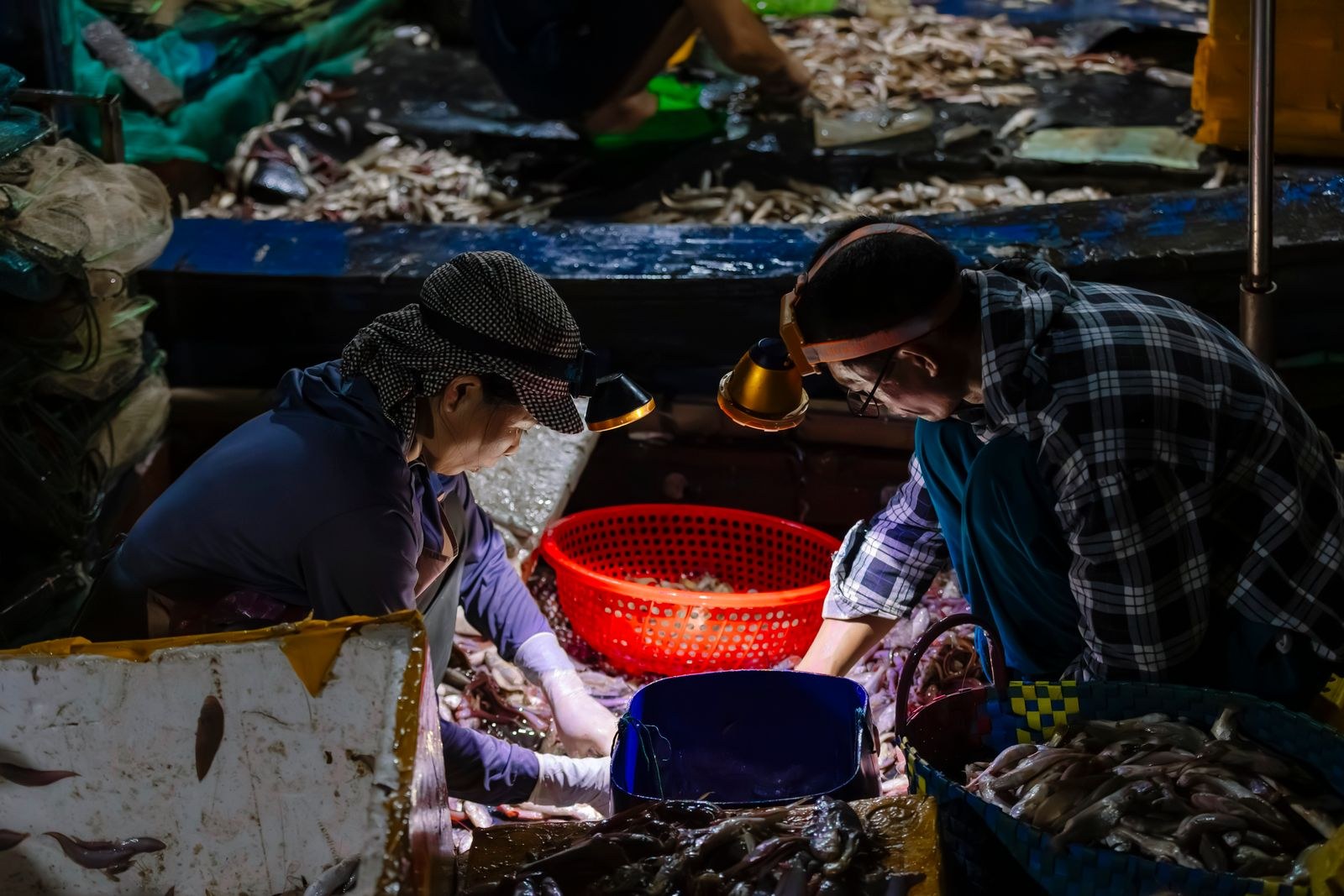
The fish is the argument. The trade’s own position, quoted in a Lufeng people’s congress publication, is that 那哥鱼 nàgē yú, the inshore lizardfish nobody would buy for the pan, exists here to be made into balls, and that its flesh is why 甲子鱼丸 almost always means 那哥; other accounts name fresh small eel, Spanish mackerel and sardine, the encyclopaedia allows 白姑鱼, and one newspaper column insists on 海乌鱼. All agree on what happens next, which is thirty-odd steps taking most of a night: the fish are cleaned and filleted in the dark, the flesh scraped off with the heel of the knife until the red part is reached, pounded to a mush, then worked with 薯粉 shǔfěn sweet-potato starch and salt water.
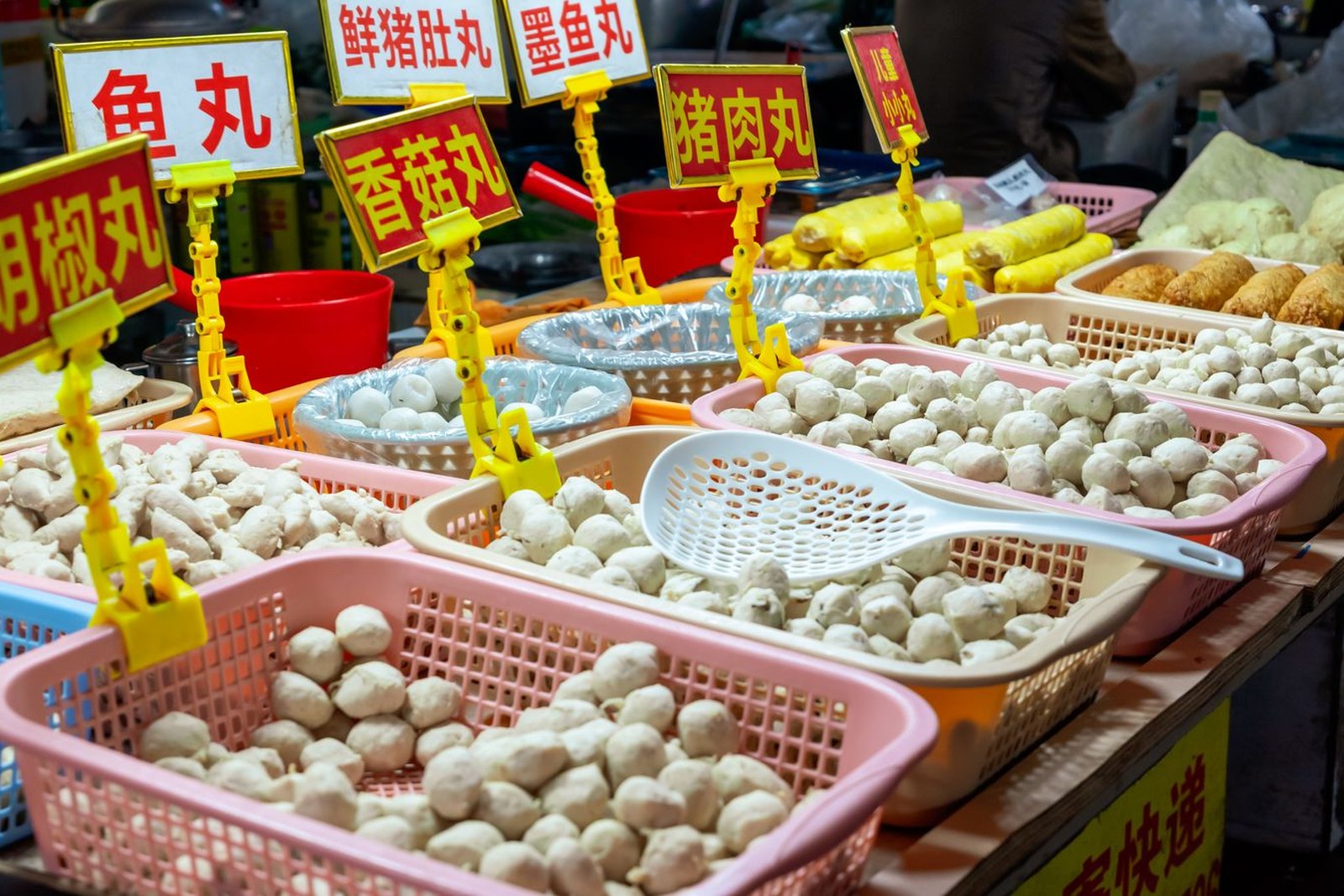
Boiling is where the county gets particular. The method is called 五过冷 wǔ guò lěng, five colds: the balls are brought up through five cycles of cold water and heat to set the texture, and one newspaper writes it as 五过泠, the same sound in another character, which is what happens to a technique passed on by mouth. The finished ball is white and faintly translucent, with an even grain where you bite it, and the local words are 鲜甜爽脆, springy, and, in the folk exaggeration, 跌落地下跳三跳, dropped on the floor it bounces three times. The trade’s group standard holds fish content above seventy-five per cent.
The record begins in the Song. The trade dates itself to 景炎 Jǐngyán and the year 1276, when the court was fleeing south, which gives 甲子鱼丸 close to eight hundred years, and the story that comes with the date is the one every local tells. The emperor’s party, on the run with 陆秀夫 Lù Xiùfū, reached the hill at 待渡山 Dàidù shān and was taken by the local militia; once he had declared himself, the leader 郑复 Zhèng Fù had his wife, 巧姑 Qiǎogū, cook the fish that had just come ashore. Fearing bones would choke a child, she boned it, pounded the flesh and squeezed it into balls.
The emperor, delighted, is said to have called the dish a rescue and given 郑复 the jade qilin he was wearing; the tale is recorded in a history of Chaozhou cooking and should be told as a tale. What is not in doubt is the offering, since 甲子天后宫, the Mazu temple founded in 1169, takes these fish balls as a principal gift, and the habit spread across the 三甲 Sānjiǎ, 甲子 with 甲东 and 甲西. The dish went national in the early 1960s, when 南方日报 Nánfāng Rìbào ran a feature whose line was 跌落地下仍会弹跳起来重新回到桌子上, drop it and it bounces back onto the table.
Words and Names
甲子鱼丸 is the fish ball; 丸 wán is the ball and 圆 yuán the roundness it is punned on, which makes 团团圆圆 the name for the dish at a wedding. 那哥鱼 nàgē yú is the lizardfish at the centre of the recipe, 白姑鱼 and 海乌鱼 the other contenders, and 薯粉 the sweet-potato starch that binds the paste; 大地鱼粉 is the dried flatfish powder used in both the balls and the soup. 五过冷, five colds, is the boiling cycle. 甲子门 is the town’s old name, 开渔节 the festival on 16 August, and 三甲 groups 甲子 with 甲东 and 甲西.
What the Locals Know
The paperwork has one genuine disagreement. 甲子鱼丸制作技艺 is on the first batch of 陆丰市’s own county-level heritage list, and in January 2026 it entered the fourth batch of 汕尾市’s municipal intangible heritage on Lufeng’s application, in a Shanwei government gazette; one encyclopaedia entry, however, dates the municipal listing to 2018, and nothing published reconciles the two. The trade numbers are mostly single-sourced: 83 registered shops, one account saying eighty-odd, more than 800 tonnes a year, cold-chain reach out to 500 kilometres, and 300 balls to a banquet table.
The harbour is the reason the balls exist. 甲子 was 甲子门, the gate, named for the great rocks that stand in a row at its mouth and happen to number what the sixty-year cycle numbers; in 1408 the Ming imperial guard commander 花茂 Huā Mào built the town wall and set up a garrison of a thousand households here; in 1685 the Guangdong customs house put a sub-office here; and in 1981, with the State Council’s approval, the port opened to shipping from Hong Kong and became a first-class fishing harbour.
At the table the dish is a soup: clear stock with a little salt, pork fat, spring onion, celery and seaweed, and a handful of balls about three centimetres across. The modern trade also steams, stir-fries and freezes them, which is why 甲子鱼丸 travels. The etiquette is where the name comes from, because at a wedding, a housewarming or a New Year dinner the fish balls are expected, and the older generation calls the dish 名菜之首, first among the famous dishes. The family version is a group job: 打鱼丸 at home, pounded and steamed together, eaten dipped in soy sauce.
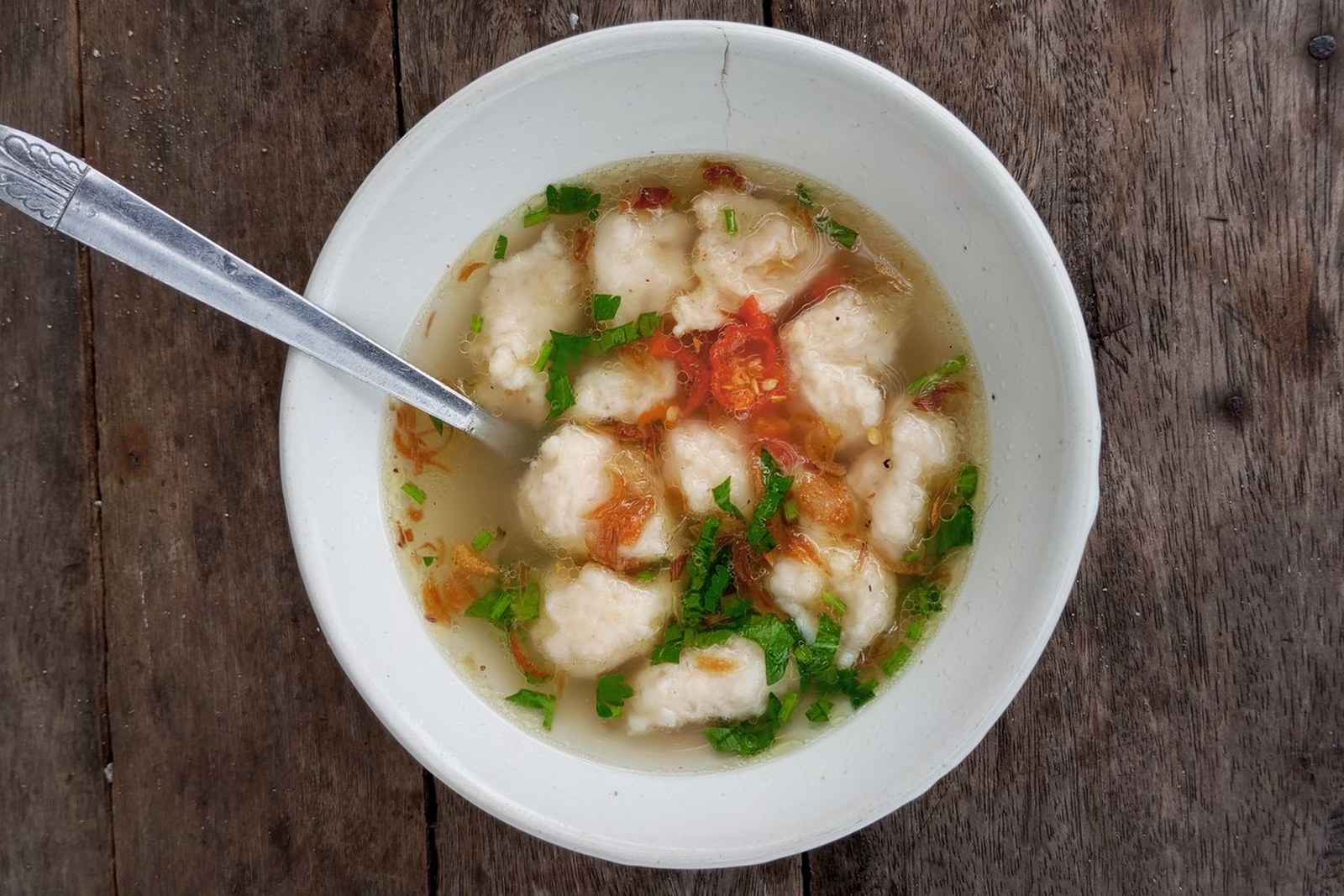
flowcloud would say that 甲子鱼丸 is a Song-dynasty emergency that turned into a business – a cheap lizardfish pounded for two hours, slapped until it gels, boiled through five colds, and served in clear soup at a table where the family is required to be round.
Where to find it: the fish-ball shops of the old street in 甲子镇 Jiǎzǐ zhèn, 陆丰市 Lùfēng shì, where the paste is pounded and the balls boiled in the same room through the morning; the 东宫码头 Dōnggōng mǎtóu of 甲子渔港 Jiǎzǐ yúgǎng before dawn, when the boats come in and the first hold is sold off the deck; the 三甲 Sānjiǎ towns of 甲东 and 甲西, where the same balls are made for the temples; and any banquet in 陆丰市, where they will arrive in soup before anything else. Ask for the shop’s own balls rather than the frozen ones, order a bowl of clear soup rather than anything fried, and if you are there on 16 August for 开渔节 kāiyú jié, go down to the harbour at four in the morning.