
Meat on the Iron Tree: Jiazi Rou of the Southern Oases
铁架悬肉馕坑火,油花滴处香满街 Tiějià xuán ròu nángkēng huǒ, yóuhuā dī chù xiāng mǎn jiē – Meat hangs on an iron rack over the naan-pit fire; where the fat drips, fragrance fills the street
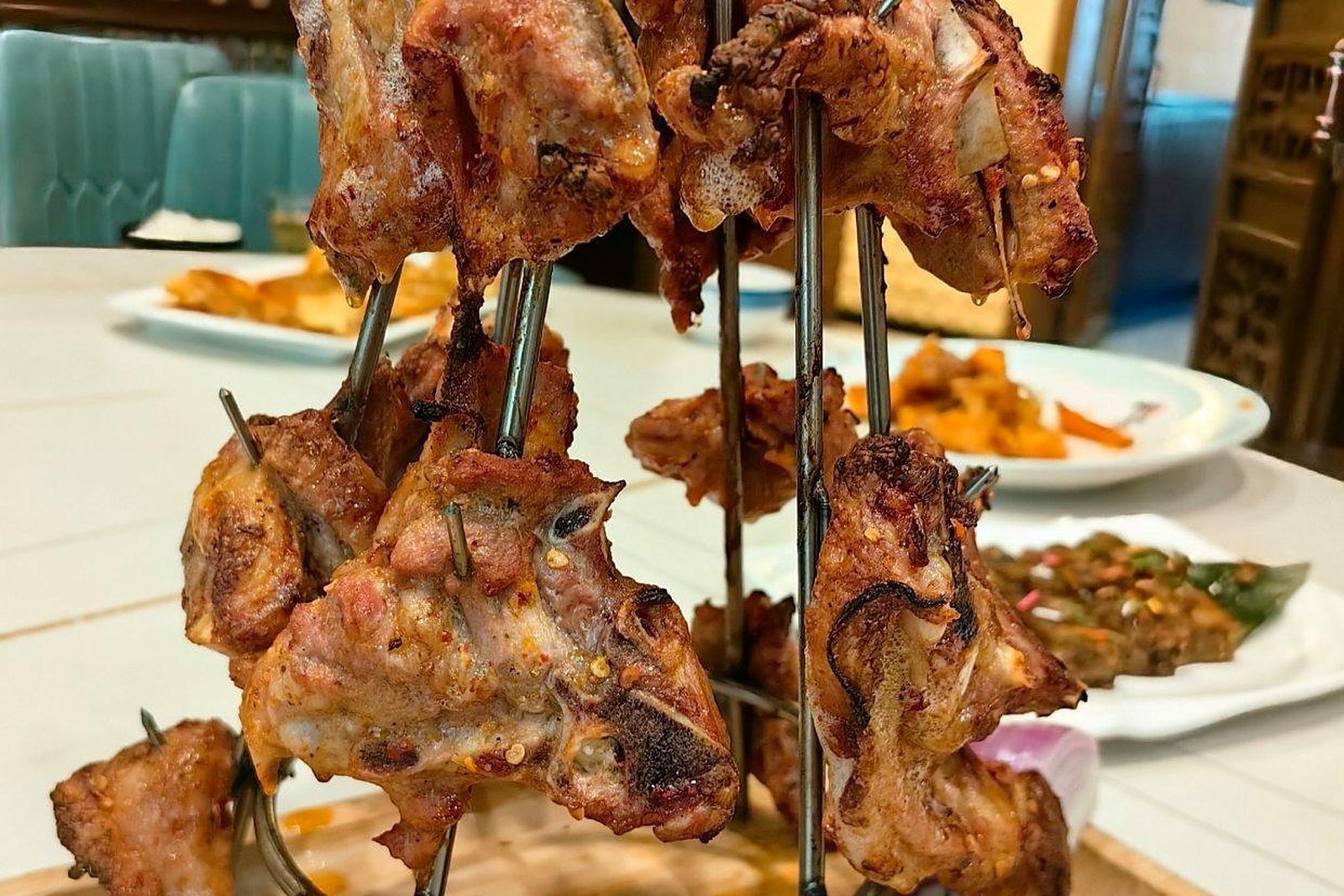
正文:架子肉 Jiàzi Ròu jiazi rou – “rack meat” – is the southern oases’ grandest way with lamb: big squares of rib and leg, marinated in onion and spice, speared on iron racks shaped like tiny trees, and lowered to roast beside the fire of a working naan pit until the fat crackles and the crust goes mahogany. Around 铁门关市 Tiěménguān Shì Tiemenguan City and through the Korla markets it is the centerpiece order – the thing a table of friends points at when the evening turns serious.
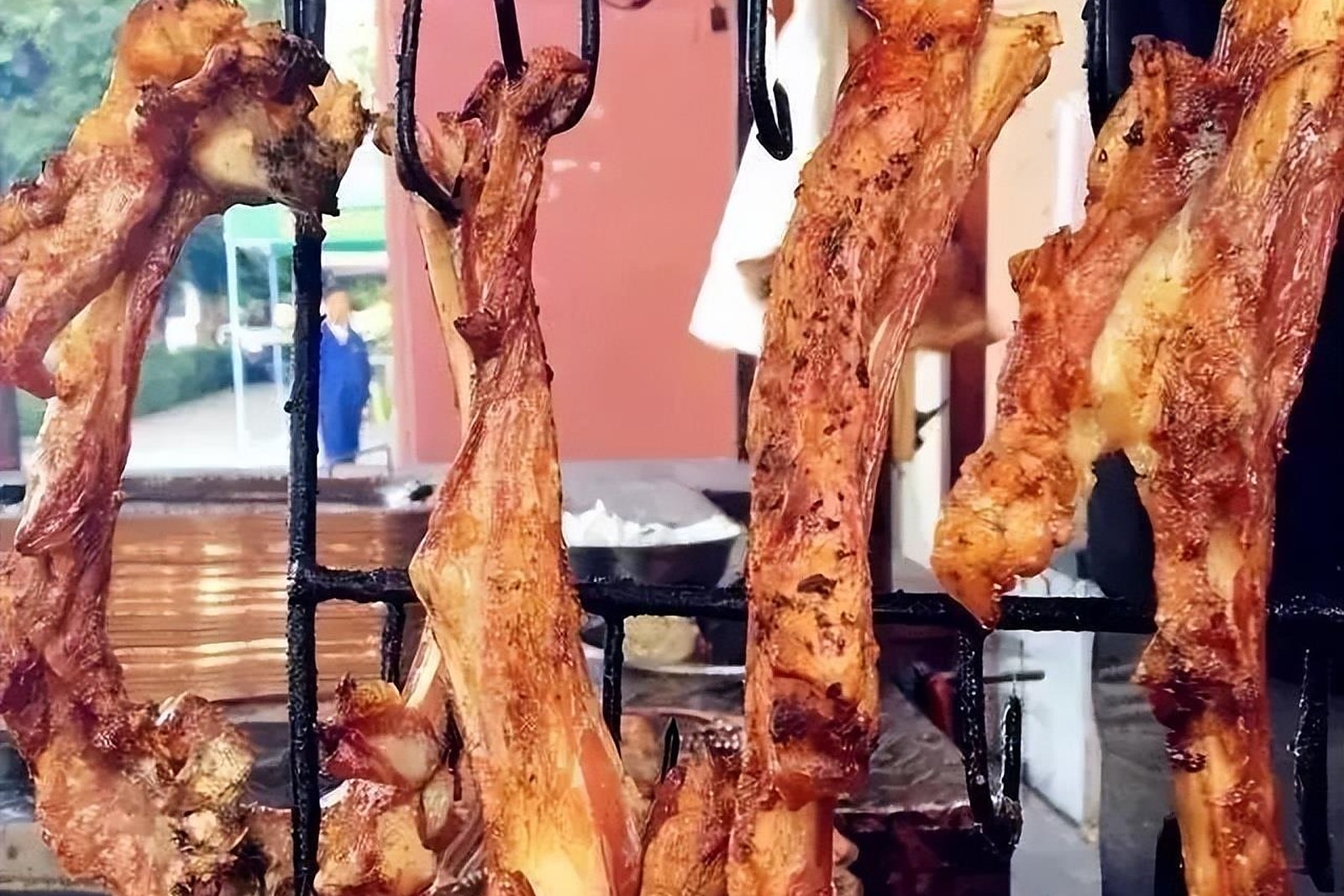
The pit is the technique. A working naan oven holds heat like a kiln, and the racks stand the meat upright in the throat of it, skin side out, where falling fat bastes the crackling from below; the result is shattering outside, molten inside, and perfumed with cumin and the smoke of the bread baked in the same chamber earlier in the day. Watch the stalls long enough and you see the rhythm – racks in, racks out, bread dough filling the gaps between meat rounds.
Eating it is a hands-on affair. The rack comes to the table still standing, meat pulled off in strips with flat bread, raw onion and a dish of the stall’s chili mix; the crisp fat is the prize and the economics of the table rearrange themselves accordingly. At the night markets the single-serving version works the same way in miniature – a quarter rack on foil, chopped and sauced, eaten standing in the crowd with the pit glowing behind the counter.
Find it where the fire is. The best racks belong to bazaar stalls that bake their own naan – the pit must be working, the racks must be iron, and the turnover must be fast enough that the meat never sits. In the Korla-Tiemenguan evening markets the smell alone navigates: follow the cumin and the woodsmoke, look for the red-lit counter, and order by pointing at whichever rack is coming out crackling.
The same district holds more flavors worth chasing: 辣皮子 Làpízi lazipi for the dried-chili foundation, 番茄采收 Fānqié Cǎishōu the processing-tomato harvest for the red cargo, 新疆凉皮 Xīnjiāng Liángpí Xinjiang liangpi for the cold refresher, or 胡辣羊蹄 Húlà Yángtí hu-la yang-ti for the night-market cauldrons – four more doors into the same 铁门关市 Tiěménguān Shì Tiemenguan City table.
Words and Names
What the Locals Know
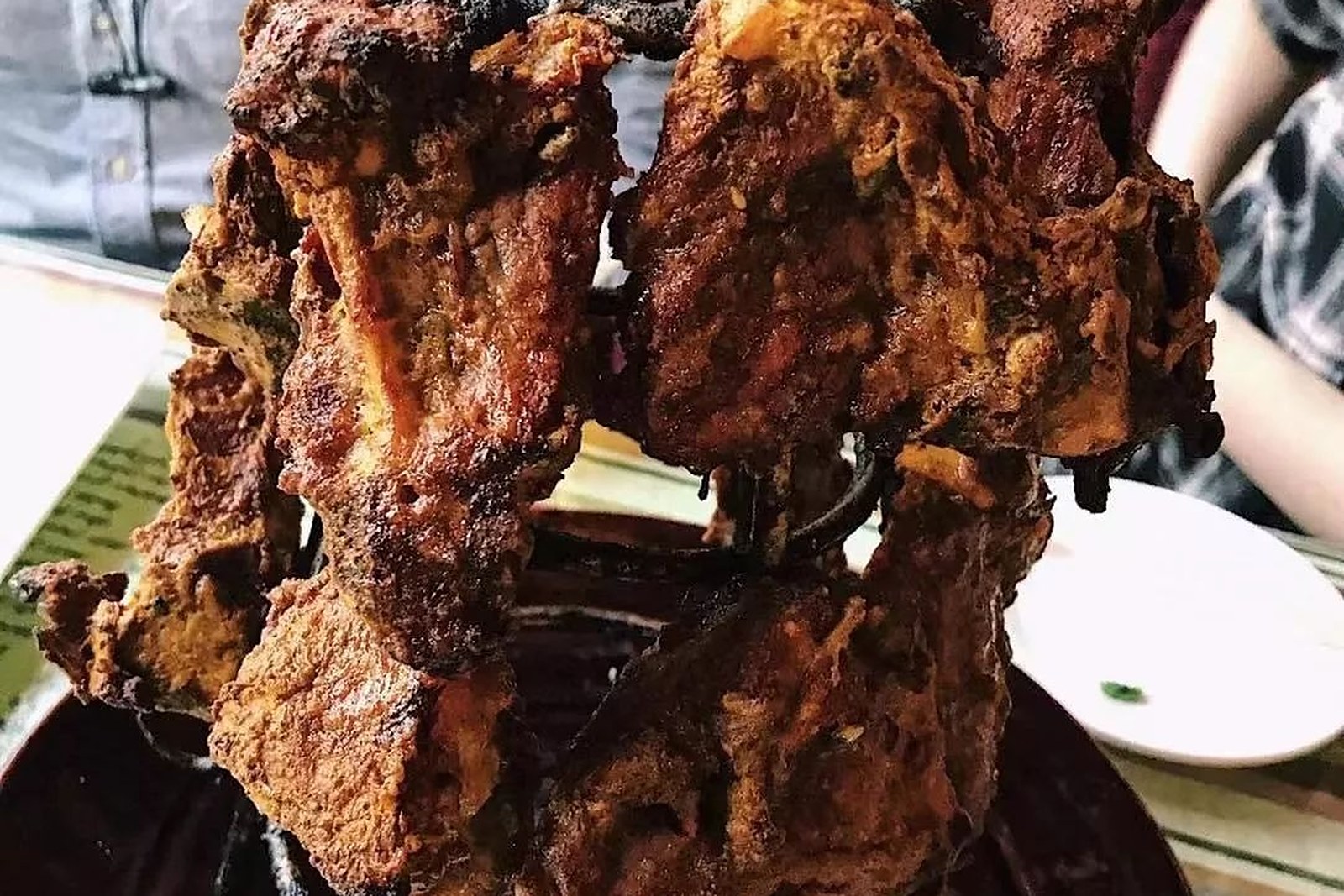
flowcloud would say jiazi rou is the naan pit’s second career: bread by day, meat theater by night, and an iron tree of crackling lamb that turns a market counter into the best table in town. All checked November 2026.
Where to find it: Night stalls and naan-bazaar pits around 铁门关市 Tiěménguān Shì Tiemenguan City and across the Korla markets serve jiazi rou from late afternoon – order the fresh-out rack and eat it with bread and raw onion. All checked November 2026.