
擂茶 léi chá is a tea that is pounded rather than steeped, and in 揭西县 Jiē xī xiàn, the western county of 揭阳市 Jiē yáng shì, it is not a drink but a meal. 揭西 was carved out as a county in 1965 and the name says what it is, 揭阳之西 Jiē yáng zhī xī, west of 揭阳. It is the one county in the prefecture where the language changes underfoot: roughly 57 per cent of its people speak 客家话 Kèjiā huà, Hakka, in 河婆 Hé pó, 上砂 Shàng shā, 五云 Wǔ yún, 良田 Liáng tián, 坪上 Píng shàng, 龙潭 Lóng tán, 南山 Nán shān, 灰寨 Huī zhài, 京溪园 Jīng xī yuán and 五经富 Wǔ jīng fù, and the remaining 43 per cent speak 潮汕话 Cháo shàn huà in 棉湖 Mián hú, 钱坑 Qián kēng, 金和 Jīn hé and the cotton-growing south. 河婆 Hé pó, the county town, is the only county seat in the whole of the three 潮汕 prefectures where Hakka is the everyday language of the street, which makes 揭西 the place where a bowl of pounded tea is ordinary rather than traditional.
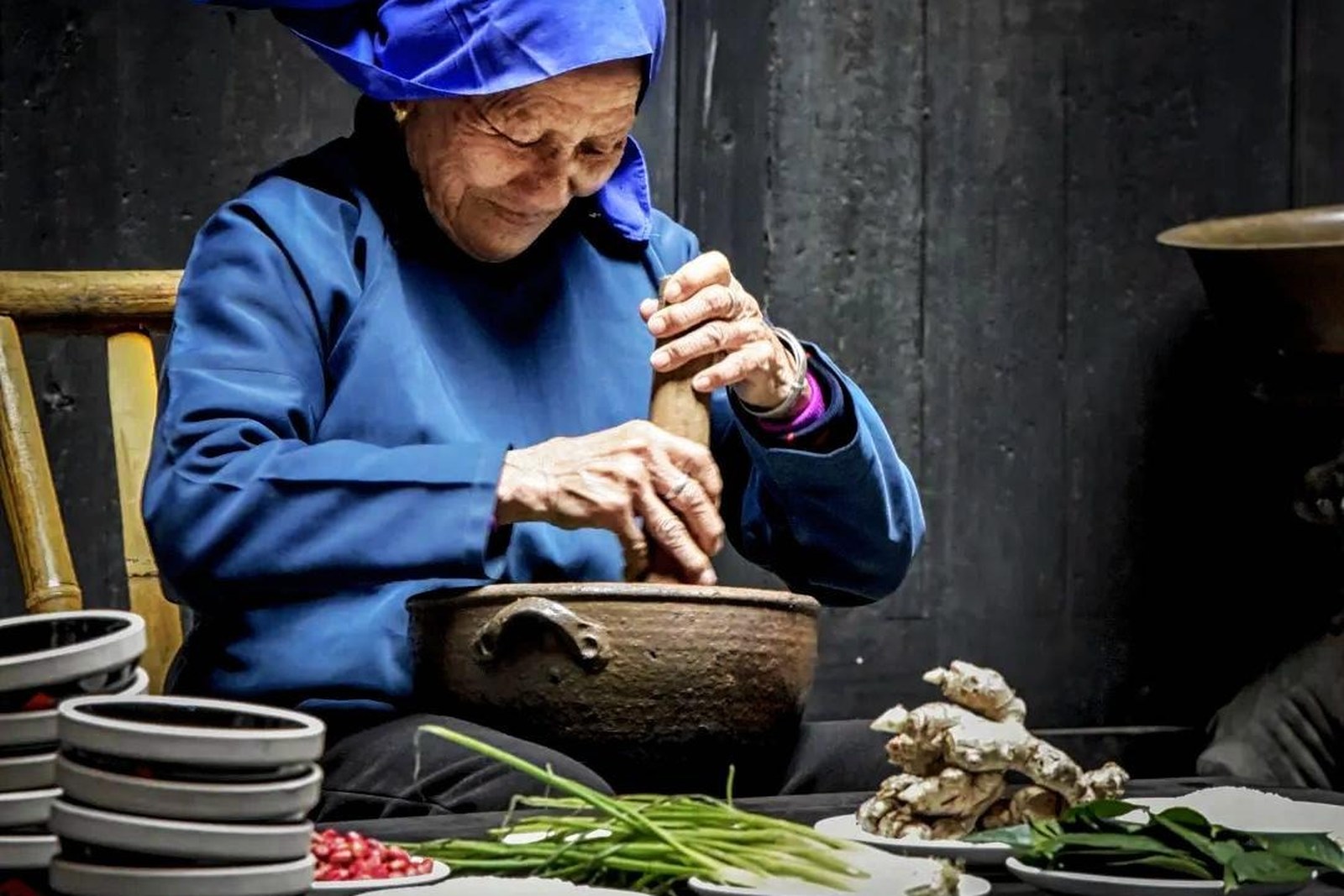
The equipment is two objects and both are specific. The first is the 擂茶钵 léi chá bō, the mortar, a thick earthenware basin whose inside walls are cut with fine radiating grooves rather than left smooth, so that the ingredients catch on the ridges and are torn rather than merely pushed round; it is made upside-down-tapered, a truncated cone narrowing towards the base, and a well-used one has been worn pale in a band where the stick travels. The second is the 擂茶棍 léi chá gùn, the stick, and here the county is unambiguous about the wood. The proper material is 山苍子 shān cāng zǐ, the mountain cubeb, a shrub of the local hills whose wood is sharp and peppery and which is also, in local practice, a medicine – the county describes the stick as 味辛辣、能顺气驱寒 wèi xīn là, néng shùn qì qū hán, pungent, good for settling the breath and driving out cold, and as a remedy for a cold in its own right, and the claim carries to the stick itself, because the wood gives something to the food it is beaten in. A stick of 元樟木 yuán zhāng mù or 油茶树 yóu chá shù will do, though it is not as good, and a stick of any other scrub timber is regarded as a waste of the ingredients. It runs about two to four feet, has a groove turned round the top end so a cord can be looped through it and the stick hung up on a nail away from damp, and is pared round at the bottom end so that it rolls and grinds inside the wall of the mortar instead of digging into it.
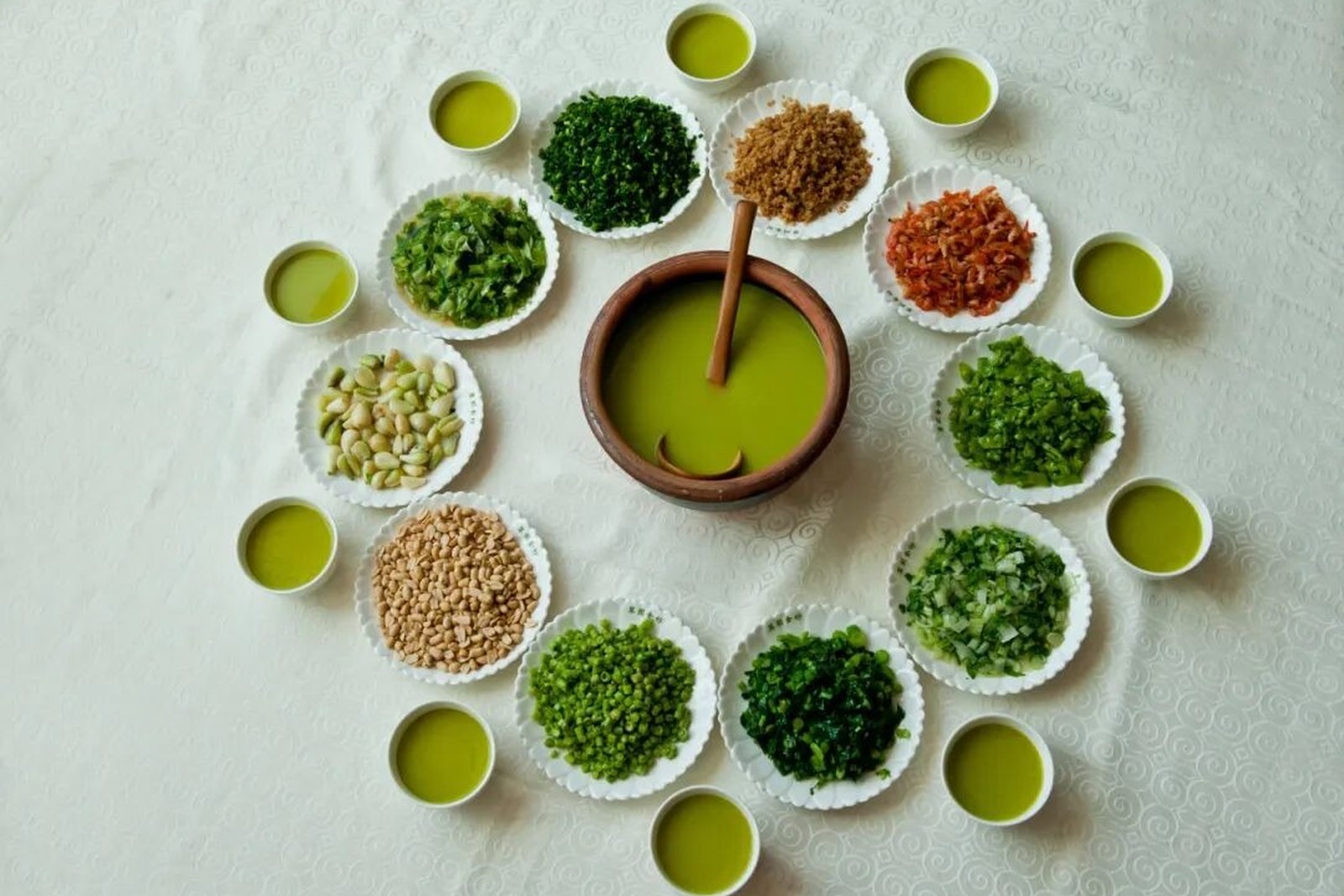
The ingredients are laid in one group at a time and the order matters. 花生 huā shēng, peanuts, roasted, and 油麻 yóu má, sesame, go in first with a little salt, and they are pounded down until they release enough oil to make a paste that holds the bottom of the mortar; that base is the flavour the rest is built onto. Then the tea and the green material: 香茶叶 xiāng chá yè, the fragrant leaf, 园香 yuán xiāng, coriander, 金不换 jīn bù huàn, the local basil, 苦刺心 kǔ cì xīn, the young tips of a bitter local thorn, and 绿茶 lǜ chá, green tea, all of it wilted in a dry pan first so that it is limp rather than raw; garlic and, for anyone who wants it, 薄荷 bó hé, 紫苏叶 zǐ sū yè and 雷公根 léi gōng gēn gathered off the hillsides. The pounding goes on for about half an hour and the county explains what is happening in it: the plant fibres break down and give up their water, and the sharp green sap that comes out is taken up by the oil from the peanuts and the sesame, so that a set of ingredients that would be harsh separately come out round and slightly nutty. Then hot water is poured on and the whole thing is stirred up into a green soup.
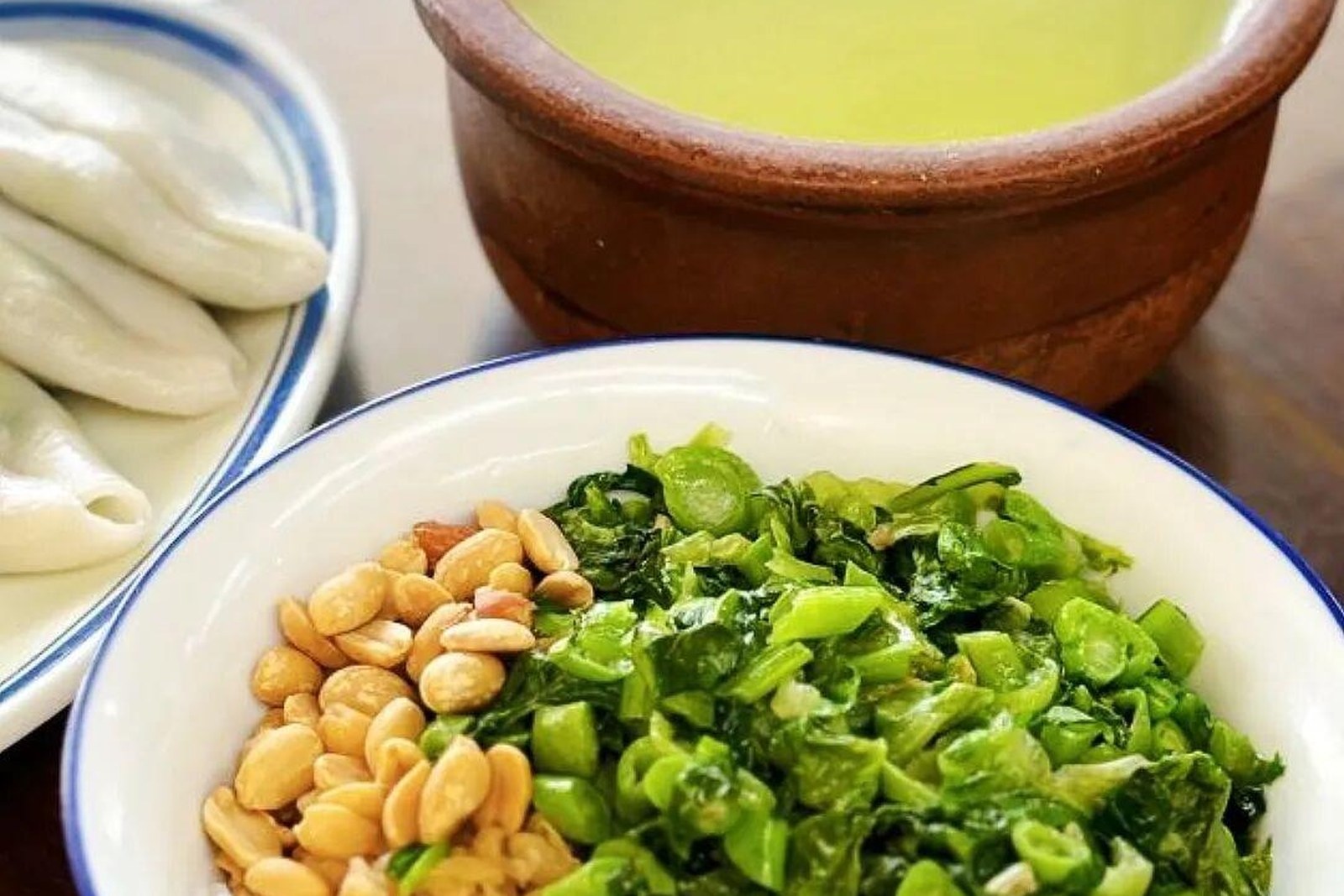
The flavour is the whole of 客家 cooking in one bowl: 咸香苦甘辣俱全 xián xiāng kǔ gān là jù quán, salty, fragrant, bitter, sweet and hot all present, and the colour is a pale opaque green that the county describes as 色如翡翠 sè rú fěi cuì, the colour of jadeite, and the texture as 甘润芳香 gān rùn fāng xiāng, sweet-smooth and aromatic. Poured on its own it is a drink, and a great many people take it that way, in a bowl, before or instead of a meal. But the meal version is the point. 炒米 chǎo mǐ, puffed fried rice, 青菜 qīng cài, green vegetables, 虾仁 xiā rén, shelled shrimps, 鱿鱼 yóu yú, squid, and 香菇 xiāng gū, dried mushroom are cooked separately and put in bowls, and then the tea is poured over the rice, the vegetables and everything else, so that each person gets one large bowl with all of it steeped together and eats it with a spoon. That is 饭茶 fàn chá, rice tea, and it is lunch, not a snack. The county’s own food is plain and this is the most elaborate thing in it, which may be why it is the meal a family spreads when someone comes back to the village.
Words and Names
擂茶 léi chá is the dish; 擂 léi means to pound or grind in a mortar, so the name is pounded tea and says nothing about drinking it. 擂茶钵 léi chá bō is the grooved mortar and 擂茶棍 léi chá gùn the wooden stick, which is properly of 山苍子 shān cāng zǐ, the mountain cubeb, rather than 元樟木 yuán zhāng mù or 油茶树 yóu chá shù. 油麻 yóu má is sesame, 花生 huā shēng peanut, 金不换 jīn bù huàn the local basil, 苦刺心 kǔ cì xīn the bitter thorn tips and 园香 yuán xiāng coriander. 饭茶 fàn chá, rice tea, is the full meal built on the tea, and 炒米 chǎo mǐ is the puffed fried rice that goes into it. 河婆 Hé pó is the county town of 揭西县 Jiē xī xiàn, 半山客 bàn shān kè, half-hill Hakka, is the scholarly label for the mixed Hakka group of this county, and 河婆腔 Hé pó qiāng is the local speech, a form of Hakka of the 海陆 Hǎi lù group carrying a good deal of borrowed 潮汕 vocabulary.
What the Locals Know
Ask for it in a village house rather than a restaurant, because a mortar that gets used weekly pounds better than one kept for visitors, and because the vegetables that go in are what the household has. If you are offered the bowl hot, take it before it cools – the aroma is in the volatile oil of the greens and it goes off within a few minutes, and a warm bowl of pounded tea left standing is a flat one. Judge it by the smell first: it should be green, herby and faintly roasted at the same time, with the sesame and peanut coming up behind the leaf. If it tastes only of tea and salt, the pounding was rushed and the base was not laid down properly. The 河婆 way to drink it is unsweetened and slightly bitter; the addition of sugar is a 潮汕 habit imported into the county and not the original thing. If you are given it as a meal, eat it with a spoon rather than chopsticks and expect a second bowl, because one is not the size of it. It is at its best in the wet months, when the local argument for the bowl – that it drives damp out of the body and loosens a cold – is easier to believe, and after a long walk in the hills it is a genuinely restorative thing to eat.
The county’s own explanation of its county town is where the bowl and the place are the same story, and like most of the best food stories it is a piece of local tradition rather than a record. It is said that in the 明洪武 Míng Hóng wǔ years a woman surnamed 何 Hé – an old woman, 何姓老奶奶 Hé xìng lǎo nǎi nai – kept a tea hut at a crossing of roads where several counties met, and that she gave a bowl of pounded tea to the porters going past: mountain tea leaf, mint, sesame and peanut ground together in a toothed clay basin and poured over with boiling water, which is exactly the drink this county still makes. It cost nothing worth mentioning, it took the weight off a man’s shoulders on a hot day, and the people who drank it began saying that they had got it 从何婆那里 cóng Hé pó nà lǐ, from old Mrs He, until 何婆 Hé pó, He the grandmother, was the name of the place and then, with the 何 written over as 河, the water radical, 河婆 Hé pó. The 揭阳县志 Jiē yáng xiàn zhì, the county gazetteer of 1994, prints the account along with the etymology, and the county has never found a better one. The speech of the town is called 河婆腔 Hé pó qiāng, a form of Hakka in the 海陆 Hǎi lù group, which has taken in a large amount of 潮汕 vocabulary from the lowland counties next door, and scholars have a name for this mixed population: 半山客 bàn shān kè, half-hill Hakka, neither wholly hill nor wholly plain.
flowcloud would say that this county has been drinking the same bowl for six hundred years and has never once claimed it invented the idea, which makes it unusual among places with a dish to sell.
Where to find it: the Hakka villages and market towns of 揭西县 Jiē xī xiàn, above all around 河婆 Hé pó, the county town, and in 上砂, 五云, 良田, 坪上, 龙潭, 南山, 灰寨, 京溪园 and 五经富, the ten Hakka-speaking townships of the county, and in the tea and mountain villages below 大北山 Dà běi shān and the 黄满磜 Huáng mǎn qì falls. 揭西 is in the west of 揭阳市, about an hour by road from 揭阳市区 and somewhat further from 汕头, and the county is reached by bus from both. A bowl of 擂茶 as a drink is a few yuan and the 饭茶 meal is a household dish rather than a restaurant one, so the practical way to eat it is to be invited, or to look for the small 农家乐 farmhouse kitchens along the roads up into the hills. 河婆 is also worth an hour on its own for a different reason: the town’s name is the story of the tea, and the two are told together locally, because the county seat is named after the woman who sold it.