
蚝烙 háo luò is a fried batter of small oysters, and in 揭阳市 Jiē yáng shì it is one of the dishes that defines what eating in the city means. The name is a contraction, 蚝 háo being the 潮汕 word for the oyster and 烙 luò the word for frying a batter flat against a hot pan. The same dish is 蚵仔煎 ézǎi jiān in 台湾 Tái wān and 蚝煎 háo jiān in 闽南 Mǐn nán, and it is eaten all along the 潮汕 coast; what makes it a 揭阳 subject is not a difference in the recipe but a set of particular kitchens in 榕城 Róng chéng, the old town, where the same families have been frying the same mixture for three or four generations and where the oysters are bought fresh at dawn and finished by the end of the day.
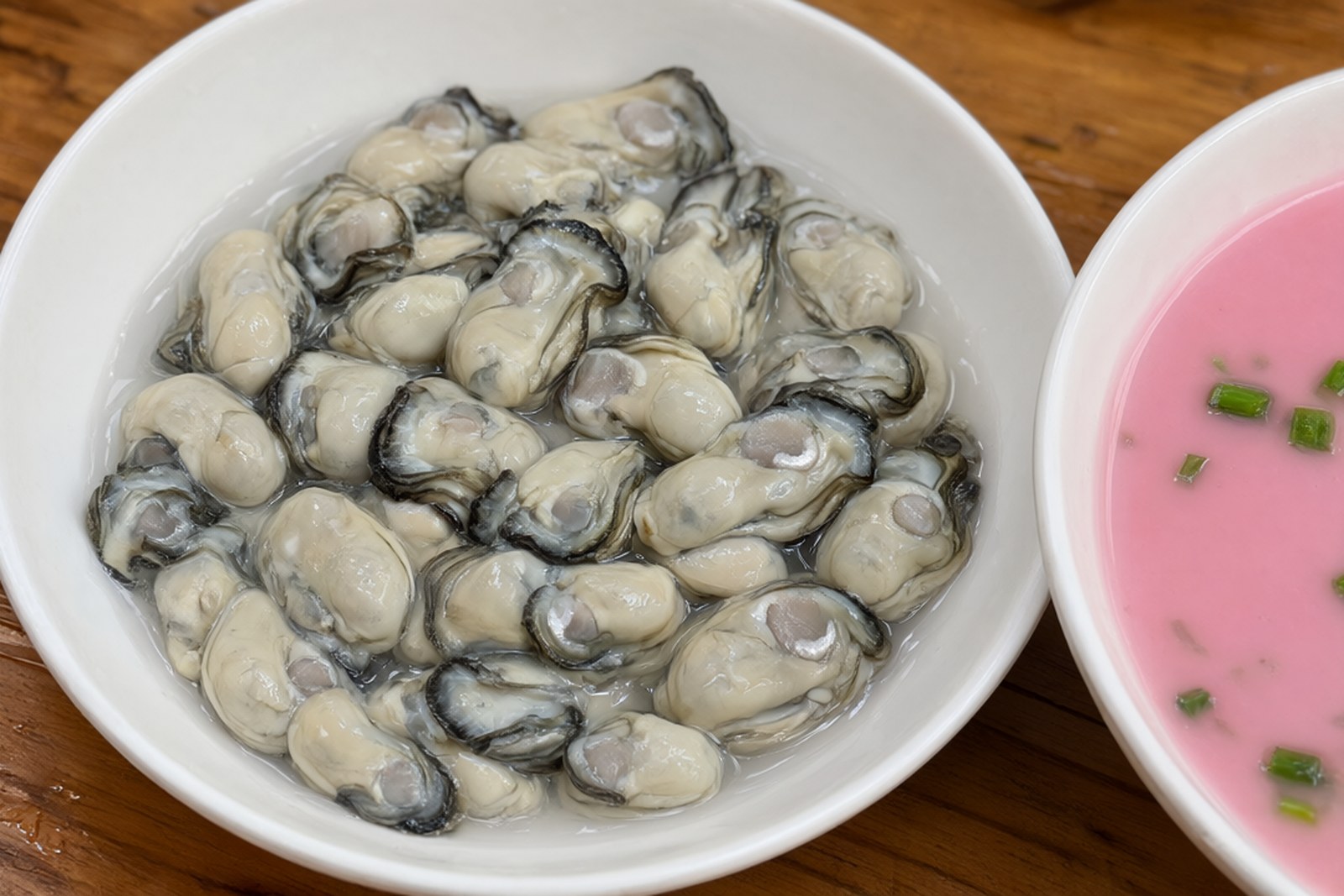
The oysters are the first argument. They are 珠蚝 zhū háo, pearl oysters, the small ones the size of a thumbnail, and the trade’s own description of a good one is that it 身子带黄色滚边 shēn zi dài huáng sè gǔn biān – the body carries a yellow colour and a rolling edge, a brownish-yellow rim running round the skirt. In 潮汕 speech the best of them are called 黄翅 huáng chì, yellow fins, and the claim made for them is that they are the sweetest and the least metallic, which is why a 蚝烙 made with a large Japanese-style oyster tastes like a different dish. A customer in the old town judges the plate on the oysters and nothing else: they should be plump, cool and firm, not shrunken, not watery, and not swimming in their own liquor. 南门蚝烙 Nán mén háo luò, the south-gate stall that has been running for more than twenty years, buys its oysters in the morning and uses them the same day, and will not hold a batch over into the next, which is the standard the trade sets itself.
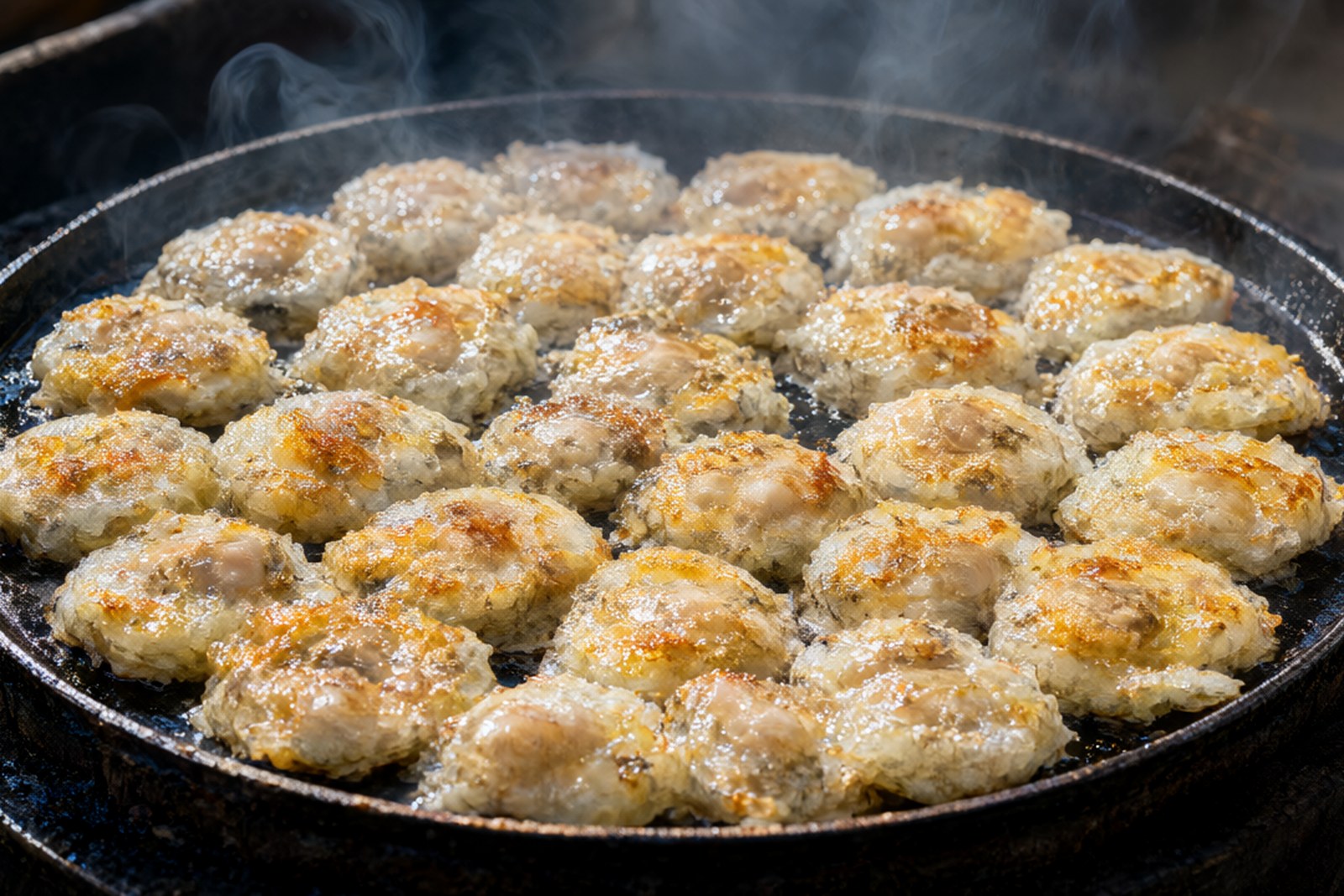
The batter is the second argument and it is short. The base is 地瓜粉 dì guā fěn, sweet-potato starch, ground from the local sweet potato, and it is what makes the thing what it is: a wheat batter fries into a crisp shell, whereas sweet-potato starch sets into something that is crisp at the edge, elastic in the middle and translucent where it is thin, so that the oysters show through it. The starch is mixed with water and a little salt into a thin slurry, the oysters go in whole, and the mixture is ladled into a pan of hot 猪油 zhū yóu, pork lard, and spread out to a round. The instruction the cooks give for the pan is 猛火厚油 měng huǒ hòu yóu, a fierce flame and thick oil – the batter has to hit fat deep enough and hot enough to set the edge immediately, or it turns to a flat grey pancake, and the pan is kept shallow but generous rather than greasy. Just before it is finished, beaten 鸭蛋 yā dàn, duck egg, is poured over the top and allowed to set into the surface, which gives the dish its faintly orange colour and the richer flavour that a hen’s egg does not quite produce. Then it is flipped once.
That flip is the visible skill of the trade. The cook holds the pan handle in one hand and a flat 鼎铲 dǐng chǎn, the wide shallow ladle of the 潮汕 kitchen, in the other; the pan is lifted, the omelette is loosened, and it is thrown into the air and caught back in the pan the other way up, sometimes with the help of a pair of long silver chopsticks rather than the ladle. The county describes it as one hand on the ladle and one on the chopsticks with both hands raised together, 双手齐举, and it is regarded as the basic qualification of anyone claiming to be able to cook this. A piece of any size can be turned with a plate or by cutting it in half, and the shops that do it that way are not necessarily worse, but the point of the gesture is that the batter is never pressed or folded and the oysters are never crushed.
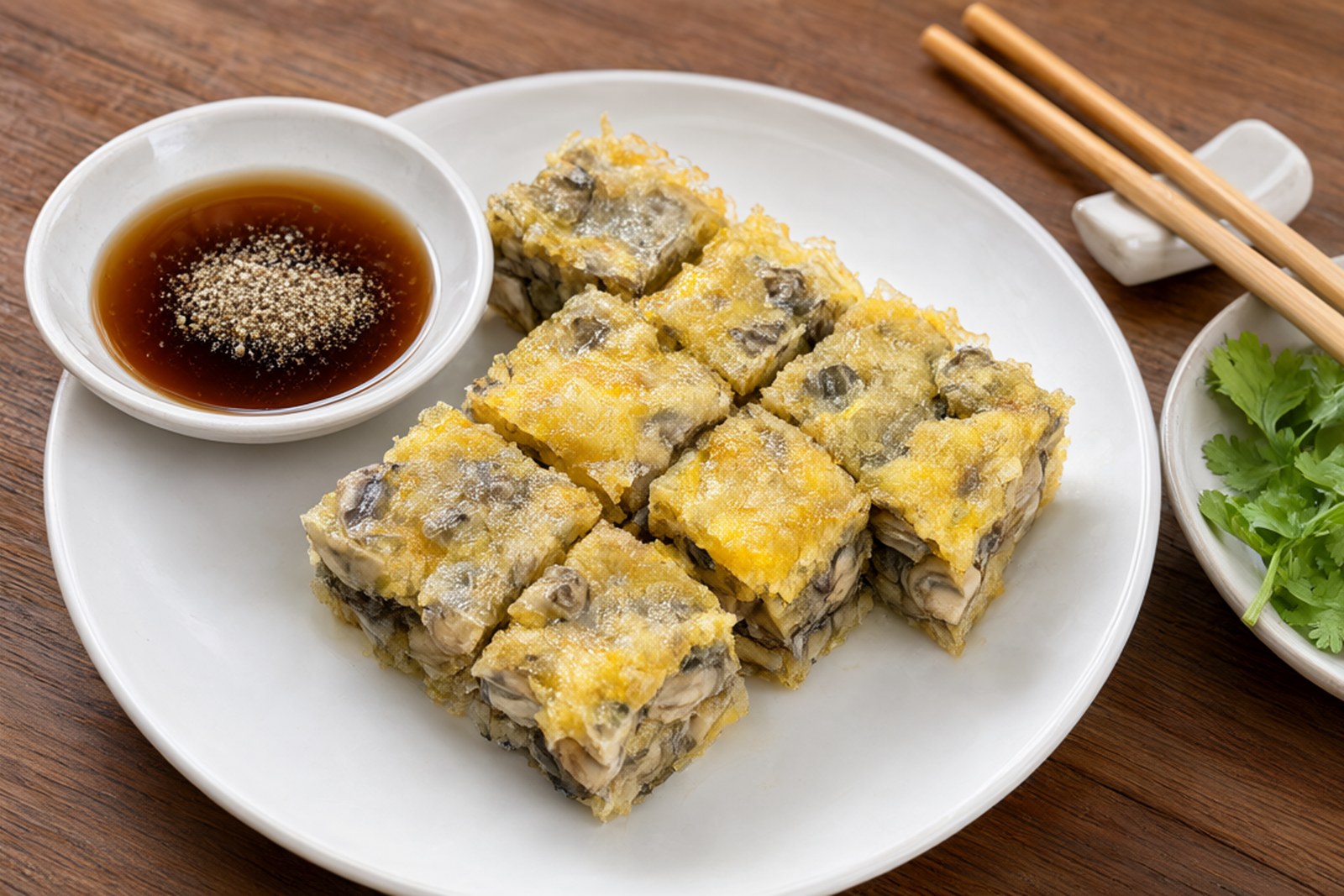
The finished plate is a disc of uneven gold, crisp and frilled at the rim, soft and slightly gelatinous through the middle, with the oysters set inside it like stones in the batter, and it is eaten with a dip of 鱼露 yú lù, fermented fish sauce, mixed at the table with ground white pepper. The 炮台镇 Pào tái zhèn version is the one the old town argues for, and the argument is about the oysters rather than the batter, because the town sits on the 榕江 Róng jiāng where the pearl oysters come in. The family stalls there set up in front of the 关爷宫 Guān yé gōng, the shrine to 关帝 Guān dì, in the late 清 Qīng – the town’s own account has 吴东熊 Wú Dōng xióng’s father and uncles opening the pitch in that period – and the trade has passed down inside the family since: to his son 吴裕昌 Wú Yù chāng, who ran it for more than thirty years, and now to his grandson 吴贵章 Wú Guì zhāng, who is twenty-nine and still working the same stretch of pavement. The town has a saying about itself, 炮台十八个关爷宫 Pào tái shí bā gè guān yé gōng, Pautai has eighteen Guandi shrines, which is both a boast about its old wealth and a practical warning to anyone being told to meet somebody at the shrine.
Words and Names
蚝烙 háo luò is the dish, 蚝 the 潮汕 word for oyster and 烙 luò the frying of a batter flat in a pan; the 闽南 name is 蚝煎 háo jiān and the Taiwanese 蚵仔煎 ézǎi jiān. 珠蚝 zhū háo, pearl oyster, is what the trade buys, and 黄翅 huáng chì, yellow fins, is what it calls the best of them. 地瓜粉 dì guā fěn is sweet-potato starch, the flour that makes the dish, and 猪油 zhū yóu is pork lard; 猛火厚油 měng huǒ hòu yóu, fierce flame and thick oil, is the standing instruction of the pan. 鸭蛋 yā dàn is duck egg, 鼎铲 dǐng chǎn the flat ladle the flip is done with, and 鱼露 yú lù the fish sauce it is dipped in. 榕城 Róng chéng is the old town of 揭阳市 and 炮台镇 Pào tái zhèn the town with the 关爷宫 Guān yé gōng, the shrine to 关帝 Guān dì, whose front is the address the trade in that town is known by.
What the Locals Know
Eat it within two minutes of its leaving the pan, because the contrast between the crisp rim and the soft middle lasts about that long, and a plate carried home is a different and much worse thing. Judge a shop by the oysters before you taste the batter: they should be small, plump, cool and dry, never shrunk and never sitting in a puddle in the bowl. Ask for 猛火 měng huǒ, a fierce flame, if you want the edge crisp, and say so if you want the duck egg left out, because some shops will do it with hen’s egg and it is a thinner dish. The dip is made at the table from fish sauce and ground white pepper, and the pepper is not optional – it is what cuts the fat. In 揭阳 the good stalls open in the late afternoon and keep going past midnight, because 蚝烙 is a night dish eaten with a bowl of 白粥 bái zhōu, plain rice porridge, on the street, and the shops that serve it at lunch are the exception. The stall on 中山路 in 榕城 in front of the old county office, run by 李映秋 Lǐ Yìng qiū, who is known throughout the old town as 秋兄 Qiū xiōng, elder brother Qiu, belongs to the old pattern: it opens in the early autumn, when the oysters come back into condition, and it sells at night, out of the door of a house in the 埔上李 Bù shàng Lǐ neighbourhood he comes from.
flowcloud would say that the difference between a great oyster omelette and an ordinary one is entirely a matter of two decisions taken before the cook starts, which oyster and which starch, and that everything afterwards is theatre performed to prevent anyone in the queue from noticing how little there is to it.
Where to find it: the night stalls and small kitchens of 榕城区 Róng chéng qū, the old town of 揭阳市, particularly along 中山路 Zhōng shān lù and round the 南门 Nán mén, and the oyster town of 炮台镇 Pào tái zhèn on the 榕江 south of the city, where the family stalls in front of the 关爷宫 have been frying for three generations – the 吴 Wú family, 吴东熊 Wú Dōng xióng, whose father and uncles set up there in the late Qing, then his son 吴裕昌 Wú Yù chāng, who ran it for more than thirty years, and now his grandson 吴贵章 Wú Guì zhāng, who is twenty-nine. The town has a saying about itself, 炮台十八个关爷宫 Pào tái shí bā gè guān yé gōng, Pautai has eighteen Guandi shrines, so ask which one. 王记蚝烙 Wáng jì háo luò on 进安街 Jìn ān jiē has been open thirty-eight years, charges ¥25 for a plate, uses duck egg, sells at least twenty catties of oyster meat a day, opens at 17:30 and closes at 01:00, and gives away a small bowl of 蚝爽 háo shuǎng, a soupy oyster dish, to anyone sitting down to wait. 揭阳 is served by 潮汕站 on the high-speed line, forty minutes from 汕头 and about two hours from 广州.