
乒乓粿 pīng pāng guǒ is a steamed rice cake from 揭阳市 Jiē yáng shì, and the name is a piece of onomatopoeia that has been mistaken for the real word so completely that the real word has almost disappeared. 乒乓 pīng pāng is the sound of a table-tennis ball bouncing, which has nothing to do with anything edible. The cake is made of a translucent glutinous skin wrapped around a dark roasted filling, it is sold in 揭阳 at every hour of the day, and it can be boiled, steamed or fried in egg batter. What makes it local rather than merely common is a specific invention by a specific man in a specific street, and the county records it: the filling was changed in the late 清 Qīng at the south gate of the old walled town of 榕城 Róng chéng, and the noise the new filling made while it was being roasted is the noise the cake is named after.
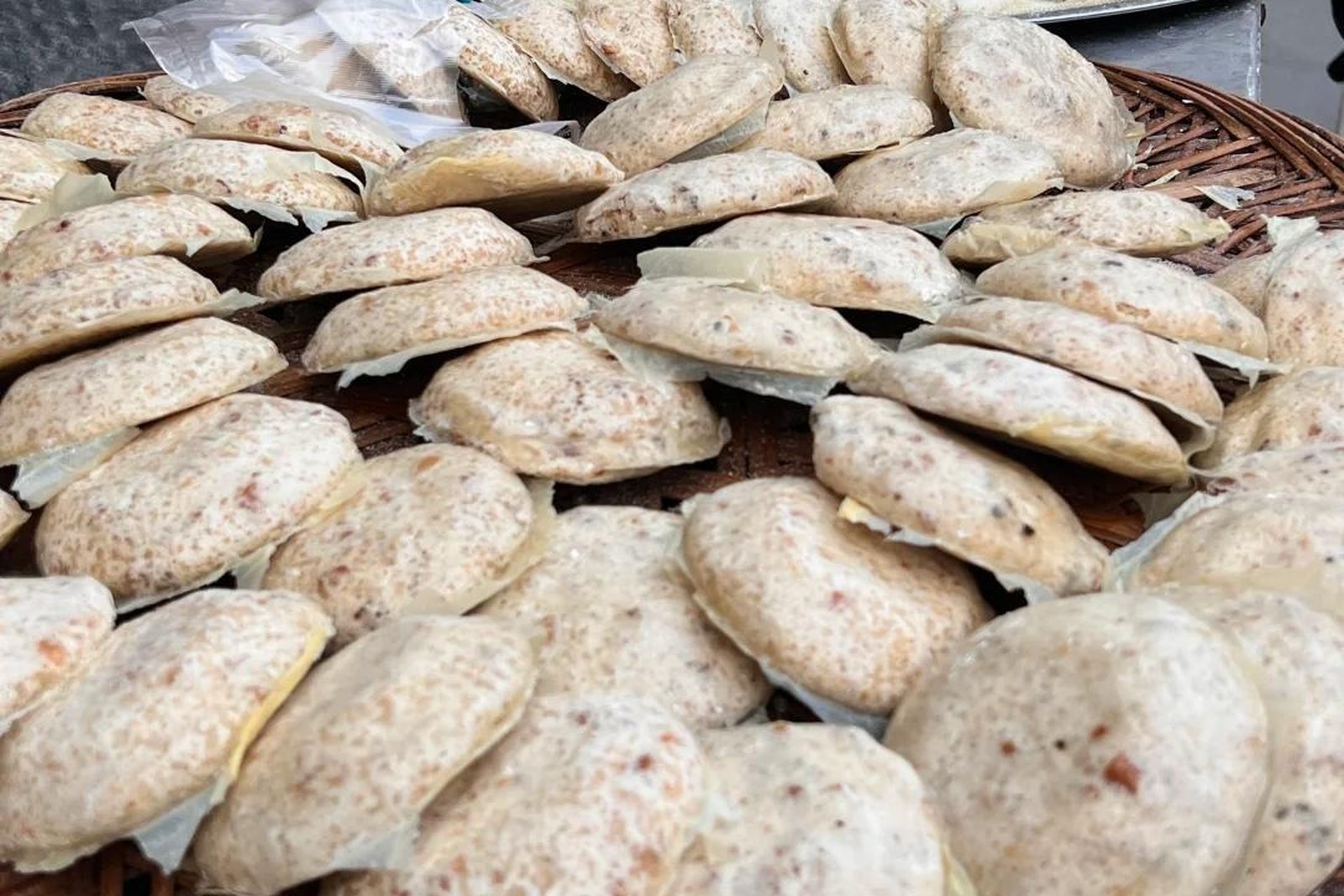
Its first name was 槟醅粿 bīn pēi guǒ, and that name goes back a long way. The ancestor is a 南宋 Sòng country cake called 鼠曲粿 shǔ qū guǒ, made by pounding 鼠壳草 shǔ ké cǎo, a low grey-leaved herb of the fields, into glutinous rice flour; the grass turns the dough a dark brownish green, and the cake came out a dull 乌粿 wū guǒ, a black kueh, eaten at the spring festival by people who did not have much. What happened at 榕城 in the late Qing is that a cook named 李奇遇 Lǐ Qí yù, working at the south gate, threw the herb away and built the filling instead out of 槟醅麸 bīn pēi fū – unhulled glutinous rice, 糯粟 nuò sù, sealed into an iron crock and roasted over and over until the grain cracked open, taking on a smell somewhere between toast and popcorn and losing every trace of raw rice. The roasted grain went into the filling with white sugar, sesame, crushed peanut, 橙糕 chéng gāo, the candied orange cake that Cantonese kitchens keep for exactly this kind of sweetness, and 葱珠油 cōng zhū yóu, spring onion fried slowly in oil until the onion has all but dissolved. The name followed from the roasting. When a batch of 槟醅麸 was tipped out of the crock it went off like a burst of small arms, 砰嘣 pēng bēng, and the cooks said it sounded like 乒乓; the shop signs drifted from 槟醅 to 乒乓, and by the 1950s the drift was official. The county’s own date for that is 1956, when the 揭阳县饮食服务公司 Jiē yáng xiàn yǐn shí fú wù gōng sī, the county food-service company, printed it on a menu as 乒乓粿 and every shop in the city copied the plate.
The skin is where the cooking lives, and it is a simple list handled carefully. Glutinous rice is ground to flour and worked with water, peanut oil and a little sugar into a dough that is soft enough to wrap without tearing and firm enough to hold a pattern; the oil is what keeps the steamed skin from going cloudy and what lets it come away from the mould. The pastry is rolled, filled and pressed into a small wooden mould carved with a flower or a character, so that the finished cake wears a raised relief on its face, and it is laid on a sheet of 腐膜 fǔ mó, the thin skin lifted off the surface of a pot of setting soya milk, which stops it sticking and adds a faint savour. Then it is steamed until the skin turns semi-transparent and the dark paste shows through it like a shadow, and while it is still hot it is brushed with peanut oil, which keeps the surface glossy and stops it drying to a scab.
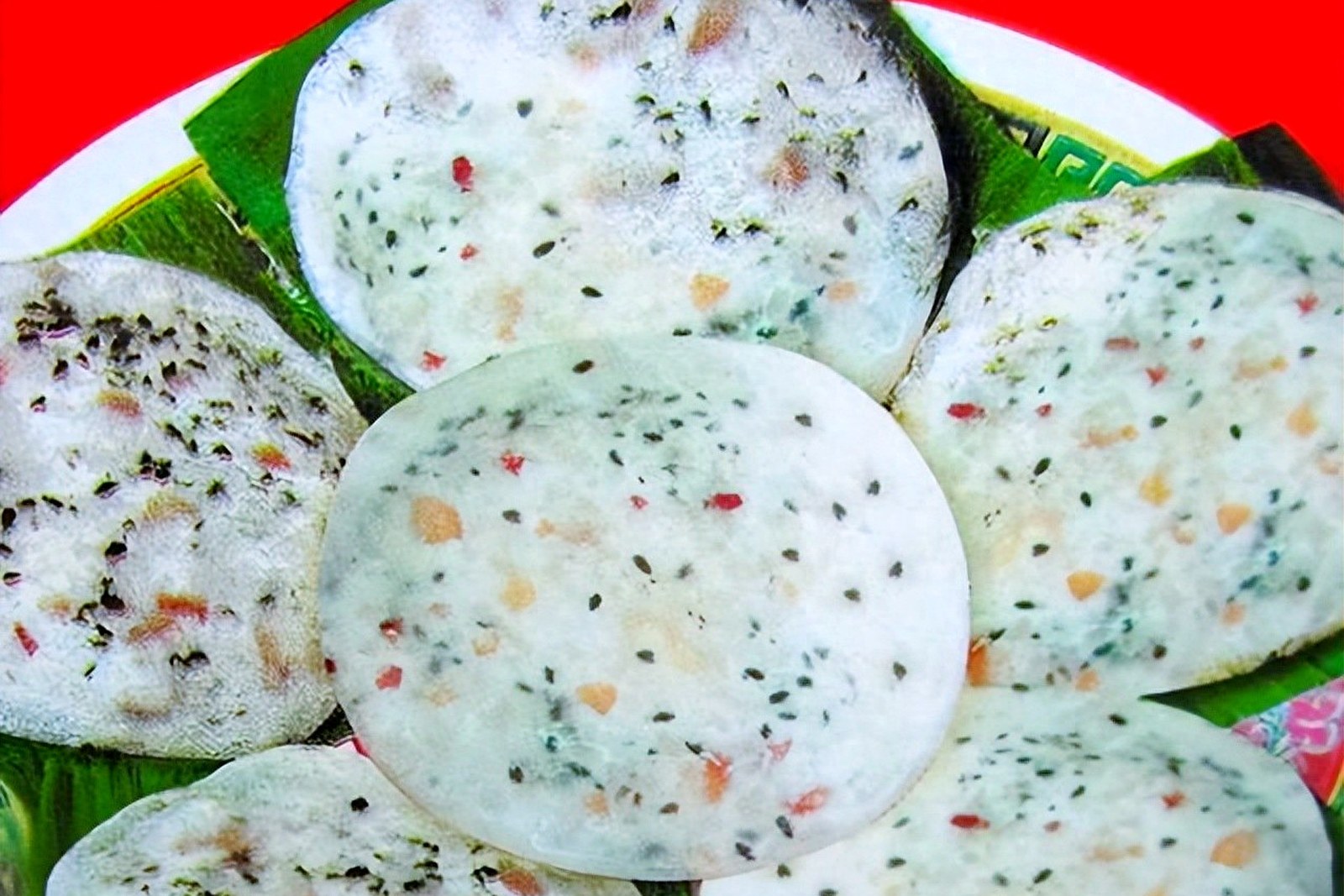
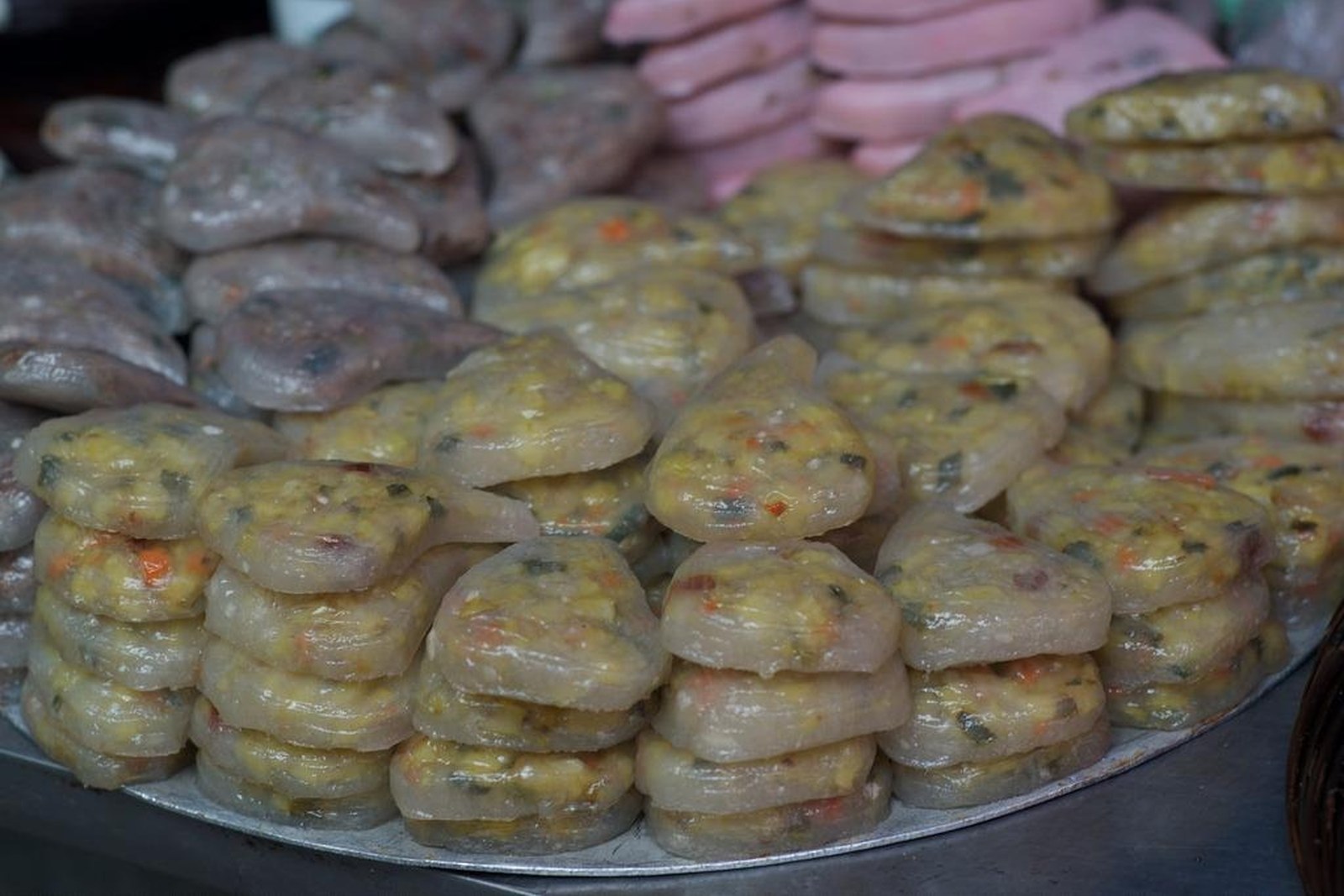
The filling has two forms and the city eats both. The sweet one is the modern invention: 槟醅麸 with white sugar, black and white sesame, crushed peanut, the candied orange and the onion oil, and it comes out dense, grainy and warm, closer to a nut brittle that has been softened than to a jam. The savoury one keeps the old farmhouse vocabulary – 瓜册 guā cè, candied melon strips, 玻璃肉 bō li ròu, pork belly cured hard and cut until it is nearly transparent, and 菜脯粒 cài pú lì, chopped preserved white radish – and tastes of salt, pork fat and the sweet-soft melon against the chewy grain. The remark the city makes about a good one is 香甜粉沙 xiāng tián fěn shā, sweet and fragrant with a sandiness under it, which is the texture of the pulverised rice catching on the tongue. The way it is most often eaten badly is to eat it cold. The way it is eaten best is dipped in beaten egg and fried, and the collision of the crisp batter with the yielding sticky skin and the warm paste inside is the reason this is a 揭阳 cake and not just a rice cake.
Words and Names
乒乓粿 pīng pāng guǒ is the cake, 乒乓 being the sound of a ping-pong ball and 粿 guǒ the southern word for any cake or dumpling made of rice flour. 槟醅粿 bīn pēi guǒ is what it was called before the sound took over, and 槟醅麸 bīn pēi fū is the roasted unhulled glutinous rice that the sound came from. 鼠曲粿 shǔ qū guǒ is the older 南宋 cake it descends from, 鼠壳草 shǔ ké cǎo the field herb that coloured it, and 乌粿 wū guǒ, black kueh, the name of that dark ancestor. 榕城 Róng chéng, banyan city, is the old walled town at the centre of 揭阳市 and the place the改变 was made; 腐膜 fǔ mó is the soya-milk skin the cakes are steamed on; 橙糕 chéng gāo is candied orange cake and 葱珠油 cōng zhū yóu is the fried spring-onion oil.
What the Locals Know
Buy them by the tray and eat the first one warm, because the skin stiffens as it cools and there is nothing to be done about it once it has. A good plain one is pale and semi-translucent with the dark filling sitting visibly in the middle and no airspace at the shoulders; if the skin has gone opaque white it was either under-steamed or over-floured, and if there is a gap between the skin and the paste the cook rushed the wrapping. Squeeze one lightly: it should give and come back, and it should never feel like a raw dough. At home, steam them over boiling water for six or seven minutes rather than microwaving them, which turns the skin rubbery, and for the fried version dip the cake in beaten egg and put it into oil hot enough to brown the batter in half a minute, so that the skin warms through without the paste leaking out. The savoury ones with the pork and the melon are the ones to buy if you are carrying them any distance, because they hold up better than the sweet, and a box of either keeps for two or three days in the cool. In 揭阳 the shops sell them in the morning and again in the late afternoon, and the two moments the city eats them are breakfast and the middle of the night.
flowcloud would say that a cake named after the sound of its own filling exploding out of a sealed crock is the most honest piece of food naming in the province, and that everything that happened to it afterwards – the moulds, the heritage listing, the egg batter – has been an attempt to make the noise respectable.
Where to find it: the cake shops and market stalls of 榕城区 Róng chéng qū, the old walled town at the centre of 揭阳市, above all around the 南门 Nán mén, the south gate, which is where the filling was invented, and along the arcaded old streets near 进贤门 Jìn xián mén; the city sits in the east of the 潮汕 plain on the 榕江 Róng jiāng, about forty minutes by high-speed train from 潮汕站 and an hour by road from 汕头. 乒乓粿 is also sold in 普宁, 汕头 and the overseas 潮汕 communities, but the shops that make it in 揭阳 are the ones that still use the wooden moulds. Look for it in the display case rather than the freezer, ask for the savoury 咸 版 by name if you do not want the sweet one, and if you are offered it fried in egg, take it that way.