
金佛山老腊肉 Jīnfó Shān lǎo làròu, Jinfo Mountain smoked bacon, is the high-mountain cure of the district – pork cut, salted and cold-smoked over 柏树 bǎishù cypress branches until it turns salty-savoury and, the locals insist, never greasy. The cold smoke rather than a hot fire is what keeps the fat clean and the meat from cooking in its own warmth, and the result is a bacon that travels well and keeps without fuss. It is eaten three ways across the mountain: sliced cold from the block, braised with the young spring bamboo shoots, or dropped into the mountain hotpot where it salts the broth as it simmers.
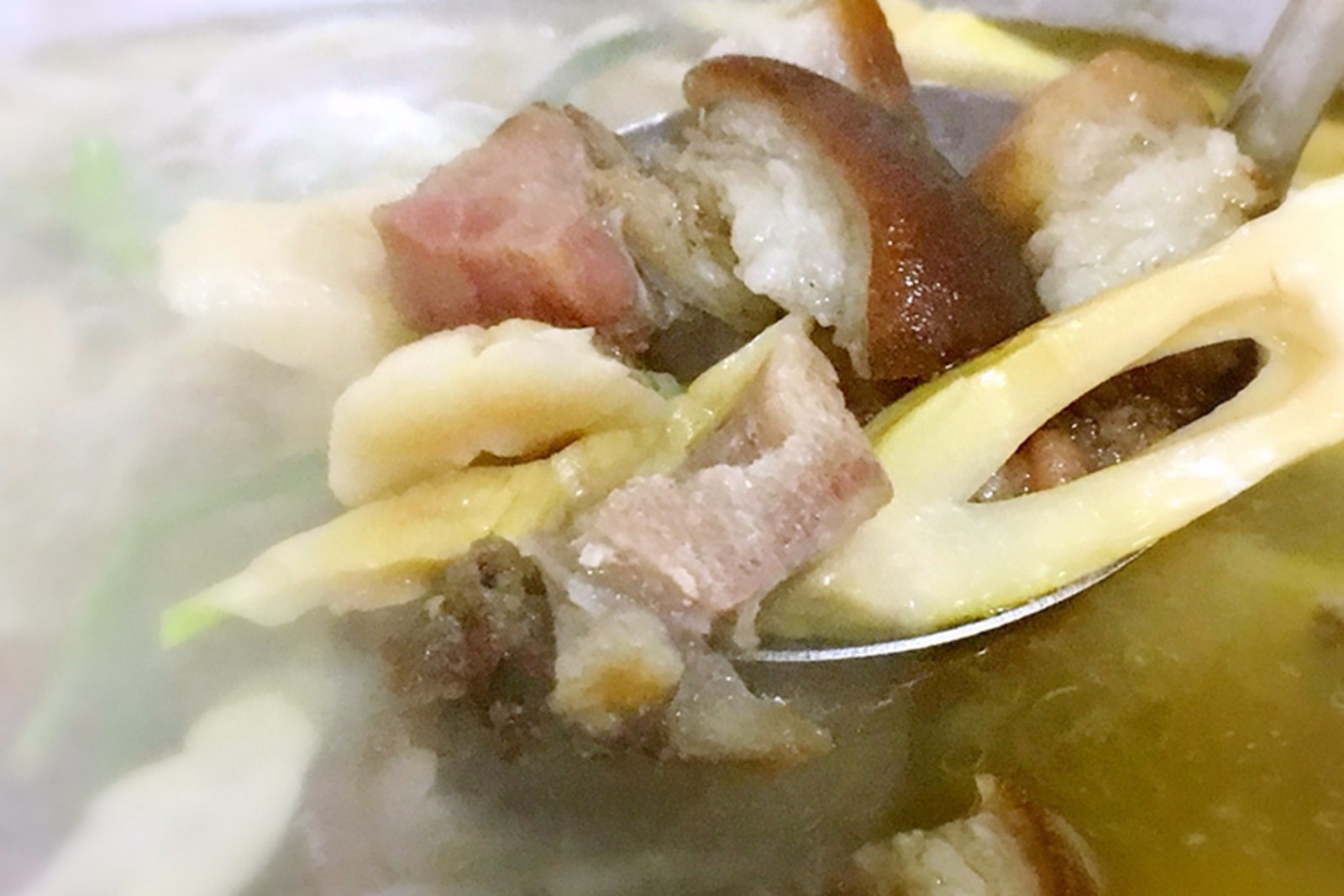
The method is the mountain’s own slow calendar. The pork is salted and left to cure, then hung in the smokehouse where a smouldering fire of cypress branches lays a cold, fragrant smoke over the meat for weeks rather than days; the cypress is chosen for a clean, resinous perfume that scents without scorching. Because the smoke is cold, the fat renders only faintly and stays firm and glassy rather than greasy, which is the trait the district’s bacon is known for and the reason it can be sliced thin and eaten cold without apology. The high cold of Jinfo Mountain does the rest, acting as a natural curing chamber through the winter.
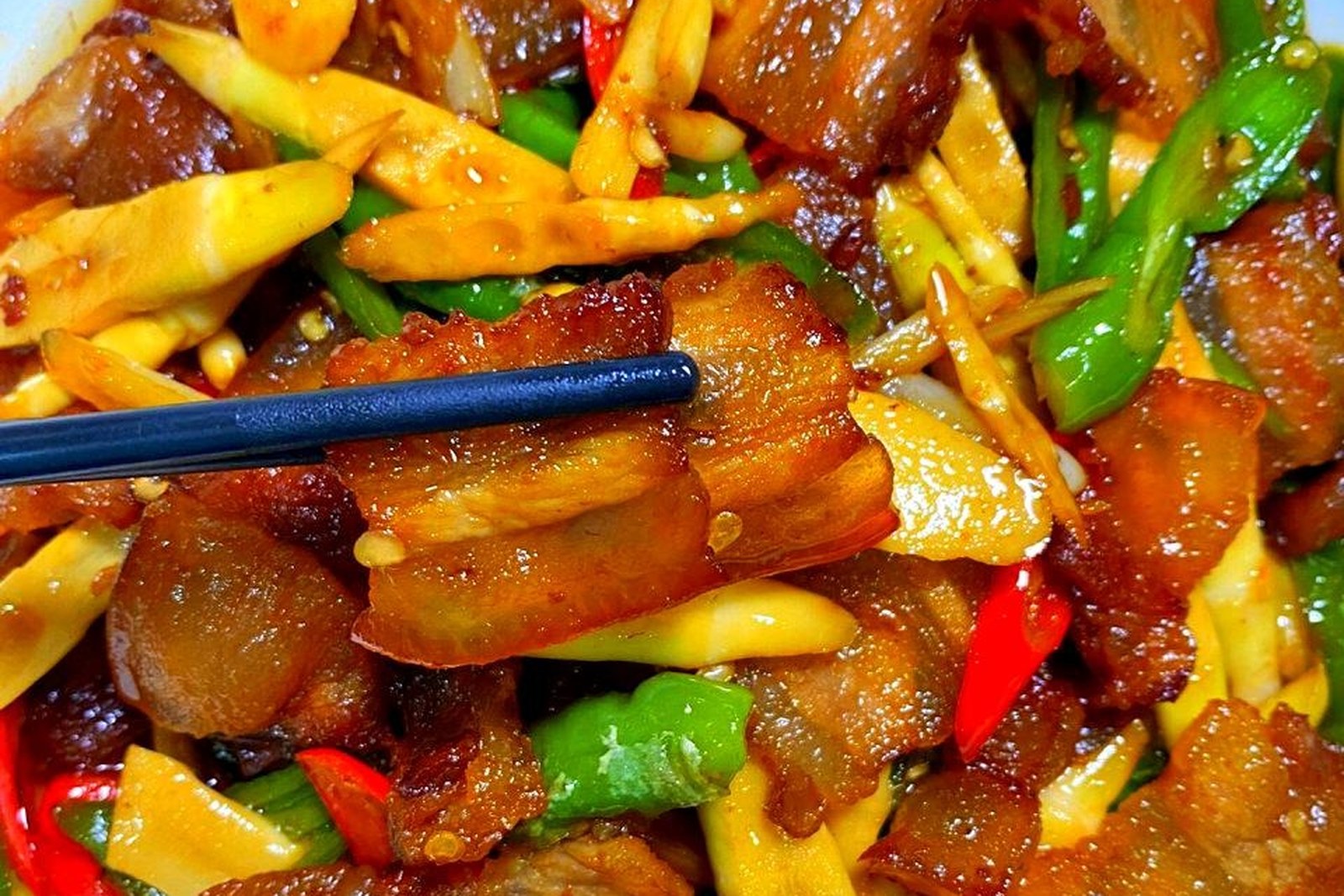
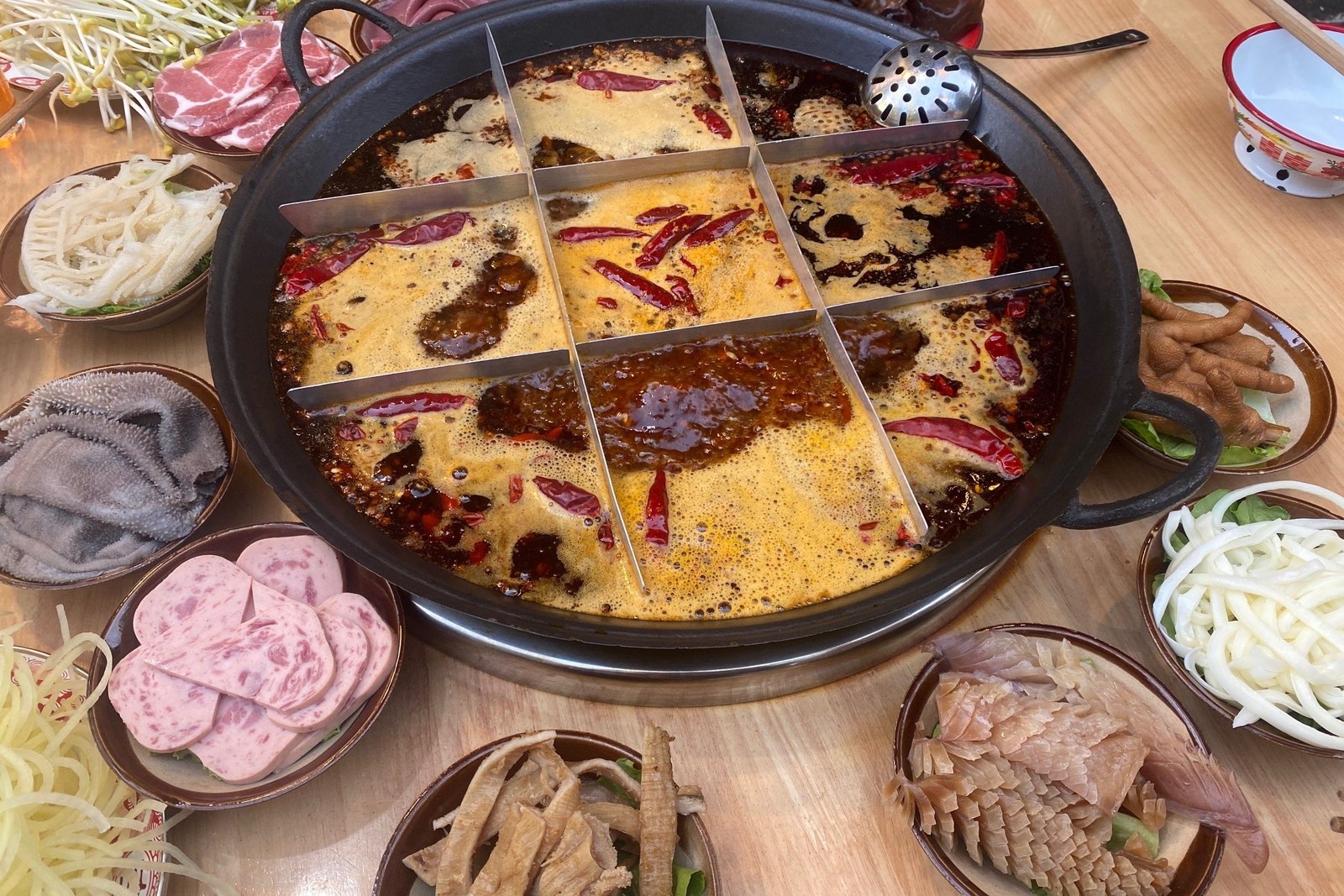
The bacon meets the table in three forms, and each shows a different side of the cure. Sliced cold from the block, it is the savoury snack and the souvenir, the fat clean on the tongue and the smoke plain; braised with the young 春笋 chūnsǔn spring bamboo shoots, it gives the vegetable its salty depth and takes back a little sweetness, a dish that marks the turn of the mountain’s seasons; dropped into the 火锅 huǒguō mountain hotpot, it salts the broth from within and rewards the patient bowl with a richer, smokier finish than fresh pork could. None of the three needs sauce – the cure is the seasoning.
The record that supports the bacon names the salt cure, the cold smoke over cypress branches, the three ways of eating and the Jinfo Mountain setting; it does not name a famous smokehouse, a founding year or a posted price, and none is invented here. The honest version is a household and mountain-town format rather than a single celebrated brand – the batches differ by wood, weather and household, and the good ones sell out by reputation alone. The buyer’s guarantee is the rind and the fat, not a certificate on the wall.
Words and Names
金佛山老腊肉 Jīnfó Shān lǎo làròu, Jinfo Mountain smoked bacon: high-mountain pork salted and cold-smoked over 柏树 bǎishù cypress branches until salty-savoury and never greasy, eaten sliced cold, braised with spring bamboo shoots, or in the mountain hotpot. 柏树 bǎishù, cypress, the branch wood whose clean smoke cures the bacon. 春笋 chūnsǔn, spring bamboo shoots, the young shoots the bacon is braised with. 火锅 huǒguō, hotpot, the mountain broth the bacon salts from within. 金佛山 Jīnfó Shān, Jinfo Mountain; 南川区 Nánchuān Qū, Nanchuan District. The record names no famous smokehouse, year or posted price, and none is invented here.
What the Locals Know
The first thing locals know is how to read the block. A good mountain bacon has an amber rind and glassy, pale fat – signs of a slow cold smoke over clean wood – while a dark, greasy rind means the fire ran hot or the cure was rushed; the check takes a glance and no brand stands behind a household batch. The second thing is the season: the cure belongs to the cold months, when the mountain’s winter acts as the chamber, and the bacon made then keeps through the year without refrigeration.
The third thing is the pairings. Sliced cold it is its own snack; braised with spring shoots it is the seasonal dish that uses the mountain’s young bamboo; in the hotpot it is the broth’s salt and smoke. Locals will tell you the bacon should never taste of tar – a clean cypress perfume is the mark of a well-smoked batch, and a bitter, sooty note is the mark of a fire pushed too hard. What the record does not support is any ranking among smokehouses, and the page declines to make one – the slice on your plate is the review.
flowcloud would say that Jinfo Mountain smoked bacon is high-mountain pork cured and cold-smoked over cypress branches until salty-savoury and never greasy – eaten sliced cold, braised with spring bamboo shoots, or in the mountain hotpot – and that it is read by an amber rind and glassy fat rather than a label, with no famous smokehouse, year or price on the record and none invented. All checked October 2026.
Where to find it: the smoked bacon is found across 南川区 Nánchuān Qū, Nanchuan District, Chongqing – at the farmhouse smokehouses and roadside stalls of 金佛山 Jīnfó Shān, Jinfo Mountain and its towns, and at the district-seat dried-goods shops that sell the mountain cure; the cold-smoke season is the winter, and the honest setting is a thin slice at a mountain table or a strip in the hotpot. No specific shop, address or posted price is on the public record consulted and none is invented here. All checked October 2026.